Burgruine Breitenegg: Medieval Castle Ruins in Germany


Site at a Glance
- Rating
- 3.5
- Popularity
- Very Low
- Country
- Germany
- Primary era
- Medieval
- Eras represented
- Medieval
- Civilizations
- Duchy of Bavaria, Holy Roman Empire
- Site type
- Military
- Remains
- Castle
On this page7 sections
History
Breitenegg Castle Ruin is a medieval fortress in Germany, built around 1229 by the Lords of Breitenbrunn in the Romanesque and Gothic architectural periods. Positioned above the Laaber valley, it developed through a succession of noble owners before passing under effective Wittelsbach control and later becoming associated with the military commander Johann T’Serclaes Tilly.
Early Lords and Successive Owners
The castle was first documented in 1229, around the time it was built by the Lords of Breitenbrunn. From about 1247 to 1289, it belonged to Werner V of Laaber, who was recorded in 1275. In March 1293, Count Gebhard VII of Hirschberg held the castle, and he sold it to Hadamar II of Laaber on 1 September 1302.
Ownership changed again over the following centuries. In 1473, the castle was sold to the brothers Martin and Ludwig of Wildenstein. The Wildenstein family adopted Protestantism around 1550 and consequently lost control of the lordship. Although Breitenegg remained formally under the Holy Roman Empire, the Wittelsbachs, a major ruling dynasty that later provided Bavaria’s rulers, assumed effective control.
Tilly and the Later Residence
In 1624, Emperor Ferdinand granted Breitenegg Castle as a fief to Johann T’Serclaes Tilly at the instigation of Duke or Elector Maximilian. Tilly was a prominent commander of the Thirty Years’ War, the major European conflict of 1618 to 1648, and had been raised to the rank of count in 1623.
Tilly’s great-granddaughter Anna Maria eventually left the hilltop castle after building Tilly Palace in the valley at Breitenbrunn. The castle site is now protected as an architectural monument of Breitenegg and as an archaeological monument covering findings from the medieval castle and the early-modern palace.
Remains
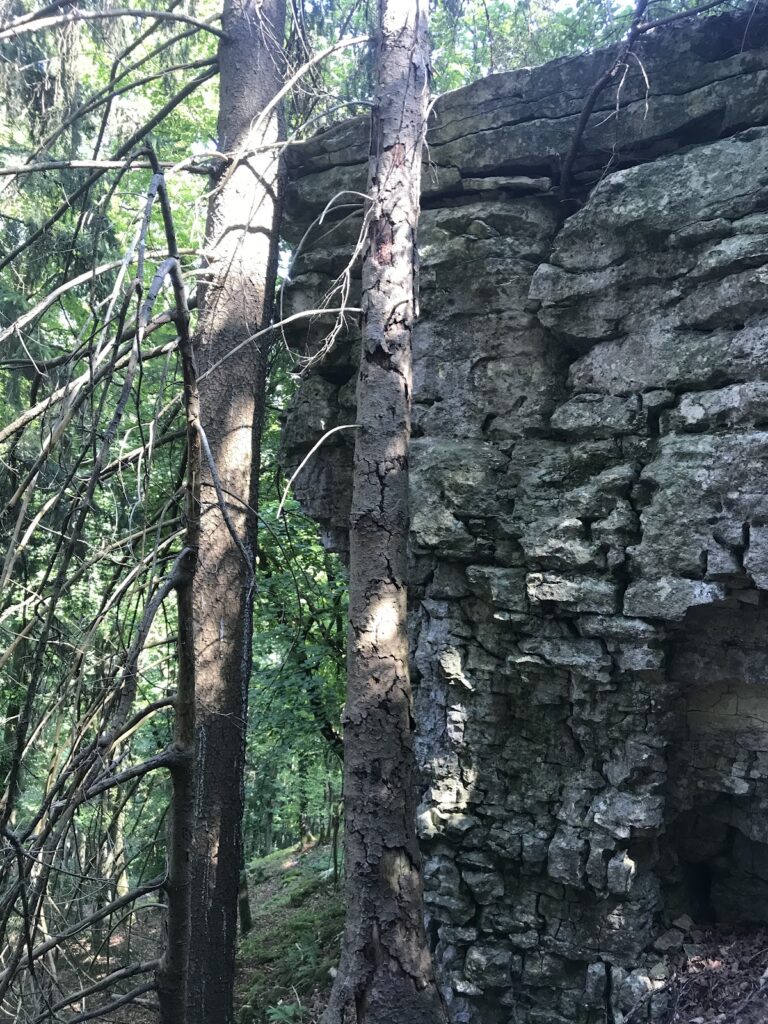
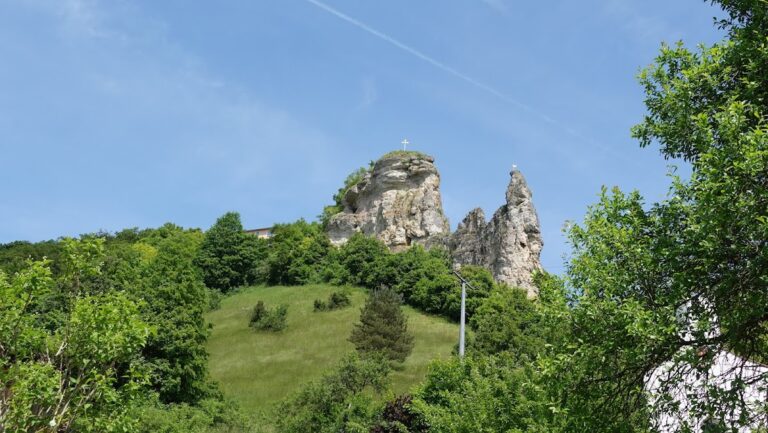
Breitenegg is a hilltop spur castle, a fortification built on a projecting ridge, occupying a peak that extends eastward into the Laaber valley. A broad neck ditch, a defensive ditch cut across the landward approach, separates the former castle complex from the hinterland. Surviving Romanesque and Gothic masonry preserves elements of the medieval fortification.
Fortification Walls and Keep
Keep
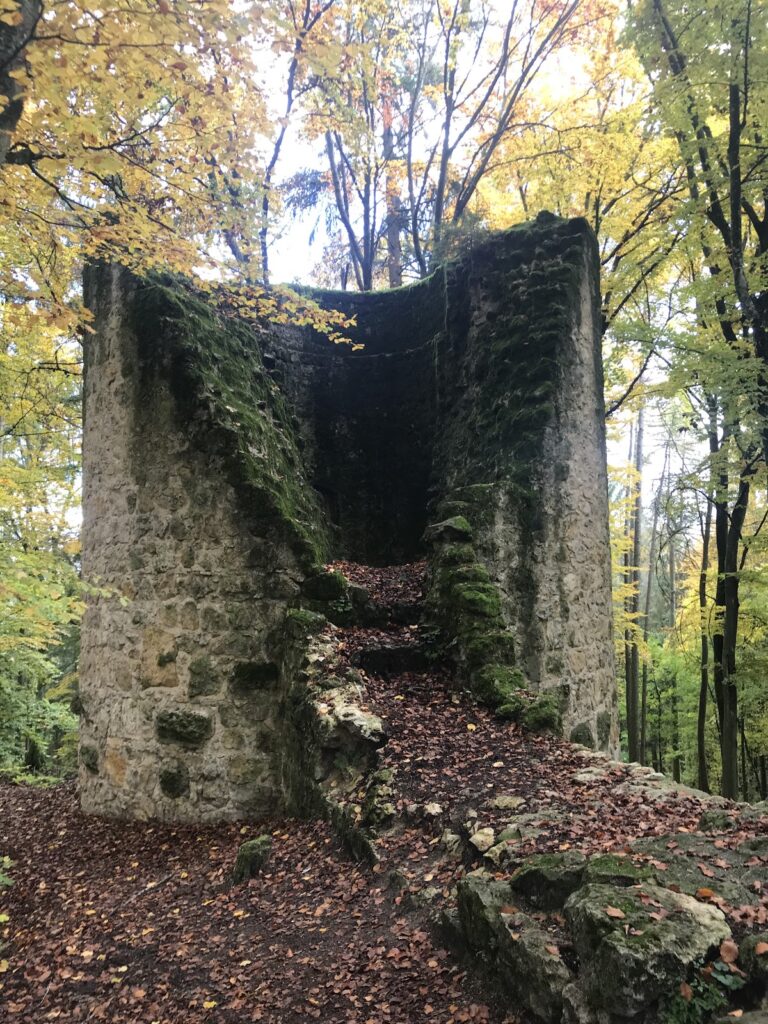
Part of the lower section of the keep survives within the ruined complex. The remaining structure measures approximately 8 by 8 metres and stands about 12 metres high, preserving a substantial fragment of the castle’s principal tower.
Ring Wall
Sections of the ring wall also remain. The wall was constructed from rusticated ashlar blocks and rubble stone, materials that reflect the defensive building methods used in the former castle complex.
Nearby sites