Saint Peter Fort: A Defensive Work in Maastricht, Netherlands



Site at a Glance
- Rating
- 4.5
- Popularity
- Medium
- Country
- Netherlands
- Primary era
- Early Modern
- External website
- Open
- Eras represented
- Early Modern, Modern
- Civilizations
- Dutch
- Site type
- Military
- Remains
- Fort
On this page6 sections
History
Construction and defensive purpose
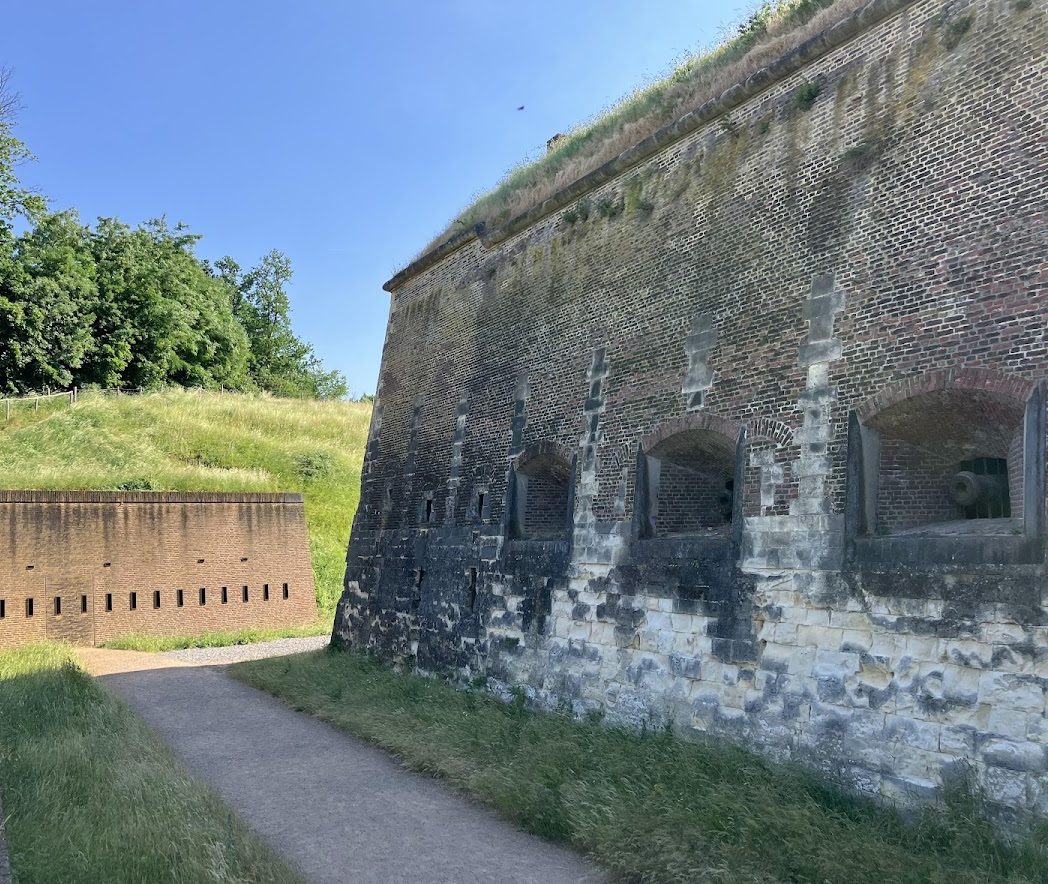
Saint Peter Fort is a five-sided defensive work in Maastricht, Netherlands, built in 1701–1702 on the northern flank of Saint Peter’s Hill. Daniël Wolff, Baron van Dopff, the military commander of Maastricht, commissioned the fort as part of the city’s fortifications. Its purpose was to protect Maastricht’s southern walls from attacks approaching from the south.
The construction followed the French occupation of Saint Peter’s Hill in 1673. From the hill, French forces had been able to direct cannon fire against the southern walls of Maastricht, exposing the weakness of the city’s defenses in that direction. The new fort was intended to prevent a similar attack in the future.
Military use and later changes
In 1717, Tsar Peter the Great, who ruled Russia from 1682 to 1725, visited Saint Peter Fort. Van Dopff gave him a ceremonial tour. During the French siege of Maastricht in 1794, the fort was attacked from the rear by French forces commanded by General Jean-Baptiste Kléber.
The fort underwent extensive modernization in the early nineteenth century as military requirements changed. Its defensive role ended in 1867, when Maastricht’s status as a fortified city was abolished. During the twentieth century, a café, restaurant, and event venue operated on the northern side, accompanied by a terrace. This addition was demolished in 2011 during restoration work, which was completed in 2014. Saint Peter Fort is a Dutch national monument, a legally protected heritage site recognized for cultural or historical importance.
Remains
Fort plan and hillside setting
Saint Peter Fort stands on the northern flank of Saint Peter’s Hill and retains its five-sided plan. The fort formed part of the wider defensive landscape around Maastricht. The Great Entrance to the Northern Tunnel System, a network of underground passages in Saint Peter’s Hill, formerly lay southwest of the fort. Predikherengat lay to the southeast, while the Ancienne Brasserie quarry lay to the northwest.
Northern addition
The twentieth-century construction on the fort’s northern side consisted of a café, restaurant, event venue, and associated terrace. It was removed in 2011 as part of the restoration of Saint Peter Fort, leaving the fort’s historic defensive form as the principal surviving feature described here.