Saint Paraskeva Church in Medvidka: A Wooden Orthodox Church
Site at a Glance
- Country
- Ukraine
- Primary era
- Early Modern
- Eras represented
- Early Modern, Modern
- Civilizations
- Polish–Lithuanian Commonwealth, Russian
- Site type
- Religious
- Remains
- Church
On this page7 sections
History
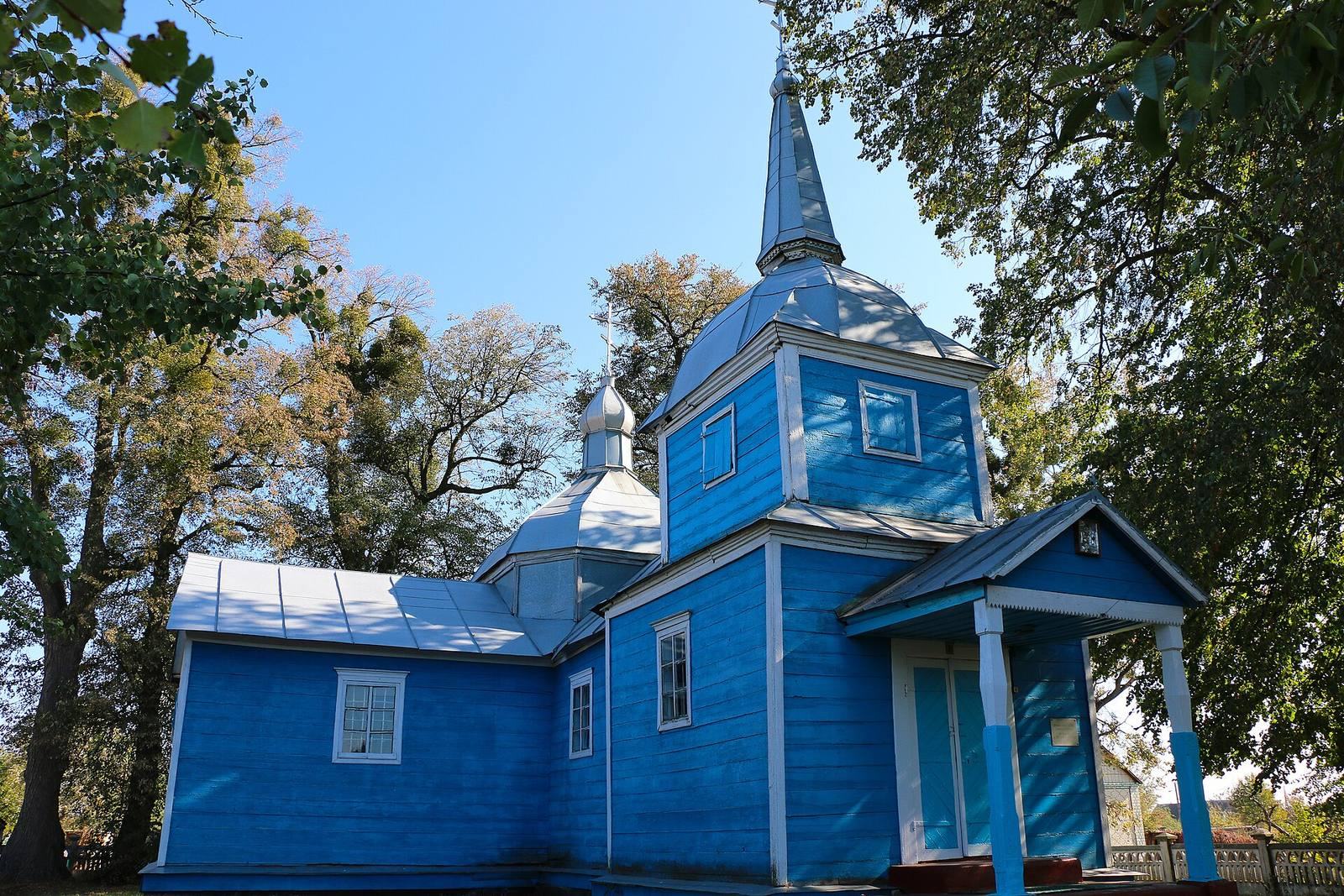
Saint Paraskeva Church in Medvidka is a wooden Orthodox church located in Slobidka, Vinnytsia Oblast, Ukraine. Local peasants built it in 1679 with donated funds and dedicated it to Paraskeva of Iconium, an early Christian woman martyr venerated in Eastern Orthodox tradition.
Foundation and expansion
A chapel was built in 1763, followed by a wooden church constructed between 1765 and 1791; the relationship between these phases is unclear. The church first appears in a recorded mention in 1796. Between 1831 and 1883, it was enlarged with side chapel-wings and a bell tower in the classical style.
Parish and local community
A parish church school operated from 1862 to 1905. Parish registers also included people from Vilkhova, also called Olkhova, which was still identified as a settlement in 1910. Maps show its location changing over time, a shift attributed to the decline of trees in Medvidka Forest and local building needs. The church’s patronal feast is given as 10 November (28 October). Parishioners and village residents are buried at the nearby Medvidka cemetery following liturgies.
Modern changes
A burglary in 2000 resulted in the theft of parish metrical records, registers of events such as baptisms, marriages, and burials. On 2 February 2023, the Holy Synod blessed the parish’s use of the Revised Julian calendar, which some Orthodox churches use to set fixed feast days, and its move from the Ukrainian Orthodox Church to the Orthodox Church of Ukraine, a self-governing Eastern Orthodox church. The parish belongs to the Vinnytsia-Bar Diocese and the Vinnytsia district deanery. On 2 July 2025, ownership of the church was returned to its religious organization in recognition of the community’s long-term use of the building and investment in its preservation. A regional executive committee designated the church a local architectural monument in 1991, under protection number 44-M.
Remains
Church and bell tower
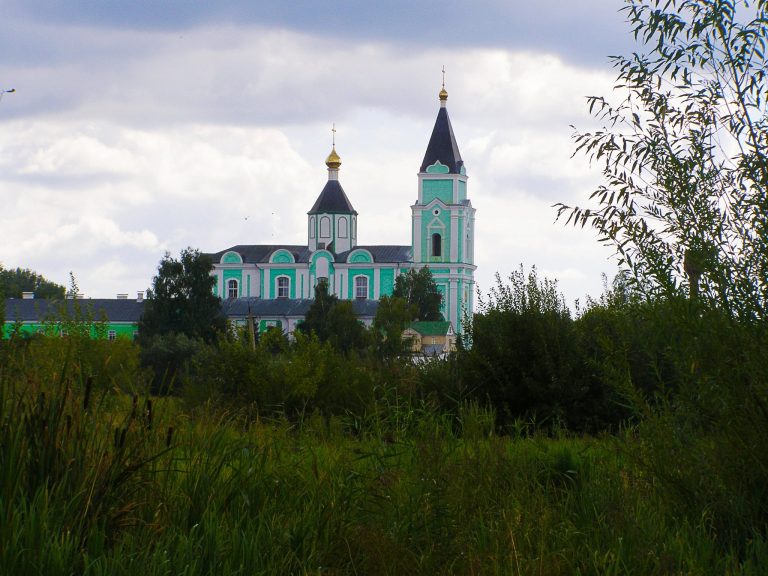
The wooden church is arranged in three principal sections and has a single dome, or roofed crown. It is traditionally described as having been built without nails. Side chapel-wings form part of the ensemble, while the bell tower stands separately. The altar window is original, and the historicist-style window trim, which draws on earlier architectural forms, indicates repairs in the late nineteenth century. The entrance to the southern side chapel combines classical and historicist details. Folk carving at the base of the bell-tower spire reflects Ukrainian classicism, a regional expression of classical forms. Viewed from the northeast, the church recalls wooden churches of Volhynia, a historical region in northwestern Ukraine and neighboring areas.
Churchyard
The church stands in the village center among old lindens. In spring 2016, lindens estimated to be about 200 years old were pruned in the churchyard; they grow densely green each spring.