Saint Michael the Archangel Church in Puszcza Mariańska: A Marian Filial Church
Site at a Glance
- Popularity
- Very Low
- Country
- Poland
- Primary era
- Early Modern
- Eras represented
- Early Modern, Modern
- Civilizations
- Polish–Lithuanian Commonwealth, Russian
- Site type
- Religious
- Remains
- Church
On this page8 sections
History
Foundation and enlargement
Saint Michael the Archangel Church in Puszcza Mariańska is a Roman Catholic filial church in Poland, dependent on the parish of the same name. It belongs to the Marian Fathers, a Roman Catholic religious congregation, and is within the Wiskitki deanery, a grouping of parishes, and the Diocese of Łowicz, a territorial jurisdiction of the Catholic Church.
Father Stanisław Papczyński, a Catholic priest who founded the Marian congregation, built the church around 1700. Dedicated to Saint Michael the Archangel, it commemorates him liturgically on 29 September. In 1755, efforts by the Sanguszko family of Guzów, a Polish-Lithuanian noble family, brought an enlargement that added a nave.
Changes in religious administration
In 1864, tsarist authorities suppressed the Marian Fathers’ religious house at Puszcza Mariańska. Father Piotr Komorowski continued to manage the church until 1879, while diocesan priests had taken responsibility for its care and services from 1870. A tower was added in 1891 through the efforts of Father J. Łagodziński. Repairs followed in 1960–1968, 1982 and 1986. Marian priests returned to the parish and monastery in 1968.
Fire and reconstruction
On 2 May 1993, the church was deliberately set on fire. It was subsequently reconstructed.
Remains
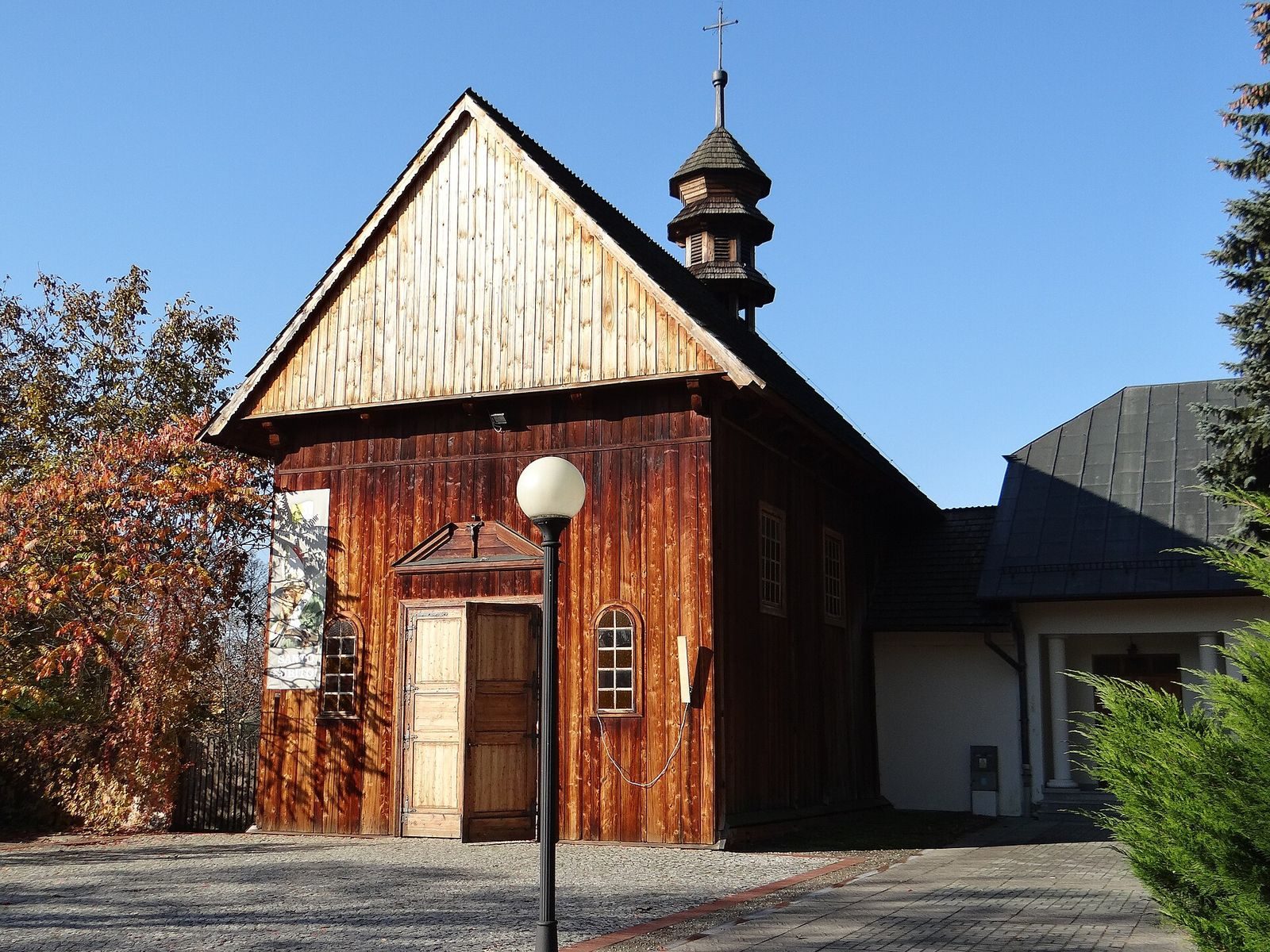
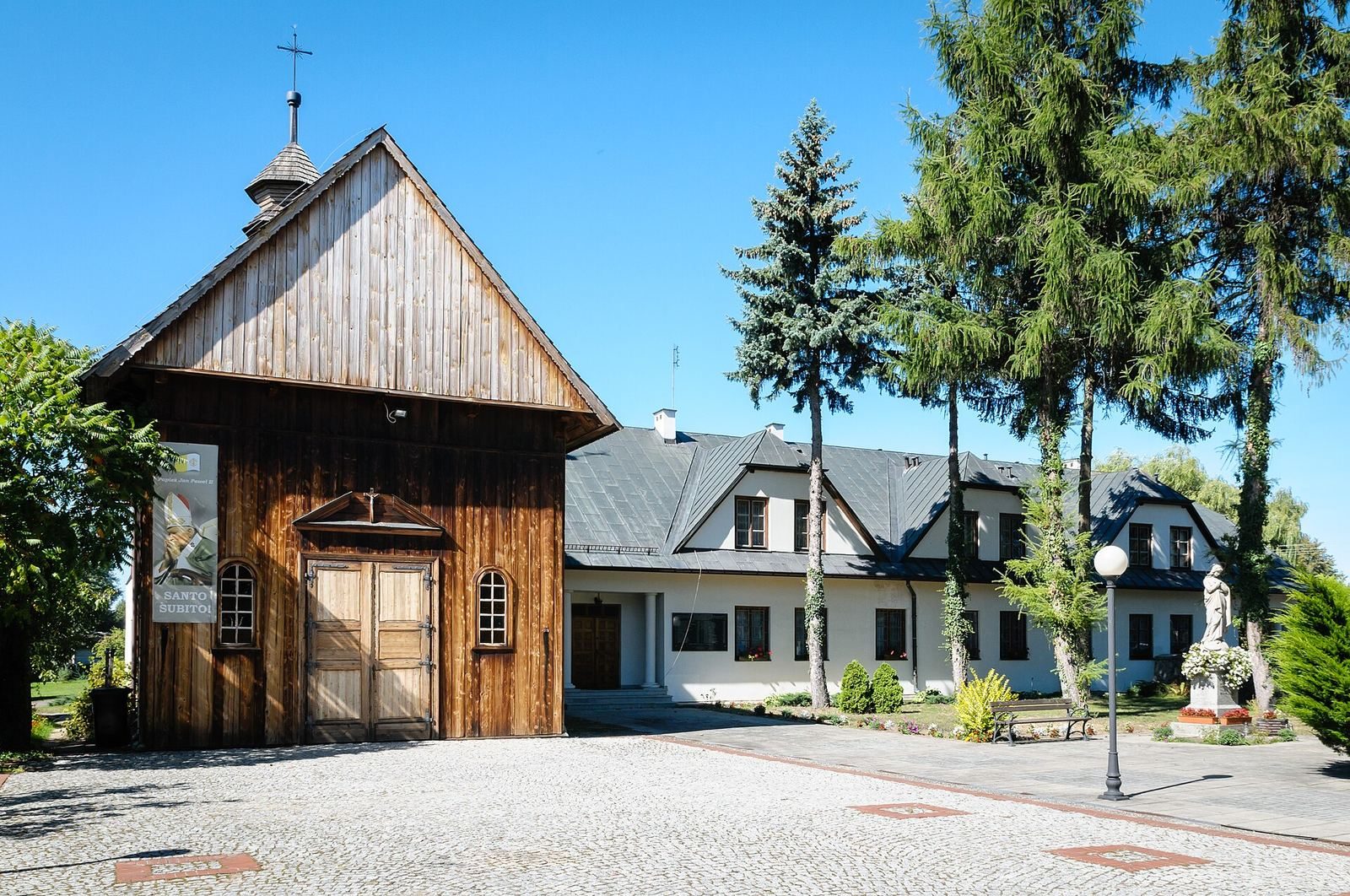
The reconstructed church is a single-nave timber building, made with log construction and clad externally in vertical boards. Its chancel, the area around the altar, is not distinguished from the nave in the exterior outline and ends in a straight wall. The shingled roof has one ridge. A small bell turret rises above it, capped by a wooden helmet-shaped roof and a decorative lantern-like feature.
Interior
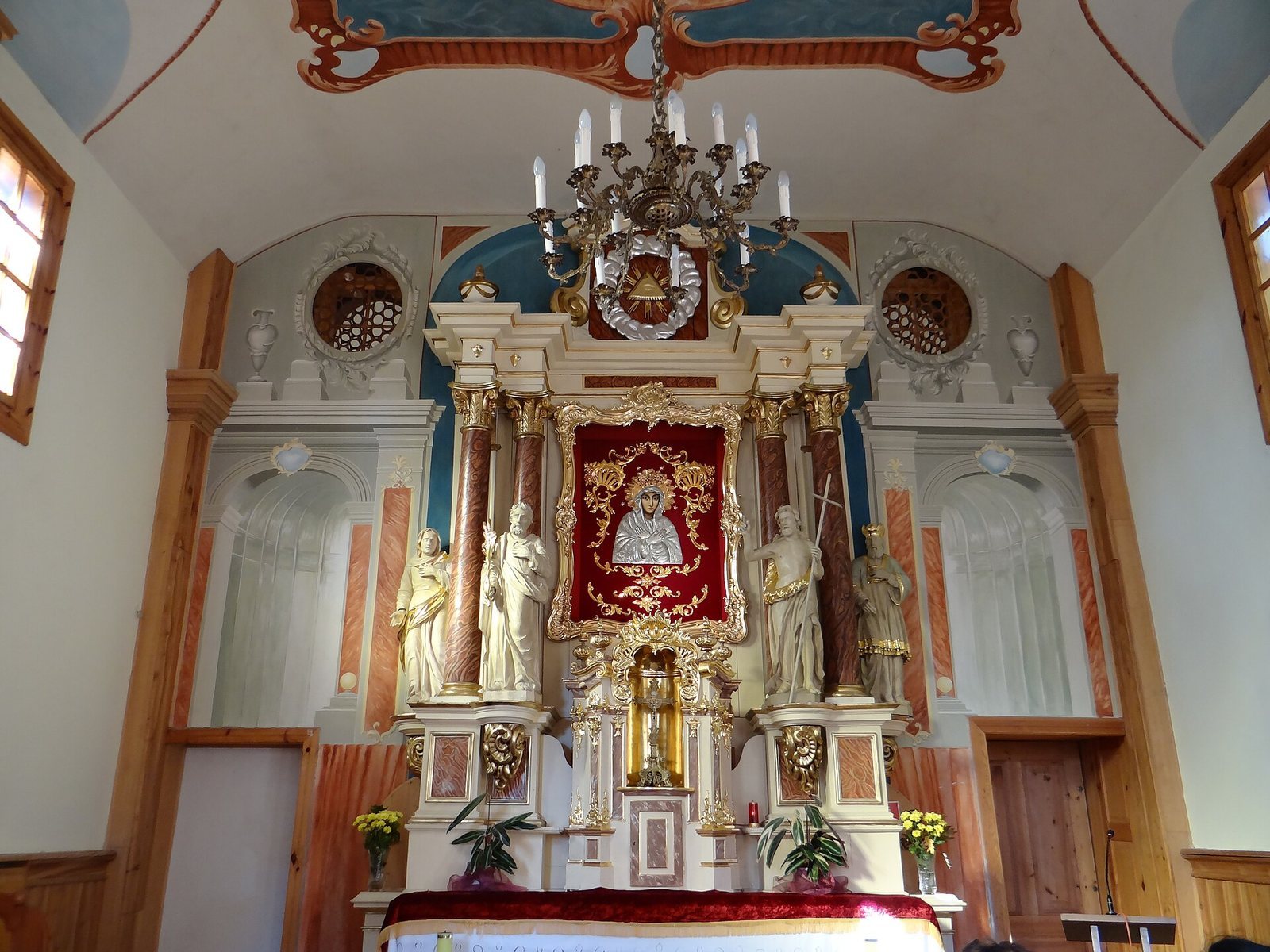
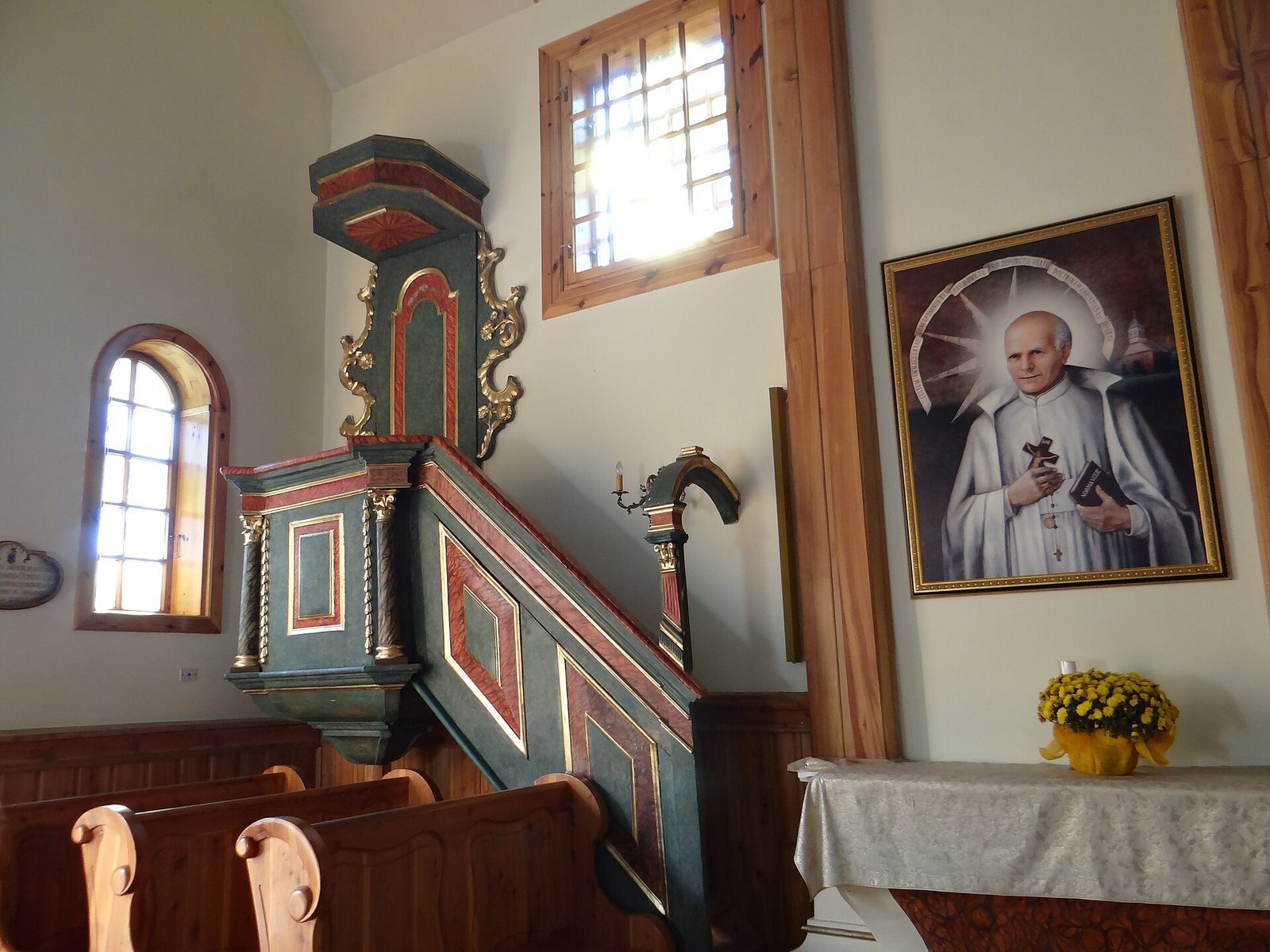
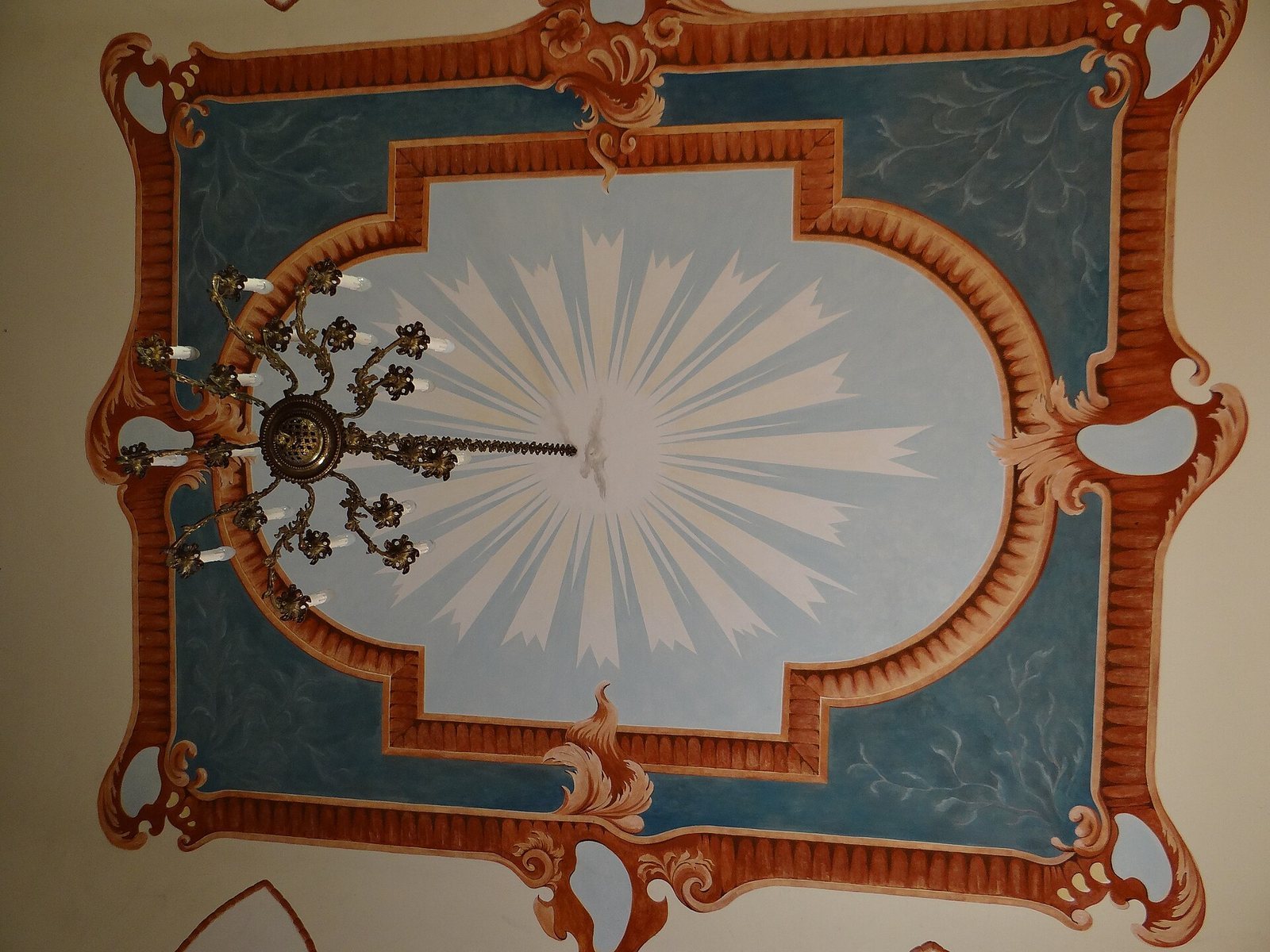
The interior has plastered walls and flat ceilings. It contains three altars, including a reconstructed high altar with an image of the Blessed Virgin Mary, as well as a reconstructed pulpit.
Monastery building
A masonry monastery building was added to the church in 1755.
Objects left by the fire
The 1993 fire left Baroque liturgical vessels and vestments, two coffin portraits made for display during funeral rites, and fragments of an epitaph for Julian Turski, who died in 1771.