Saint-Melaine Palace: Former Archbishopric Seat in Rennes


Site at a Glance
- Rating
- 4.6
- Popularity
- Low
- Country
- France
- Primary era
- Early Modern
- External website
- Open
- Eras represented
- Early Modern
- Civilizations
- French
- Site type
- Religious
- Remains
- Palace
On this page6 sections
History
Saint-Melaine Palace is a former seat of the Archbishopric of Rennes in Rennes, France. Construction began during the second half of the seventeenth century, when the building was intended as an abbey manor, a residence and administrative center associated with an abbey and its abbot. It was elevated to that status in 1666.
Expansion and Episcopal Alterations
A western wing was added in 1720, separating the palace from the street. In 1770, François Bareau de Girac, bishop of Rennes, altered the building so that he could live there. These works gave the palace its present overall appearance.
Museum, Faculty, and Educational Administration
From 1840 to 1944, Saint-Melaine Palace housed the Muséum national d’Histoire naturelle et des Arts de Rennes. The Faculty of Law occupied the building from 1911 until the end of the 1950s, except during the First World War, when it was requisitioned as a hospital for wounded soldiers.
The palace later served as the residence of the rectors of the Rennes educational academy from 1979 to 2019. A rector is the senior official responsible for administering France’s regional education system.
Protection and Planned Conversion
The entire complex, including its courtyard and garden grounds, was classified as a historic monument by an order dated 21 August 1959. In France, this designation protects a building, site, or architectural element because of its cultural or historical value. The buildings and remains of the former abbey received an additional classification on 2 July 2013.
After the palace was offered for sale through a call for projects, the French state announced its sale to the real-estate investment company Westone on 15 December 2025. Westone appointed Renaissances to convert the property into a mixed office and residential site. Because of the palace’s protected status, the planned renovations are to be supervised by a chief architect of historic monuments in cooperation with the Regional Directorate of Cultural Affairs of Brittany.
Remains
Palace, Wing, and Former Abbey Grounds
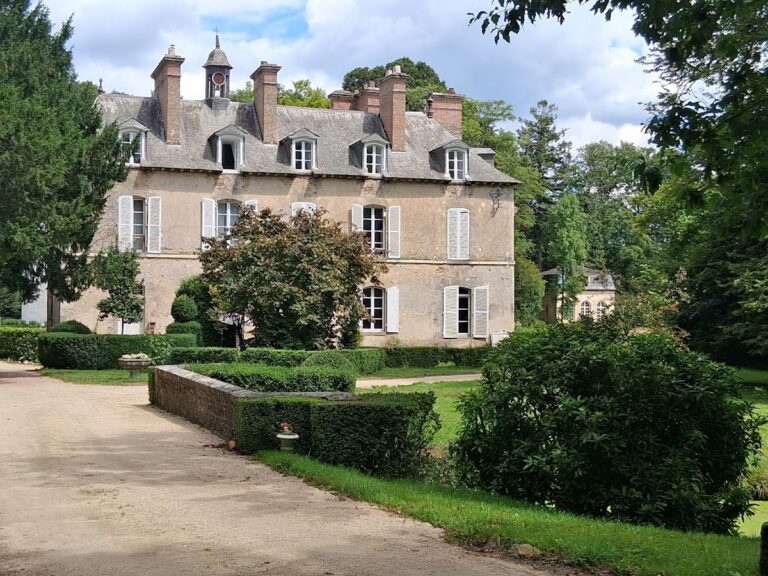
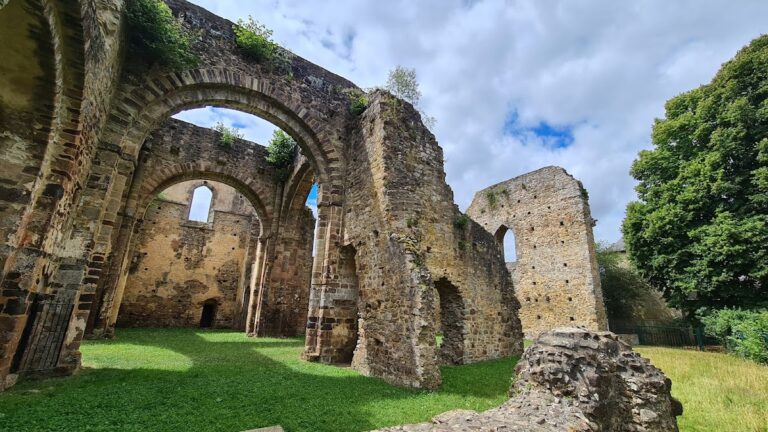
Saint-Melaine Palace stands on Place Saint-Melaine at the western edge of Thabor Park. The surviving complex consists of the main palace and the western wing added in 1720, whose position separates the palace from the street. The courtyard and garden grounds form part of the protected site, which also includes buildings and remains of the former abbey.
Nearby sites