Saint James Church in Wielki Lubień: A Roman Catholic Parish Church
Site at a Glance
- Popularity
- Very Low
- Country
- Poland
- Primary era
- Early Modern
- Eras represented
- Early Modern, Modern
- Civilizations
- Kingdom of Prussia, Polish–Lithuanian Commonwealth
- Site type
- Religious
- Remains
- Church
On this page13 sections
History
Saint James Church in Wielki Lubień is a Roman Catholic parish church in Poland, dedicated to the apostle James and built in 1680. It serves a parish whose history reaches back to the fourteenth century.
The medieval parish and early church
A church stood in Wielki Lubień during the fourteenth century, and the parish is first mentioned in 1398. In the fifteenth century, the village belonged to a religious order.
Reformation-era use and rebuilding
During the sixteenth century, Mennonites from the Netherlands temporarily used the church. Mennonites are part of a Christian movement that emphasizes adult baptism.
The present church was built in 1680. A flood in 1855 submerged its interior to a depth of three metres. Reconstruction followed, enlarging the building and adding a chancel, the area around the altar. The work also removed the church’s earlier stylistic features.
Later parish history
The church was renovated in 1999 and continues to serve the parish dedicated to Saint James.
Remains
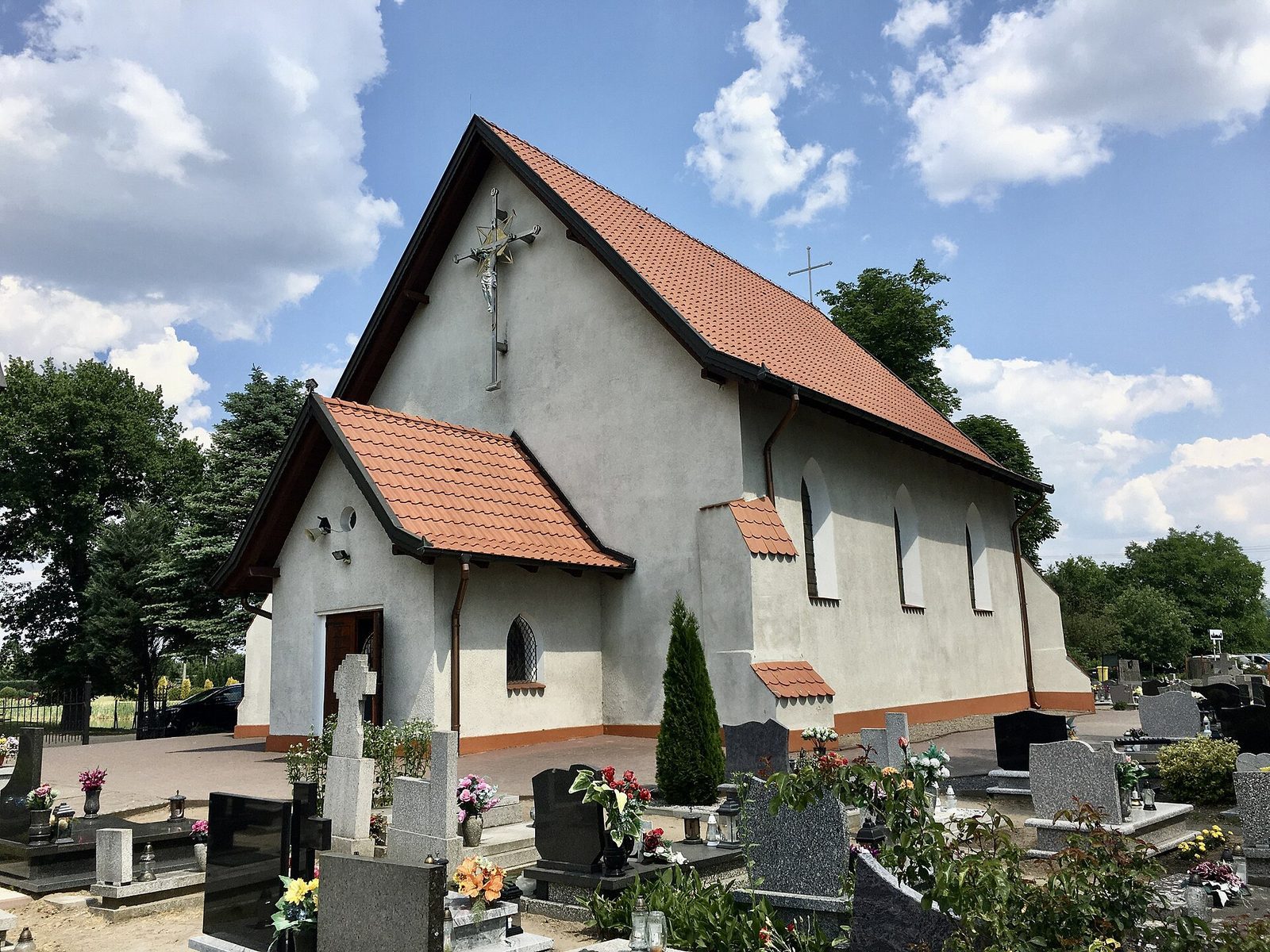
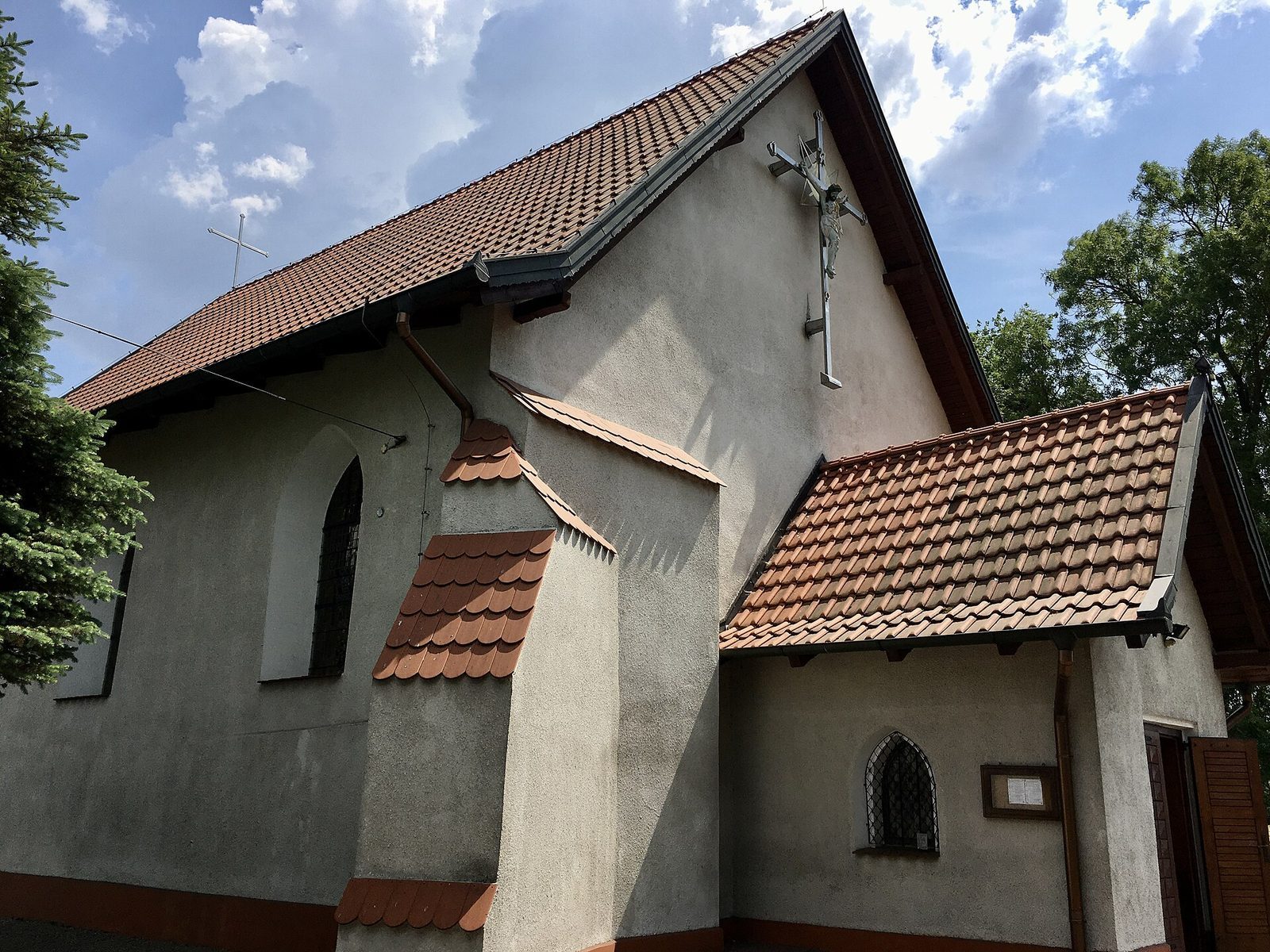
The church is a brick building with one main worship space, aligned east to west with the chancel at the eastern end. The church itself has no tower; a separate bell tower stands beside it.
Church fabric and layout
Plaster covers the brick walls, which have a distinct chancel and projecting supports. The windows have pointed arches, and a porch was added later. Half-timbering, a timber frame filled with other materials, forms the gable wall; parts of the frame remain visible through its plaster.
Interior and furnishings
High altar and painting
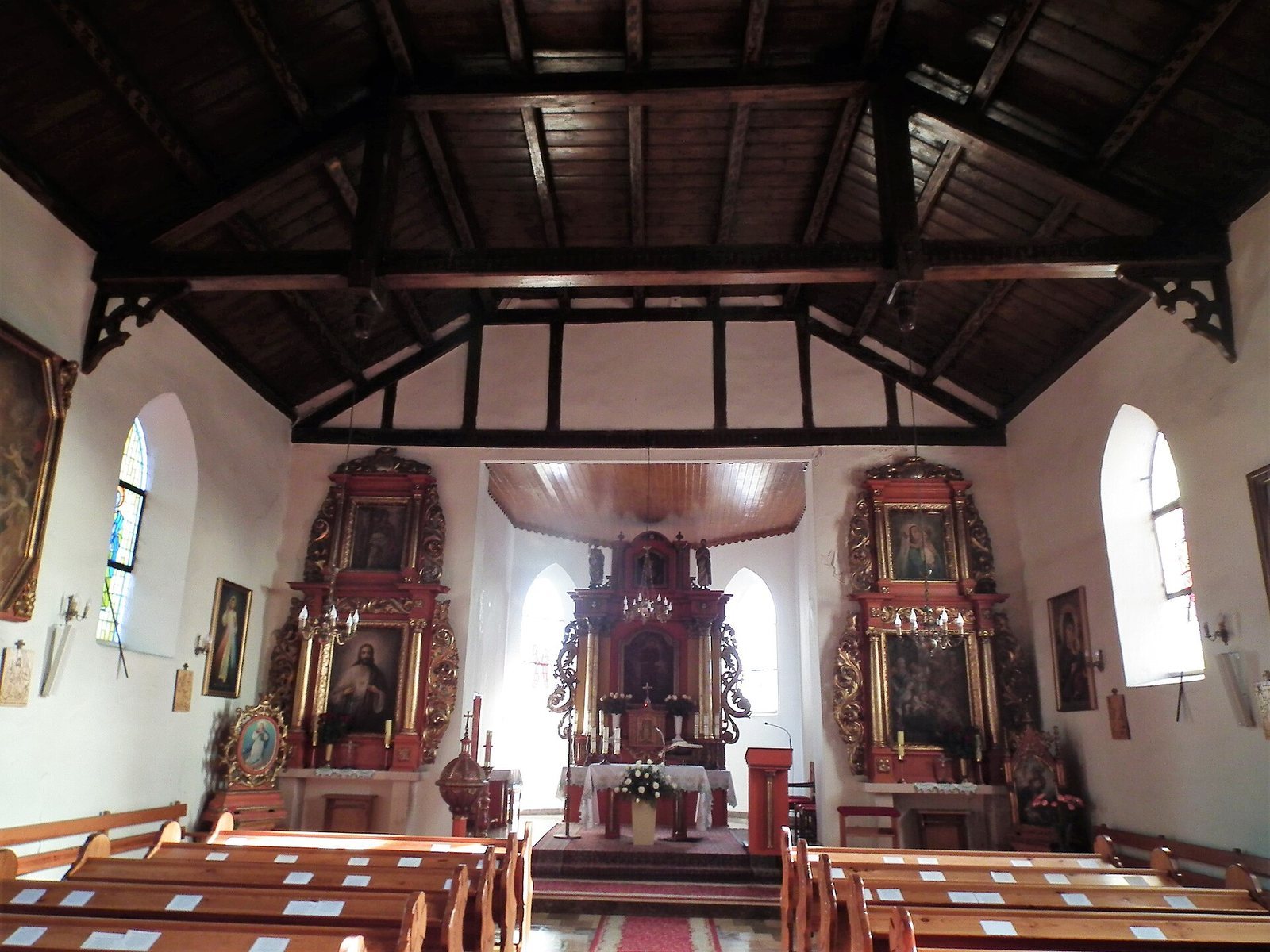
The interior furnishings are in the Baroque style, a European style known for elaborate ornament and dramatic forms, and date from the seventeenth and eighteenth centuries. The seventeenth-century high altar came from Pelplin Cathedral and survived the 1855 flood. A seventeenth-century painting, Communion of St Stanislaus Kostka, also came from the cathedral. Stanislaus Kostka was a Polish Jesuit and Catholic saint.
Gallery and later fittings
A nineteenth-century choir gallery, an elevated space for singers and musicians, stands inside the church. The chalice-shaped baptismal font combines several styles, and the stained-glass windows date from the postwar period.
Chancel ceiling
The chancel ceiling has exposed beams and flat boarding.
Bell tower and commemorative features
Bell tower and bells
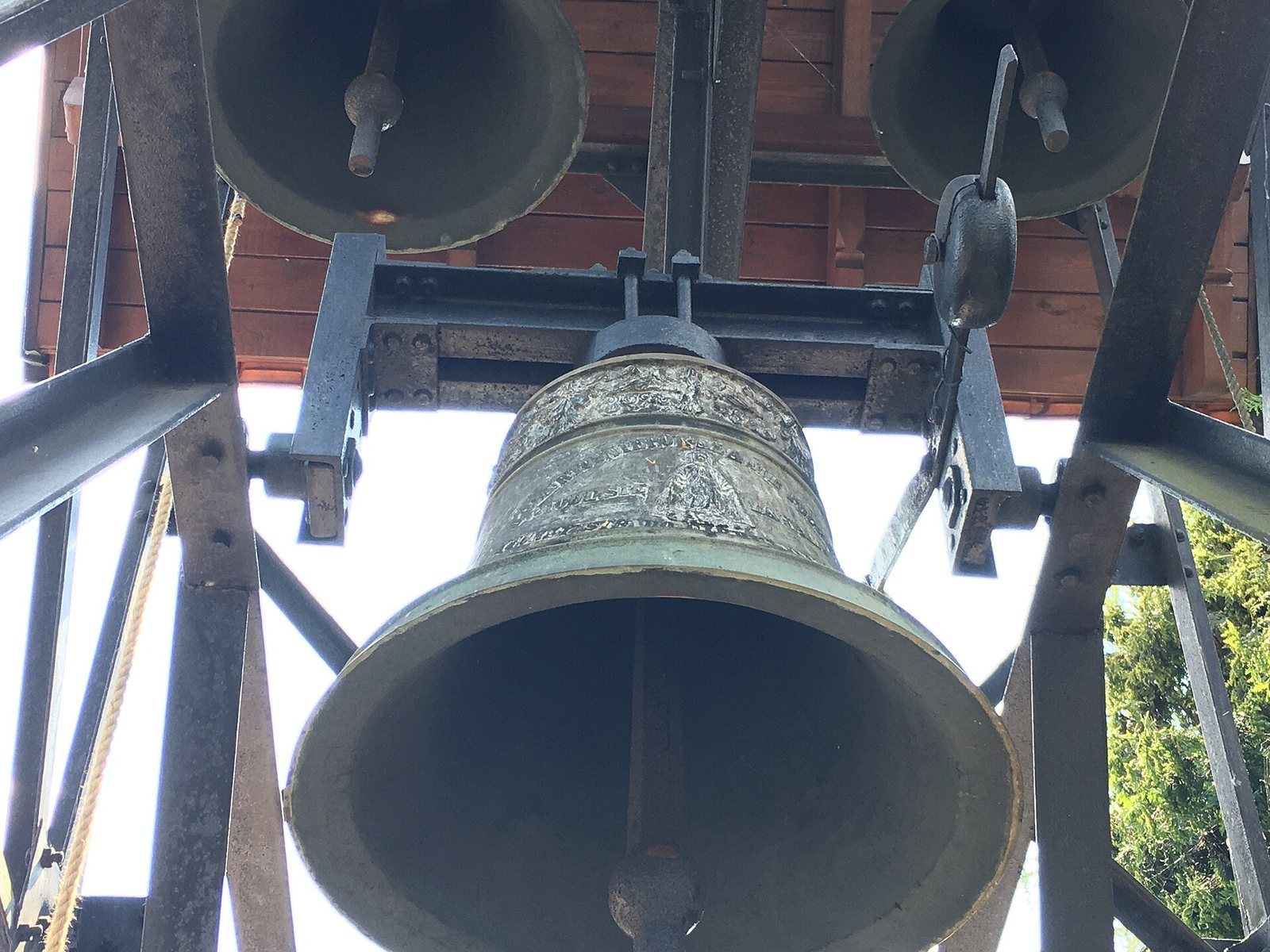
The adjacent bell tower holds bells that came from a Protestant church in Dragacz, destroyed in 1945.
Memorials beside and within the church
A plaque inside the church commemorates Poles from Volhynia, a historical region chiefly in present-day Ukraine, who were imprisoned, deported, and murdered between 1939 and 1945. Former residents of Volhynia, veterans, and the municipal authorities of Dragacz funded the plaque. Beside the church is a grave for unidentified Polish soldiers killed in September 1939 while fighting the Nazi invasion.