Saint James Church in Krzepice: A Gothic Parish Church in Poland


Site at a Glance
- Rating
- 4.6
- Popularity
- Low
- Country
- Poland
- Primary era
- Medieval
- External website
- Open
- Eras represented
- Medieval, Early Modern
- Civilizations
- Kingdom of Poland, Polish–Lithuanian Commonwealth
- Site type
- Religious
- Remains
- Church
On this page7 sections
History
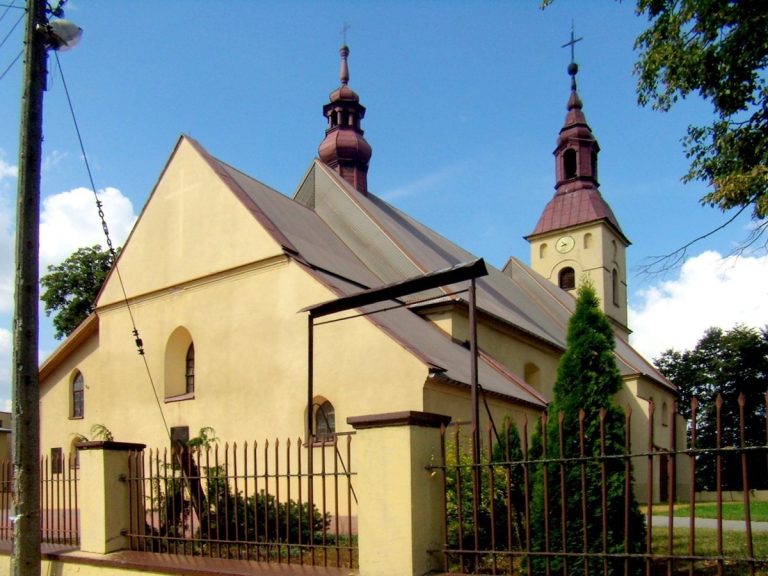
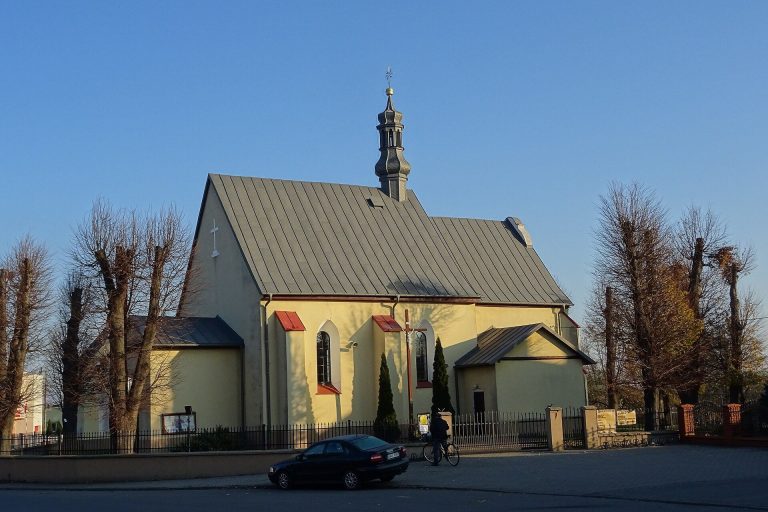
Saint James Church in Krzepice is a Gothic Roman Catholic parish church in Poland, dedicated to Saint James the Apostle and founded by King Casimir III the Great. Construction was completed in the fifteenth century. The church belongs to the Archdiocese of Częstochowa and the Krzepice deanery, and its present form reflects both Late Gothic traditions and early-modern changes.
Foundation and seventeenth-century transformation
The church was repeatedly affected by fires, wartime plundering, and epidemics. These events brought repairs and alterations over several centuries, with major works carried out in 1548, 1620, and 1660. Its most substantial transformation came in the seventeenth century, when the building was heightened and given a more monumental character. Baroque gilded ornament and statues enriched the interior during this period.
At the time, Krzepice was administered by Mikołaj Wolski, a Polish court official who served Sigismund III Vasa and held the office of Crown Marshal, a senior royal administrative position. Monastic buildings, side chapels, and other architectural additions also became part of the church complex. The Chapel of Christ Crucified was added on the north side around 1620, while the Chapel of Saint Joseph followed on the south side around 1660. The latter was built as a votive offering of thanksgiving for deliverance from plague and the Swedish Deluge, the mid-seventeenth-century Swedish invasion and occupation of much of the Polish-Lithuanian Commonwealth.
Repairs, religious furnishings, and modern protection
Further restorations took place in 1825, 1830, 1840 to 1846, 1876, 1884, 1903, 1924, 1938, 1954 to 1955, 1969, and the 1990s. An altar decorated with the miraculous image of Our Lady of the Krzepice Rosary was mentioned in 1730, and the image was crowned again in 1993. The church is protected as a historic monument under registrations 1118/69, also cited as R/513/57, dated 27 December 1969, and 54/78, dated 16 February 1978.
Remains
Saint James Church is a Gothic brick building with a single nave and one tower. Its surviving interior combines the church’s medieval structure with seventeenth-century additions, Baroque gilded ornament, statues, and three recorded altars. The side chapels extend the building to the north and south and form a balanced arrangement around the nave.
Main church and interior
The single-nave church retains its Gothic brick construction and one church tower. The interior includes Baroque gilded decoration and statues associated with the seventeenth-century transformation. An altar contains the image of Our Lady of the Krzepice Rosary, a devotional object associated with the church since at least the eighteenth century.
Side chapels
The Chapel of Christ Crucified, also called the Łaszewski Chapel, stands on the north side and dates from around 1620. Its eighteenth-century Late Baroque altar presents the Crucified Christ with the instruments of the Passion. Statues of the Virgin Mary and Saint John the Evangelist accompany the scene.
On the south side, the Chapel of Saint Joseph, also known as the Krzepice Citizens’ Chapel, forms a symmetrical counterpart to the Łaszewski Chapel. Its altar of Saint Joseph with the Child was made in 1730 and is accompanied by statues of Aaron and Moses.
Organs
The church contains two organs. The main instrument, used for regular services, was built in the 1950s by the Truszczyński firm of Włocławek. It has 30 stops, two manuals, and a pedal. The smaller eighteenth-century positive, a compact organ, has nine stops and one manual. It was brought to the church after 1824, when the wooden Church of the Descent of the Holy Spirit burned down. Monks formerly associated with Saint James Church probably used this instrument in the presbytery, the part of the church reserved for clergy and the main liturgical rites, rather than using the main organ during their services.