Saint George Chapel in Lądek-Zdrój: An Early Baroque Roman Catholic Chapel
Site at a Glance
- Popularity
- Low
- Country
- Poland
- Primary era
- Early Modern
- Eras represented
- Early Modern
- Civilizations
- Habsburg, Holy Roman Empire, Kingdom of Bohemia
- Site type
- Religious
- Remains
- Chapel
On this page9 sections
History
Saint George Chapel in Lądek-Zdrój is a Roman Catholic chapel on Saint George Hill in Moniuszko Park, Poland. Built between 1656 and 1658 in the early Baroque style, a European architectural tradition marked by elaborate forms, it is dedicated to Saint George, a Christian saint traditionally associated with martyrdom.
Earlier chapels and the Baroque foundation
A chapel stood on the site by 1498, built at the personal expense of a Duke of Ziębice who also held the title Count of Kłodzko. A wooden predecessor followed in 1637. The present chapel replaced these earlier buildings, with funding from Johann Georg von Götzen, Count of Kłodzko and a regional administrative official.
Blessing and later use
Ernst Adalbert von Harrach, a cardinal and archbishop of Prague, blessed the chapel on 21 June 1665. Around 1720, its interior was remodeled.
The chapel now serves as an auxiliary church, supporting the main church of the Roman Catholic Parish of the Nativity of the Blessed Virgin Mary in Lądek-Zdrój.
Repairs and restoration
After 1945, a later-added sacristy, a room for clergy’s vestments and service objects, was demolished, and limited conservation work was undertaken. The chapel was repeatedly robbed and vandalized during the 1980s and 1990s. A thorough renovation followed in 1997–1998, and Henryk Gulbinowicz, Metropolitan Archbishop of Wrocław, consecrated it on 8 November 1998.
Remains
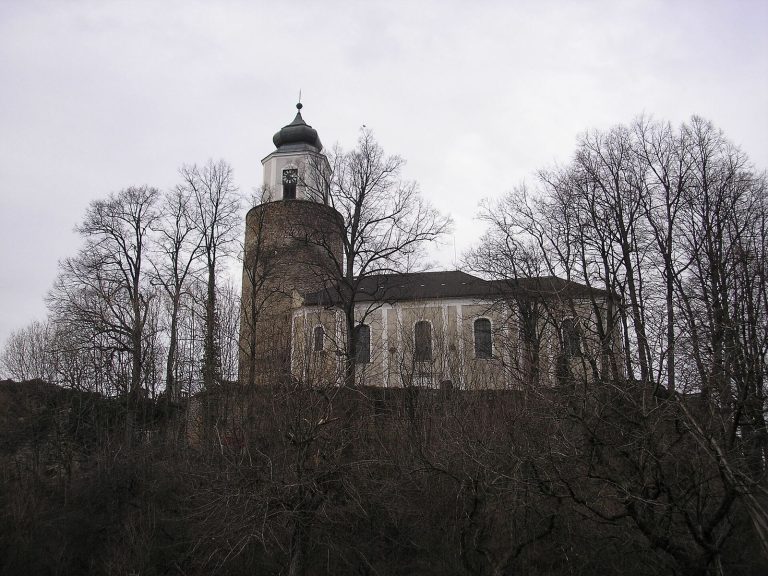
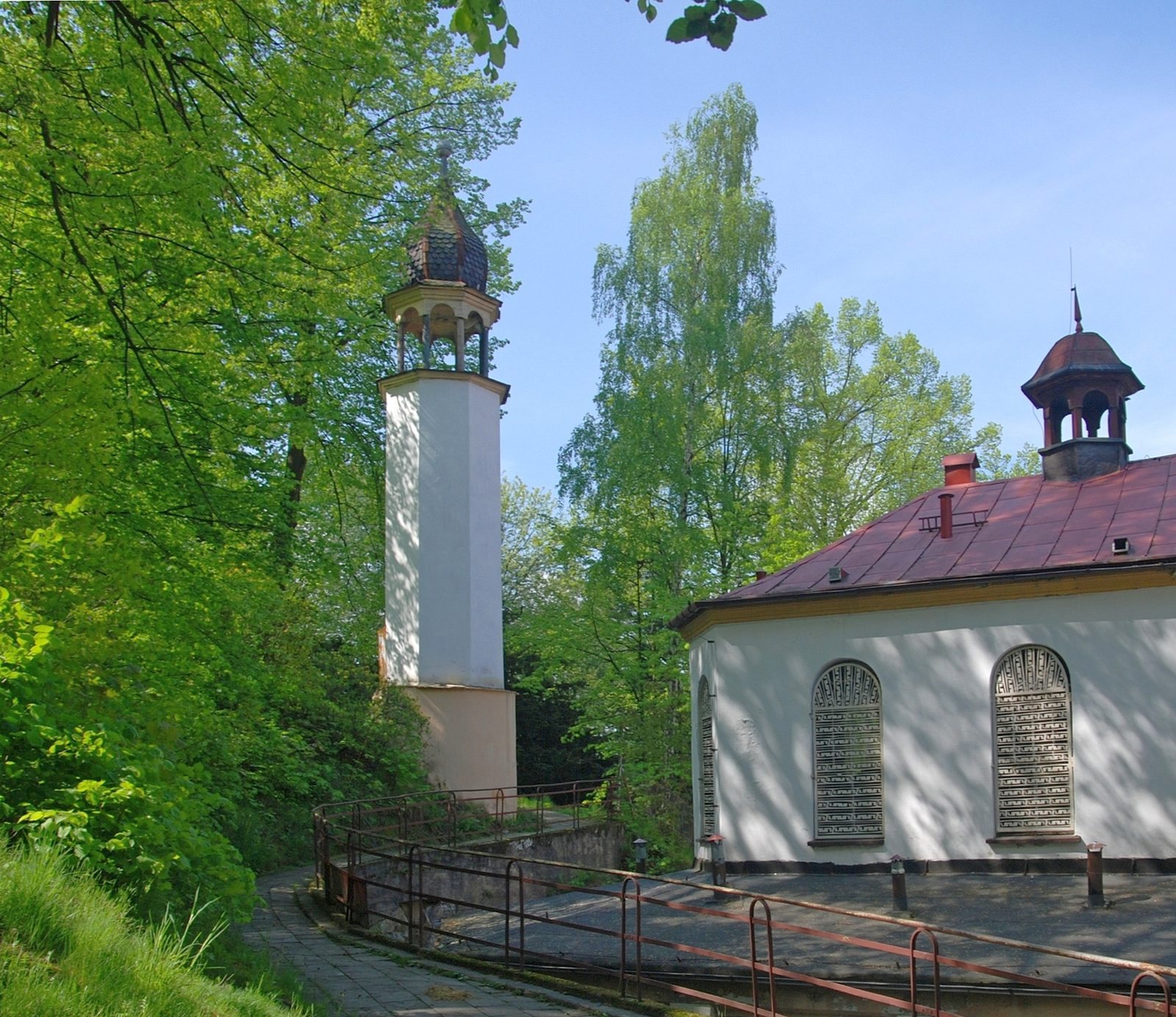
On Saint George Hill in Moniuszko Park, the chapel is a plastered masonry building in the early Baroque style, with an octagonal clock tower standing beside it.
The chapel
Exterior
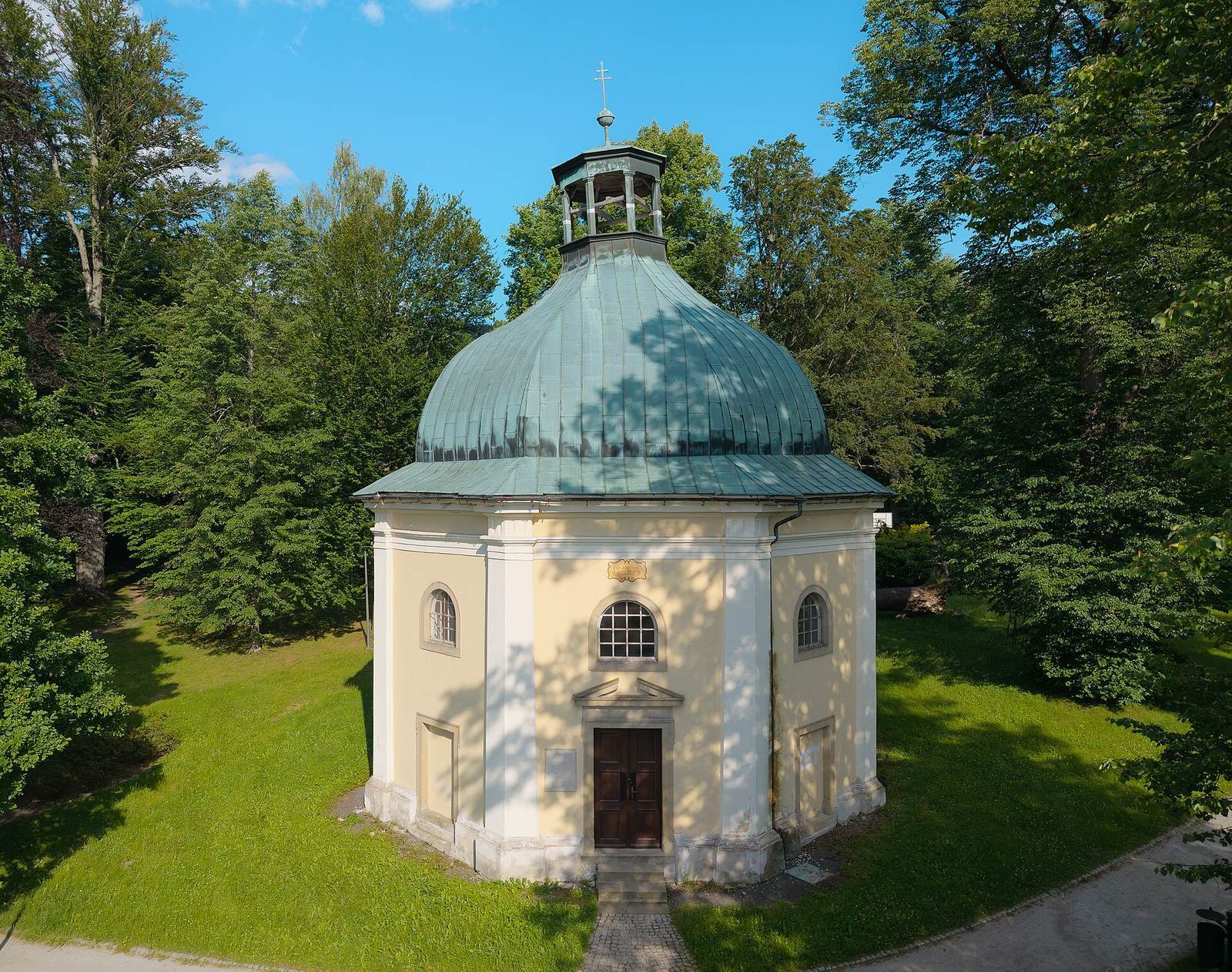
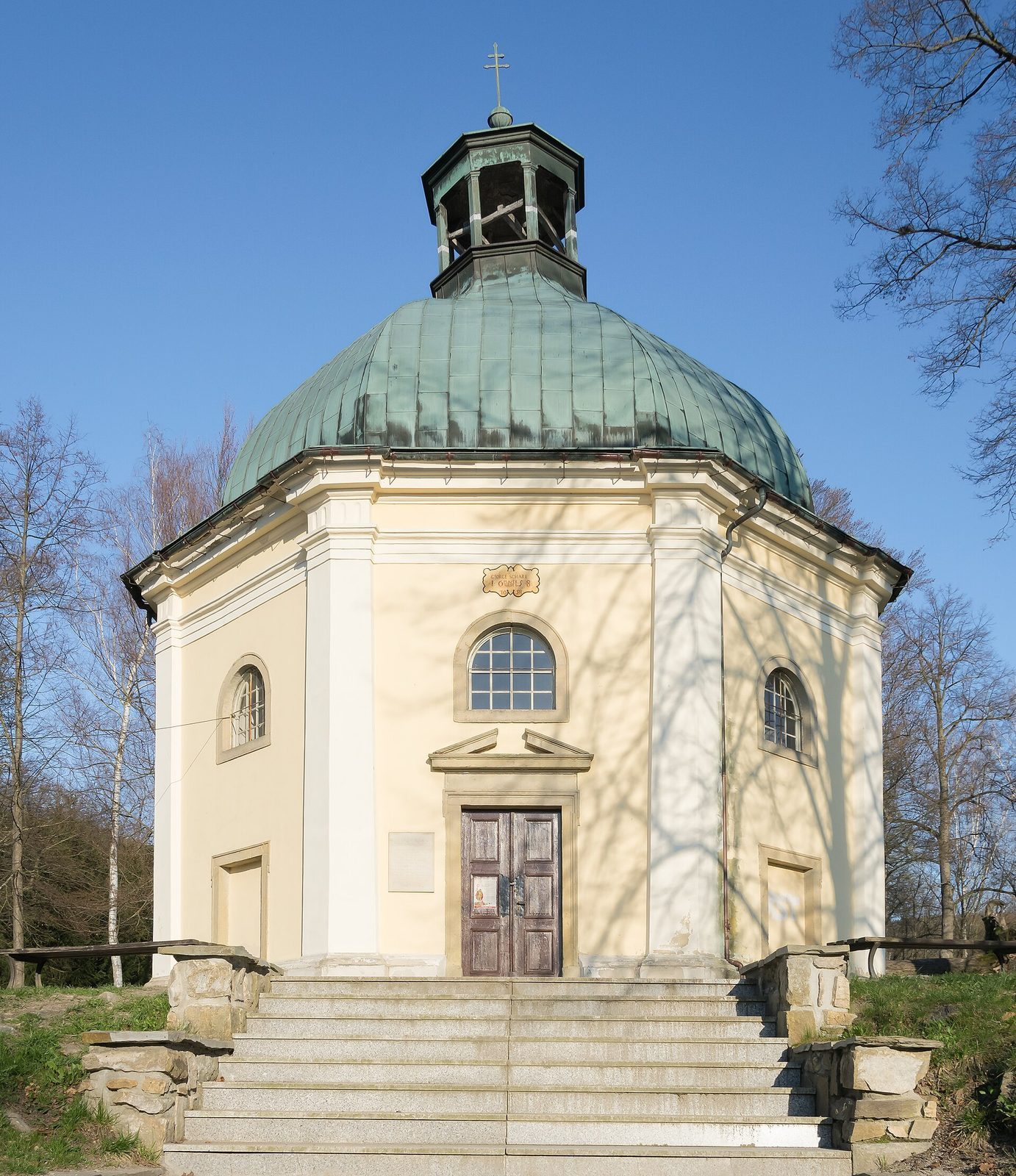
The chapel has an octagonal exterior plan and a circular interior. Its bulbous copper dome is crowned by a lantern, a small structure set atop a roof. Shallow, column-like projections called pilasters divide the outer walls. Above the main entrance, a rectangular panel sits beneath a broken triangular pediment, and an inscription records the chapel’s foundation date.
Interior
Bundles of pilasters divide the circular interior. The dome’s illusionistic, multicolored painted decoration dates to 1720 and creates an impression of depth. It is attributed either to Johann Jacob Eybelwieser, an Austrian-born painter based in Wrocław and a pupil of Michael Willmann, or to J. H. Kynast of Bystrzyca Kłodzka. The central ceiling panel depicts heaven and the Holy Trinity, the Christian belief that God is Father, Son, and Holy Spirit. Four surrounding scenes show episodes from Saint George’s life and death. The main altar dates to 1682.
Clock tower
The octagonal tower beside the chapel resembles a minaret, a tower associated with a mosque and traditionally used for the call to prayer. Built by the municipal authorities in 1580 to house a clock donated to the spa by George II, Duke of Brzeg, it has an openwork gallery and a bulbous roof. Its present clock dates to the nineteenth century, and the tower now serves as the chapel’s bell tower.