Saint Florian Church in Sharhorod: A Baroque Roman Catholic Church
Site at a Glance
- Popularity
- Low
- Country
- Ukraine
- Primary era
- Early Modern
- Eras represented
- Early Modern, Modern
- Civilizations
- Polish–Lithuanian Commonwealth, Russian
- Site type
- Religious
- Remains
- Church
On this page8 sections
History
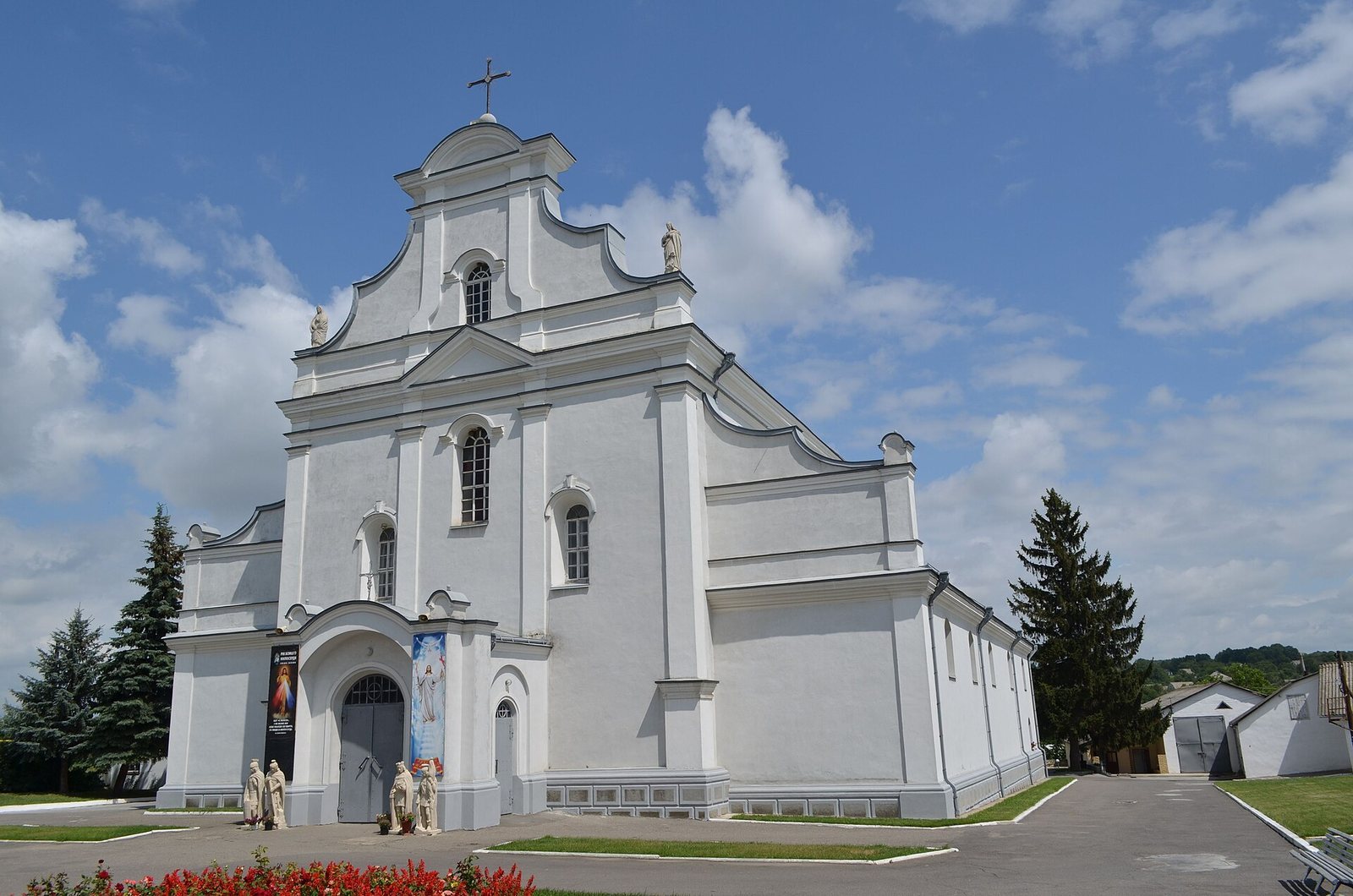
Saint Florian Church in Sharhorod is a Roman Catholic church in Ukraine, built in 1595 in the Baroque style, an ornate European artistic and architectural tradition. Polish magnate and Grand Chancellor of the Crown Jan Zamoyski, a senior official in the Polish Crown’s government, paid for its construction. The church was dedicated to Saint Florian, an early Christian martyr venerated as a saint and the patron of Zamoyski’s family. A fortress was also built in Sharhorod that year.
Damage and rebuilding
The church suffered severe damage in 1648 during the Khmelnytsky Uprising, a major revolt against Polish rule in the Polish-Lithuanian Commonwealth. It was rebuilt in 1717 with minor architectural changes, then rebuilt again in 1899.
Persecution and present status
The church was briefly closed in the 1930s, during intense Bolshevik persecution of religion. In 1937, 300 parishioners were shot. The parish priest, Maksymilian Turovskyi, was also executed, on 8 December 1937 in Medvezhyegorsk.
Saint Florian Church remains active and belongs to the Roman Catholic Church in Ukraine and the Diocese of Kamianets-Podilskyi, a territorial district under a bishop’s authority. Ukraine recognizes it as a monument of national significance for architecture and urban planning.
Remains
Building and courtyard
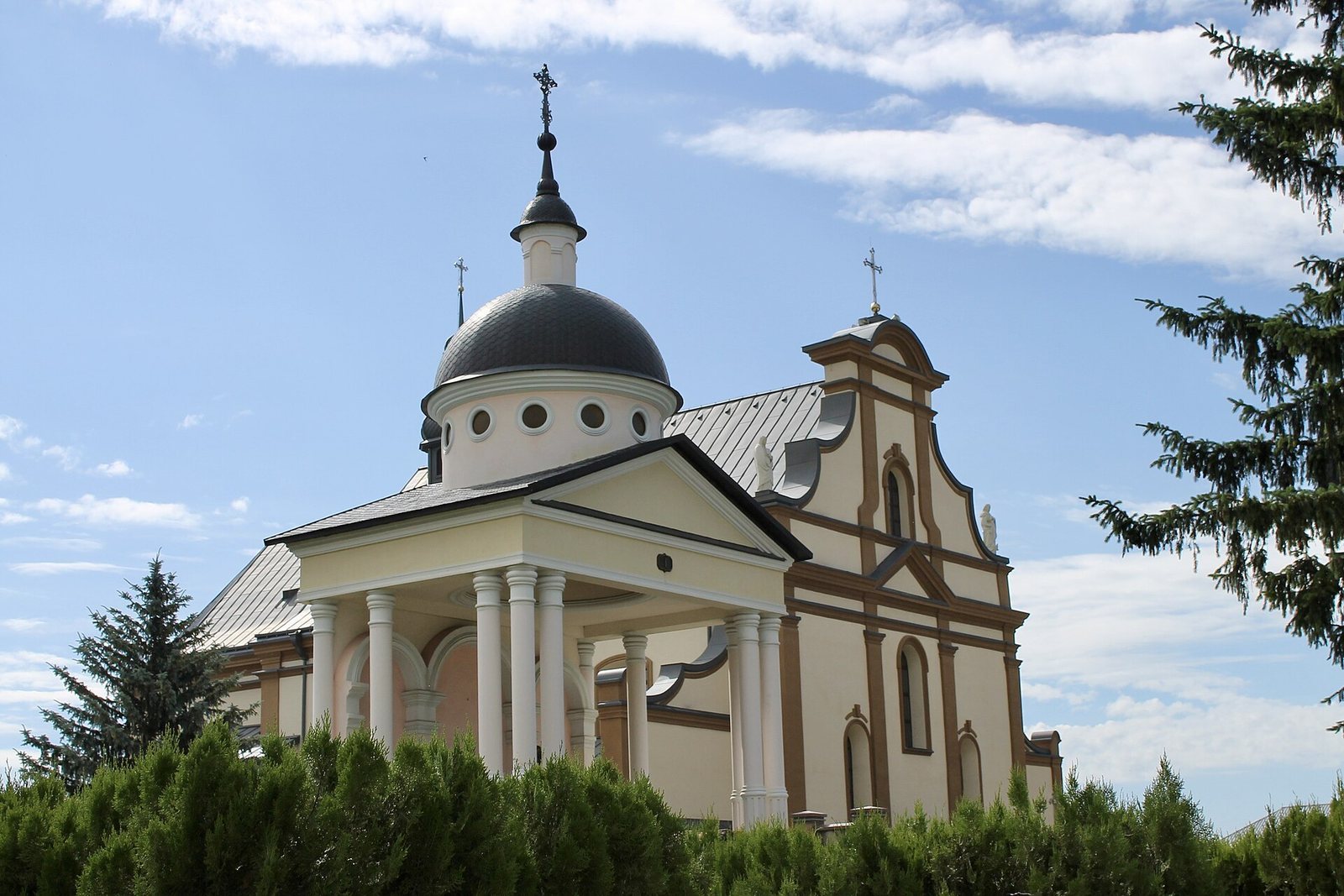
Built of sandstone and stone, the church has a three-nave basilica plan, meaning a long central space with two side aisles, organized around four main supports. Its main facade is crowned by a Baroque pediment. A three-part arched entrance, also topped by a Baroque pediment, leads into the building. In the courtyard, a fountain is decorated with sculptures in a traditional style. An enclosure surrounds the church, and its entrance arch contains a niche with a finely worked sculpture of Saint Florian.
Altars, sculptures, and portrait
The main altar holds a Crucifixion made by Italian masters. The church also contains two wooden sculptures painted in several colors and an eighteenth-century carved pulpit. Fourteen high-relief compositions, sculptures that project strongly from their background, were brought from Poland and installed on pillars and in the side aisles in 1905. Made of tinted alabaster, they depict the Way of the Cross, a devotional sequence representing Jesus’ final journey to his crucifixion. In the sacristy, a room where clergy prepare for services and keep liturgical objects, an old portrait of Zamoyski bears the dates of his life and an inscription calling him the founder of the Sharhorod community in 1585. This inscription gives a date for that claim, distinct from the church’s construction in 1595.
Paintings and organ
Ornamental paintings by A. Tenchynskyi cover the vaulted ceilings and walls in the church’s eastern part. Made between 1895 and 1899 in the decorative grotesque style, they were cleaned in 1963. A fragment of the organ survives in the choir loft, an elevated gallery that can accommodate singers and an organ. Its wind chest, which distributes air to the pipes, retains several sets of pipes and can imitate a working organ to some extent.
Memorials
A plaque inside the church commemorates the 1937 shootings, and another honors Turovskyi as a martyr for his faith.