Călărășeuca Monastery: An Active Orthodox Women’s Monastery in Moldova
Site at a Glance
- Popularity
- Medium
- Country
- Moldova
- Primary era
- Early Modern
- Eras represented
- Early Modern, Modern
- Civilizations
- Ottoman, Principality of Moldavia, Russian
- Site type
- Religious
- Remains
- Monastery
On this page12 sections
History
Călărășeuca Monastery is an active women’s Orthodox monastery in Moldova, on the western bank of the Dniester. Its precise foundation date is unknown, although its establishment is placed in the eighteenth century. Records of a monastic community date to 1648, and a wooden church may have been built in the late sixteenth or early seventeenth century.
Origins and the first stone church
A foundation tradition tells of a hermit monk living in a cave opposite the present site, where he established a small religious community. In 1747, Maria Cantacuzino gave the settlement land from her estate. A charter issued in 1776 by Grigore III Ghica, ruler of the Principality of Moldavia, also placed the community on an estate.
By 1780, the old church could no longer be used. Abbot Marcu Donici, the monastery’s head, built a stone church and bell tower with the blessing of Abraham, the Patriarch of Jerusalem, a senior bishop who heads a major church jurisdiction. The church was consecrated in 1782 on the Feast of the Dormition, which commemorates the death and assumption of the Virgin Mary. Donici was appointed administrator and abbot for life. The settlement and its estate were subordinate to Saint Sava Monastery in Iași, which itself answered to the Monastery of the Holy Sepulchre in Jerusalem.
Russian administration and nineteenth-century change
After Donici died in 1809, Saint Sava sent the monk Lazar to lead the community. He was required to pay the monastery an annual tribute of 100 lei. Bessarabia became part of the Russian Empire in 1812, and the settlement was raised to the status of a monastery the following year. It came under the Diocese of Chișinău, the regional church authority, but remained economically dependent on Saint Sava for a time. Its lands began to be leased, with 300 desyatinas, a traditional Russian unit of land measurement whose value varied by period and use, reserved for the monastery.
In 1814, the church administration in Chișinău required monks to obtain the abbot’s written permission before leaving. Officials were ordered to detain monks who broke the rule and return them to their superiors. Monks serving punishment at Călărășeuca sometimes escaped. On 31 January 1819, Lazar was removed as abbot and replaced by Onisifor, who had led Cosăuți Monastery.
During the nineteenth century, the confiscation of Moldavian monasteries west of the Prut under Alexandru Ioan Cuza contributed to monks moving east and increased attendance at monasteries in the Russian sphere, including Călărășeuca. Construction of a second stone church began in 1853, with assistance from Major General Nikolai Mitrofanovich Cherkez and his family, and financial support from Princess Elena Mikhailovna Cantacuzino, who also gave land to the monastery. Dedicated to Saint Mitrofan of Voronezh, a Russian Orthodox bishop and saint, the church was consecrated on 6 December 1853. Its construction was completed under Abbot Ion in 1911.
Property administration remained contested. On 9 March 1873, Alexander II approved transferring Bessarabian estates belonging to monasteries beyond the Prut to Russian state administration. An act of 7 July included estates associated with the Monastery of the Holy Sepulchre. Călărășeuca’s land was listed separately, and the Holy Sepulchre monastery disputed its ownership. The matter went before the Governing Senate.
From a men’s monastery to a women’s community
Călărășeuca remained a men’s monastery until 1916. During the First World War, its monks were transferred to Dobrușa Monastery, while nuns who had fled Virov Monastery in Poland arrived under Abbess Ambrosia, the community’s head. Ambrosia returned to Russia on 19 October 1918. A church decree of 7 November that year established communal life for the sisters under the difficult conditions of the period.
Nonna became the first abbess after the nuns arrived, followed by Iraida and others. Taisia took the position on 1 October 1919, during a period of growth in both the monastery and its community, which reached 120 sisters. In 1919, the monastery held 50 hectares of farmland, 40 hectares of forest, and 3 hectares of vineyards and gardens.
In his 1943 monograph on Soroca, Nikolai Constantinescu wrote that Soviet authorities had expelled the nuns in 1940 and that Abbess Akilina Popova had been thrown into the Dniester at night and killed. The nuns gradually returned, and by 1943 the community numbered about 100. The monastery then had 50 hectares of land, 31 hectares of gardens and vineyards, an oil mill, and a water mill. Records of the community dating to 1648 were destroyed during the Soviet advance in 1944.
Closure and revival
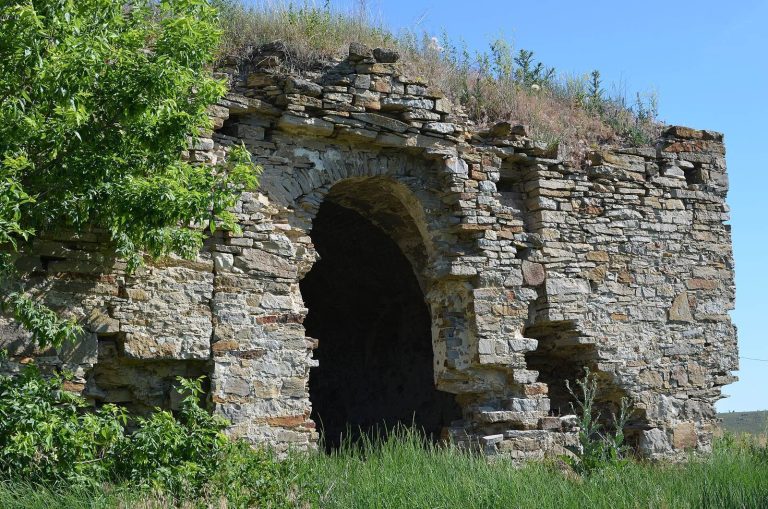
The monastery closed on 8 June 1961. Its icon screen was destroyed and its icons confiscated. The buildings were put to other uses, first as a tuberculosis dispensary and later as an institution for children with intellectual disabilities. The winter church became a club, while the summer church was used to store hospital supplies. The buildings eventually stood unused.
The monastery reopened on 3 May 1991. Former residents Emilia and Feodosia, along with Serafima, a schema-nun who had taken the solemn vows of the Great Schema, were among its first novices. Archimandrite Irinei, a senior monastic title in Eastern Orthodox churches, was assigned there on 28 November 1991. Maria became abbess on 15 December 1998, when 12 sisters lived at the monastery. On 22 March 1999, Abbess Efrosinia and several sisters transferred from Căușeni, bringing the community to 30. Efrosinia died on 20 February 2023. The monastery is affiliated with the Moldavian Metropolis of the Russian Orthodox Church and the Diocese of Edineț and Briceni.
Restoration of the Saint Mitrofan church was completed in autumn 1999. The smaller church was replastered in 2006.
Remains
Setting and layout
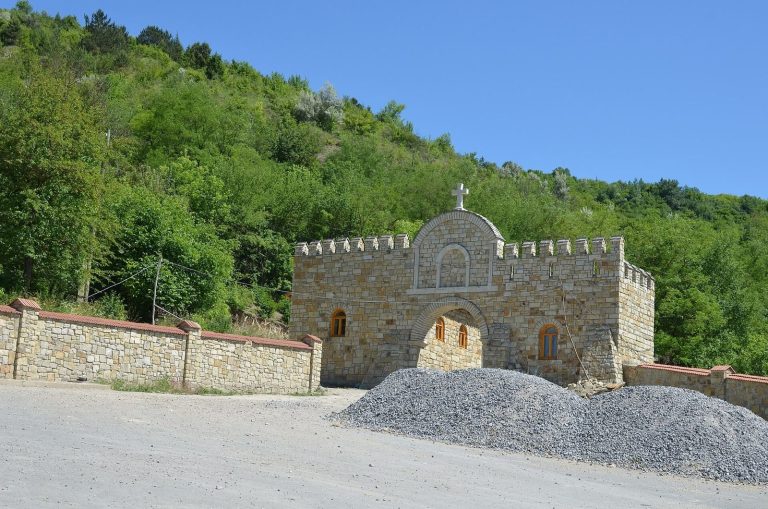
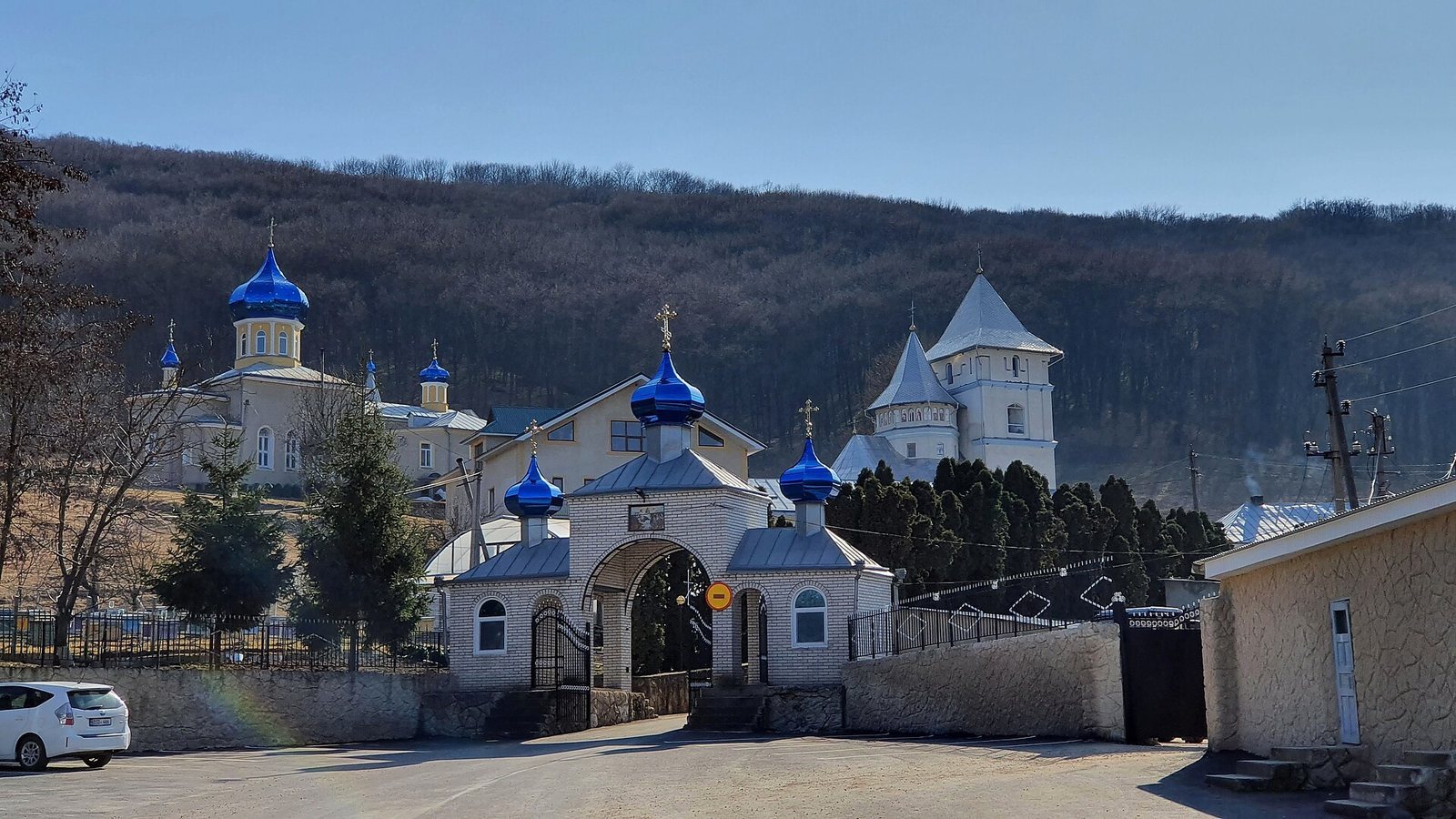
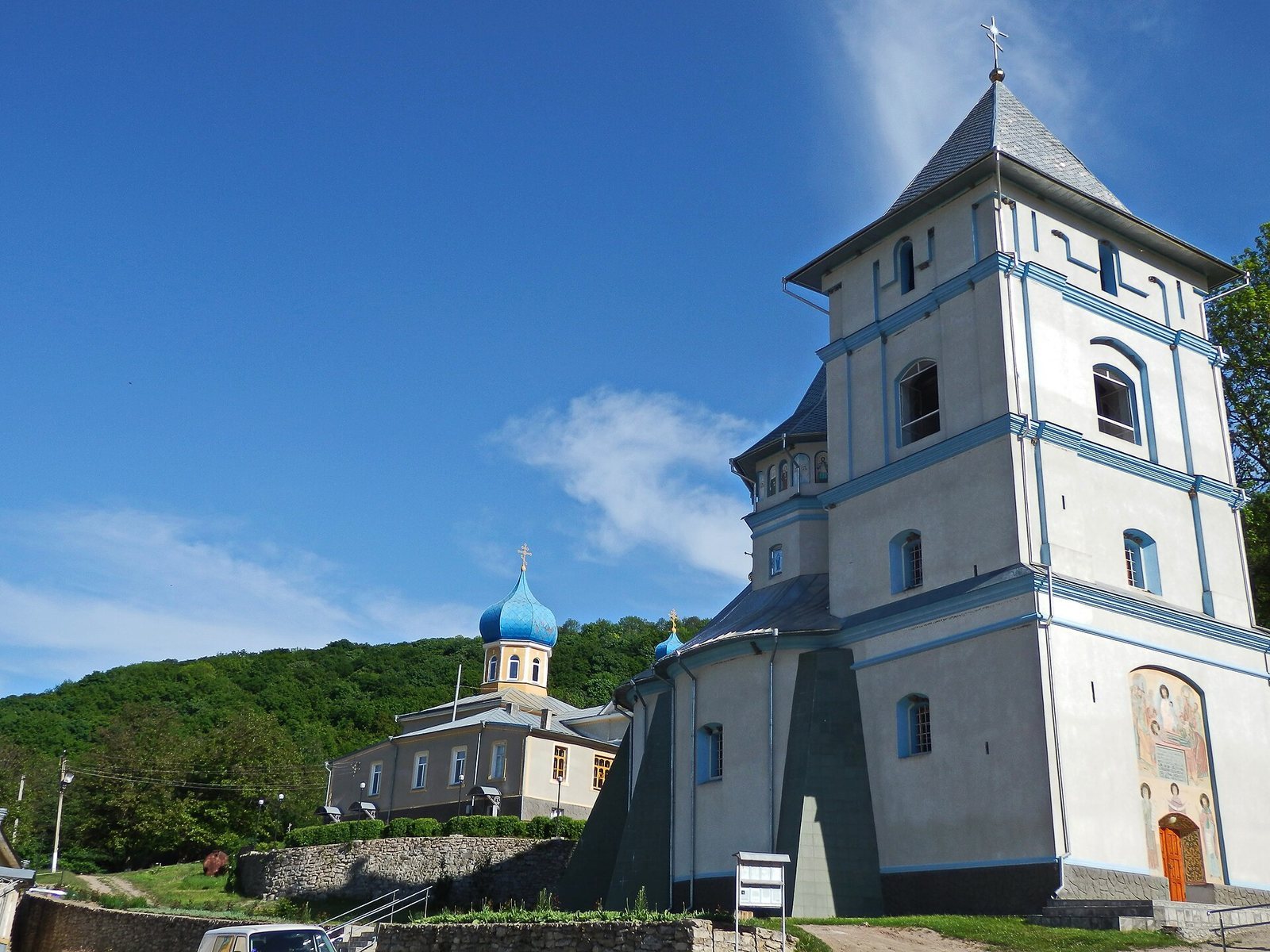
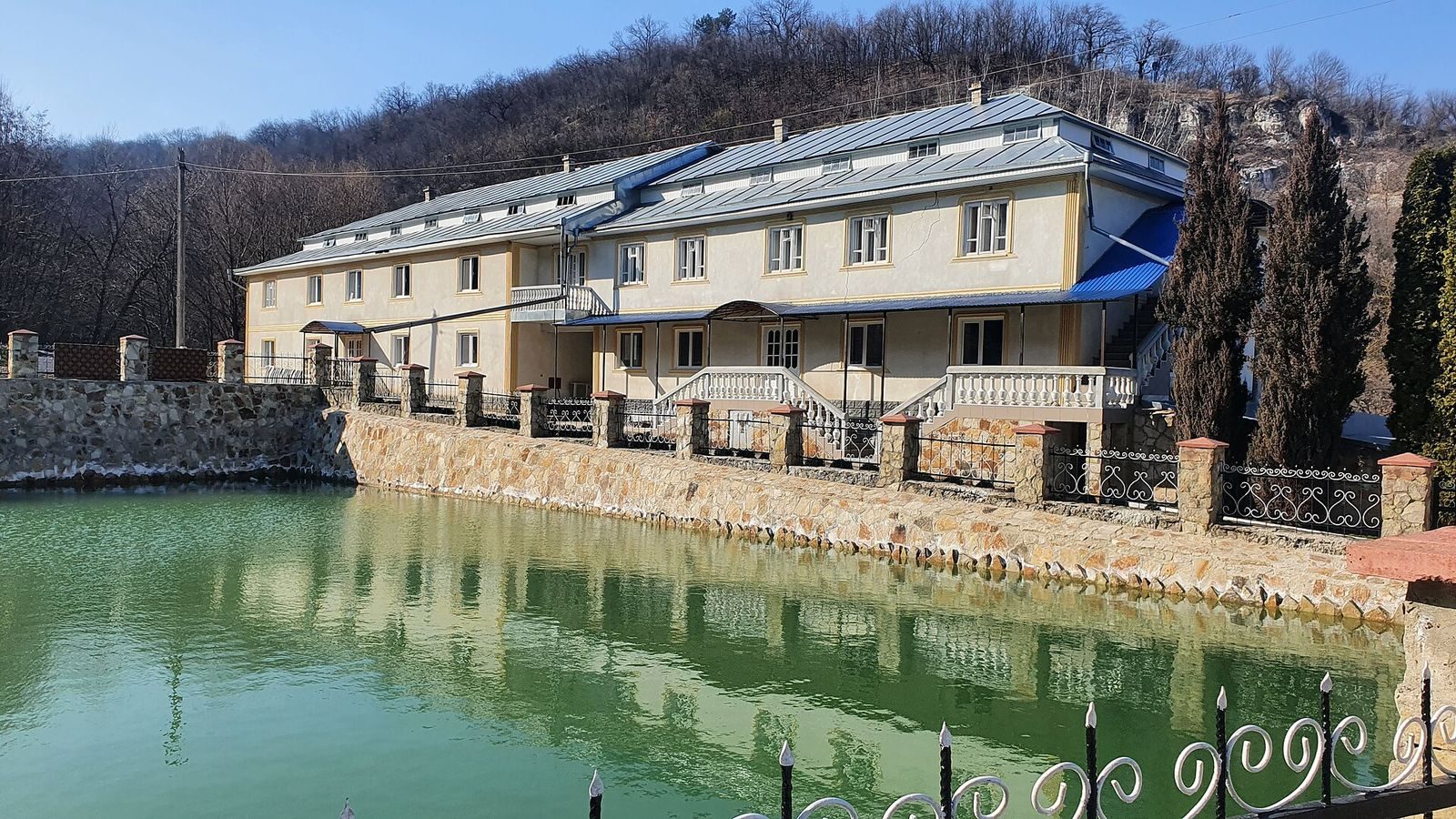
The monastery occupies a small hollow beside the Dniester, with steep, densely wooded hills rising about 200 metres around it, except where the land opens toward the river plain. The riverside flat is no more than about 150 metres wide, and the surrounding woods contain many conifers. The two churches stand in the upper part of the complex. A large basin fed by three springs lies at its centre.
Churches
Dormition Church
The Dormition church follows the traditions of ancient Moldavian architecture. It is one of the two churches in the upper section of the monastery complex.
Church of Saint Mitrofan of Voronezh
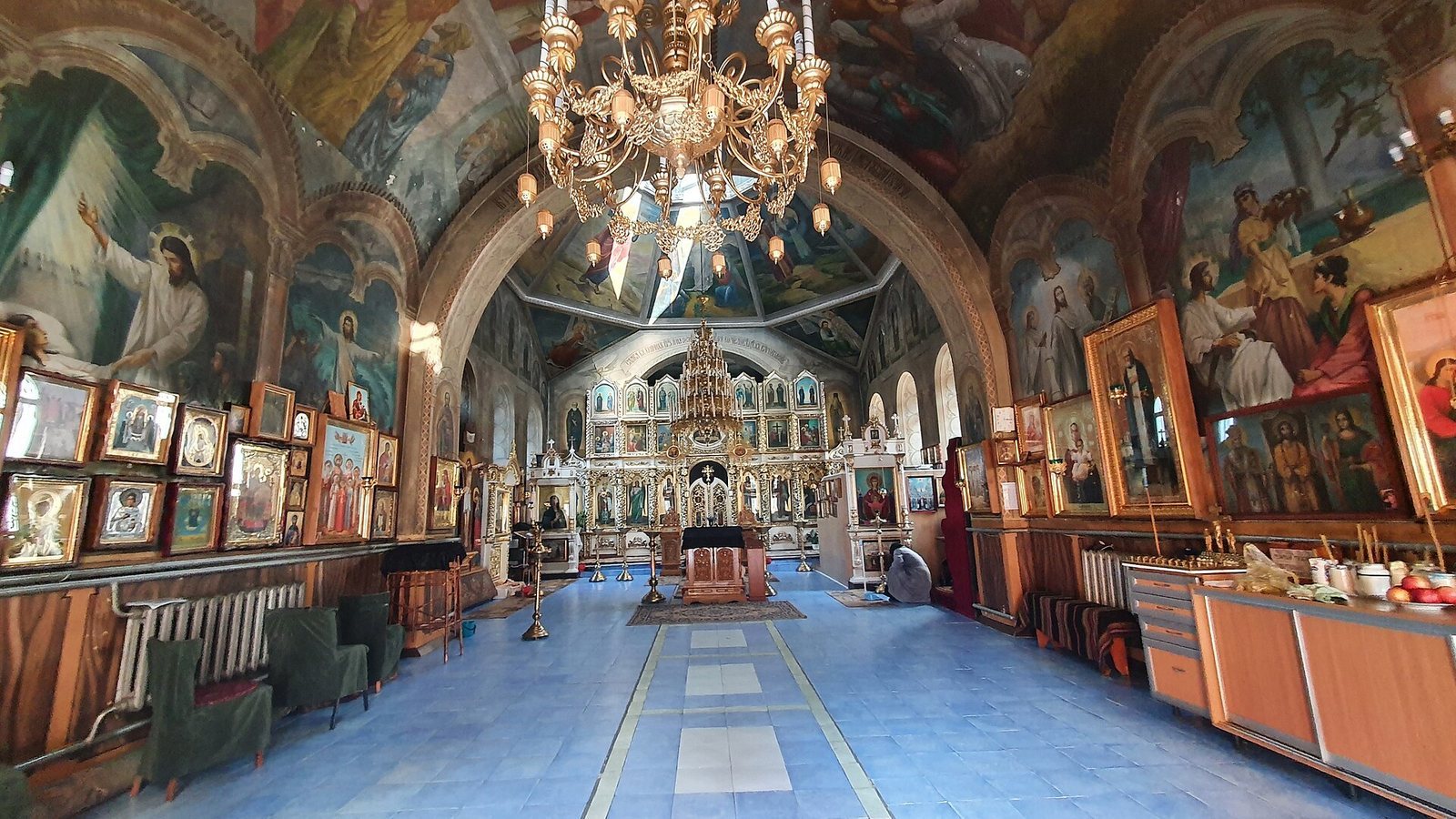
The second church is dedicated to Saint Mitrofan of Voronezh. Pavel Gutsu of Briceni painted the restored church, and Leonid Romadin made its iconostasis, an icon screen within the church.
Cave and spring basin
A cave is set into the rock face above the monastery, with a cross in front of it. A tradition about the foundation places a hermit monk in a cave opposite the present site. Nearby villagers regard the water from the three springs that feed the central basin as medicinal.
Monastic and agricultural buildings
The complex also includes a refectory, monastic cells, a house church, a library, a bishop’s residence, the abbess’s quarters, an apiary, and agricultural outbuildings. Tractors and farm buildings are associated with the cultivation of grain fields around the monastery.