Saint Catherine of Alexandria Church in Łasin: A Gothic Parish Church
Site at a Glance
- Popularity
- Low
- Country
- Poland
- Primary era
- Medieval
- Eras represented
- Medieval, Early Modern, Modern
- Civilizations
- Kingdom of Poland, Polish–Lithuanian Commonwealth, Teutonic Order
- Site type
- Religious
- Remains
- Church
On this page7 sections
History
Medieval origins and enlargement
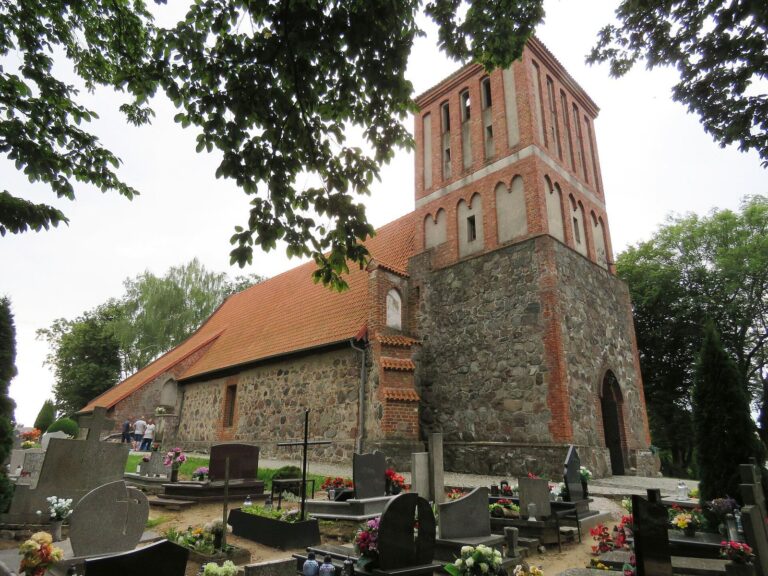
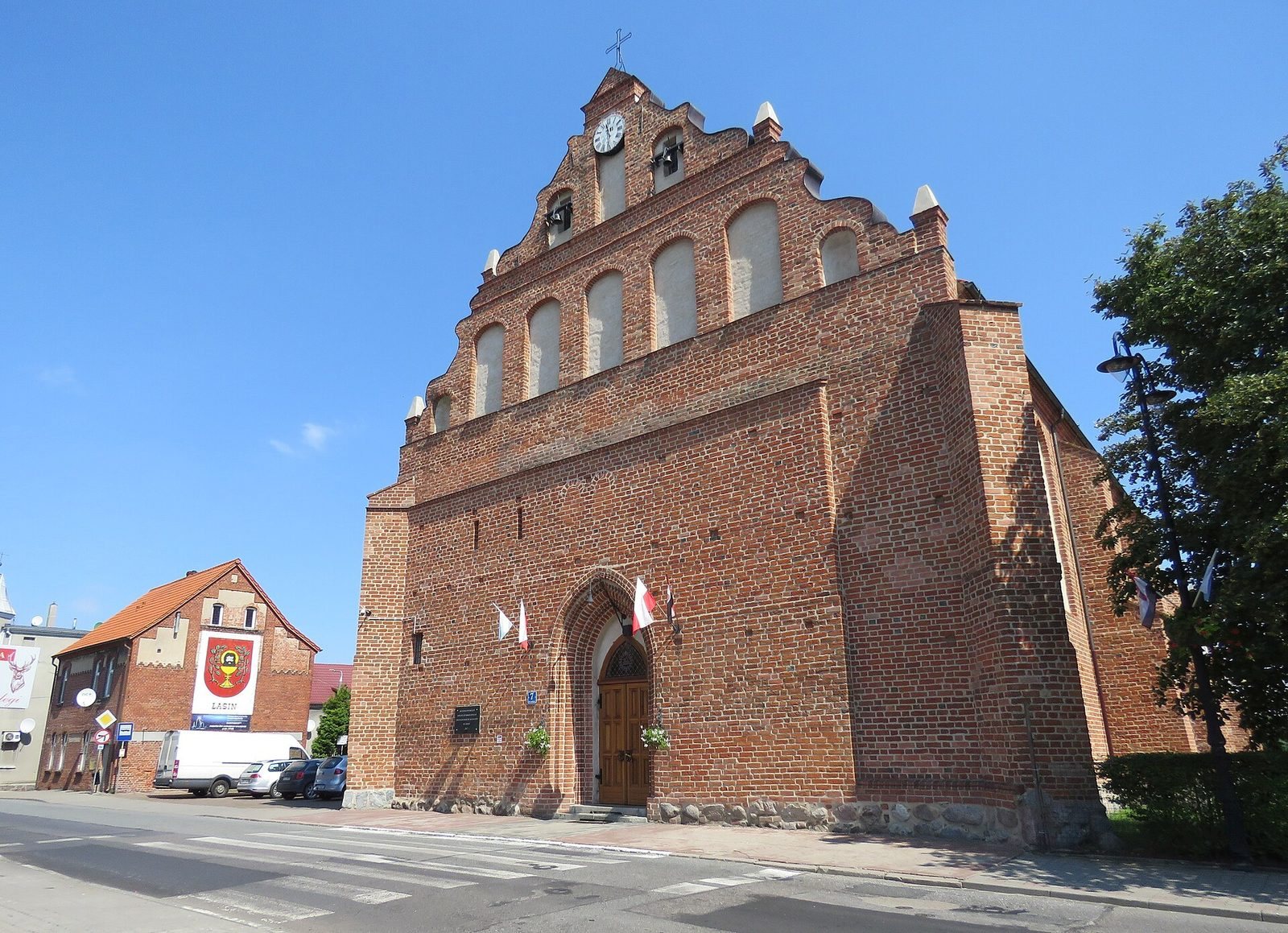
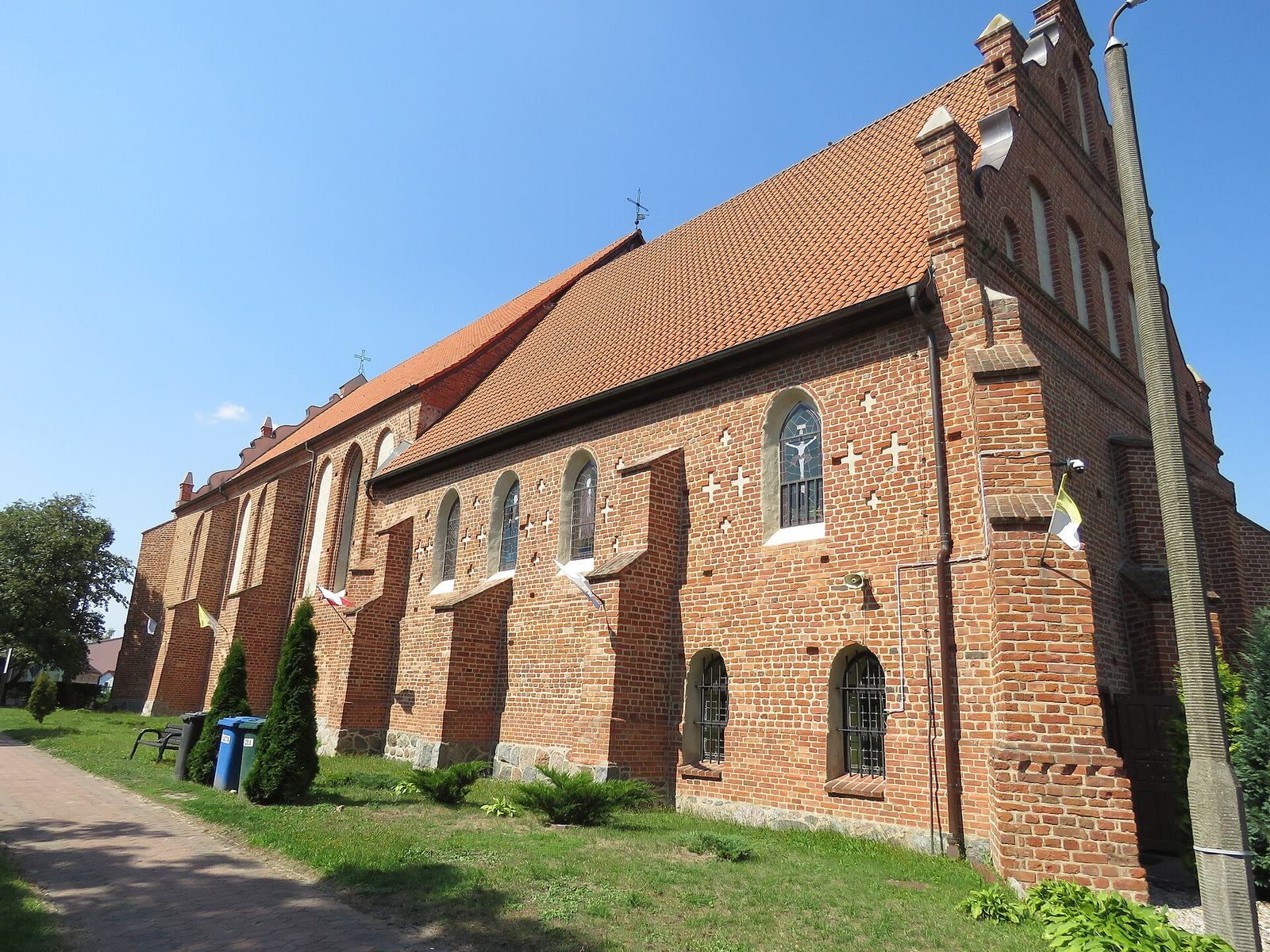
Saint Catherine of Alexandria Church in Łasin is a Gothic brick Roman Catholic parish church in Poland, erected between 1320 and 1328 on the site of an earlier wooden church. The wooden building had been constructed shortly after the town’s foundation and was standing before 1298. The church was dedicated to Catherine of Alexandria, traditionally revered as an early Christian martyr, although her historical existence is uncertain.
The church was enlarged in 1568. About two decades later, Bishop Piotr Kostka of Chełmno added Saint John the Baptist to its dedication alongside Catherine. John the Baptist was a Jewish preacher and prophet revered in Christianity. The church serves as a parish church within the Łasin deanery, a grouping of parishes within a diocese.
Destruction and rebuilding
In 1628, during the Thirty Years’ War, a major European conflict fought from 1618 to 1648, Swedish troops burned Łasin and its church. The nave’s walls were the only parts left standing. The presbytery was rebuilt several years later, but restoration of the church as a whole was not completed until 1710–1719. A separate fire in 1719 was followed by the addition of a small choir gallery.
Remains
Plan and exterior
The three-aisled brick church stands in the town’s southern part, beside the gate known as the South Gate, where it bordered the town walls. Its overall silhouette has remained unchanged since the rebuilding completed in 1710–1719.
Altars, presbytery, and chapel
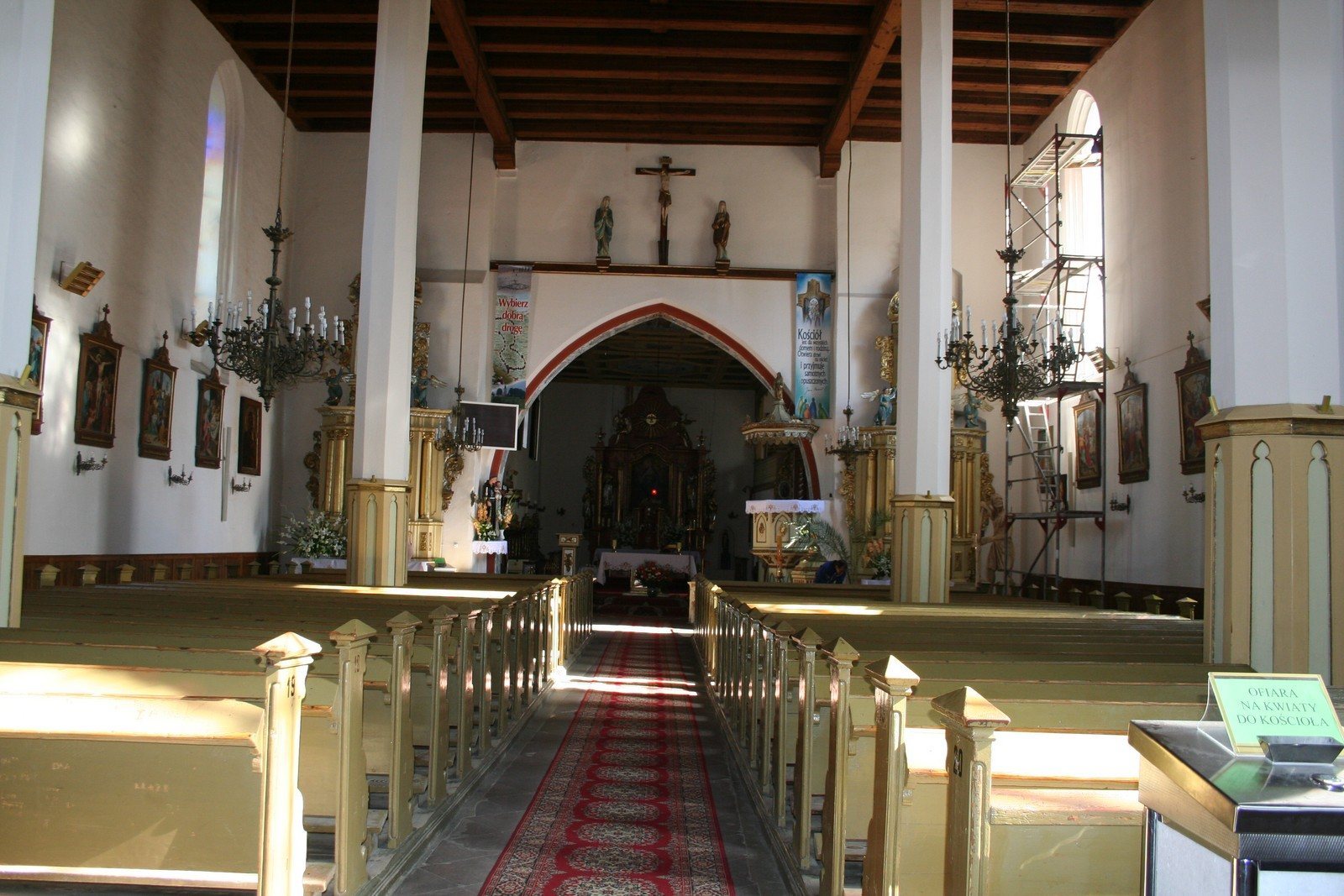
The Baroque main altar, made in the first half of the eighteenth century, features a painting of Saint Catherine with the sword and wheel associated with her martyrdom. Carved figures of the apostles Peter and Paul, leading figures in early Christianity, flank the painting. Two Baroque side altars in the nave date from the late seventeenth or early eighteenth century. A chancel arch, which marks the division between the presbytery and nave, and a balustrade separate the presbytery from the main body of the church.
The presbytery contains a chapel of the Holy Rosary with a painting of the Virgin and Child in the type known as Our Lady of the Snows, a title used in Catholic devotion to the Virgin Mary. The painting was probably made between 1620 and 1640. Choir stalls from the early eighteenth century are also preserved in the church.
Choir and other furnishings
A wooden choir gallery spans the church’s full width and holds an organ from the first half of the nineteenth century. The interior also includes a small choir gallery and a historic baptismal font near the entrance to the sacristy. A pulpit combining Neoclassical and Gothic Revival styles stands to the right of the presbytery. Made in the mid-nineteenth century, it was brought from a Protestant church.