Rumpenheim Castle: A Princely Residence on the Main River
Site at a Glance
- Popularity
- High
- Country
- Germany
- Primary era
- Early Modern
- Eras represented
- Early Modern, Modern
- Civilizations
- Holy Roman Empire
- Site type
- Domestic
- Remains
- Castle
On this page9 sections
History
Rumpenheim Castle is a three-wing complex on the Main River in Offenbach, Germany. It began as a manor house built by Johann Georg Seifert von Edelsheim from 1678. The estate later became a country residence for the princes of Hesse-Kassel and a setting for European royal affairs.
From Hanau estate to princely residence
In 1674, Seifert von Edelsheim, a senior official responsible for the finances of the County of Hanau, received the Rumpenheim estate and village as a fief, land held from a ruler in return for service. The grant came from Count Friedrich Casimir of Hanau in recognition of his work on the county’s finances.
After the death of the last Count of Hanau, Johann Reinhard III, in 1736, Hanau-Münzenberg and Rumpenheim passed to Hesse-Kassel, a territory ruled by a landgrave. In 1768, the Edelsheim family sold the fief and manor to Prince Charles of Hesse-Kassel for 140,000 gulden, a currency then used in German-speaking territories. Charles enlarged the house in 1771 as a country residence for a prince. His mother, Maria, used and furnished it until her death in 1772. At the end of 1781, Charles sold the property to his brother Frederick, who expanded it into a three-wing complex in 1787–1788. He also redesigned the park, with work continuing until 1839.
Royal connections and changing ownership
In 1863, Prince Wilhelm of Schleswig-Holstein-Glücksburg accepted the Greek crown at Rumpenheim. He later ruled as George I of Greece. During the nineteenth century, the castle also hosted European royal visitors, including Austrian Emperor Franz Joseph, Russian Tsar Alexander III, and Danish kings Frederick VII and Christian IX. Princess Mary Adelaide of Cambridge visited with her family, including Mary of Teck, later Queen Mary. Princess Louise of Hesse-Kassel came with Christian IX and their children, among them the future George I and Alexandra, later Queen Alexandra. Another royal gathering included Augusta, Duchess of Cambridge, Albert Edward, Prince of Wales, later Edward VII, and Princess Alexandra of Wales.
After Prussia annexed Hesse-Kassel in 1866, following the Austro-Prussian War, the castle became private property of the Hesse-Kassel family descended from Prince Frederick. After a postwar settlement, that branch moved to Schloss Philippsruhe. Rumpenheim stood empty for periods during the 1880s and was used only intermittently thereafter. In 1902, the family’s residence shifted to Friedrichshof, which had entered the family through Empress Victoria’s inheritance. The move was associated with the marriage of Prince Frederick Charles to Princess Margaret of Prussia.
Decline, wartime damage, and restoration
The castle library was transferred to Schloss Fasanerie around 1922. After the First World War, the property became part of the Kurhessian House Foundation, the forerunner of the Hessian House Foundation. Bombing in 1943 damaged the central block and fire consumed its roof structure. Refugees lived in the castle after the war, but poor upkeep, exposure to weather, and arson caused further damage. The city of Offenbach acquired the castle and park in 1965.
A 1973 competition proposed demolishing the ruin and constructing a high-rise beside the river, but a citizens’ initiative stopped the plan. Stabilization work began in the 1980s. Restoration returned the castle’s exterior to its historic appearance by 2002.
Remains
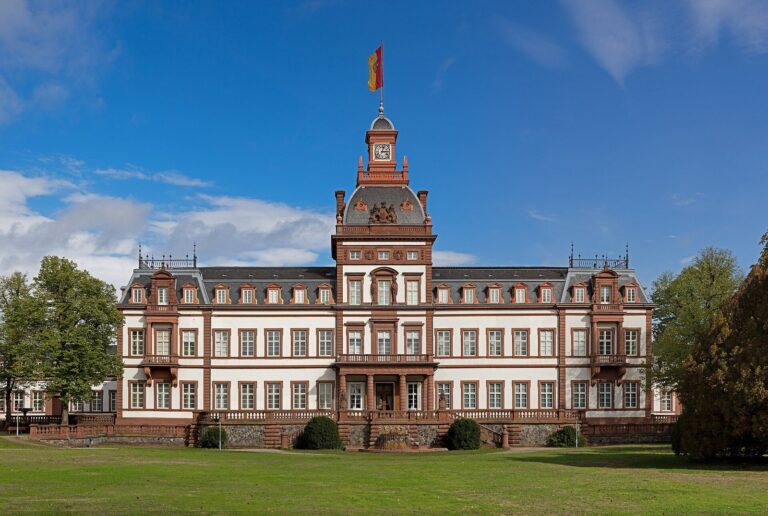
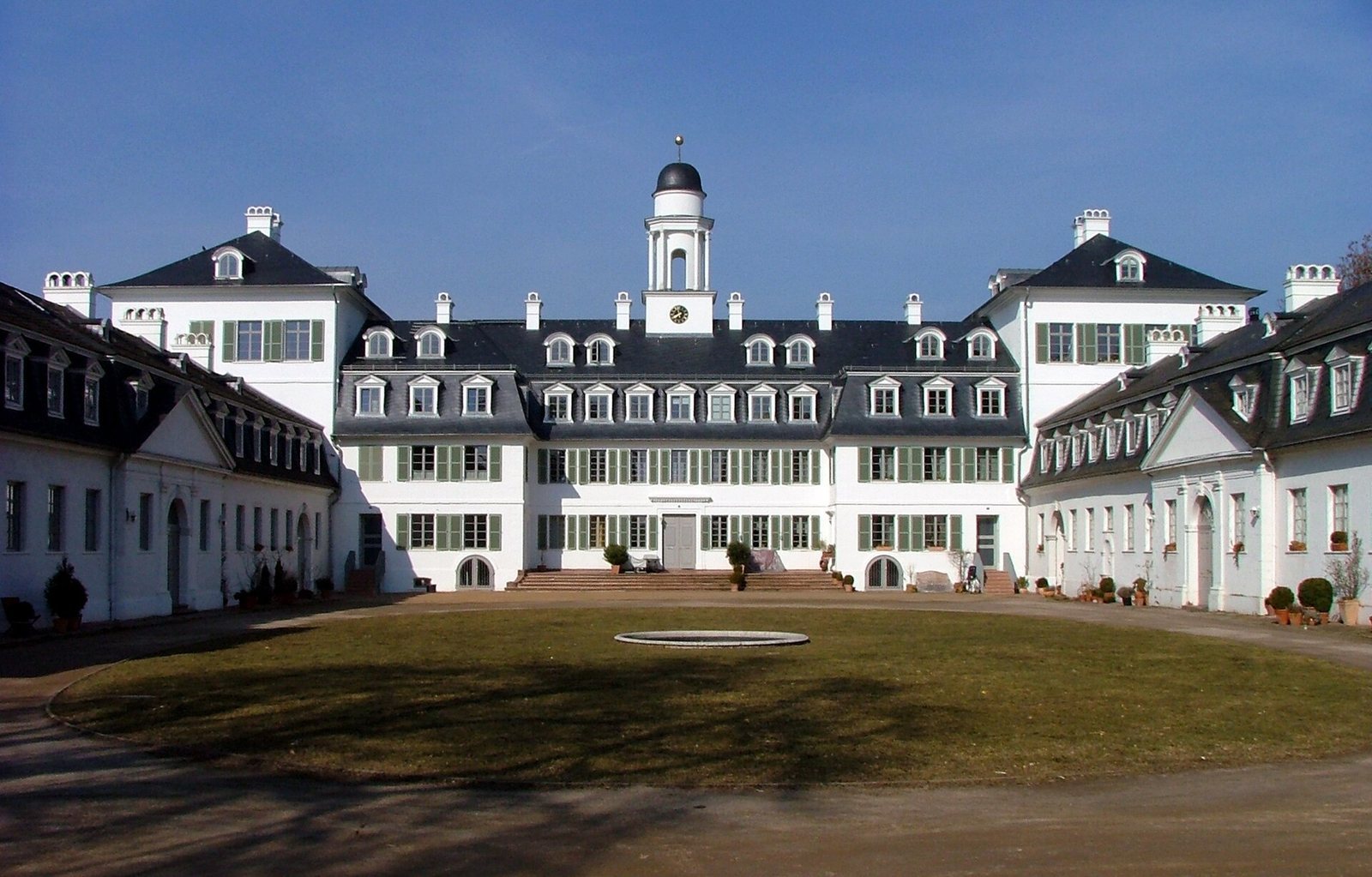
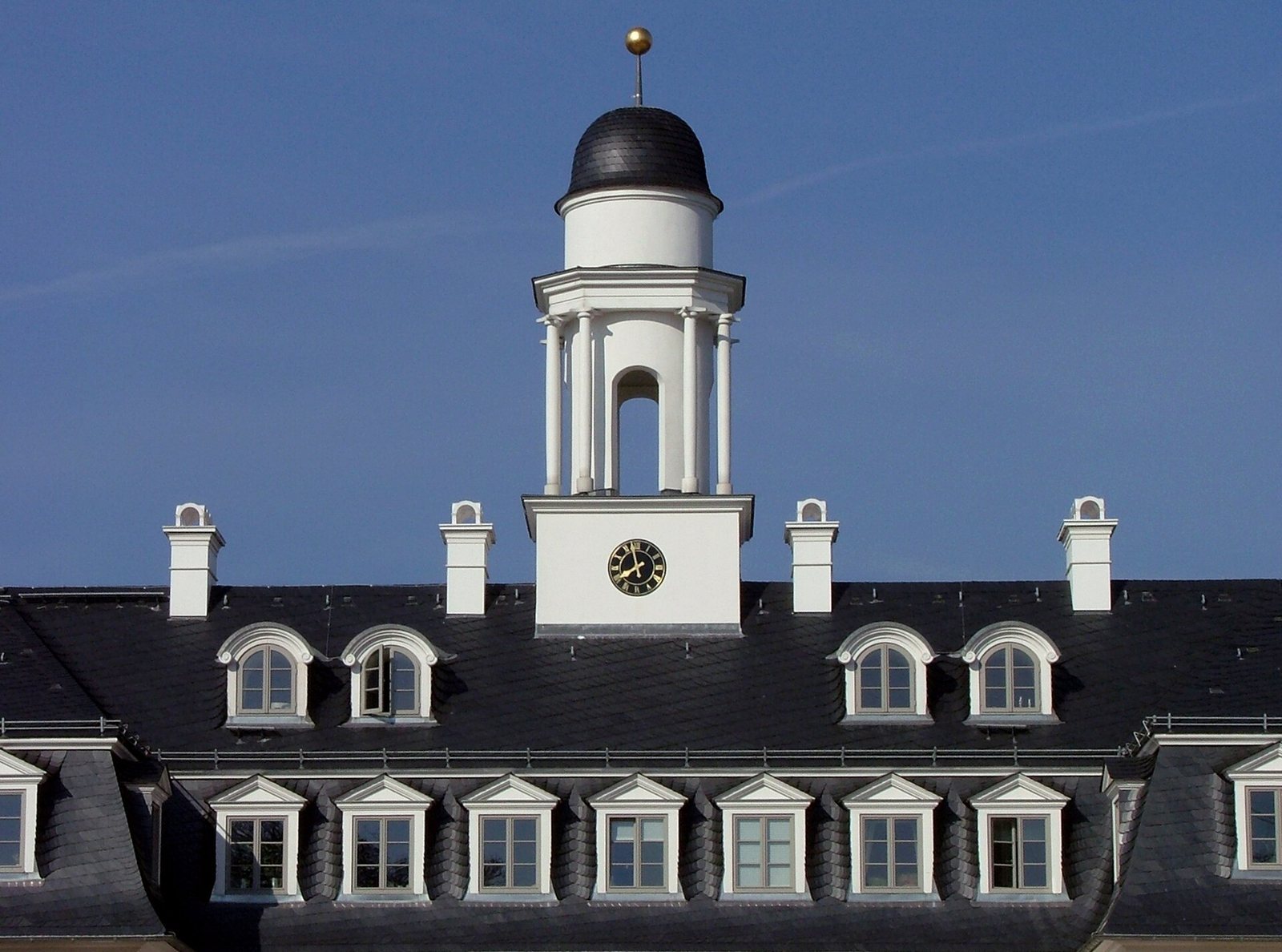
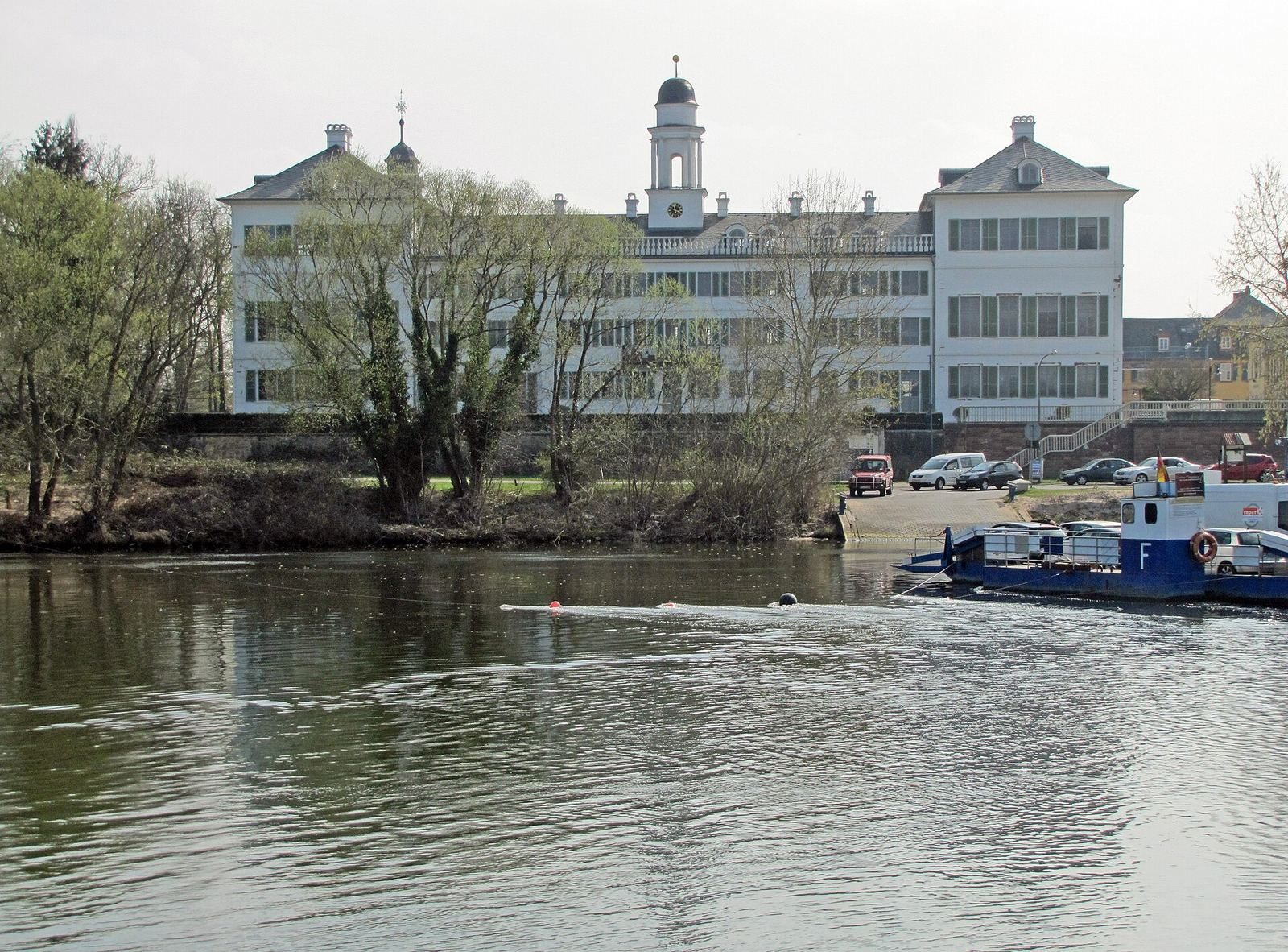
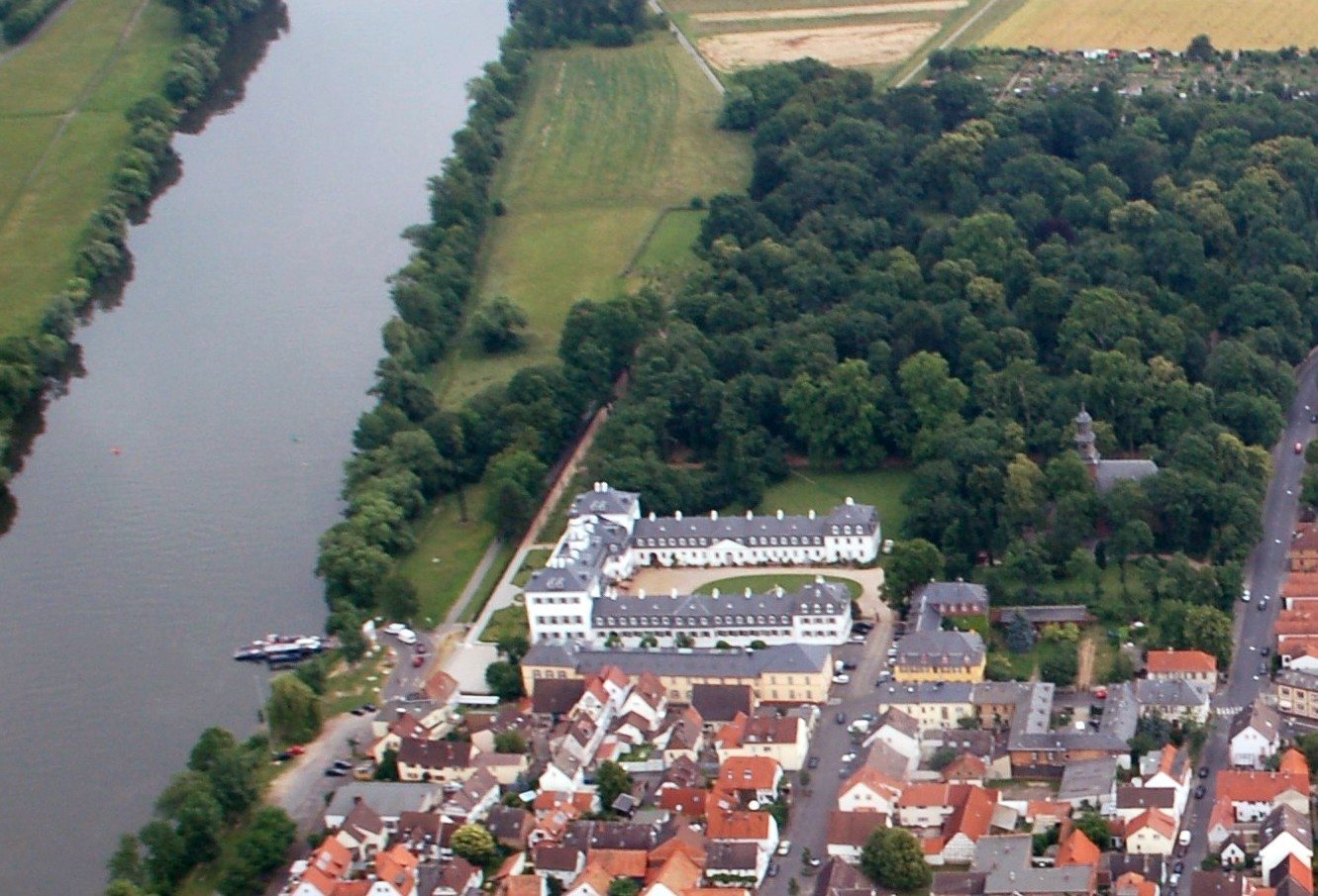
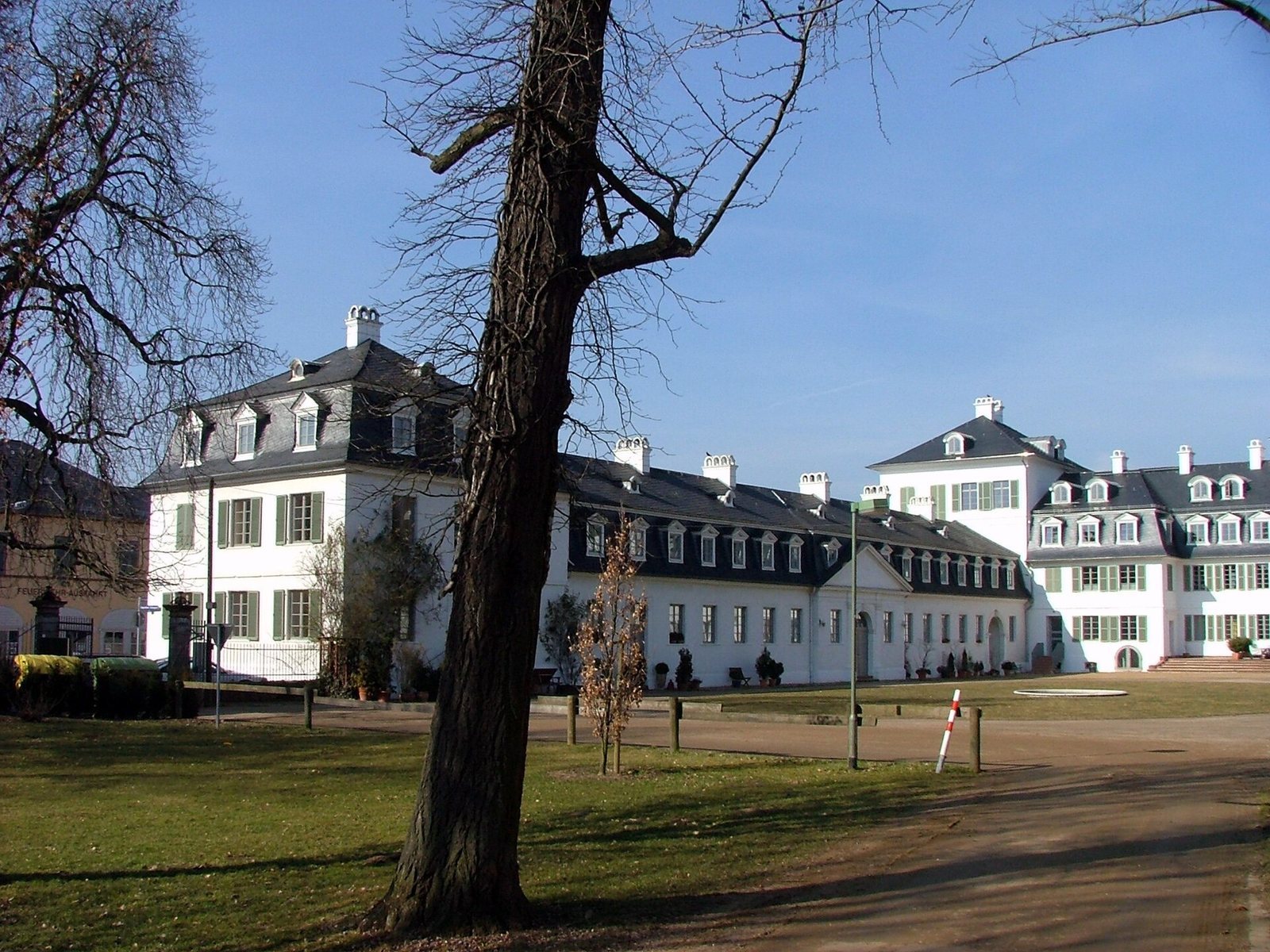
The white-painted, slate-roofed castle is arranged in three wings beside the Main River, with an adjoining park. Its main block runs parallel to the river, while two wings extend at right angles from its river-opposite side to enclose a formal courtyard.
The castle complex
Main block
The central block corresponds approximately to Seifert von Edelsheim’s manor house. In its original form, it had three storeys and another level beneath the roof. Two flanking towers rose one storey higher than the main block. The structure is generally preserved, and its exterior has regained its historic appearance.
Courtyard wings and pavilions
Each of the two parallel courtyard wings had one storey and an additional level beneath the roof. A pavilion, with two storeys and a further level beneath the roof, stood at the outer end of each wing. Two more pavilions were added on the river-facing side in the early nineteenth century. The castle’s interiors, once richly furnished with antique furniture, now contain modern upscale apartments.
Park and service buildings
The park developed on land Seifert von Edelsheim acquired around the manor house. Later service buildings included a stable, built in 1840, and accommodation for servants added in the middle of the nineteenth century.