Ruïnekerk, Bergen: A Partly Rebuilt Church in the Netherlands
Site at a Glance
- Popularity
- Medium
- Country
- Netherlands
- Primary era
- Medieval
- Eras represented
- Medieval, Early Modern, Modern
- Civilizations
- Dutch, Holy Roman Empire
- Site type
- Religious
- Remains
- Church
On this page12 sections
History
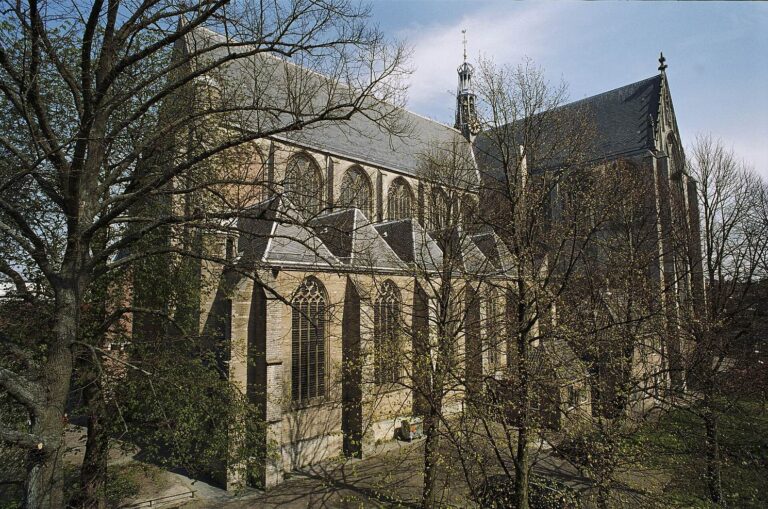
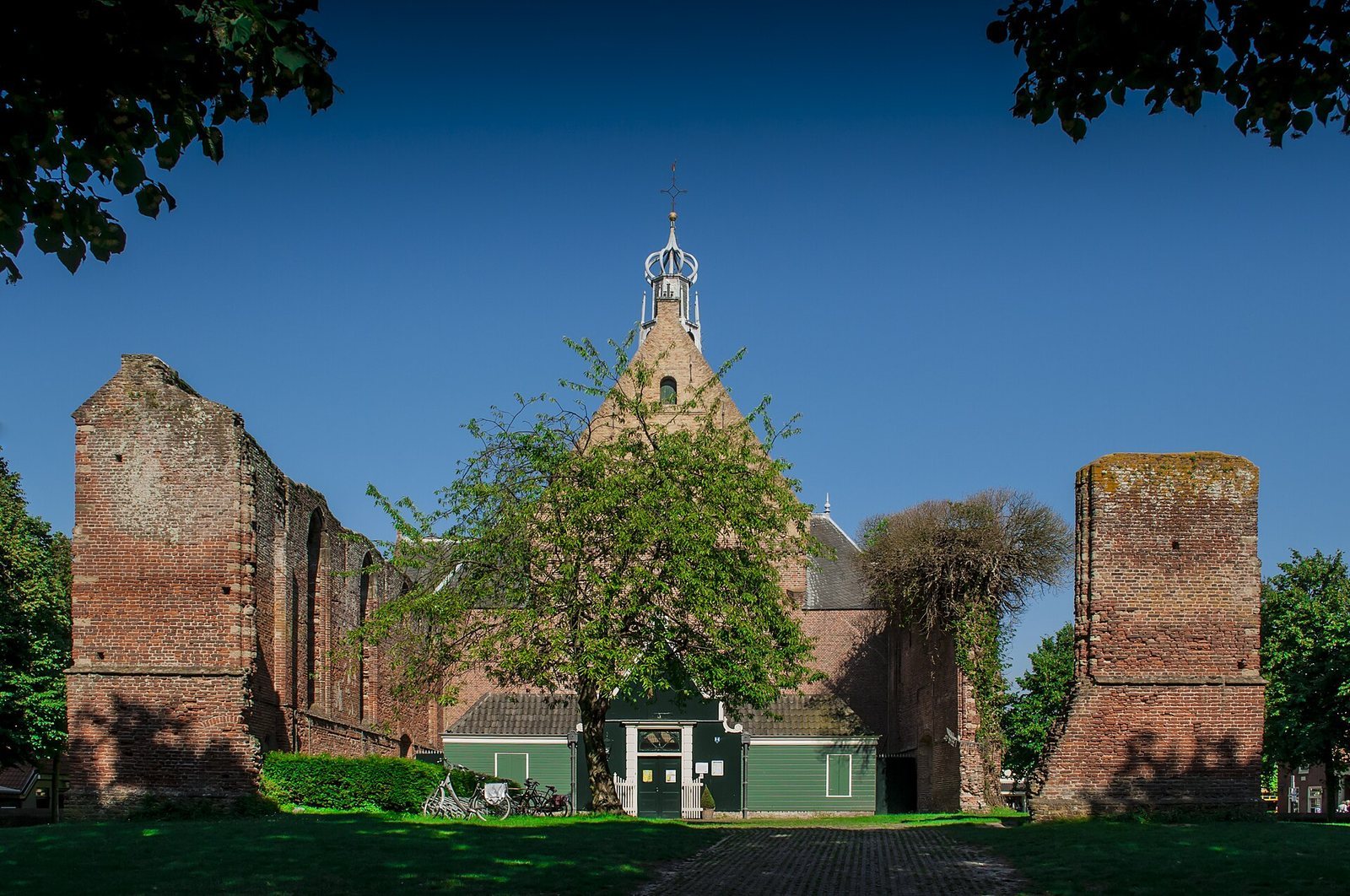
The Ruïnekerk is a partly rebuilt church in Bergen, the Netherlands. Bergen grew around a chapel on the site. After the Miracle of Bergen in 1422, the chapel was replaced by a church, later enlarged to accommodate pilgrims. Dedicated to the apostles Peter and Paul, it became one of the largest churches in Holland.
Growth and destruction
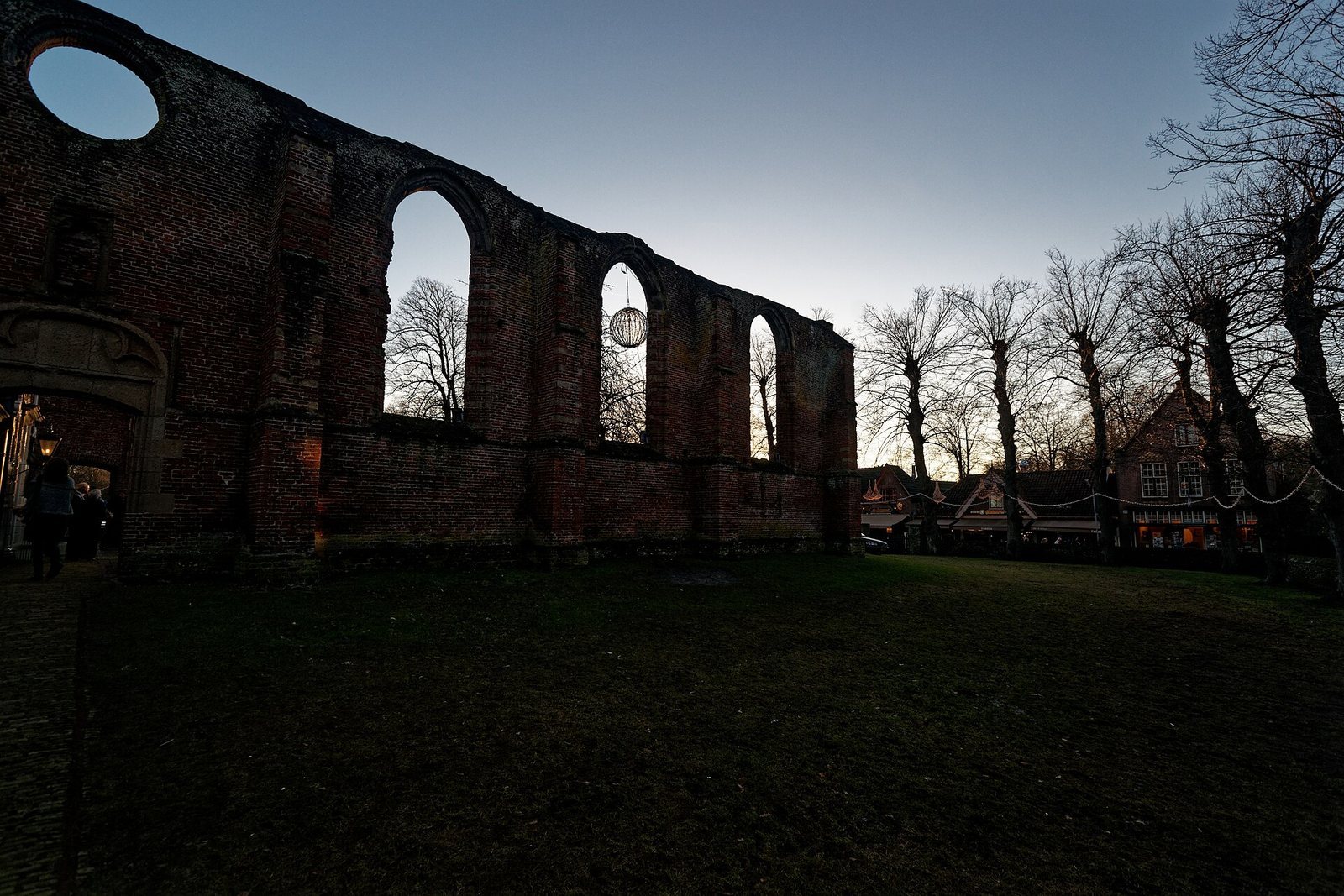
On 21 February 1574, during the Eighty Years’ War, the Dutch revolt against Habsburg Spain, rebel forces known as the Geuzen, led by Diederik Sonoy, looted and burned the church. Their attack formed part of a scorched-earth strategy around Alkmaar, intended to prevent Spanish forces from renewing their siege of the city. Much of the church was destroyed, including its tower.
The ruined choir was rebuilt by 1597. Part of the work was complete in 1594, a year also marked on a beam above the pulpit.
Protestant use and later conflict
After the Reformation, the sixteenth-century movement that produced Protestant churches in western Europe, the church came into Protestant use. It is now associated with Bergen’s Protestant congregation and the Protestant Church in the Netherlands.
Heavy fighting took place around the church during the Battle of Bergen in 1799, fought during the Anglo-Russian invasion of the Batavian Republic.
Modern changes
German occupying forces requisitioned the church’s bell, cast in 1888, in 1943; it never returned. An older bell, cast in 1750, was acquired through Eijsbouts in 1960, then removed in 1970 to make way for a carillon.
The carillon was inaugurated on 5 May 1970 by Jenke Kaldenberg, city carillonneur of Alkmaar and Enkhuizen. At the request of Lies Over de Linde, who played the instrument for a time, pianist and composer Gerard Hengeveld wrote works for it.
Dutch architect Cornelis Willem Royaards led a restoration from 1955 to 1961. The church is designated a Dutch national monument.
Remains
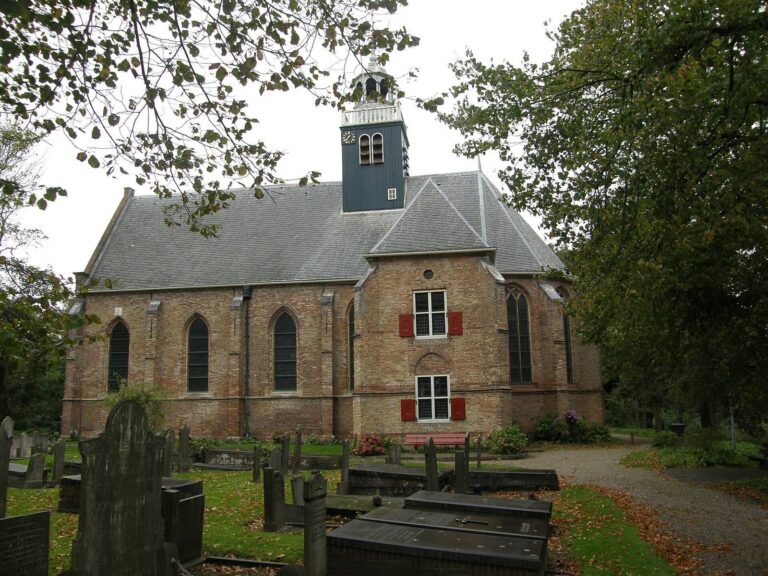
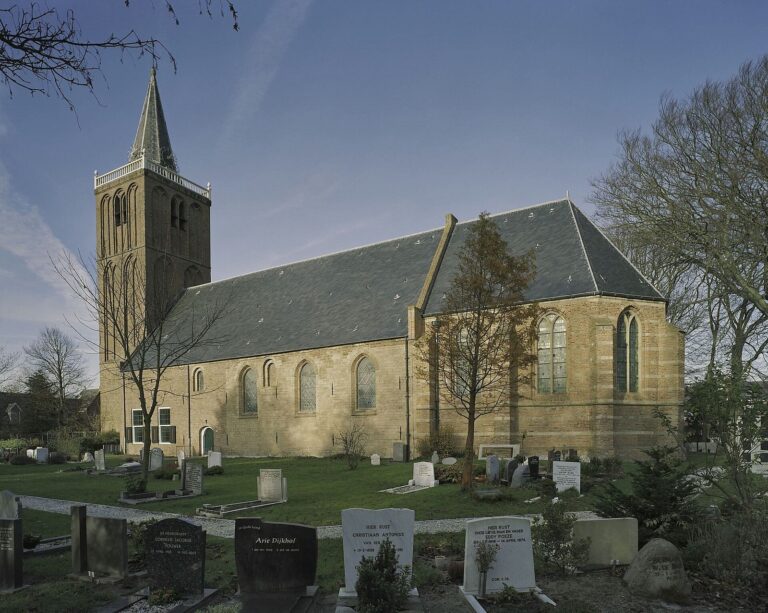
The partly rebuilt brick church developed from a single-aisle chapel into a three-aisled hall church. In a hall church, the nave and side aisles are of similar height, forming a broad interior. The original tower was lost in the 1574 fire, and a roof turret is now present.
Church fabric and entrance
The wooden entrance portal was added during the 1955–1961 restoration in a style associated with eighteenth-century Zaan architecture. When the entrance was widened in 2003, the portal was moved several metres. The year 1958 appears on the façade in memory of the restoration.
Musical fittings
Organ
Johan Frederik Kruse built the church organ in 1886. It came from the Reformed Church in Koog aan de Zaan, was purchased by Bergen’s Reformed congregation in 1913 and restored in 1960.
Carillon
The roof turret holds a two-octave carillon, a set of tuned bells played from a keyboard. It has 26 playing bells and a 27th bell that does not sound, bearing donors’ names and information about the instrument’s construction. Petit & Fritsen of Aarle-Rixtel cast the bells. The largest bears the inscription, “I ring for those who fell for our freedom and rest in Bergen, 1940–1945.” The next 24 carry the names of 266 people killed in the Second World War. The 26th reads, “34 fallen, all known to God.”
Battle damage and burials
Battle damage
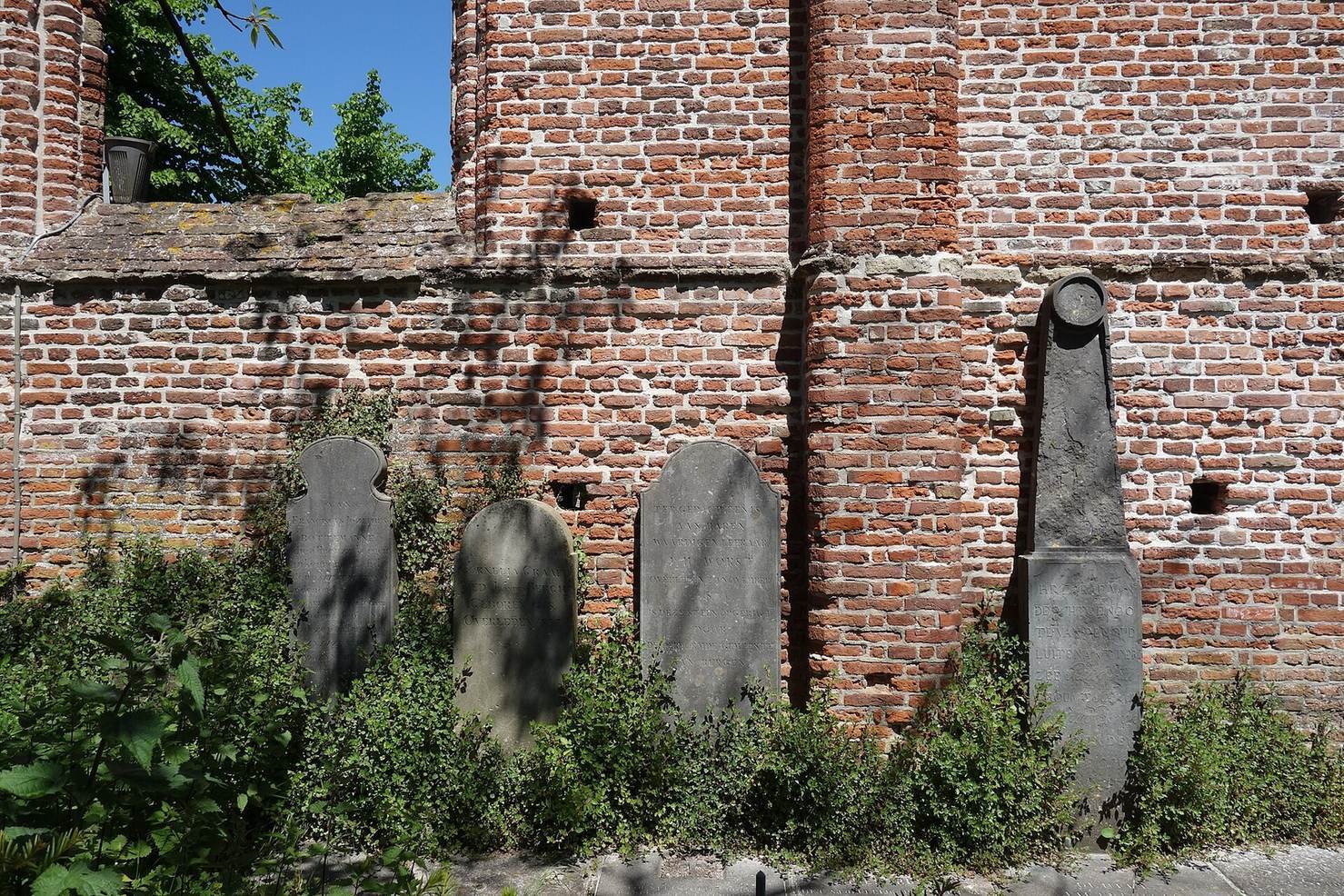
Bullet holes and impact marks from the fighting around the church in 1799 remain visible in its fabric.
Burial vault and gravestones
Inside the church is the burial vault of the Imperial Counts of Nassau-Bergen, nobles who held titles within the Holy Roman Empire. The only surviving grave in the vault is that of Wigbold Adriaan van Nassau (1729–1797), a member of the Nassau-Bergen line. About 25 historic gravestones lie outside the church but within the churchyard wall.