Bürgle (Enkenstein Castle): A High Medieval Hilltop Castle
Site at a Glance
- Popularity
- Very Low
- Country
- Germany
- Primary era
- Medieval
- Eras represented
- Medieval
- Civilizations
- Holy Roman Empire
- Site type
- Military
- Remains
- Castle
History
Bürgle, also known as Enkenstein Castle, is a High Medieval hilltop castle above Enkenstein, a locality of Schopfheim in Baden-Württemberg, Germany. The High Middle Ages generally refers to the 11th through 13th centuries.
The castle’s name may have survived in Enkenstein, first mentioned in 1392 and probably the hamlet once associated with the site. No noble family named Enkenstein is known, but references to people connected with En(g)kenstein support the possibility that this was also the castle’s name.
Enkenstein belonged first to the bailiwick of Tegernau, an administrative territory overseen by a bailiff, and later to that of Langenau. It was also part of the Landgraviate of Sausenburg, a territory governed by a landgrave. Enkenstein later came under the control of the Rötteln branch of the von Rotenberg family and then St. Blasien Monastery, a Benedictine abbey.
Bürgle was once regarded as an outpost of Rotenburg Castle, but it was probably an independent small castle. The farm at Brodenloch may have belonged to it at most.
Remains
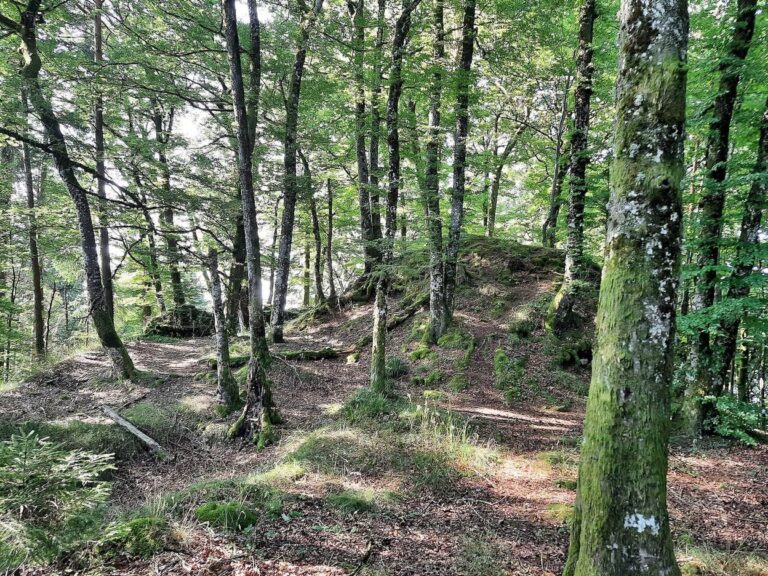
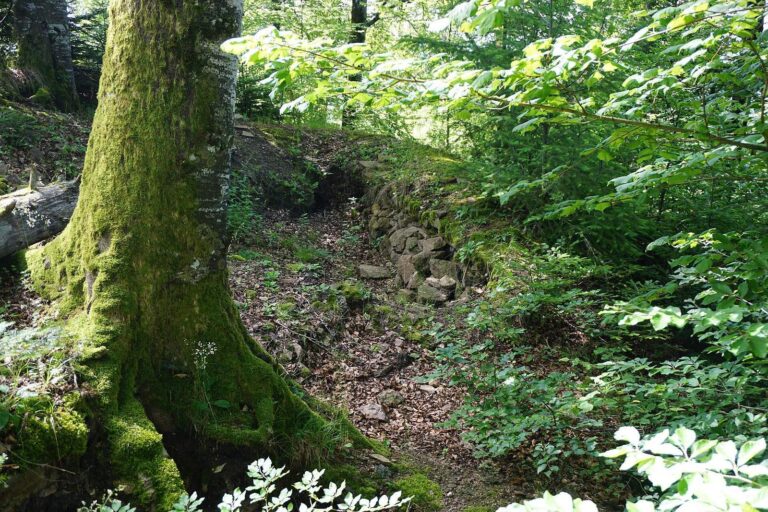
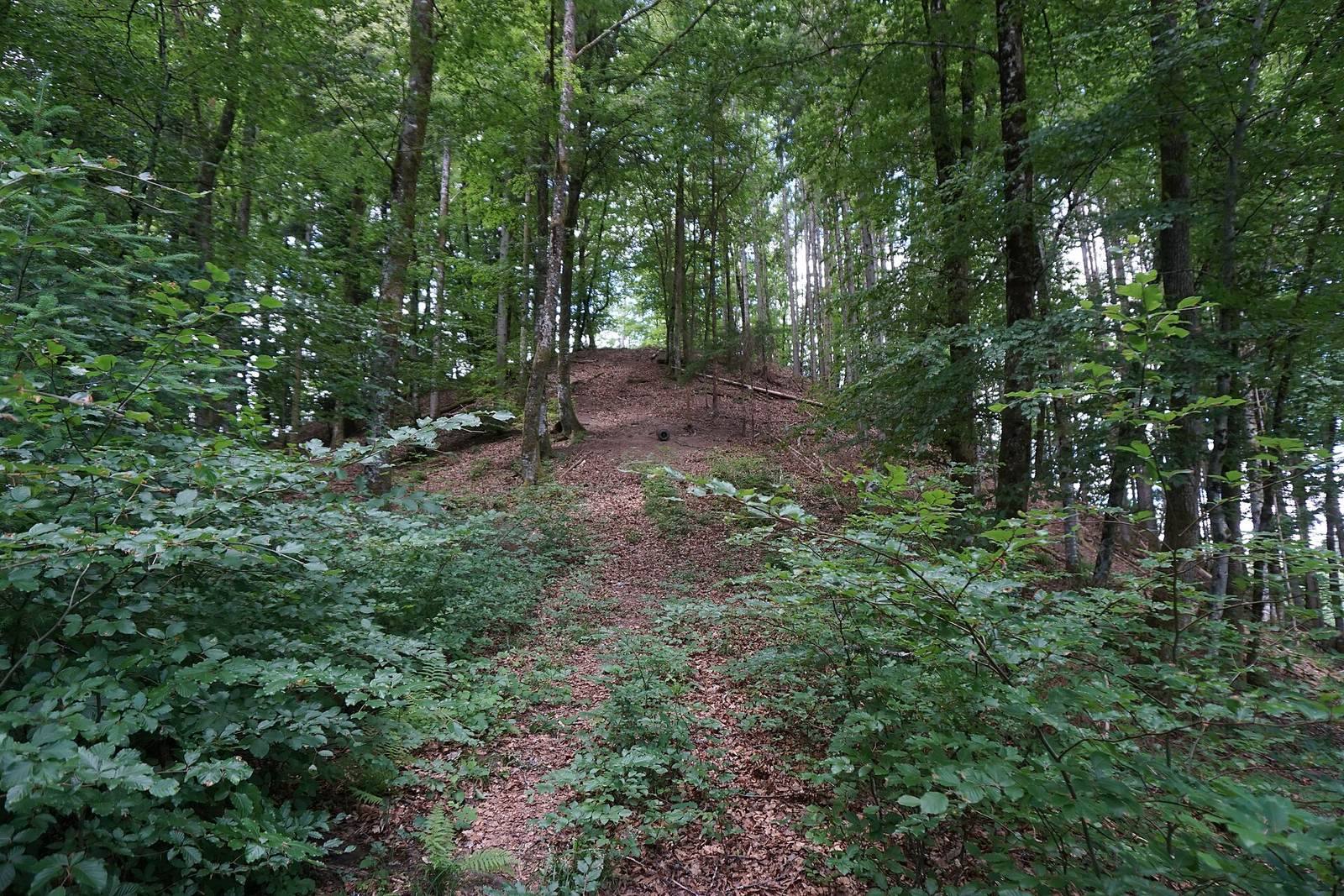
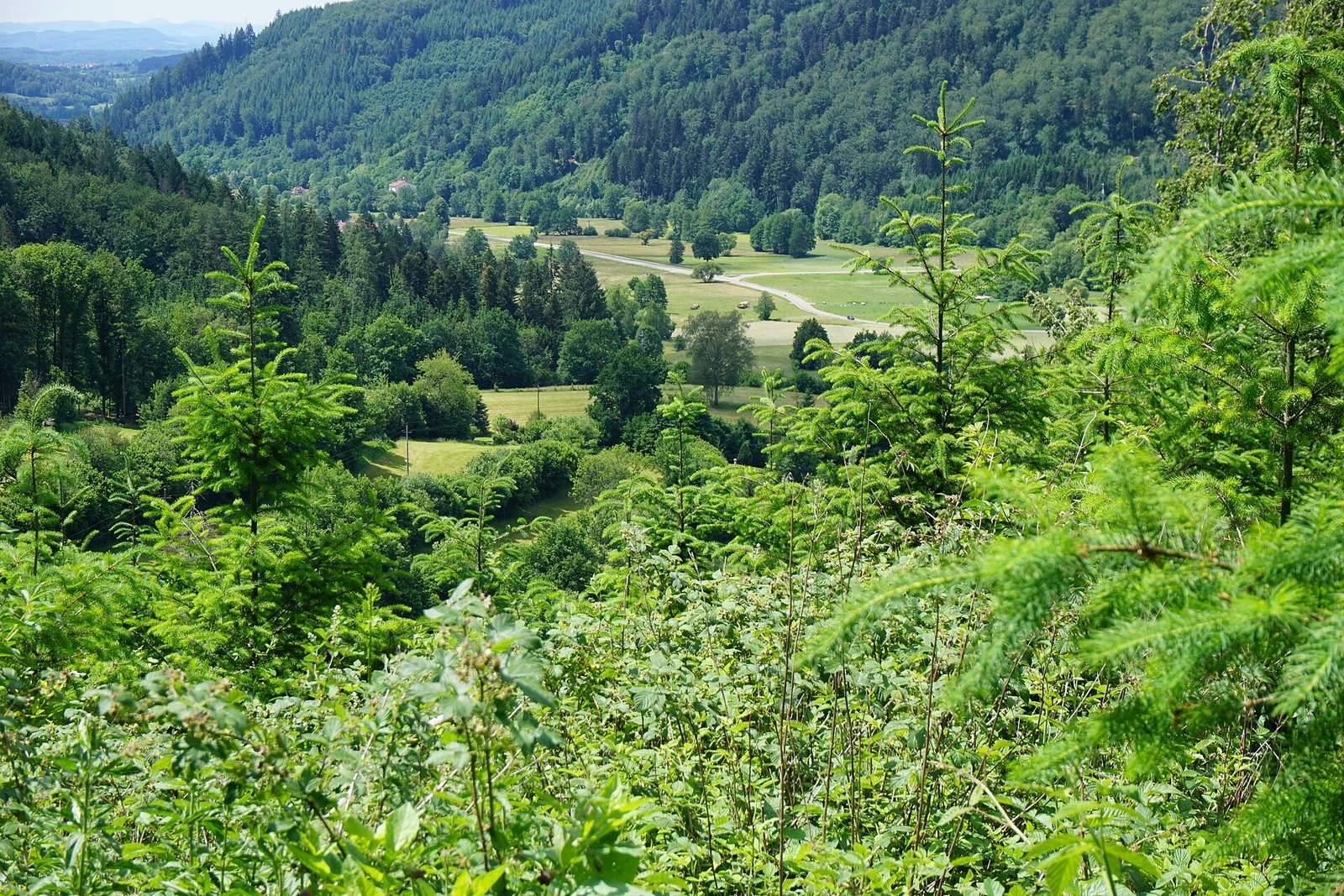
The remains occupy a wooded summit called Schlossberg, about 478 metres above sea level. The castle’s spur has a plateau roughly 40 to 50 metres long and 10 to 20 metres wide, with steep slopes. Its natural approach lay to the west, where a small defensive ditch cut across the narrow neck of land. Partly filled and now barely discernible, the ditch formed a barrier on this landward side.
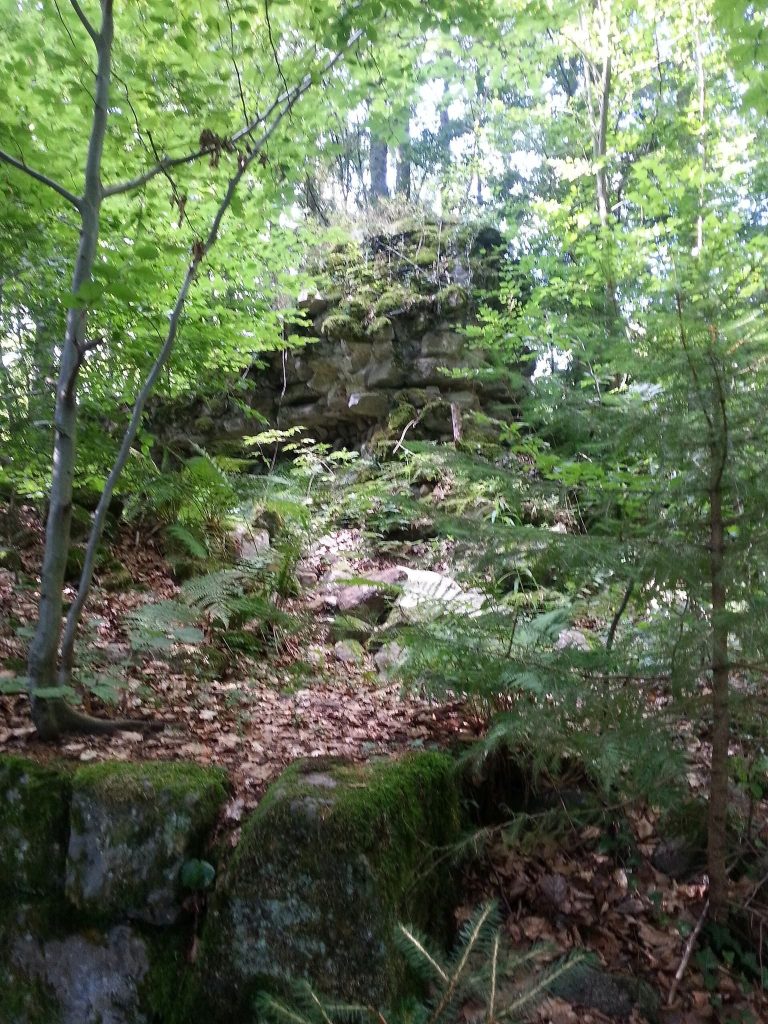
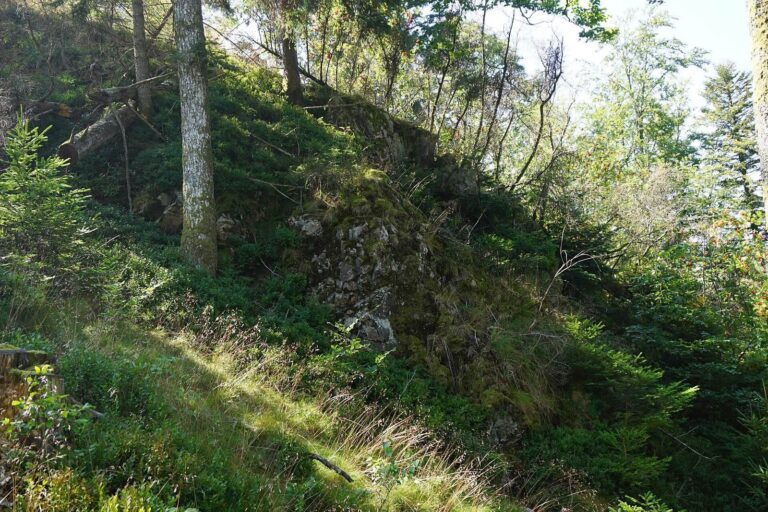
Fragments of carefully squared stone blocks remain at the site, some with traces of mortar.