Nordeck Castle: A Medieval Administrative Fortress in Germany


Site at a Glance
- Rating
- 4.5
- Popularity
- Low
- Country
- Germany
- Primary era
- Medieval
- Eras represented
- Medieval
- Civilizations
- Holy Roman Empire
- Site type
- Military
- Remains
- Castle
On this page7 sections
History
Foundation and Bamberg Administration
Nordeck Castle is a high-medieval fortress in Germany, near Stadtsteinach, probably founded around 1100 by the Counts of Henneberg, a medieval dynasty whose territories included parts of Franconia. Its original role was coercive, supporting the authority of its rulers in the surrounding area.
In 1151, Bishop Eberhard II of Bamberg acquired Nordeck together with Steinach, the settlement now known as Stadtsteinach. The castle then became an administrative center of the Bamberg bishopric, a church-ruled territory, and was occupied by episcopal officials until the beginning of the sixteenth century.
Destruction and Rebuilding
In 1438, Nordeck was destroyed during minor warfare between the Waldenfels family and the Bishop of Bamberg. The castle was rebuilt in the mid-fifteenth century and continued to serve as the seat of Bamberg officials. Its later occupants included officials responsible for administration and justice in the bishopric’s territory.
The castle was also associated with Thomas von Absberg, a Franconian nobleman and robber knight active in the early sixteenth century. He used Nordeck to conceal people he had abducted. A local legend tells of a merchant’s son who escaped from the castle with help from the castle cook.
Destruction and Abandonment
During the Franconian War in 1523, the Swabian League, a military alliance of imperial territories in southwestern Germany, did not attack Nordeck. At that time, the castle was occupied by Jörg von Wildenstein, a Bamberg official who held the office of Amtmann, an administrative and judicial position.
Nordeck was destroyed during the German Peasants’ War in 1525. This uprising of peasants and other lower social groups spread through the German lands in 1524 and 1525. After its destruction, the castle was abandoned.
Remains
Mountain Spur Setting
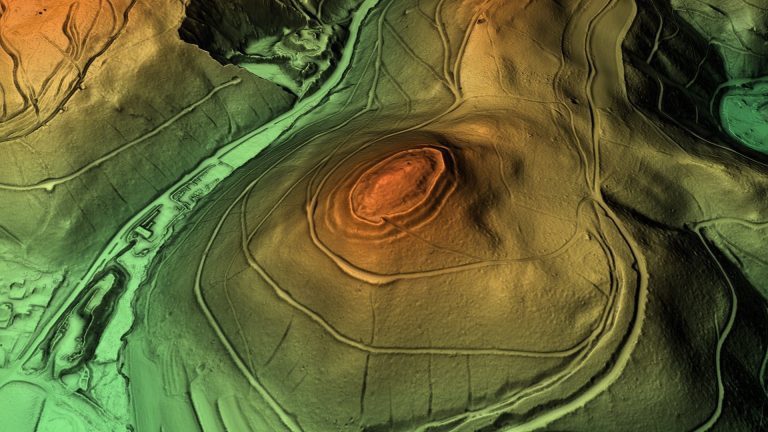
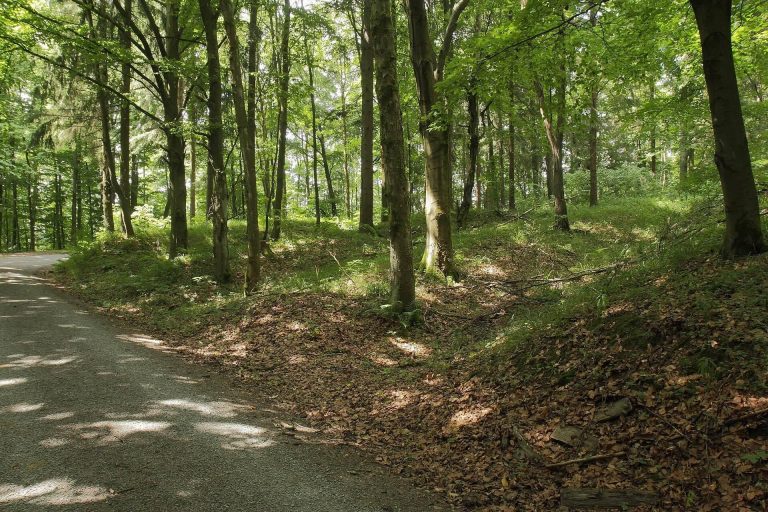
The ruin stands at about 450 metres above sea level in the Frankenwald Nature Park. It occupies a western-projecting mountain spur in the Stadtsteinach Forest, approximately two kilometres north-northeast of Stadtsteinach, and overlooks the hamlet of Mittelhammer in the valley of the Untere Steinach. The castle is a spur castle, using the projecting landform as the setting for its surviving remains.
Surviving Structures
The surviving remains consist of a circular residential tower, a prison tower, and sections of the foundation walls. The ruin stands on Kellwasser limestone, a rock that forms part of the castle site’s physical foundation. These fragmentary structures preserve the outlines of the former fortress after its destruction and abandonment.