Puxer-Loch: The Medieval Cave Castles of Luegg and Schallaun
Site at a Glance
- Popularity
- Medium
- Country
- Austria
- Primary era
- Medieval
- Eras represented
- Medieval
- Civilizations
- Duchy of Styria, Holy Roman Empire
- Site type
- Military
- Remains
- Castle
On this page7 sections
History
Puxer-Loch is the collective name for the ruins of Luegg and Schallaun, two cave castles near Teufenbach-Katsch in Styria, Austria. Local noble families fortified natural caves here during the High Middle Ages, the period from the eleventh through thirteenth centuries. A cave castle is a fortified structure built within or against a natural cave. Schallaun is first recorded in 1181, while Luegg was probably built around the same time. Together, they are among the few surviving cave-castle ruins in Austria.
Medieval foundations and changing lords
Schallaun appears in a record of 1181 as Schalun, a name associated with Machward of Schalun. The local Lueger family probably built Luegg in the same period. Both castles later passed among Styrian noble families. Schallaun was held by a family related to the Lords of Saurau before being sold to the Liechtenstein family in 1472.
In the fifteenth century, Luegg became a fief of the Counts of Cilli, a powerful noble house based around Styria and Carniola. A fief was land held in return for service or allegiance. The Puxer and Teufenbacher families held parts of Luegg, and after the Cilli line ended in 1456, the Teufenbachers continued to hold it into the seventeenth century. Both castles eventually passed to the Pranckh family through inheritance or sale and became part of its estates.
Hungarian troops occupied Schallaun from 1481 to 1490 during the campaigns of Matthias Corvinus, king of Hungary from 1458 to 1490. Afterward, Frederick III, the Holy Roman Emperor, returned the castle to the Liechtensteins.
Decline and local traditions
Both castles began to decline from the sixteenth century, as the Pranckhs stopped using them and allowed them to deteriorate. Luegg was probably no longer a permanent residence by the seventeenth century, partly because it was difficult to reach and offered cramped living conditions. It was nevertheless described as partly habitable into the nineteenth century. By the eighteenth century, both sites were ruins. Hungarian troops cleared the caves in 1769, causing further damage, while robber bands also contributed to their deterioration.
A local legend places robbers in the caves in the early nineteenth century and says authorities used explosives to drive them out, destroying much of the remaining masonry. Other local stories tell of a cursed “man without a shadow” who emerged at night to abduct maidens. Versions of the tale name an emperor’s daughter or Duchess Guta Maultasch as the intended victim.
Another origin legend sets its events during Charlemagne’s reign, from 768 to 814. It says Charlot von Chalon fled with a captured Saxon princess and took refuge at Schallaun, where he built the castle, married one of two Saxon sisters, and began a line of knights associated with robbery and banditry. This is a legend, not an established account of the castle’s construction.
The ruins remain privately owned by the Pranckh family. They have cultural-monument protection in Styria and at the municipal level, while the cliffs lie within a protected landscape area. Preservation is limited, with occasional maintenance to the access steps.
Remains
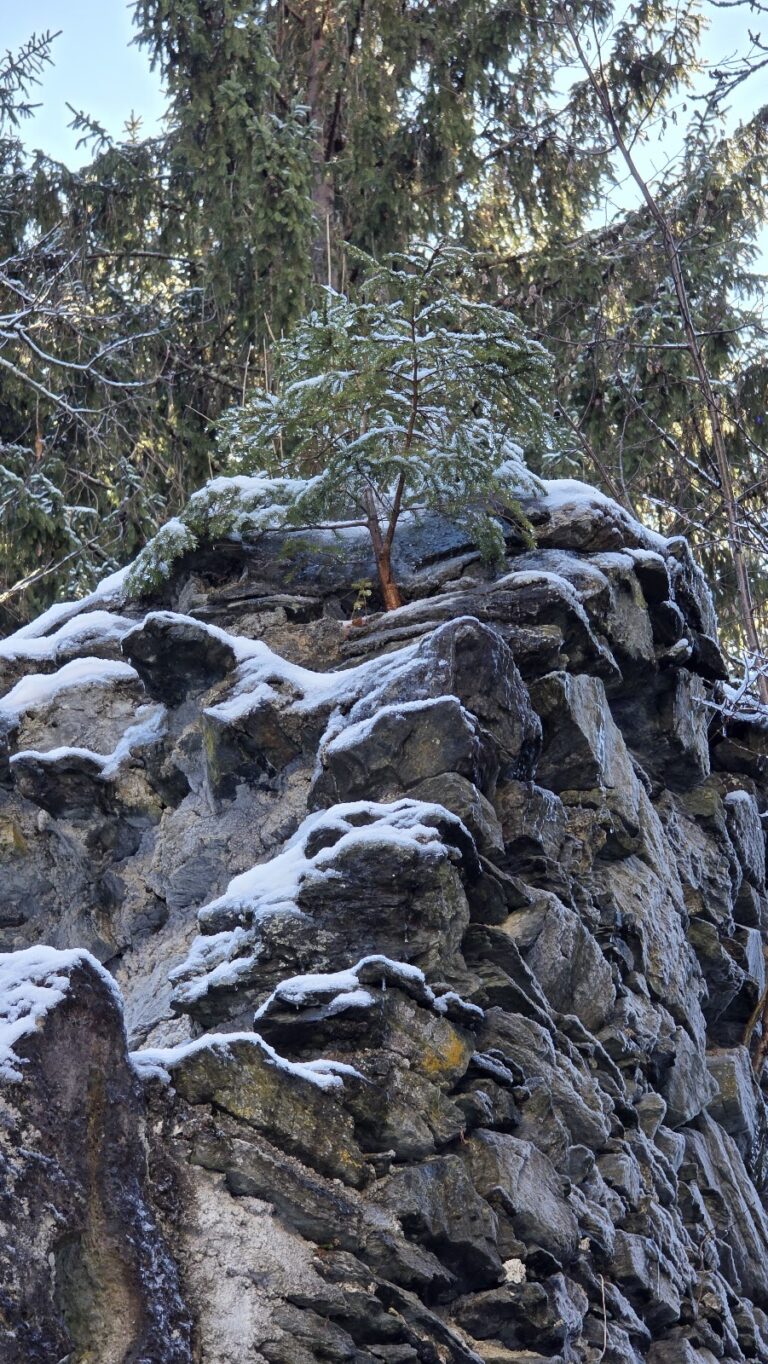
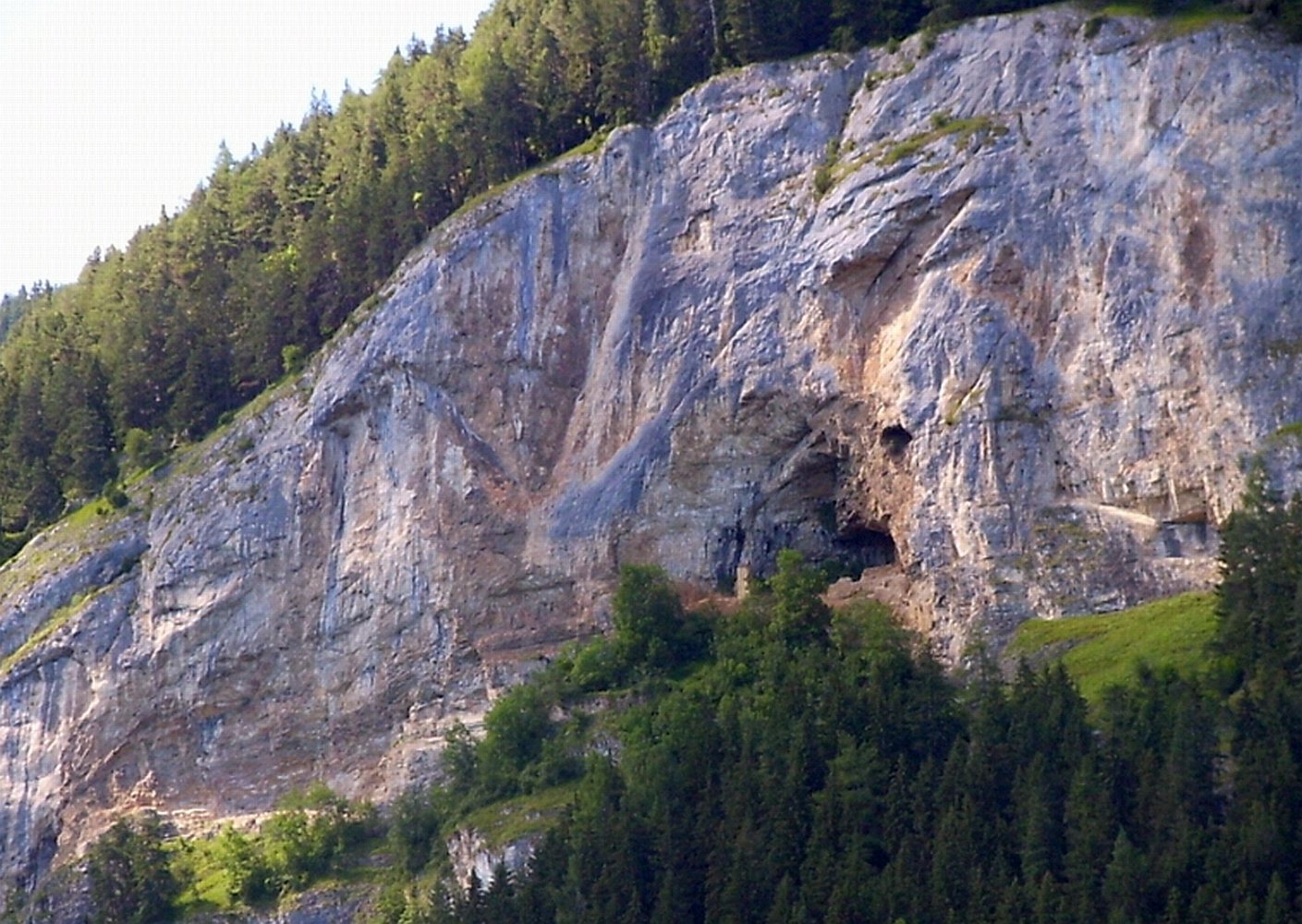
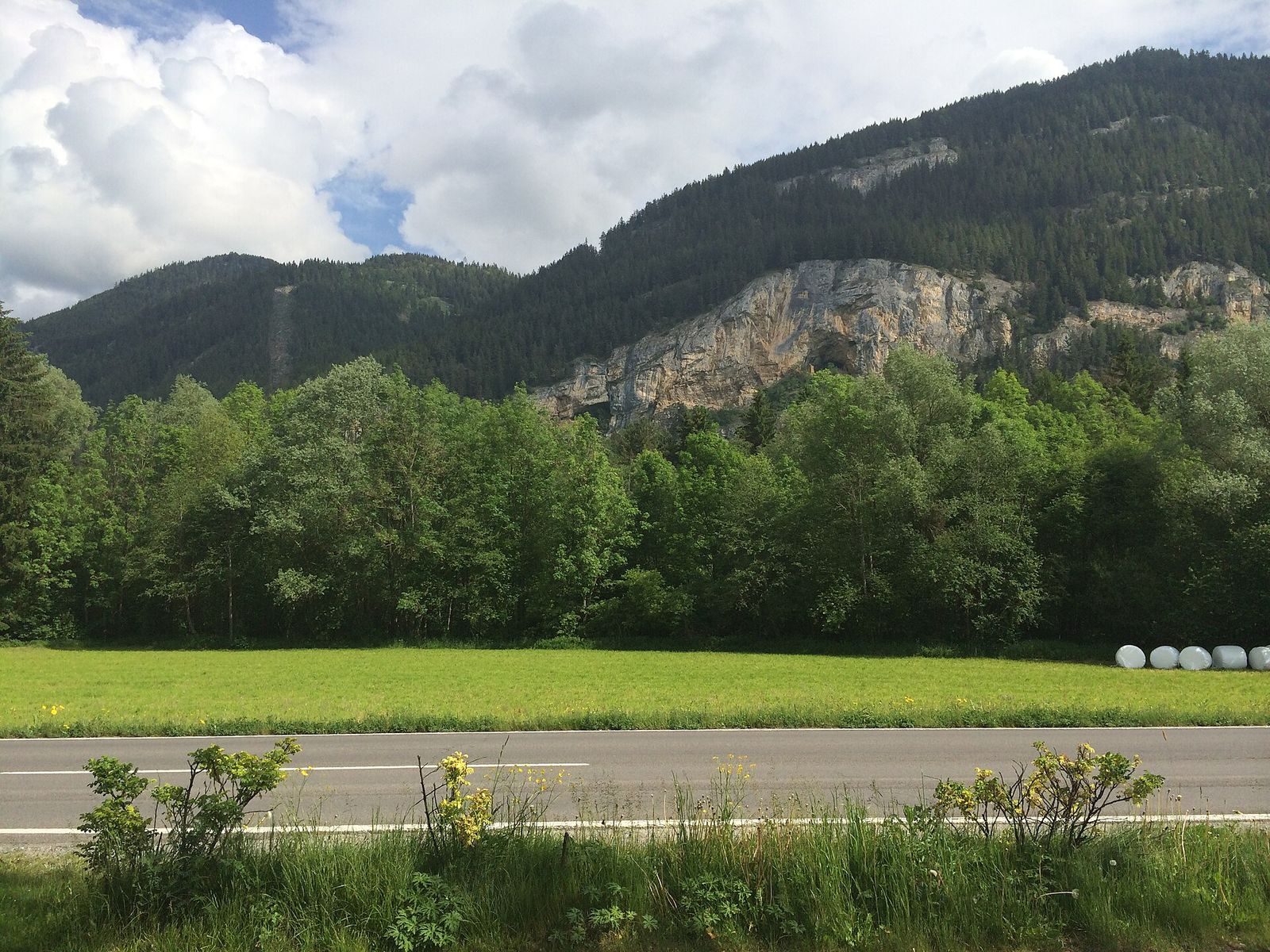
The paired castles occupy natural caves in the nearly vertical limestone of the Puxer Wand on Pleschaitz, above the Mur River valley. They lie at roughly 900 metres or somewhat higher above sea level, and the cliff rises about 100 metres above the valley floor. Luegg occupies the larger cave; Schallaun lies about 50 metres to its west and 10 to 15 metres lower. Each cave had a single approach, which strengthened its defensibility.
Luegg
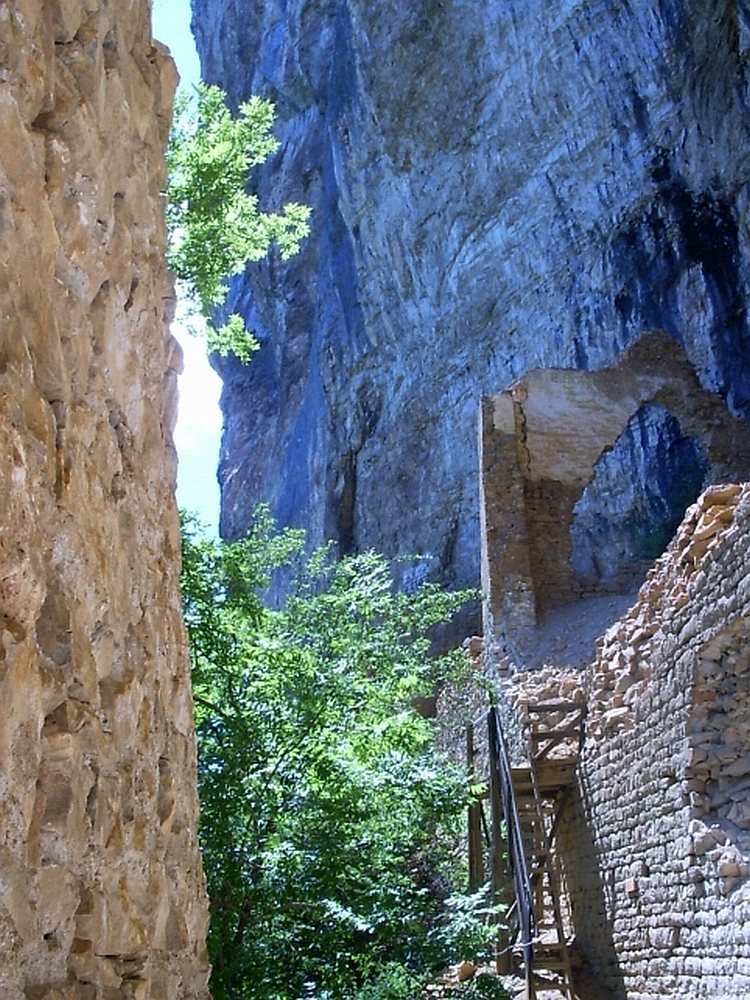
An overgrown defensive terrace lies below Luegg’s cave entrance, whose roughly rectangular portal is about 40 metres wide and 40 metres high. A massive front wall once closed off the inner chambers, and surviving sections include masonry from about the twelfth or thirteenth century. Inside, the courtyards and rooms have largely collapsed to their foundations. Wall fragments, floor debris, sockets for beams, and painted plaster indicate where multi-storey residences stood. A natural spring supplied water.
Schallaun
Schallaun’s narrower entrance was formerly reached by ladder or by a steep path. Its inner chamber is about 28 metres wide and contains the remains of a small, three-storey dwelling. Holes for the horizontal beams that supported the second floor can still be seen in the cave walls.
Cliffside remains
Intermittent fragments of small walls and a partly artificial path survive along the cliff. The ruins are unstable.