Ruine Lauterburg: Medieval Spur Castle Ruins in Germany
Site at a Glance
- Rating
- 4.1
- Popularity
- Very Low
- Country
- Germany
- Primary era
- Medieval
- Eras represented
- Medieval, Early Modern
- Civilizations
- Holy Roman Empire
- Site type
- Military
- Remains
- Castle
On this page9 sections
History
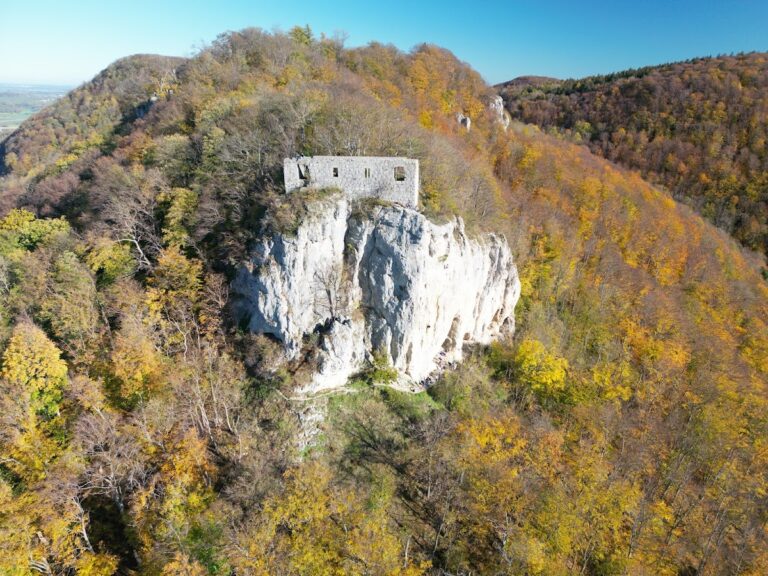
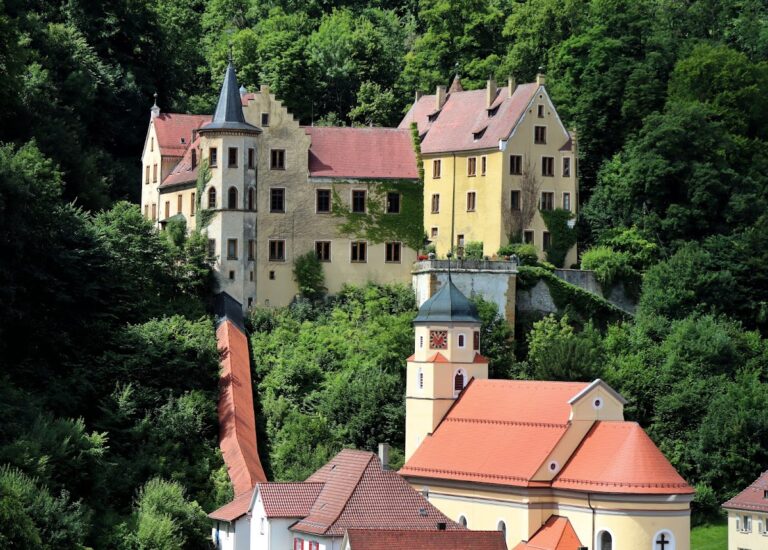
Ruine Lauterburg is the surviving ruin of a medieval aristocratic spur castle in Germany, in Lauterburg, a locality of Essingen in Baden-Württemberg. The castle was probably built at the beginning of the twelfth century, during a construction period broadly dated from 1100 to 1200, and its position on a projecting ridge used the surrounding terrain for defence.
Medieval origins and ownership
Adalbert of Lauterburg was first mentioned in 1128. He was Count Palatine of Swabia from 1125 to 1146 and is identified as an early owner of the castle. The Hohenstaufen, a medieval German ruling dynasty whose members held the imperial throne, later belonged among its recorded owners, together with the lords of Oettingen and the barons of Woellwarth. A new structure was built at Lauterburg during the thirteenth and fourteenth centuries.
Renaissance transformation and later history
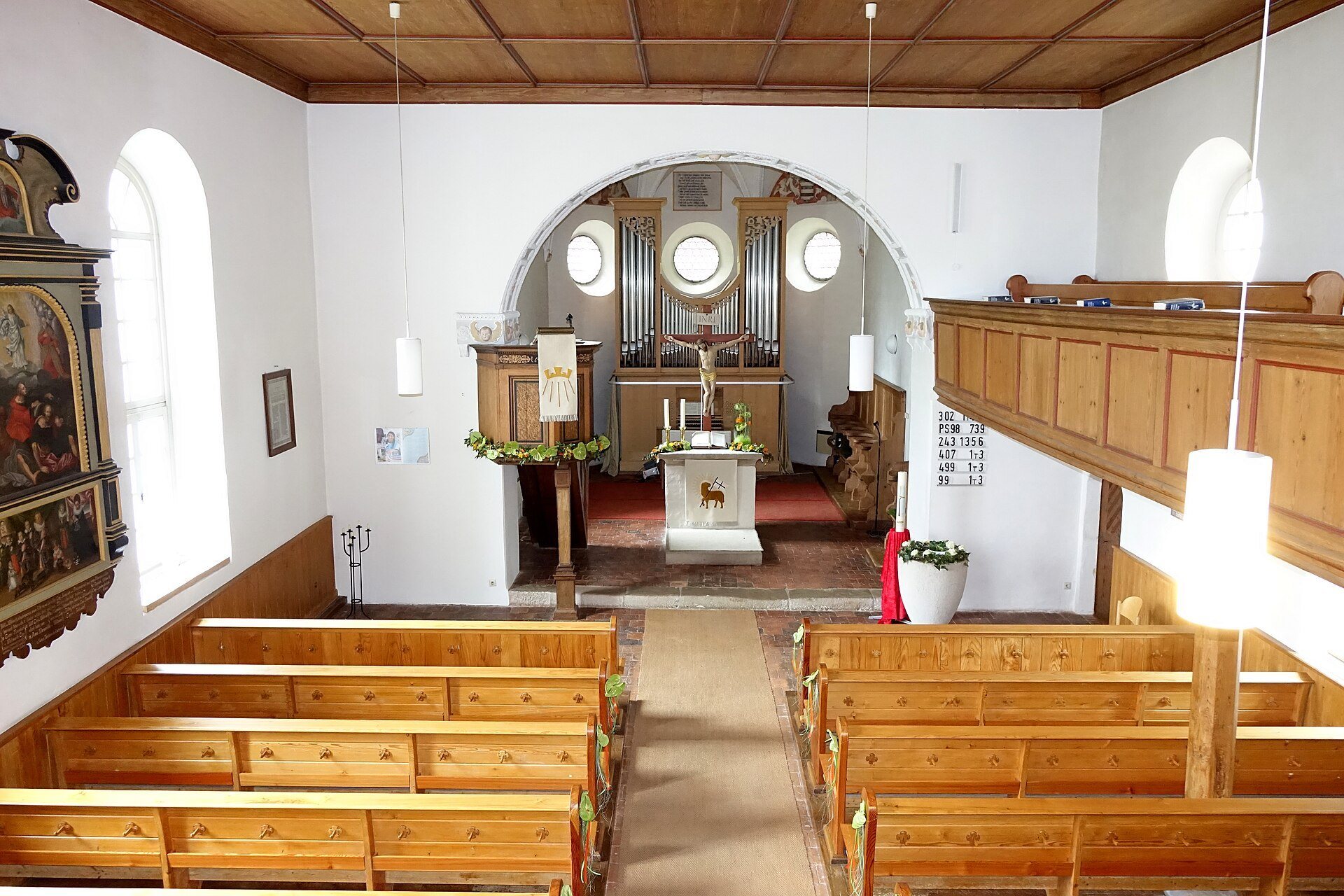
A new palace in the Renaissance style was constructed in 1594. Renaissance forms spread north of the Alps from the fifteenth century and shaped residences intended for both living and representation. The palace was destroyed by a major fire in 1732. The castle church, built in 1607, remains the village church of Lauterburg.
The property known as the Outer Castle Gate has belonged to the Rieder family and its descendants since 1881. Since 1997, the ruin has been recognized as a sight on the Staufer Road, a route associated with the historical Hohenstaufen dynasty.
Remains
Enclosure and outer ward
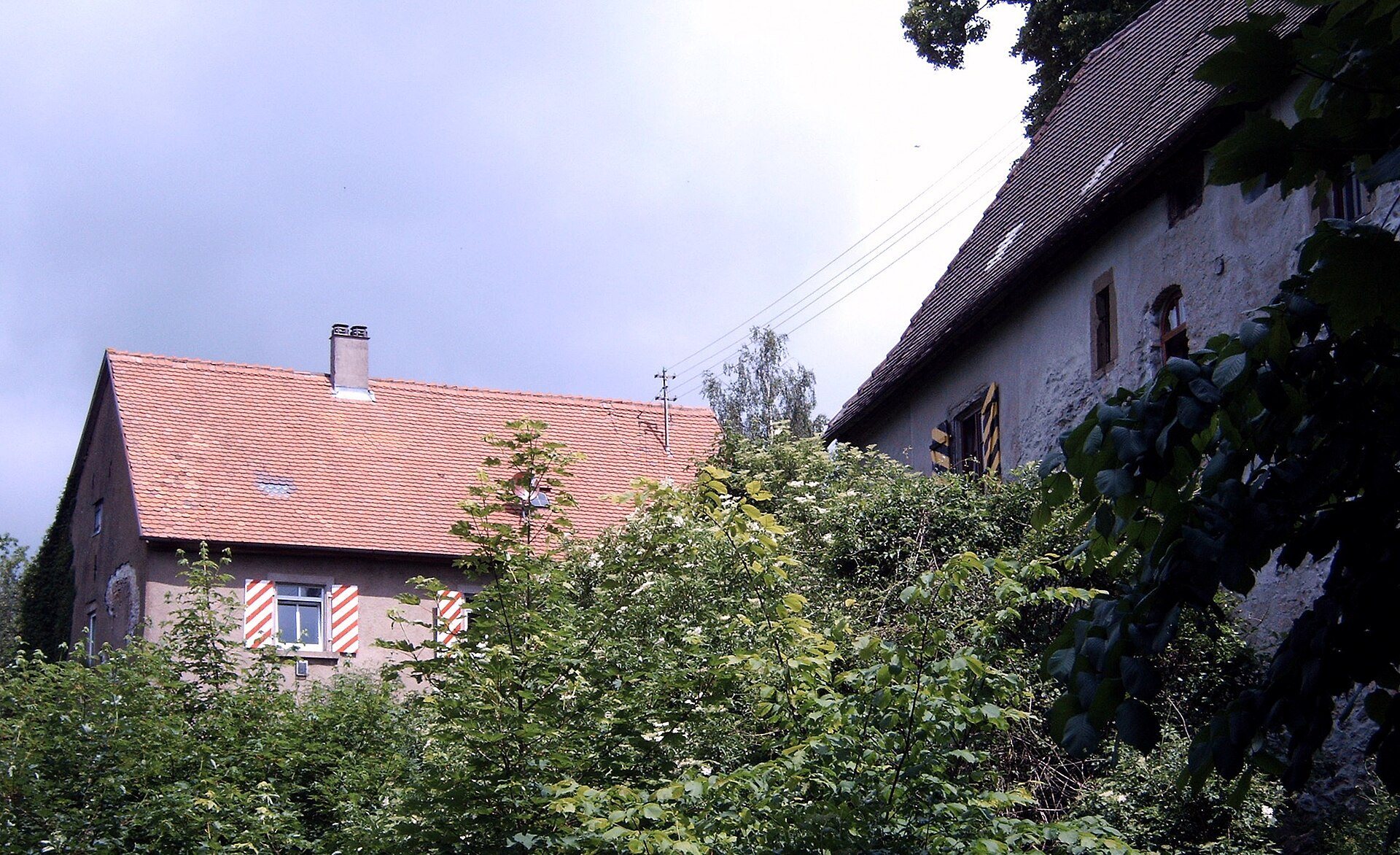
Ruine Lauterburg occupies a hilltop spur within the village and survives with substantial sections of its enceinte, the enclosing defensive wall around a castle. The outer ward measures approximately 75 by 25 metres. It is relatively well preserved and accessible, while the main castle is increasingly deteriorating and is overgrown with bushes and trees. The danger of collapse makes the main castle inaccessible.
Palace and gate buildings
Renaissance palace
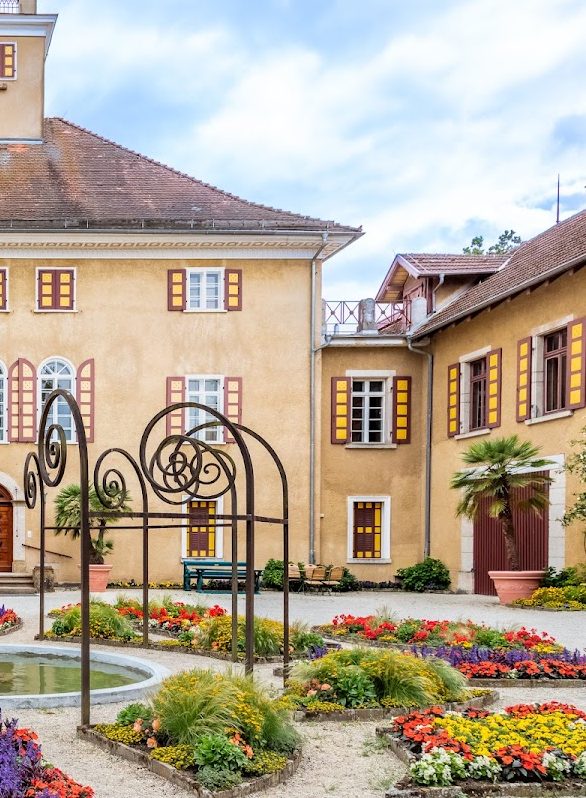
In the northeastern part of the ruin stand the remains of a three-storey palace built in the Renaissance style in 1594. The building represents the residential transformation of the castle before the major fire of 1732 and survives today in ruined form.
Outer gate and gatehouse
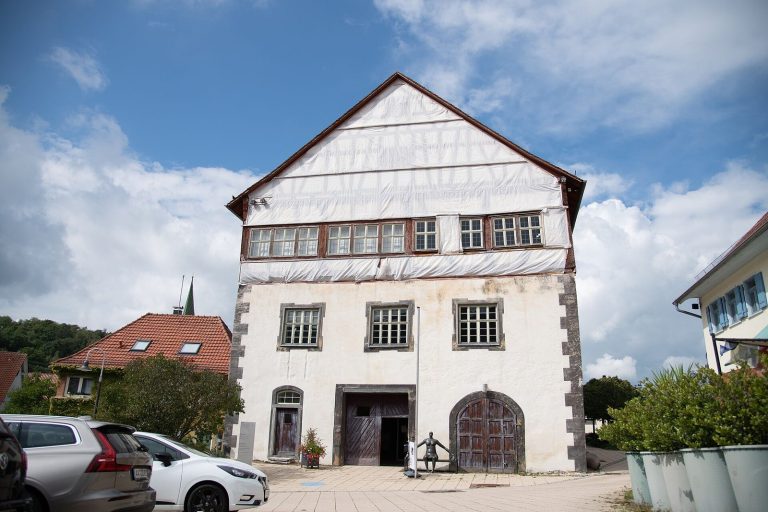
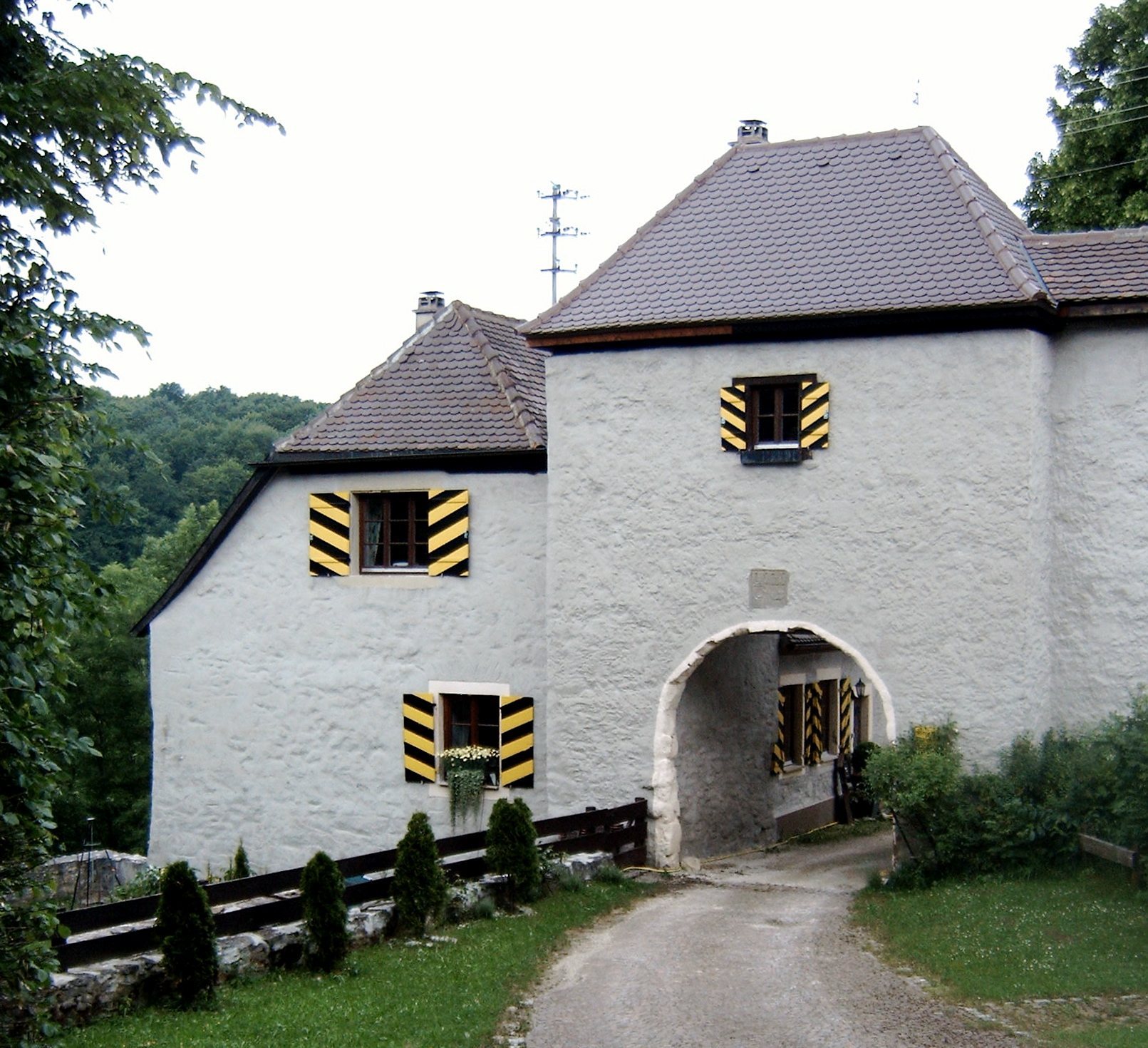
The outer gate is connected to a gatehouse, a prominent building in the outer ward. The gatehouse originally housed the gatekeeper, was later enlarged, and served as the village school until 1881. Its facade, especially the arched gateway, is regarded locally as a landmark of Lauterburg. The inner gatehouse and the residential buildings of the outer ward remain in use as inhabited buildings.
Castle church and southern tower
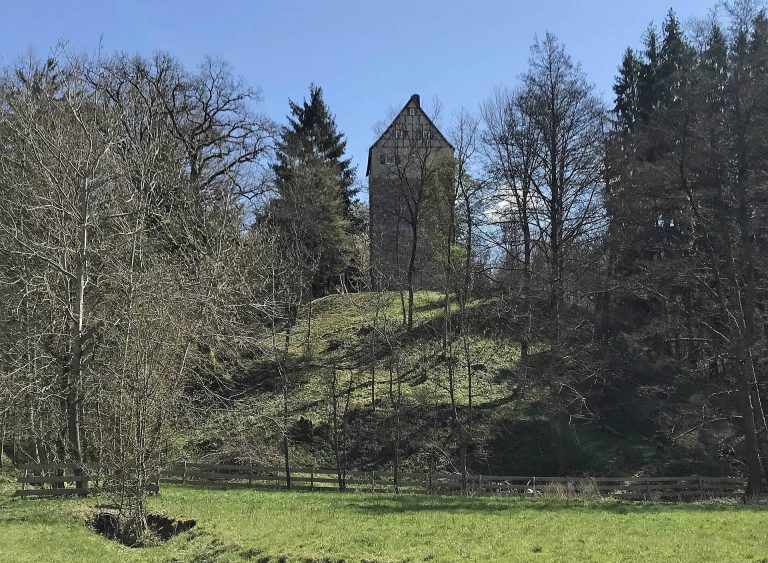
The castle church, built in 1607, continues to serve as Lauterburg’s village church. A southern flanking tower also forms part of the surviving castle remains.