Rugaard: A Danish Manor Estate and Renaissance Castle
Site at a Glance
- Popularity
- Medium
- Country
- Denmark
- Primary era
- Early Modern
- Eras represented
- Early Modern
- Civilizations
- Denmark–Norway
- Site type
- Domestic
- Remains
- Castle
On this page12 sections
History
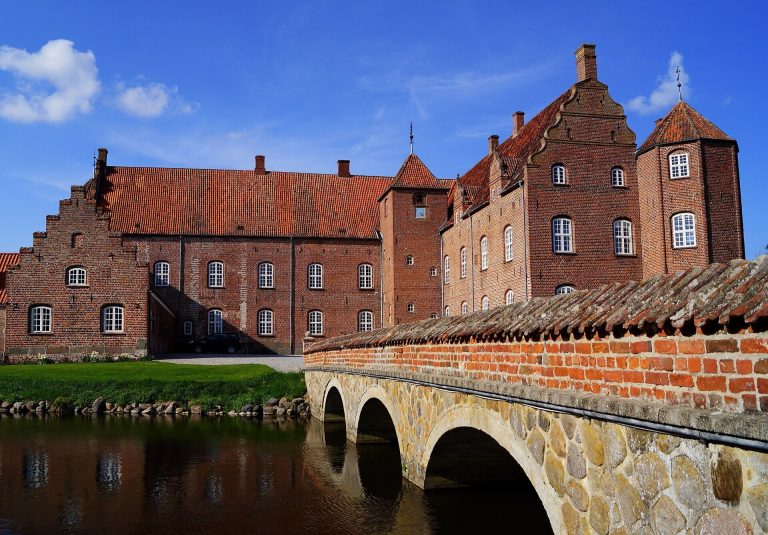
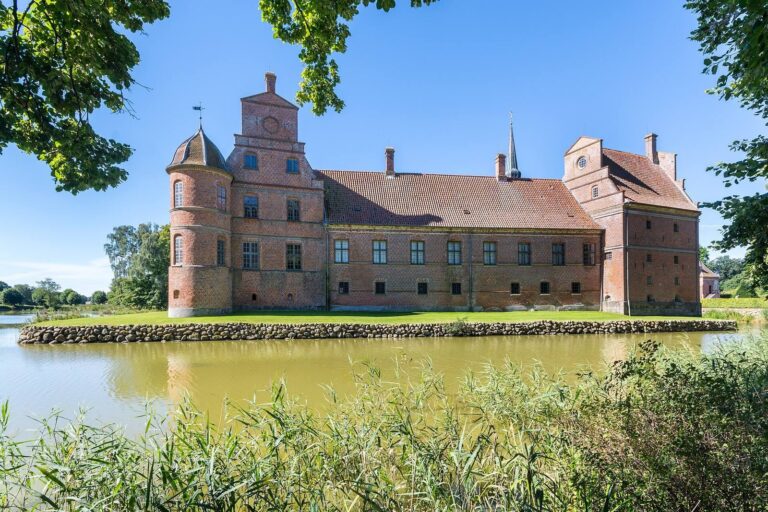
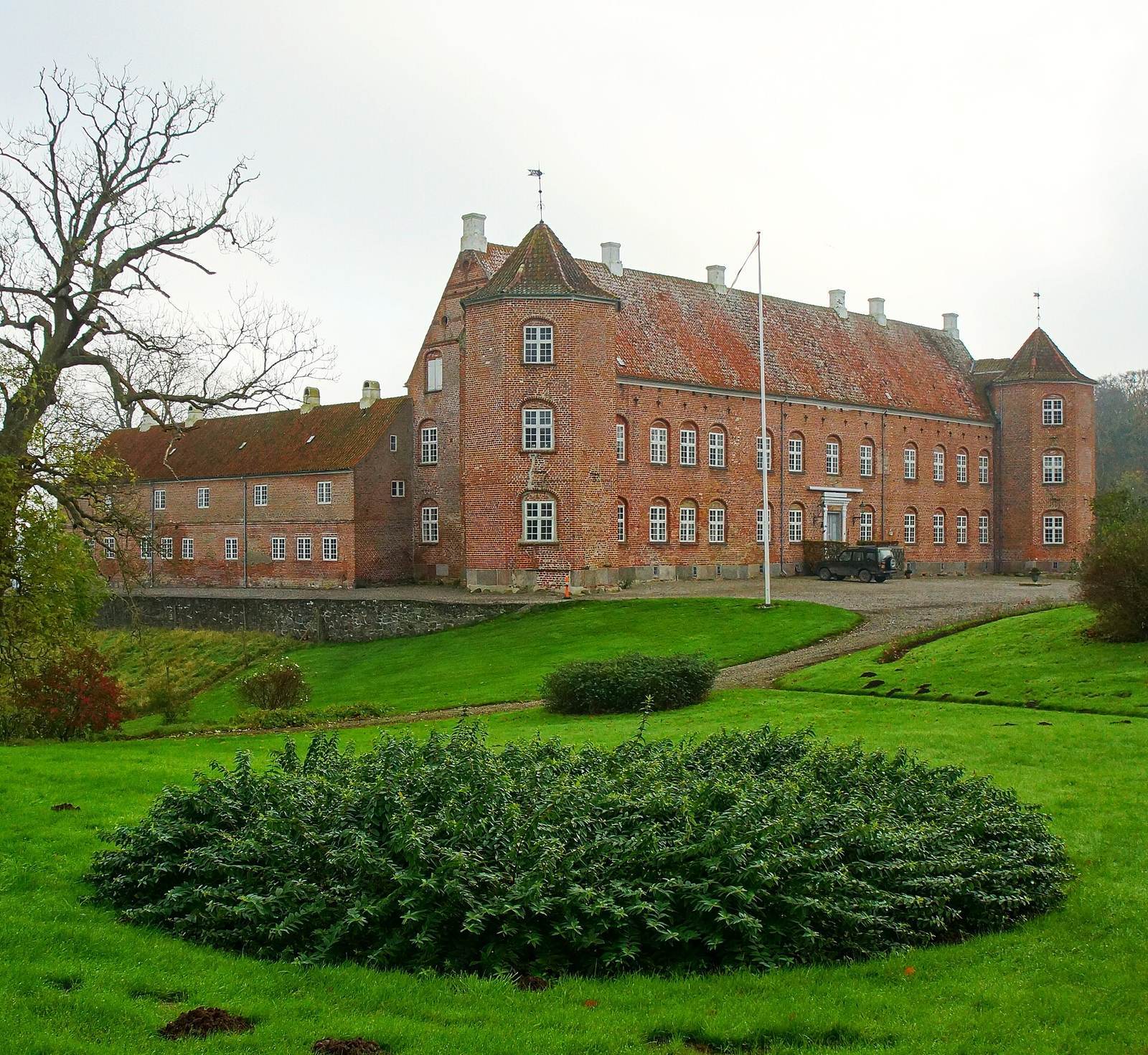
Rugaard is a manor estate near Ebeltoft on Denmark’s Djursland peninsula. Its castle is in the Renaissance style, an architectural tradition that drew on classical models, and construction began in 1579. The estate later became a center of Denmark’s last major witch-hunt campaigns, and the proceedings there helped change how witchcraft cases were sentenced.
From Abbey Land to Arenfeldt Estate
Land associated with Rugaard belonged to Øm Abbey, a medieval monastery in Jutland, from 1183 to 1536. The Crown held it until 1579, when the nobleman Hans Axelsen Arenfeldt acquired land that included farms in Attrup, Rosmus, Balle, Hyllested, and Rove, and established the estate.
The Witchcraft Trials of 1686
One of the Arenfeldt owners, Jørgen Hansen Arenfeldt, made Rugaard a center of witch-hunt campaigns that helped set off a series of trials in eastern Jutland in 1686. Suspects were bound hand and foot and thrown into the manor’s moat in a so-called water test. Authorities treated sinking as proof of innocence and floating as proof of guilt; a guilty verdict could lead to burning at the stake.
Among those accused were 28-year-old Anne Sørensdatter and her mother, after rumors that Anne could see events beyond ordinary perception. During interrogation, Anne named people in Ebeltoft, Grenaa, and Aarhus as alleged associates. Those accused then charged Jørgen with bringing false cases through the illegal use of torture, and the dispute went to Denmark’s Supreme Court, the country’s highest court.
Jørgen lost the case, was fined for defamation, and was stripped of the authority to issue sentences privately. Anne escaped execution but was flogged and exiled after the court judged her accusations against reputable people to be untrue. The proceedings led to a requirement that witchcraft cases go before the Supreme Court before a sentence could be imposed, helping curb abuses. Denmark’s last burning for witchcraft took place on Falster in 1693, seven years after the Rugaard case.
Changing Ownership and Agricultural Reform
Jørgen had to give up Rugaard in 1707. His eldest son, Axel Arenfeldt, took over, but the estate was auctioned in 1737, ending roughly 150 years of Arenfeldt ownership. Rugaard subsequently passed through several hands. Its operation relied on villeinage, a rural system in which tenants owed labor or other obligations to an estate, until 1800.
That year Hans Peter Ingerslev acquired Rugaard, partly drained Søndersø for farming, and sold land to smallholders, ending villeinage. His estate was regarded as a model until his tenure ended in 1830.
The Mourier-Petersen Family
Ferdinand Mourier-Petersen bought Rugaard in 1857, beginning the family ownership line that continues through the later history of the estate. He enlarged the property and maintained its buildings. In 1866 he co-founded the Danish Heath Society, a national organization concerned with land reclamation and agricultural development, and chaired it until his death in 1898. He worked closely with the society’s director and advocate, Enrico Dalgas, a Danish engineer known for land reclamation and tree planting.
Ferdinand’s son Adolph succeeded him and also contributed to the society. In 1941, Adolph completed the drainage of Søndersø. After Adolph’s death in 1950, his son Christian took over; Christian died in 1982. His daughters Elisabeth, Annette, Ida, and Astrid then held the estate through a limited partnership. As of 2014, Elisabeth and her husband, Henning Madsen, managed it.
Remains
Manor and Estate Boundaries
Rugaard Castle
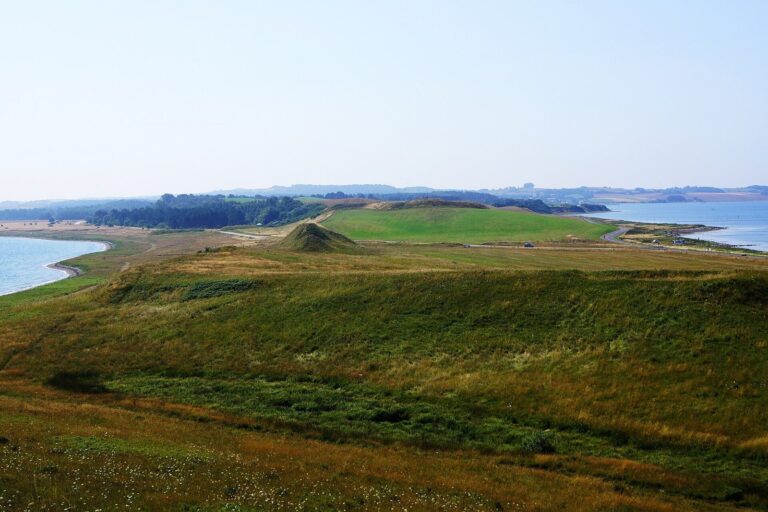
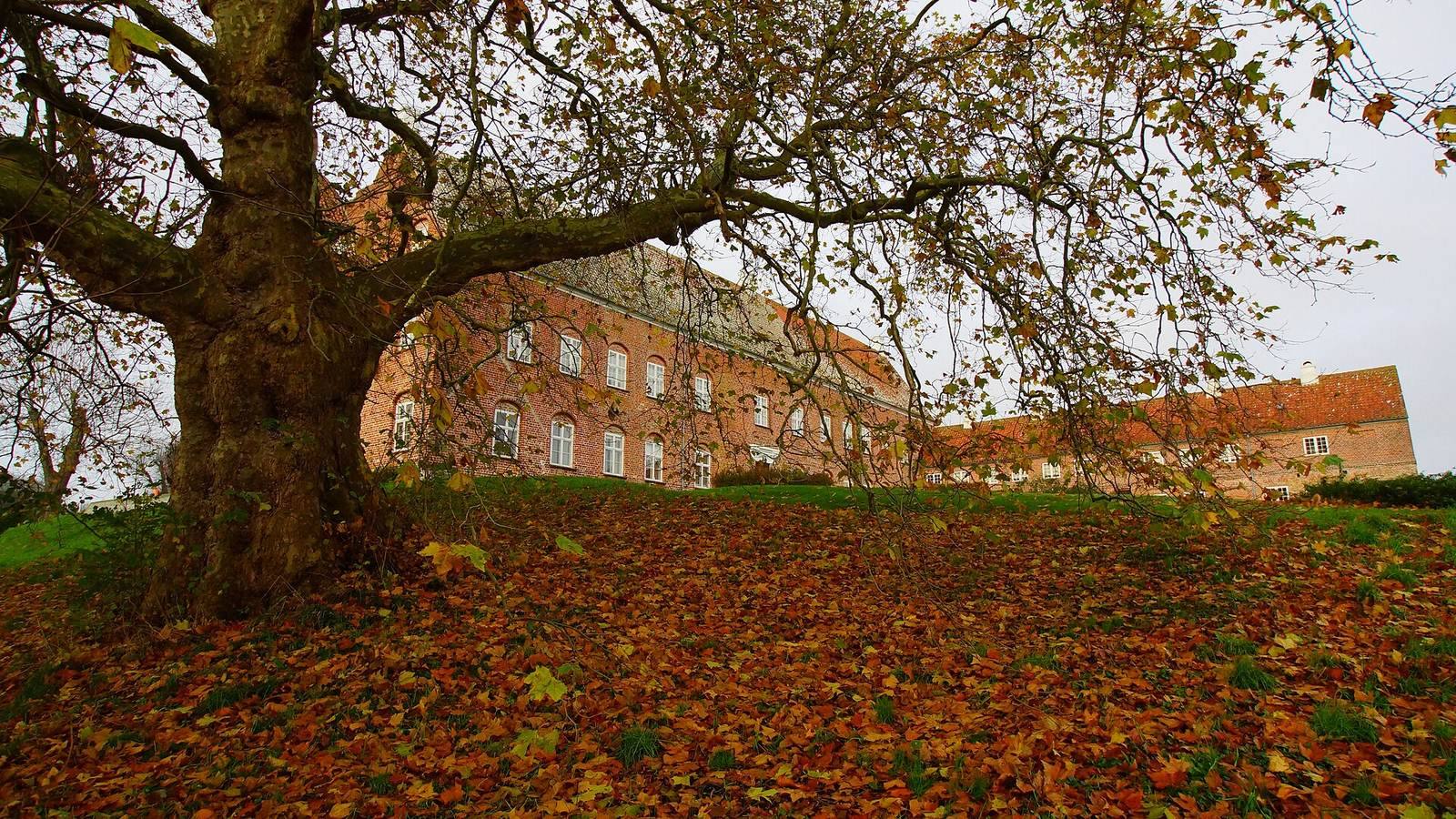
Rugaard Castle stands at the top of a slope that descends toward Nørresø. Its easterly outlook extends over the lake and the Kattegat, the sea between Denmark and Sweden. The estate lies about 2 km from Djursland’s eastern coast.
Moat and Stone Walls
A moat once surrounded the manor and was filled during Jacob Benzon’s ownership. Stone walls begun during his tenure remain visible on the estate.
Glacial Terrain
Rugaard lies in a hilly, wooded coastal landscape. Its stated area is 965 hectares, including farmland, forest, and lakes. The estate sits at the edge of the last ice sheet, which advanced north from the Baltic region and ended in the Rugaard area about 12,000 to 14,000 years ago. Meltwater spread stony sand and gravel across the northern ground; the southern part, once beneath the ice, has clay-rich, fertile soil. Gravel quarries on Rugaard’s northern land adjoin quarries on Katholm’s southern land. Birds of prey uncommon elsewhere are sometimes found in this part of eastern Djursland.
Lakes
Nørresø and the more southerly Søndersø occupy former sea coves. They became lakes as the land rose after the pressure of the ice sheets ceased about 10,000 years ago. Søndersø has since been re-established following its drainage for farming.
Park Monument
A monument in the park north of the manor commemorates Ferdinand Mourier-Petersen’s work planting forests and converting heathland to farmland.