Handel Hendrix House: A Museum of Two Musicians in London
Site at a Glance
- Popularity
- High
- Country
- United Kingdom
- Primary era
- Early Modern
- Eras represented
- Early Modern, Modern
- Civilizations
- British
- Site type
- Domestic
- Remains
- House
On this page13 sections
History
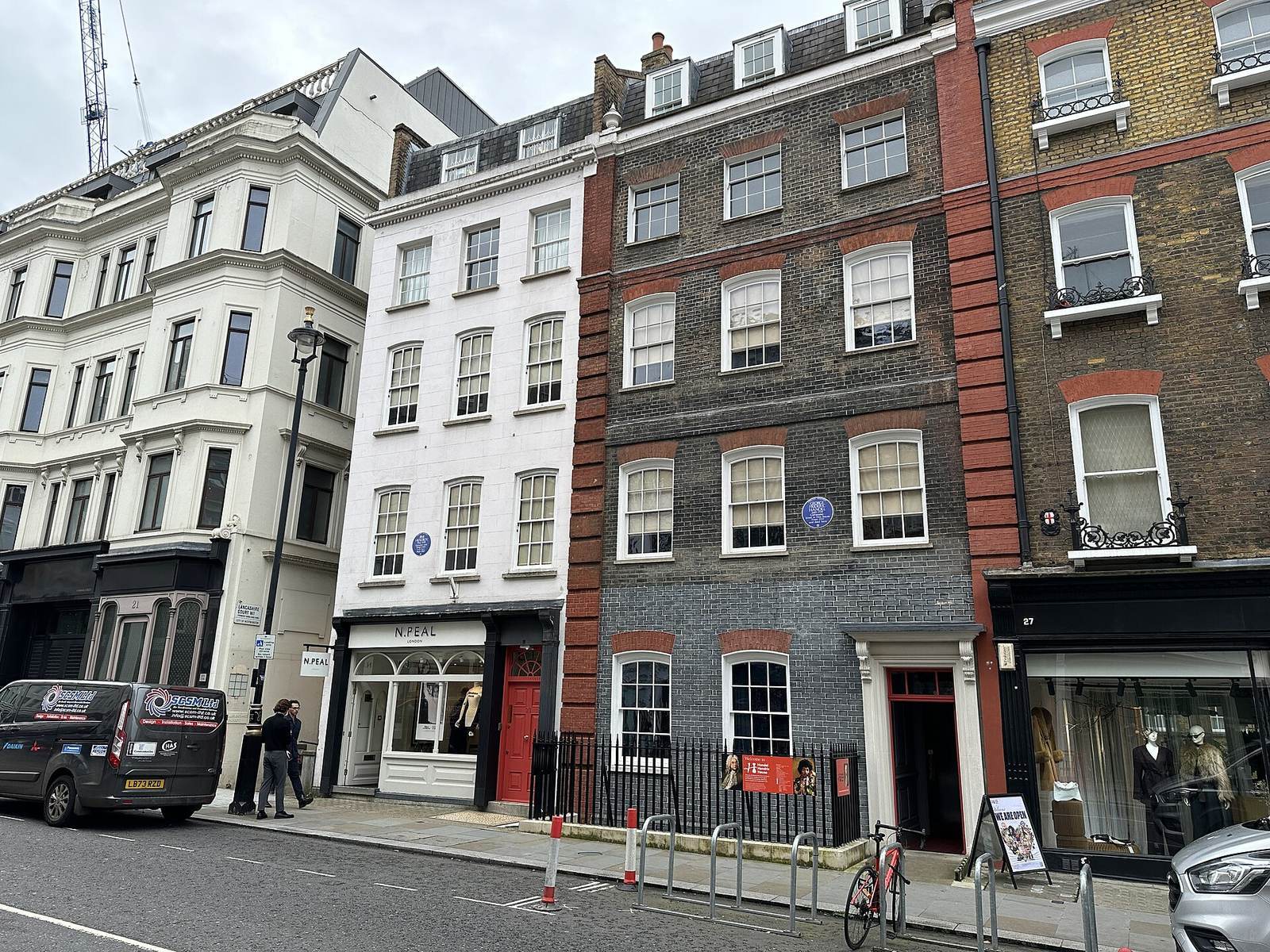
Handel Hendrix House is a museum in Mayfair, London, United Kingdom, devoted to the lives and work of George Frideric Handel and Jimi Hendrix. The adjoining houses were built between 1717 and 1726 as part of a planned extension of Brook Street. Handel moved into No. 25 in 1723, and Hendrix lived at No. 23 in 1968–69.
Handel at Brook Street
Handel had settled in London in 1712 and, before moving to Brook Street, lodged with friends and patrons. In 1723 he took No. 25 after being appointed composer to the Chapel Royal, the monarch’s chapel and musical establishment, on an annual salary of £400. As a foreign national, he initially could not buy a London property or take a long lease. Even after becoming a British citizen in 1727, he continued to rent the house on short-term agreements, living there until his death in 1759.
Handel composed and partly rehearsed almost all the works he wrote after moving to Brook Street. From the 1730s, he also rehearsed with musical associates at the house, including works such as Alcina and Messiah. The house served as a place for business and entertaining as well as composition: by the late 1730s, scores of Alexander’s Feast and other works were available for purchase there. At the end of his life, Handel owned more than 80 paintings and prints, including works by Watteau, Teniers and Poussin.
After Handel died, his instruments passed to John Christopher Smith and Smith’s son. Handel had brought the elder Smith to London as his copyist; the younger Smith later assisted him when blindness prevented him from writing and conducting. The tenancy and Handel’s clothing passed to his servant John Du Burk. An inventory made on 27 August 1759, after more valuable belongings had been removed, recorded the house’s contents and use.
Changes to the house
The house remained largely unchanged until the 1830s, when its attic rooms were converted into a fourth full storey. In 1905, C. J. Charles turned the building into a shop, removing its original frontage and internal dividing walls. Interior decorators and antiques dealers later occupied the property. The Co-operative Insurance Society acquired it in 1971 and held the freehold.
Preservation and the museum
Efforts to establish a Handel museum began in 1958, when dentist Leslie Sparey arranged a special visit to the house, then occupied by Viyella. The following year, musicologist Stanley Sadie attended a Handel bicentenary commemoration there and also pursued the idea. A committee that included representatives of the Royal College of Music, the Royal Academy of Music and the Arts Council later proposed a museum, but the plan was shelved.
In 1982, a proposal to demolish five Grade II-listed buildings in a development that would affect Handel’s house was refused planning permission. Sparey continued to press for the property’s lasting preservation, and a proposed Handel museum trust fund and draft statement of aims followed in 1983 and 1984. In the early 1990s, Stanley Sadie and his wife established the Handel House Trust. The Trust acquired the lease of No. 25 from the Co-operative Insurance Society, leased the upper floors from 2000 and opened the Handel House Museum on 8 November 2001 after renovation. No. 25 is Grade I listed, the highest English category for buildings of special architectural or historic interest, in recognition of its association with Handel.
In 1998, the Handel House Collections Trust acquired the Byrne Collection, a group of several hundred items connected with Handel. It includes correspondence, manuscripts, early editions, prints, paintings and sculptures, as well as a copy of an early Handel biography annotated by Handel’s friend and librettist Charles Jennens. The Trust also acquired portraits of Jennens and opera singer Faustina Bordoni.
Hendrix lived at No. 23 in 1968–69. The museum added the upper floors of his former home in 2016, and the rooms of his apartment opened to the public in February that year. The institution later adopted the name Handel & Hendrix in London.
Remains
The museum occupies the upper floors of adjoining Nos. 23 and 25 Brook Street. No. 25 is a typical early-eighteenth-century London terrace house, built with a basement, three main storeys and attic rooms. Its ground floor remains a shop outside the museum; the museum’s reconstructed period rooms are on the first and second floors, while its displays also extend into the upper floors of No. 23.
No. 25: plan and restored interiors
House plan and restoration
The basement of No. 25 held the kitchens. On each of the three floors above, a front room was paired with a smaller rear room and an adjoining closet; servants’ rooms lay in the attic before those spaces became a full fourth storey in the 1830s. The internal staircase survives in near-original condition. During the museum restoration, later partitions were removed to recover the Georgian room arrangement, and details such as panelling, shutters, window seats and cornices were reconstructed chiefly with reference to surviving period features at No. 27/29.
Paint samples survived on the staircase woodwork and on a second-floor door that had been repainted 28 times. The original paint scheme was lead grey, while the door was later finished in chocolate brown, a colour used in the Georgian period to conceal grime. These colours informed the redecoration, with more grey used on the first floor. Three Georgian marble fireplaces from Russell Street in Covent Garden were installed in the first-floor rooms and bedroom. The floors were laid with old wood treated with lime and wax, and the ceilings were finished with lime plaster.
Handel’s rooms
First-floor rooms
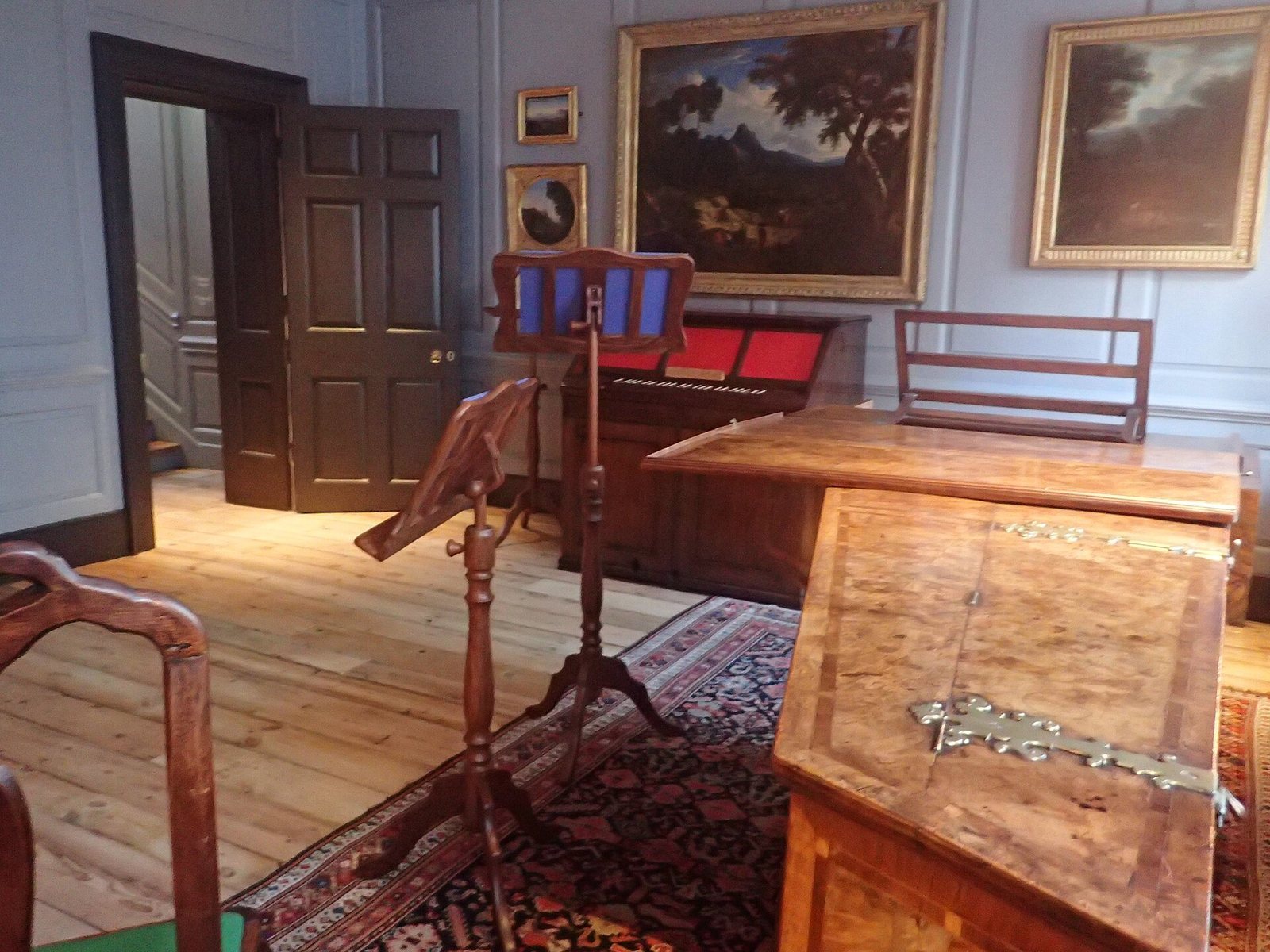
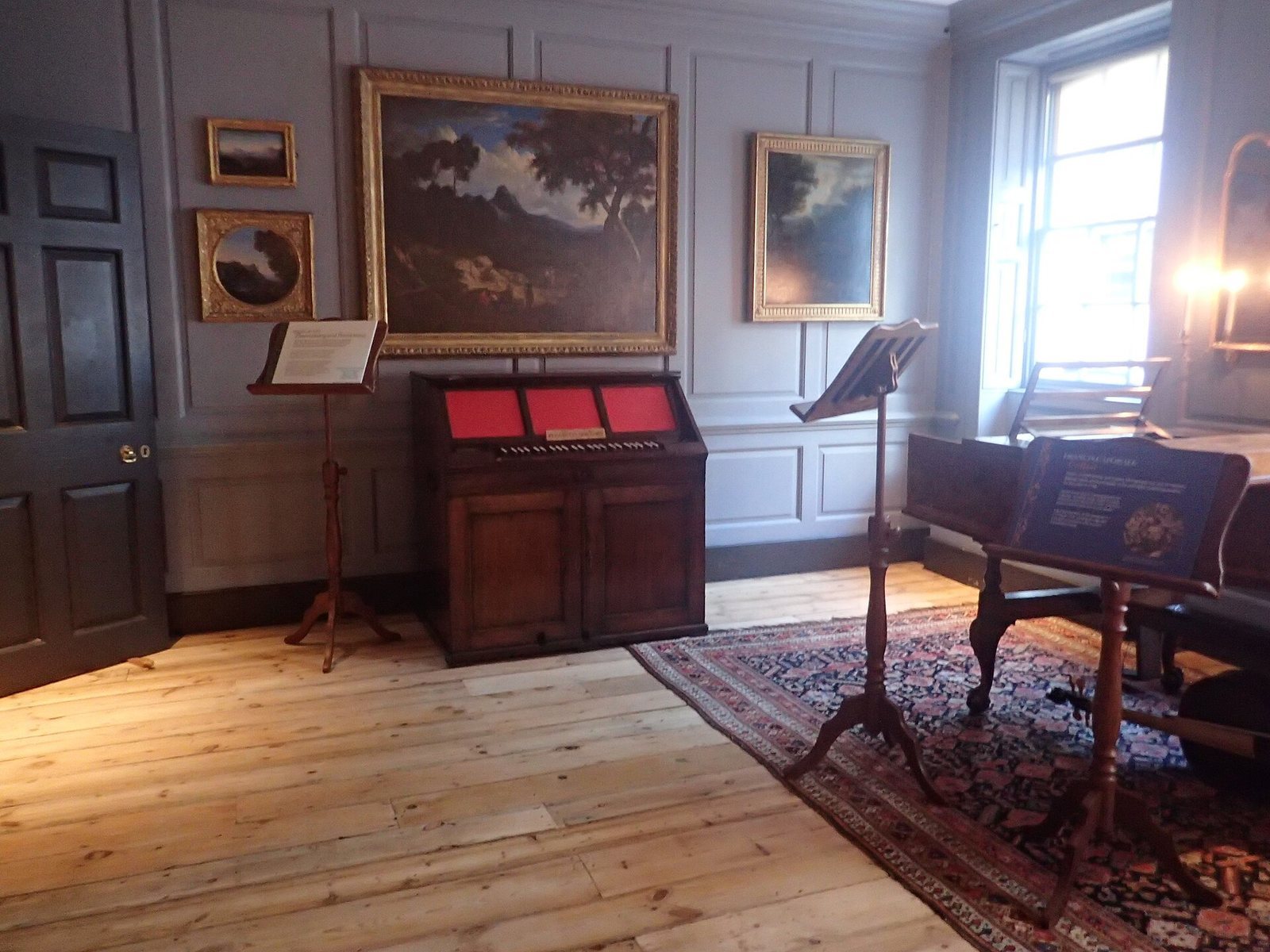
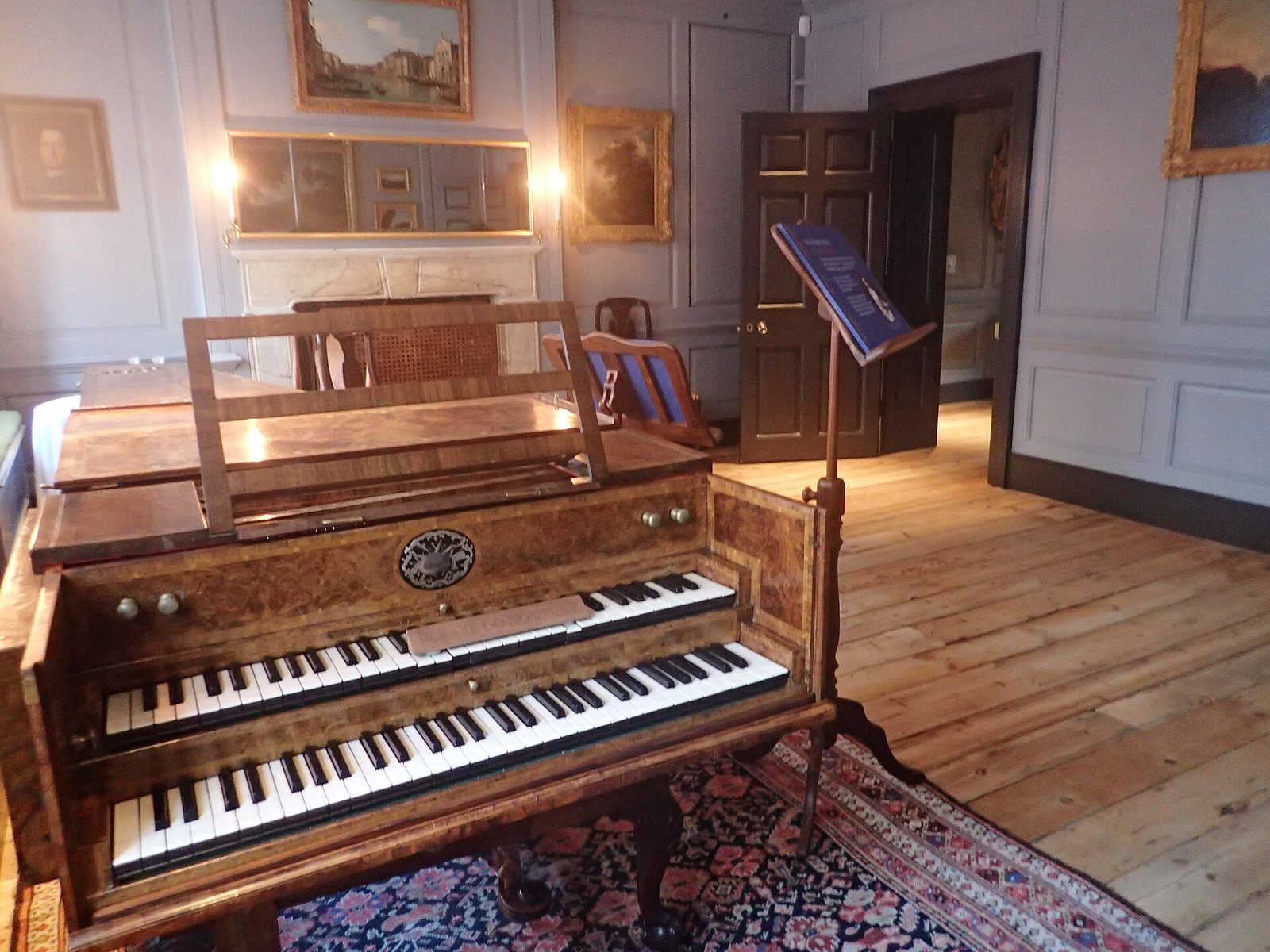
The front room on the first floor served as Handel’s rehearsal room from the 1730s. It now displays portraits of singers from his era and a reproduction of a two-keyboard harpsichord by the Flemish firm Ruckers, used for concerts. The rear room was Handel’s composing room and is thought to be where he wrote some of his best-known works, including Messiah. Portraits of Handel and Jennens are displayed there.
Second-floor rooms
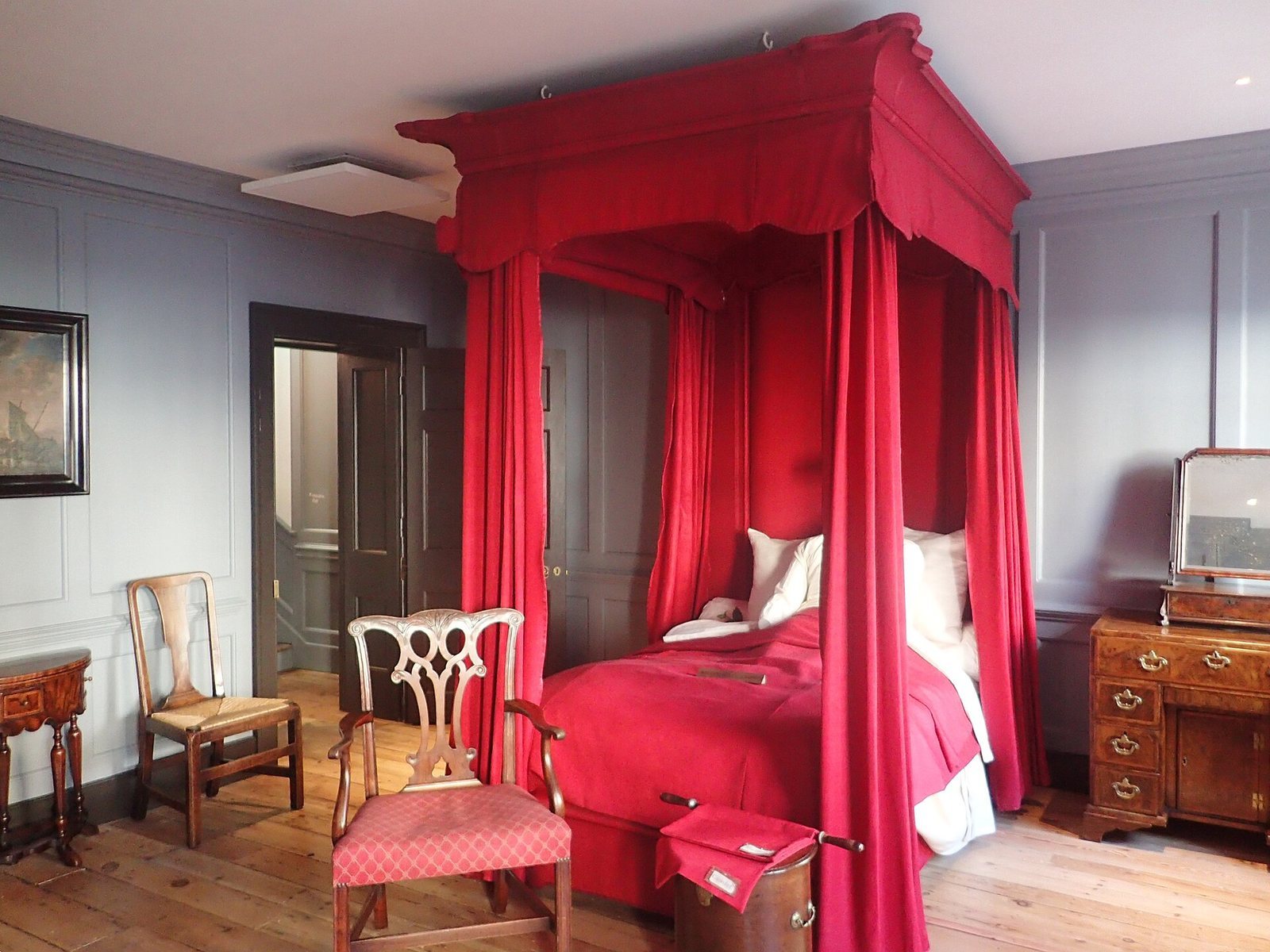
The front room on the second floor is thought to be where Handel died. The rear room was his dressing room and originally connected to a small closet. A large canopy bed in the front room resembles the bed described in the 1759 inventory.
Furnishings and displays
Re-created furnishings
The 1759 inventory describes a canopy bed with crimson wool hangings, bedding, pillows, blankets and a quilt. It also lists red window curtains and rods, along with chairs, a fire screen and other household items. The museum’s large bed was reconstructed using a period bed; its woven wool fabric and silk braid were based on a canopy bed at Hanbury Hall in Worcestershire. Bed linen, pillows and a quilt were recreated using objects from Historic Royal Palaces. The inventory mentions curtains in the rear first-floor room; research into the restoration suggests the rehearsal room at the front may have had none, possibly for acoustic reasons.
Musical and commemorative displays
A clavichord made in 1726 by Annibale Traeri of Modena may have been kept in Handel’s rear first-floor room; he used this kind of instrument for composing and could take it on journeys. The instrument is now at Maidstone Museum & Art Gallery in Kent. A story that Handel secretly played a clavichord as a child does not establish that the 1726 instrument was the one in that anecdote.
No. 23 displays a collection of Hendrix’s old records. Both houses also bear blue plaques commemorating their respective residents.