Rufford Abbey: A Cistercian Monastery and Country House in England
Site at a Glance
- Rating
- 4.6
- Popularity
- Medium
- Country
- United Kingdom
- Primary era
- Medieval
- External website
- Open
- Eras represented
- Medieval, Early Modern, Modern
- Civilizations
- British, English
- Site type
- Religious
- Remains
- Monastery
On this page14 sections
History
Rufford Abbey is a former Cistercian monastery in the United Kingdom, founded by Gilbert de Gant, Earl of Lincoln, in 1147 or 1148. Cistercian monks came from Rievaulx Abbey in Yorkshire, and the new foundation belonged to the line of Clairvaux. Dedicated to Saint Mary and attached to the Diocese of York, it was completed by 1170.
The medieval monastery
The abbey received papal recognition during its early years. Pope Adrian IV blessed it in 1156, while charters and papal bulls, formal documents issued by the pope concerning church authority and privileges, confirmed its rights and donations between 1148 and 1462. Its abbots included Philip de Kyme, Edward, Geoffrey, Thomas, Simon, an abbot recorded only as “G—”, William, Henry, Thomas de Stayngreve, Henry de Tring, Elias Lyvet, Robert de Mapelbek, John de Harlesay, John de Farnsfeld, Thomas Sewally, Robert de Welles, Robert Warthill, William Cresswell, John Pomfrat, John Lilly, John Greyne, Roland Bliton, and Thomas Doncaster. The recorded sequence extends from the reign of Stephen and 1203 through 1516 and the Dissolution.
As the abbey’s lands expanded, the settlements of Cratley, Grimston, Rufford, and Inkersall were cleared. Some of the displaced inhabitants were settled at Wellow, a new village outside the estate. During the medieval period, the monks also received permission to cut and sell firewood and building timber from Sherwood Forest. These rights supported the estate’s activities while linking the monastery to the surrounding woodland.
The abbey remained substantially unchanged until shortly before the sixteenth-century Dissolution, the programme through which Henry VIII’s government closed England’s monasteries and transferred or sold their property. A fire damaged Rufford before that upheaval. In 1534, the abbey’s gross income was recorded as £254 6s. 8d., with a clear annual value of £176 11s. 6d. Between six and fifteen monks lived there when the monastery was closed and stripped of its contents on 4 September 1536 by the royal visitors Legh and Layton. Thomas Doncaster, the last abbot, received a pension of £25 a year, but it was cancelled when he became rector of Rotherham on 2 July 1536.
From monastery to country house
After the Dissolution, the former abbey was granted to John Markham. He exchanged it less than a year later for lands in Ireland, after which it passed to George Talbot, 4th Earl of Shrewsbury. The Talbot family retained it until 1626. Between 1560 and 1590, George Talbot, 6th Earl of Shrewsbury, and Bess of Hardwick converted part of the former monastery into a country house.
In 1626, Mary Talbot transferred Rufford through her marriage to Sir George Savile, 2nd Baronet. Sir William Savile, 3rd Baronet, made it the seat of the Savile family after burning their former home during the Civil War, the conflict between forces supporting Charles I and Parliament in England during the 1640s, to prevent its occupation by a Parliamentarian garrison. He was killed in action in 1644. His son, George Savile, later 1st Marquess of Halifax and Lord Privy Seal, occupied Rufford and died there in 1695.
The Saviles reshaped the former monastic site during the later seventeenth century. George Savile built a north wing in 1679 on the site of the abbey church, providing reception rooms and a long gallery, and also constructed a large stable block. The house was remodelled between 1685 and 1695, while the surviving south service wing was added during the same broad period and later used as offices.
Rufford also hosted notable visitors and entertainments. Lady Arbella Stuart visited the estate. In August 1614, King James VI and I came from Belvoir Castle, where a masque, an elaborate court performance combining drama, music, dance, and staging, was presented as an “antick Maske”. The visit took place in the wider political context of Arbella Stuart’s claim to royal attention. In 1603, the Main Plot had sought to place her on the throne instead of James.
The Lumley-Savile estate
During the eighteenth and nineteenth centuries, Rufford passed through the Lumley-Savile family. Its owners and associated heirs included Richard Lumley-Saunderson, later 6th Earl of Scarbrough; his younger brother, the 7th Earl; the 8th Earl; Captain Henry Lumley-Savile; Augustus William Lumley-Savile; and John Lumley-Savile, who became Baron Savile.
Between 1729 and about 1845, the estate was extensively improved. The works included the creation of Rufford Lake and the addition of a bath house, mill buildings, a brewhouse, water tower, coach house, and five ice houses. By the early twentieth century, the estate covered about 18,500 acres. Rising costs and falling income then led its trustees to sell the estate in lots in 1938.
In 1851, about forty poachers assembled in Rufford Park to protest wealthy landowners’ control of game-hunting rights. A clash with ten gamekeepers left one gamekeeper badly injured, and he later died. Four ringleaders were sentenced to deportation and fourteen years’ penal servitude for manslaughter. The event inspired the ballad Rufford Park Poachers.
War, public ownership, and protection
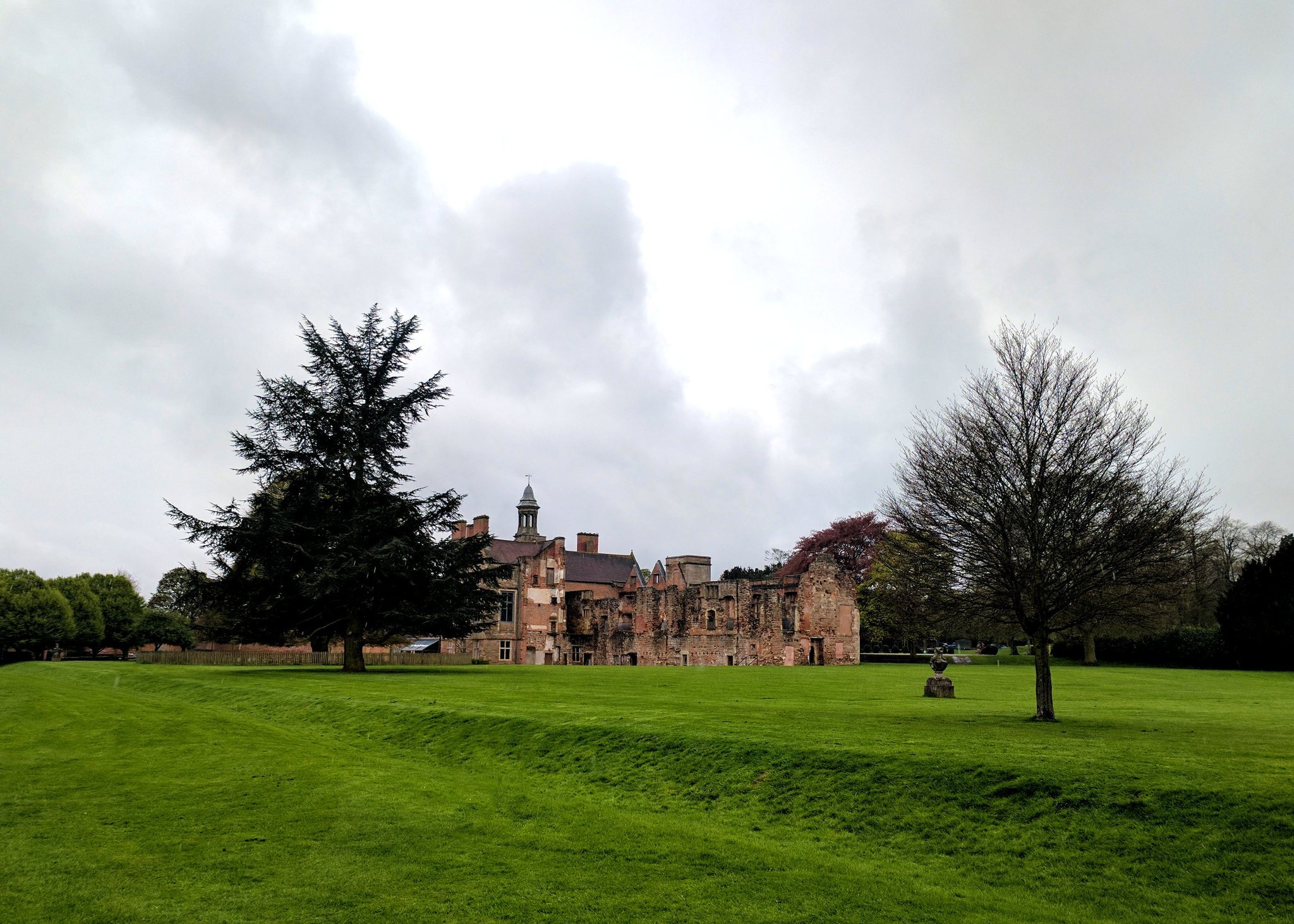
Sir Albert Ball bought much of the land after the 1938 sale and soon sold the house to Harry Clifton. During the Second World War, the former abbey was used by the Ministry of War. Nottinghamshire County Council purchased the abbey and 150 acres of grounds in 1952. In 1956, the late-seventeenth-century north and east wings were demolished. The remaining west range and south service wing were placed in the care of the Ministry of Works, and the site was opened to the public.
Rufford Abbey was designated a Grade I listed building on 18 March 1949. Grade I is the highest category of statutory protection for a building of exceptional architectural or historic interest in England. Its historic park and gardens were registered nationally in 1986. English Heritage owns the remains of the house, while Nottinghamshire County Council owns Rufford Country Park.
The former abbey also entered local tradition and modern cultural history. After the Dissolution, it acquired a reputation as the haunt of a giant monk carrying a skull. It later provided the setting for Helen Cresswell’s children’s book The Secret World of Polly Flint and its 1987 television adaptation.
Remains
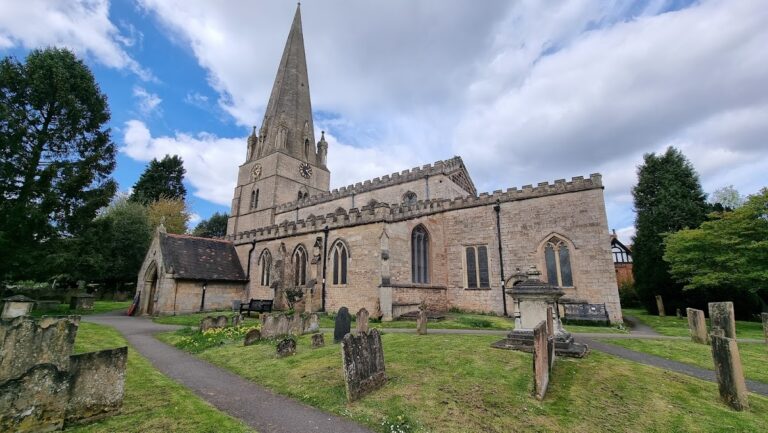
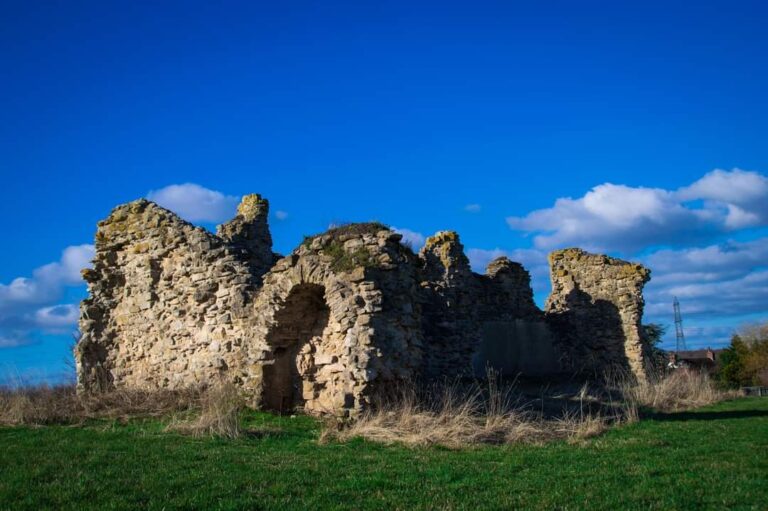
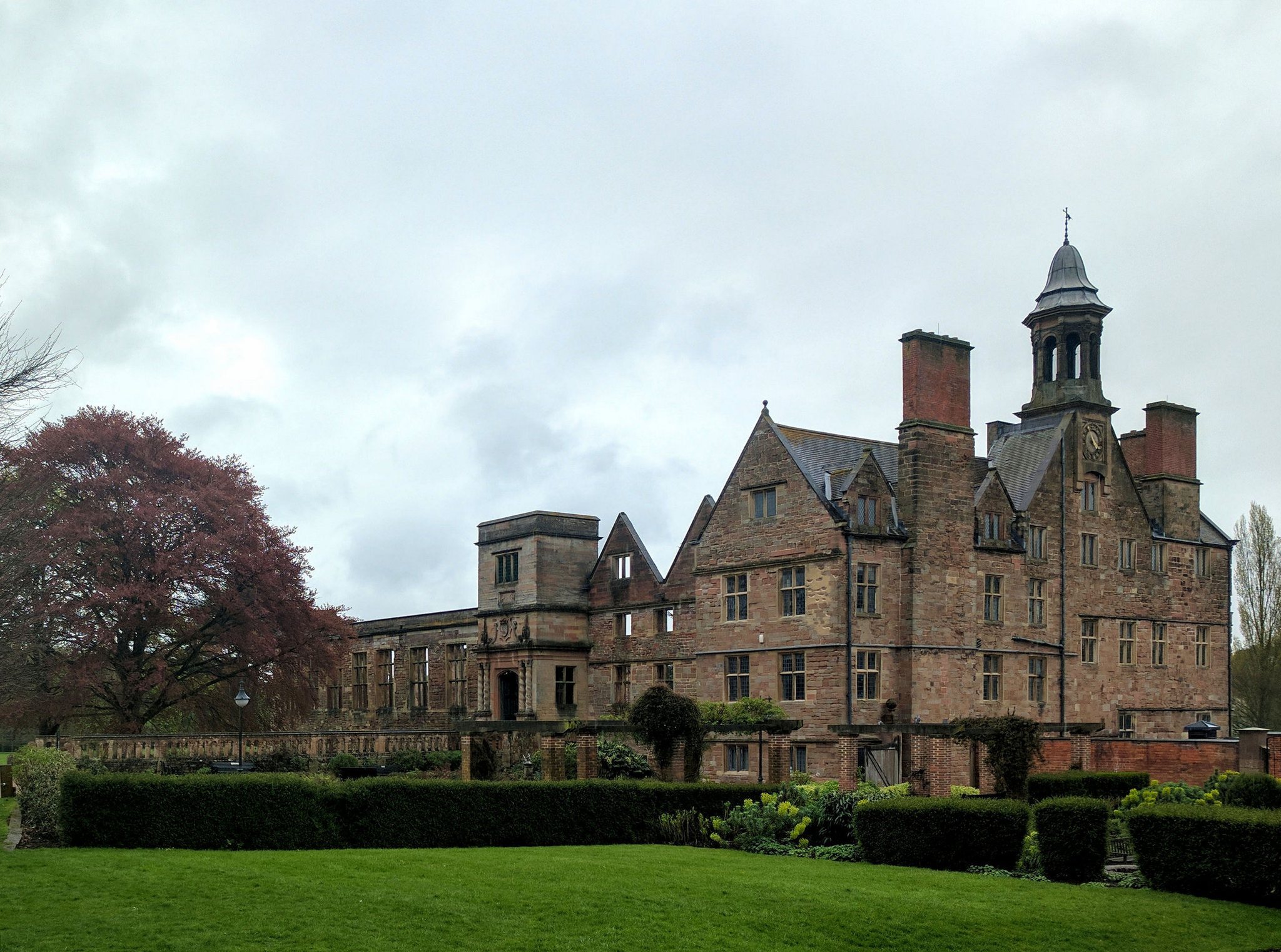
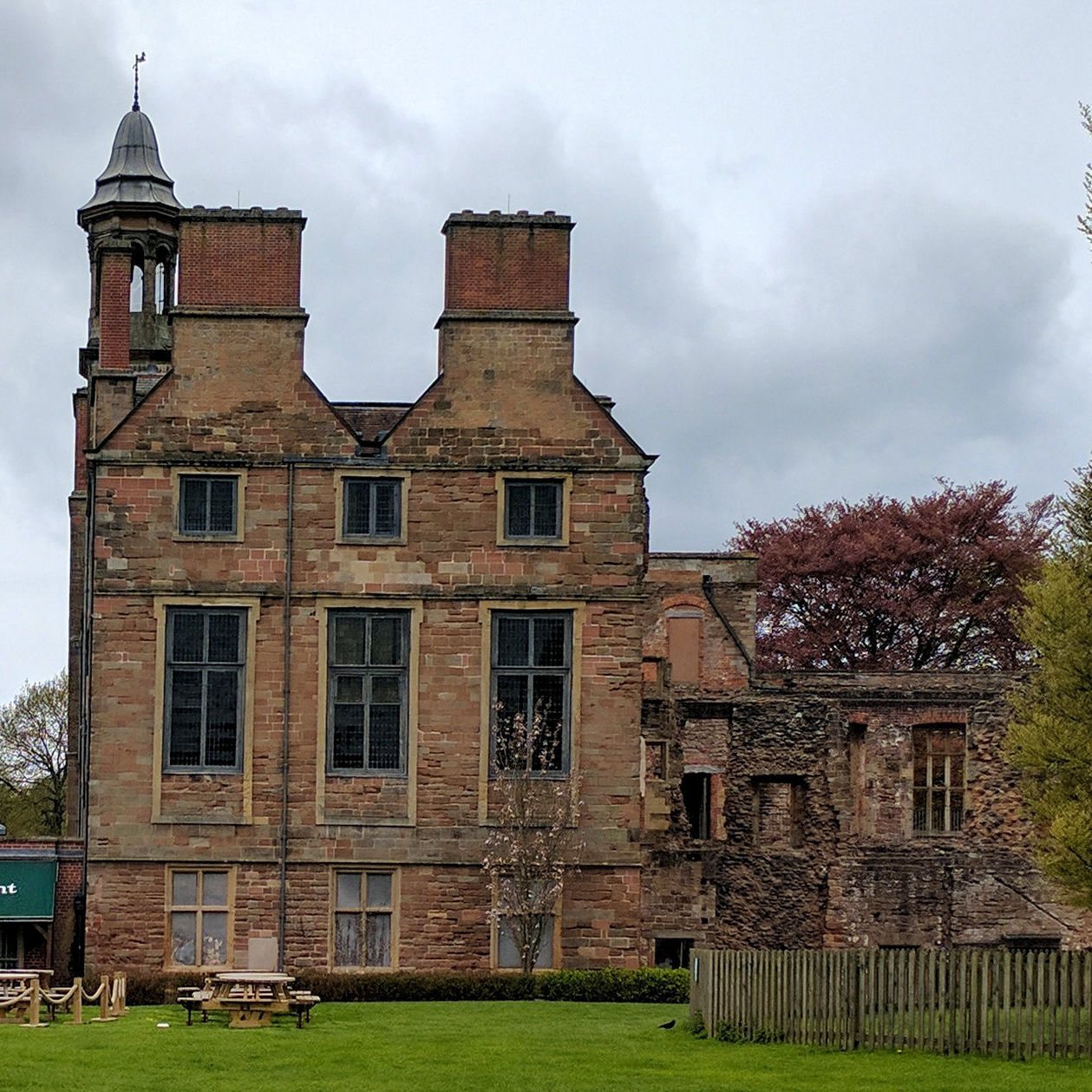
Rufford’s surviving complex is formed principally by the west range and the former lay brothers’ building, both dating largely from around 1160. Lay brothers were members of a medieval monastery who carried out much of its manual and estate work. These medieval remains are incorporated into a later country-house complex, whose substantial additions were subsequently demolished. The buildings use rubble, brick, dressed stone, and ashlar, with ashlar dressings and plain-tile roofs. The remains stand within approximately 150 acres of park and woodland, including Rufford Lake, while part of the park is designated as a local nature reserve.
Medieval monastic buildings
West range
The west range is one of the principal surviving parts of the monastery and dates largely from around 1160. Its fabric belongs to the medieval complex established for the Cistercians, although the former monastic buildings were later incorporated into the country house. The range survives within the present park as part of the remains placed in the care of the Ministry of Works after the twentieth-century demolition campaign.
Lay brothers’ building
The former lay brothers’ building also dates largely from around 1160. Its purpose was connected with the community of lay brothers who performed manual and estate work for the monastery. Like the west range, it forms part of the surviving medieval complex, constructed in rubble, dressed stone, and ashlar within a site later adapted for domestic use.
Country-house remains
North and east wings
The north wing was built in 1679 on the site of the abbey church. It contained reception rooms and a long gallery, reflecting the conversion of the former monastery into an aristocratic residence. The north wing and the east wing were demolished in 1956, leaving the surviving medieval ranges and the remaining service wing to represent the later house.
South service wing
The Saviles added the south service wing during the seventeenth century. It formed part of the working side of the country house and was later used as offices. The wing survived the 1956 demolition and remains among the principal parts of the former house still standing.
Estate buildings and water features
The wider estate included a large stable block, a bath house, mill buildings, a brewhouse, water tower, and coach house. Rufford Lake was created during the estate improvements carried out between 1729 and about 1845. These structures and water features extended the former monastic estate into a managed country-house landscape.
Ice houses
Five ice houses were constructed around 1820 near Rufford Lake, when the estate belonged to John Lumley-Savile, 8th Earl of Scarbrough. Two survive. Their position beside the lake made it easier to move ice from its source, although their entrances were not all oriented in the same direction. Some doorways faced the lake to meet practical access and transport needs.
Ice was probably obtained mainly from Blackwalk Pond. The pond had served the abbey during its monastic period and later supplied water to the water tower and brewhouse. It was drained in the twentieth century to make way for housing. The surviving former monastic buildings and country-house remains are now presented within Rufford Country Park.