Rouffignac Cave: A Prehistoric Decorated Cave in France
Site at a Glance
- Country
- France
- Primary era
- Stone Age
- Eras represented
- Stone Age
- Civilizations
- Unclassified
- Site type
- Civic
- Remains
- Rock Art
On this page11 sections
History
Rouffignac Cave, also known as the Cave of the Hundred Mammoths, is a decorated prehistoric cave in Rouffignac-Saint-Cernin-de-Reilhac, France. Its engravings and paintings are attributed to the Middle Magdalenian, a phase of the Upper Paleolithic hunter-gatherer culture in western Europe, and are more than 13,000 years old. Their age is based on style rather than direct dating.
Prehistoric activity
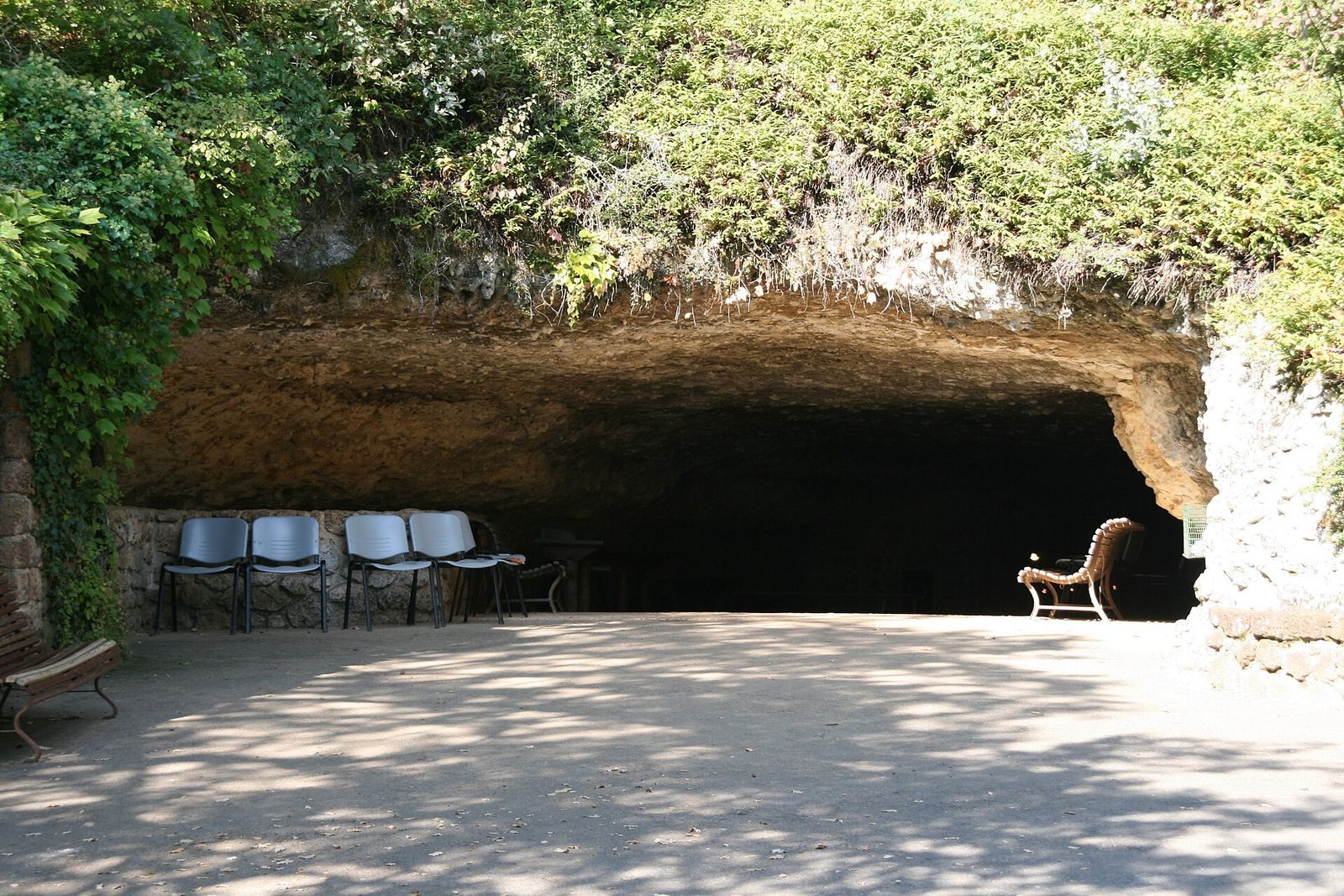
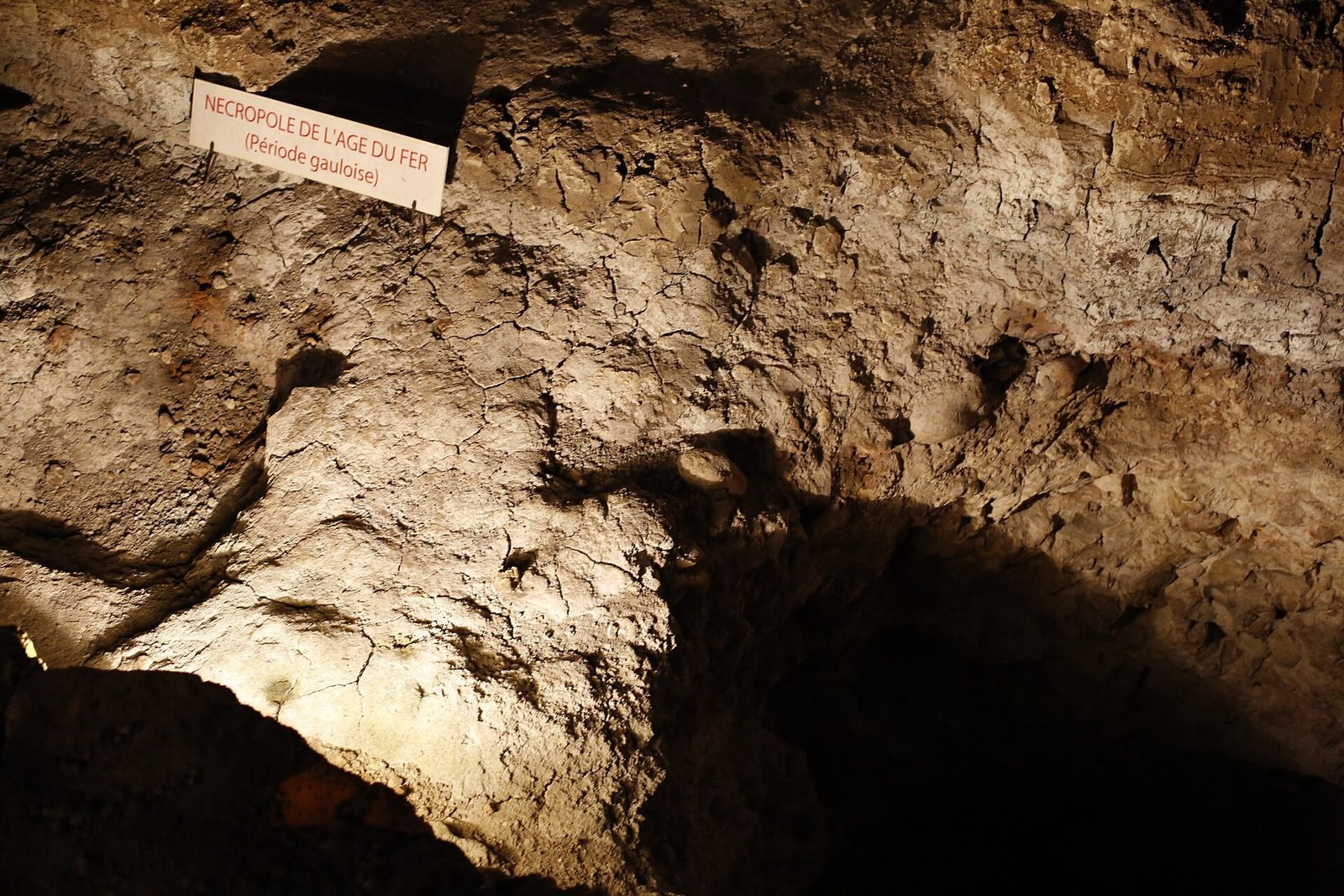
The entrance area was used during several periods. Mesolithic hunter-gatherers occupied it from about 9,200 to 7,800 years before present. Evidence also relates to the Tardenoisian and Sauveterrian, two Mesolithic archaeological traditions, and to the Neolithic and Iron Age. Burials from the latter two periods were found at the entrance.
Early descriptions and wartime use
François de Belleforest described the cave in 1575, referring to paintings and animal traces. In the seventeenth century, the canon and historian Jean Tarde said he had seen paintings of livestock. Louis Moréri’s 1674 historical dictionary described the cave of Cluseau as reaching far underground and repeated local accounts of large chambers, paintings, and altars.
Gabriel Bouquier made the first plan of the cave in the mid-eighteenth century; it is now held at the Museum of Art and Archaeology of the Périgord. From that century onward, visitors also left graffiti over prehistoric works. During the Second World War, the cave sheltered members of the French Resistance, the movements that opposed the German occupation of France.
Rediscovery and authentication of the art
The Périgueux Caving Club rediscovered the rhinoceros frieze during an expedition in 1948. It appeared behind a tent in a photograph by Bernard Pierret, published in 1951. Séverin Blanc, then an official responsible for prehistoric sites, initially judged the drawings to be the work of the Resistance.
Louis-René Nougier and Romain Robert renewed attention to the cave art’s great age in 1956, but its authenticity remained disputed. Investigators considered the style, animal subjects, anatomical detail, and preservation of the images. Assessments by Henri Breuil, Paolo Graziosi, and Martin Almagro in September 1956 helped establish that the works were prehistoric. Skepticism continued in print, including claims that the art was a hoax.
Research and protection
Studies of the finger-drawn markings have investigated who made them and whether they had symbolic meaning. A 2006 study attributed 50 markings to children on the basis of their width. Dick Stapert later argued that two children made 46 of those marks, while two to four others, aged six to thirteen, made the remaining four. Some children may have been lifted by adults to reach the cave walls. In 2011, Jess Cooney and Leslie Van Gelder identified children as young as three among the makers of a large proportion of the markings.
Rouffignac Cave became a protected French historic monument in 1957. In 1979, it was included in UNESCO’s World Heritage listing of the Prehistoric Sites and Decorated Caves of the Vézère Valley, under the name Cro de Granville. UNESCO World Heritage status recognizes places of outstanding cultural or natural importance.
Remains
Cave layout and geology
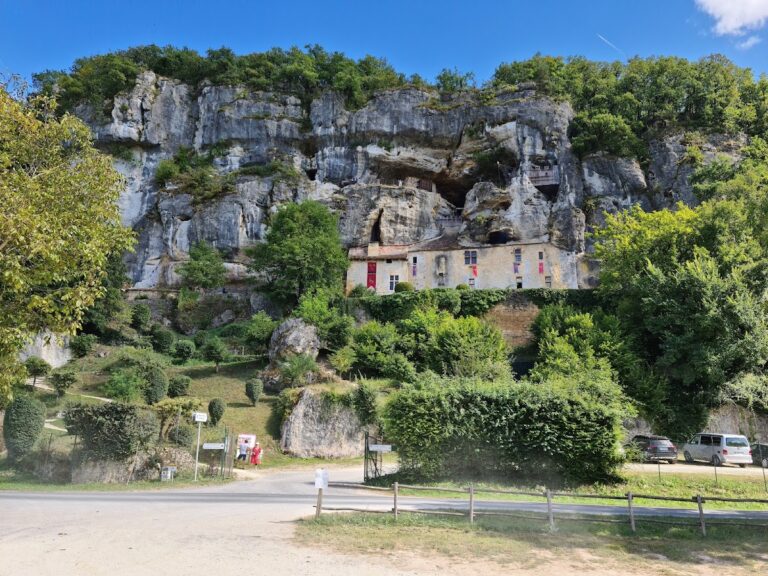
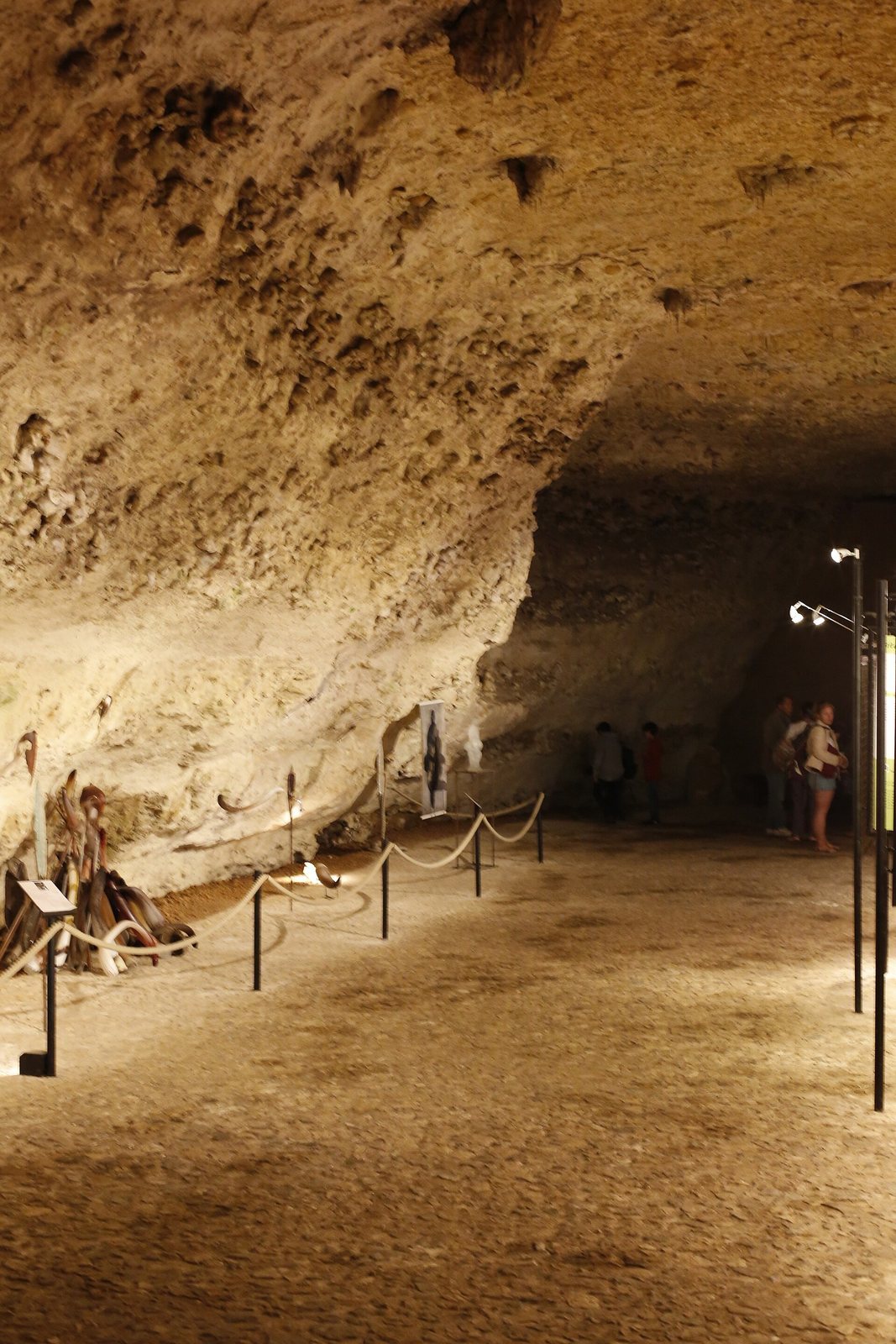
More than eight kilometres of passages extend through Rouffignac Cave, making it one of Europe’s largest decorated caves. The passages branch in a tree-like pattern through flat-lying limestone rich in flint nodules, on a hillside about five kilometres south of Rouffignac and along the right side of the Labinche valley. The limestone belongs to the uppermost Coniacian stage of the Late Cretaceous; younger rocks from the succeeding Santonian stage form the Légal plateau, a watershed between the Lisle and Vézère basins. The cave probably developed about three to two million years ago as water dissolved the rock along natural weaknesses. It is now mostly dry, with a small underground stream at its lowest level. Ten natural shafts descend to a deeper level, where a further four kilometres of passages have been explored. Major compositions often lie near the shafts. The Grand Plafond chamber, associated with a shaft, has 63 animal figures on its ceiling.
Prehistoric imagery
Engravings, drawings, and signs
The cave contains more than 250 engravings and drawings. An inventory counts 224 animal figures and four human figures. The animals include 158 mammoths, 28 bison, 15 horses, 12 ibex, 10 woolly rhinoceroses, and one cave bear; mammoths make up about 70 percent of the recorded animal figures. The images were made chiefly by engraving or drawing black outlines. Some figures are deeply cut into the rock, while others were painted in black. Manganese oxide used in the drawings came from Romanèche, about 450 kilometres away. The imagery also includes 17 house-shaped signs and six snake-shaped signs.
Finger markings and bear traces
Meandering traces made with fingers cover about 500 square metres of walls and ceilings. Cave-bear scratches and traces of resting places show that bears used the cave before the human artwork. Some bear scratches lie beneath human engravings.
Entrance finds
Finds from the entrance include several hearths, animal bones, and stone tools. Small geometrically shaped tools from the Sauveterrian level are known as Rouffignac heads. One blade was recovered from the decorated cave.