Rosenfeld Palace: A Banker’s Residence and Cultural Centre in Žilina
Site at a Glance
- Popularity
- Low
- Country
- Slovakia
- Primary era
- Modern
- Eras represented
- Modern
- Civilizations
- Austria-Hungary, Habsburg, Hungarian
- Site type
- Domestic
- Remains
- Elite Residence
On this page9 sections
History
Construction and patronage
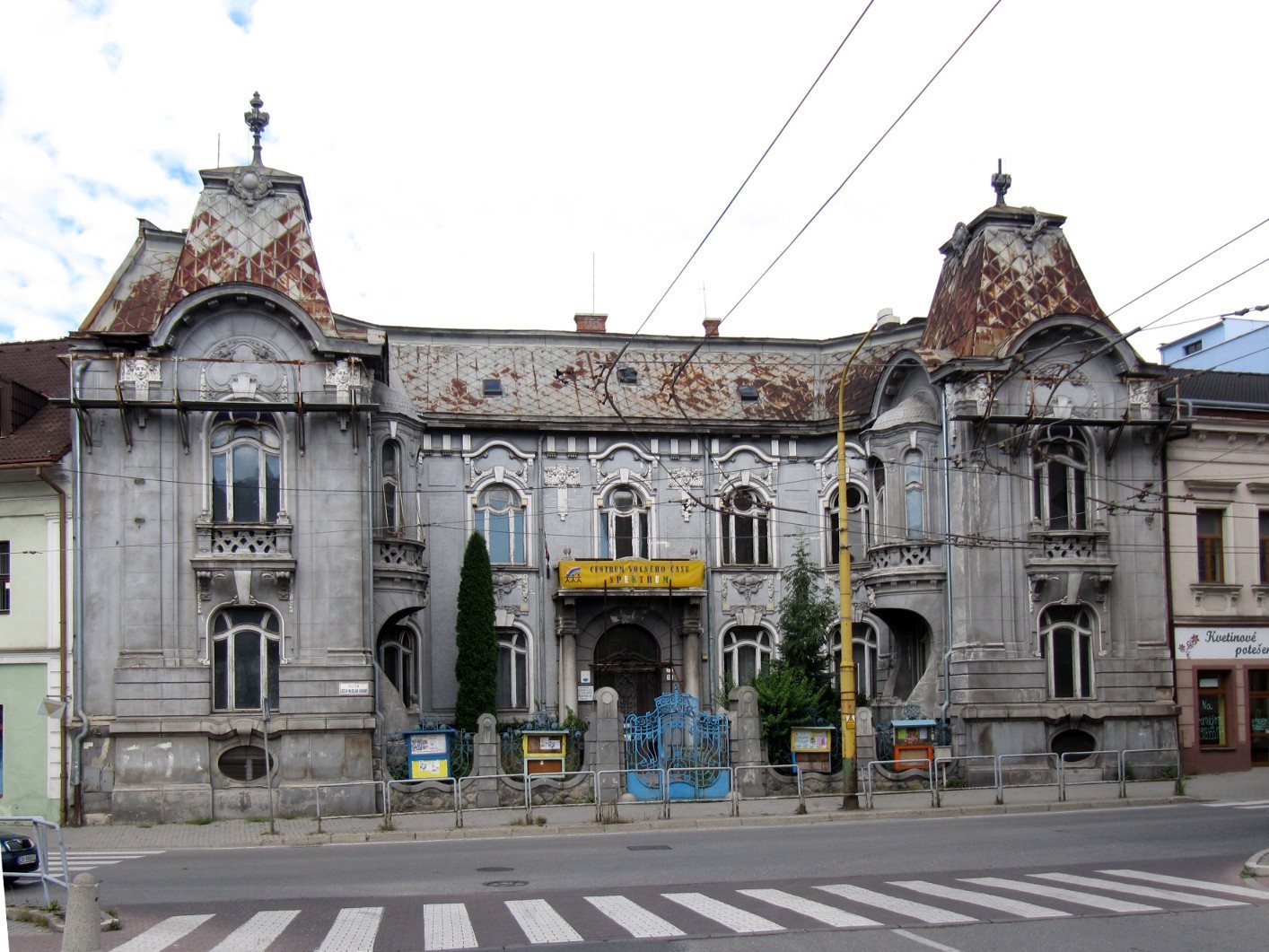
Rosenfeld Palace is an Art Nouveau building in Žilina, Slovakia, commissioned by banker and merchant Ignác Rosenfeld as his home and the headquarters of the Žilina Commercial Bank. Built in 1907 to a design by Žilina architect Mikuláš Rauter, its style belonged to an international architectural and decorative movement prominent around the turn of the twentieth century.
Rosenfeld directed the Slovak Savings and Credit Institution. After Žilina’s Jewish communal organization was established and its statutes approved in 1888, he became its first chairman. The palace takes its name from him.
Changing functions
After the owners died in 1932, the building was used for offices and banking. Banks remained there until the end of the 1950s, while a local public notary had an office in the palace from the 1930s. A centre for organized activities for children and young people opened there in the early 1950s and later became the District House of Pioneers and Youth.
Restoration and cultural use
From 1990, the palace operated as a leisure centre. It closed in 2011 because of its poor condition and subsequently deteriorated; restoration began in 2015. In 2016, it became a venue for cultural activities and informal education in Žilina.
The city’s bookbinding tradition dates to 1928, when artist Ján Vrtílek arrived in Žilina and established the foundations for the workshop now based in the palace. The workshop has operated independently since 1990 under the direction of Vrtílek’s daughter, Lida Mlichová. Its books have received awards in Slovak and international competitions, and Vrtílek belonged to a Munich association devoted to artistic bookbinding.
Rosenfeld Palace has been a National Cultural Monument since 2009, a Slovak designation for heritage recognized as nationally important. Its entrance gate has separate heritage-object protection. It is the largest cultural monument owned by the city, and its architectural, artistic, craft, and social value extends beyond Slovakia.
Remains
Plan and exterior
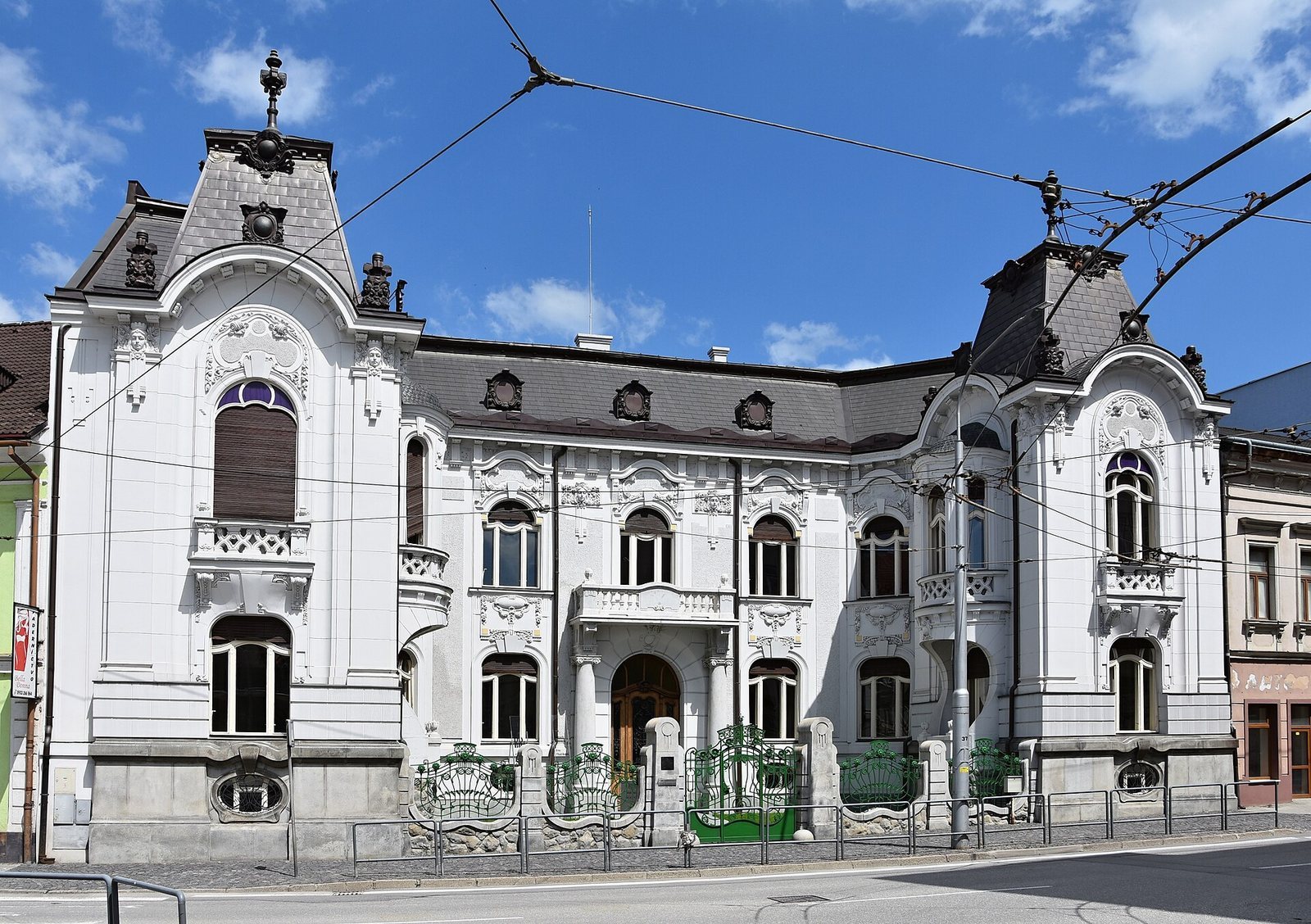
At Hurbanova Street 28 in Žilina’s historic centre, near the city’s main squares, the palace has an irregular C-shaped plan arranged in three spatial bands, or tracts. A small courtyard lies before the entrance, where a wrought-iron gate stands. The Art Nouveau building recalls Vienna’s Belvedere and has an elaborately decorated façade and a complex roof with additional features. A wrought-iron fence and the main gate survive as part of its exterior fittings.
Interior and craftwork
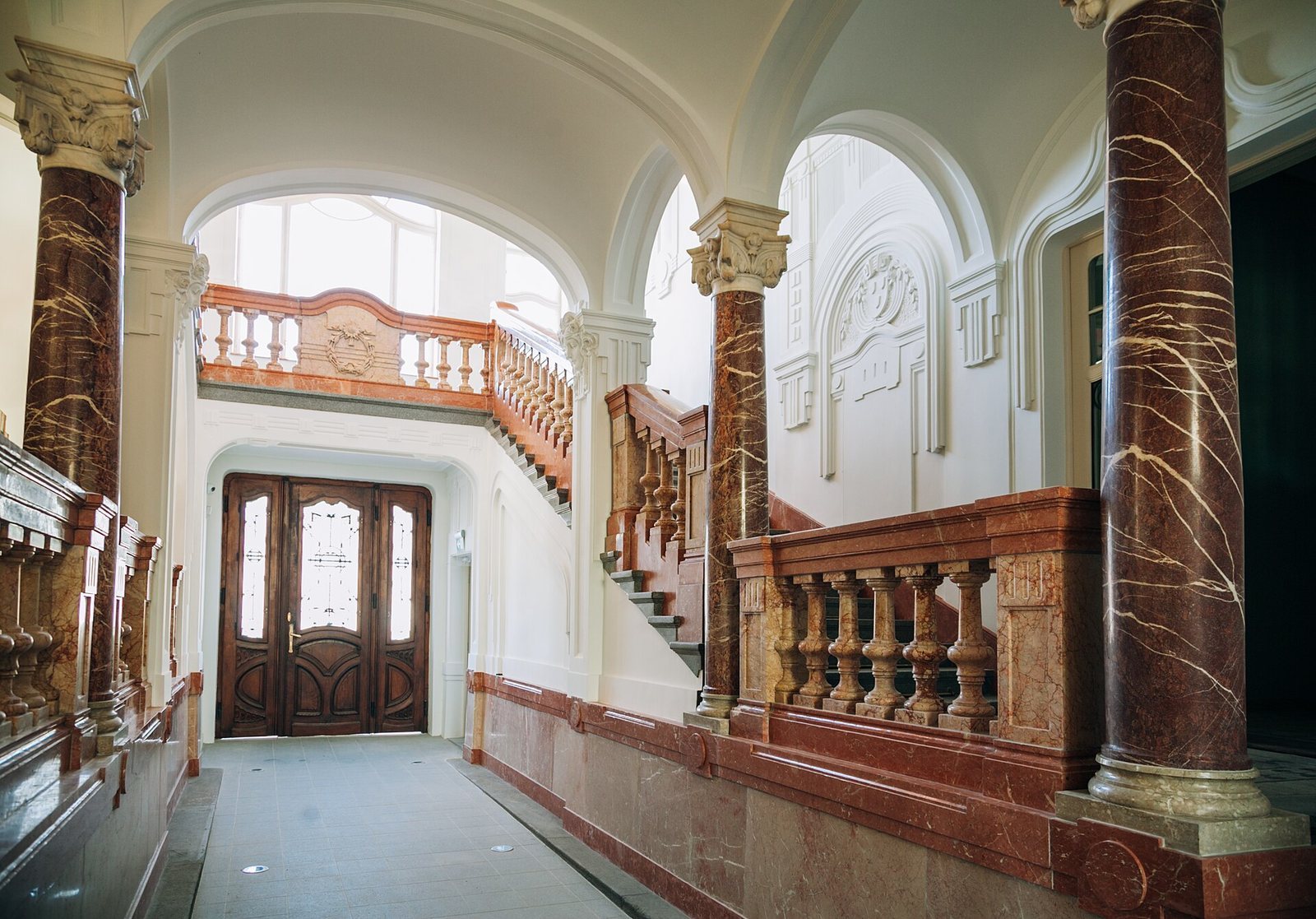
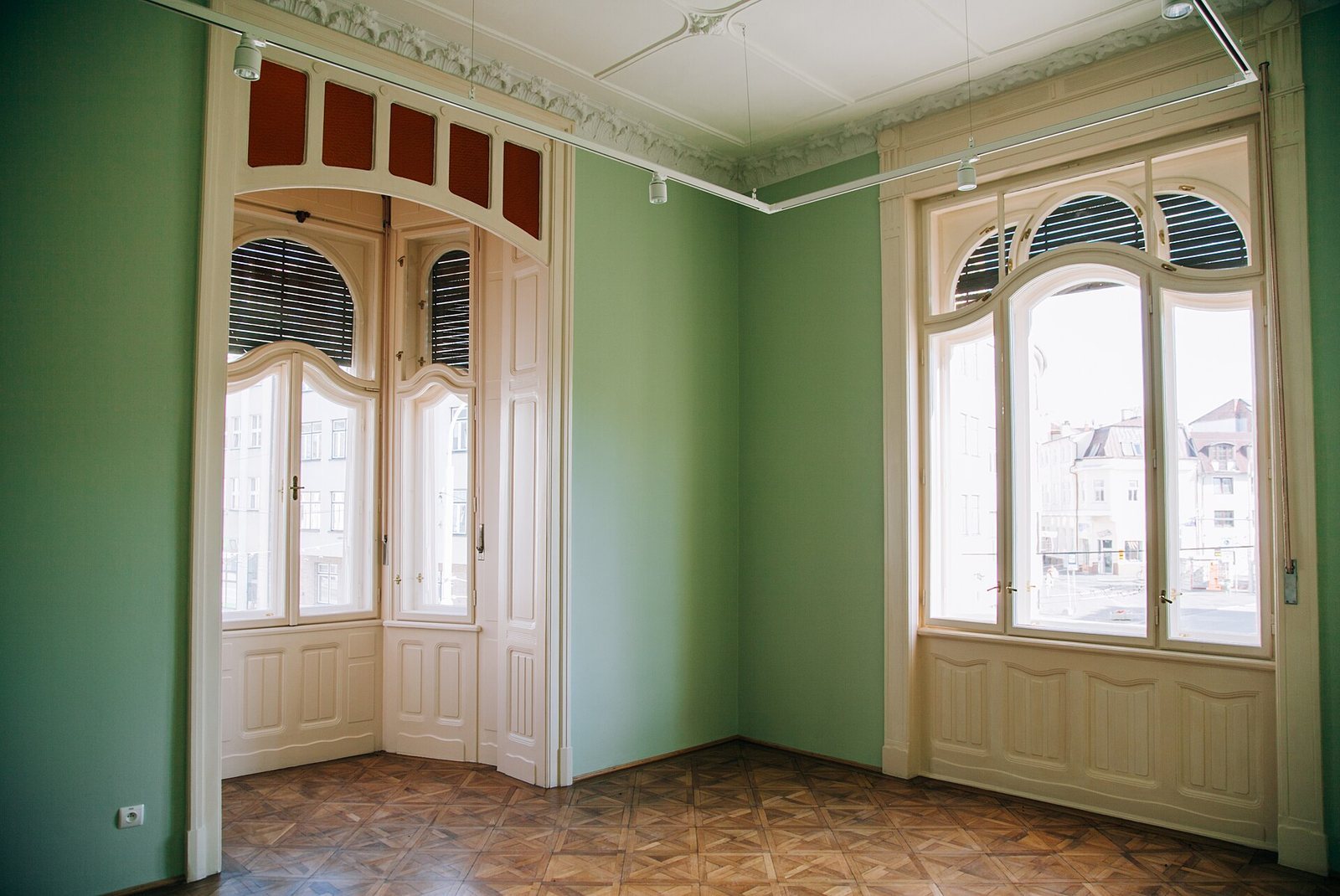
The palace remains close to its original state, with many of its decorative details intact. These include metal grilles on window and door fittings, wooden wall panelling, stucco decoration, original light fixtures, and windows with etched stained glass. The monumental main staircase has a marble balustrade, while the rear staircase has a metal railing.
Puppet exhibition
The attic contains the permanent exhibition “Puppets in the Attic,” which explores Slovak and Žilina puppetry. A glass interpretive path presents the first 16 years of the Žilina Puppet Theatre, founded on 1 September 1950 by local amateur enthusiasts led by puppeteer Teodor Zvara. The exhibition also covers Ján Stražan, described as the first Slovak puppeteer, whose theatre became popular across Slovakia, and introduces work by Žilina artist Martin Bálik.
Bookbinding workshop
The Lida Mlichová bookbinding workshop occupies part of the palace, continuing a craft tradition associated with the building’s cultural use.