Roman Fort Ermelo: A Roman Marching Camp in the Netherlands

Site at a Glance
- Rating
- 4.4
- Popularity
- Low
- Country
- Netherlands
- External website
- Open
- Eras represented
- Classical
- Civilizations
- Roman
- Site type
- Military
- Remains
- Fort
History
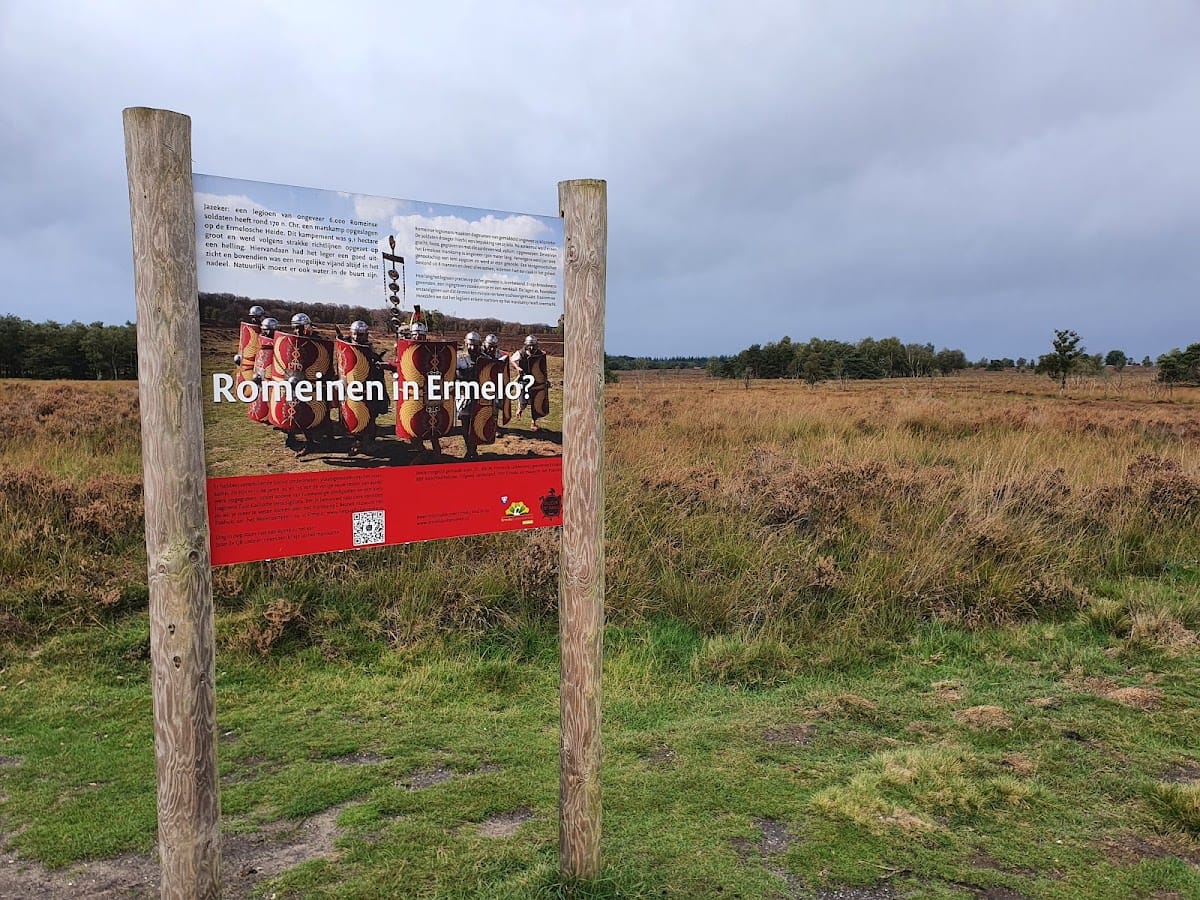
Roman Fort Ermelo is a Roman temporary marching camp in the Netherlands, built by the Roman army in the later second century AD during the period of frontier operations north of the Rhine. Dated to roughly the middle to late 100s AD (with some estimates narrowing use to about 170–180 AD), the site marks a moment when Roman forces moved beyond the river for short-term expeditions. Its size and the numbers estimated to have been present indicate a substantial military effort in the region and a concentrated deployment drawn from units stationed along the Lower Germanic frontier.
The earthwork was long known in local mapping, appearing on a nineteenth-century plan as “Heidensch Kamp” (meaning “heathen camp”), and later recognised as Roman in origin. The camp functioned as a marching encampment where troops stayed only briefly, probably one day and at most two, before breaking camp and continuing their march. Capacity estimates vary: the enclosure of about nine hectares has been calculated as able to hold between roughly 6,000 and 8,000 men in orderly tent rows, while other reconstructions suggest it could have sheltered a single legion of about 5,000. Some commentators have gauged the force present as amounting to about one third of the total troops available along the Lower Germanic limes, an indication of the scale of the operation.
The camp may have formed part of a campaign against local Germanic groups; proposed targets in discussion include the Chamavi or a Roman operation against the Chauci in the early 170s AD. Over time the earthworks have become less distinct because of tree planting and the laying out of a provincial road across the area. A focused excavation of the camp’s southern sector took place in 1987. For many years this site was regarded as the only known Roman marching camp in the Netherlands, though additional temporary camps have since been recognised elsewhere on the Veluwe landscape.
Remains
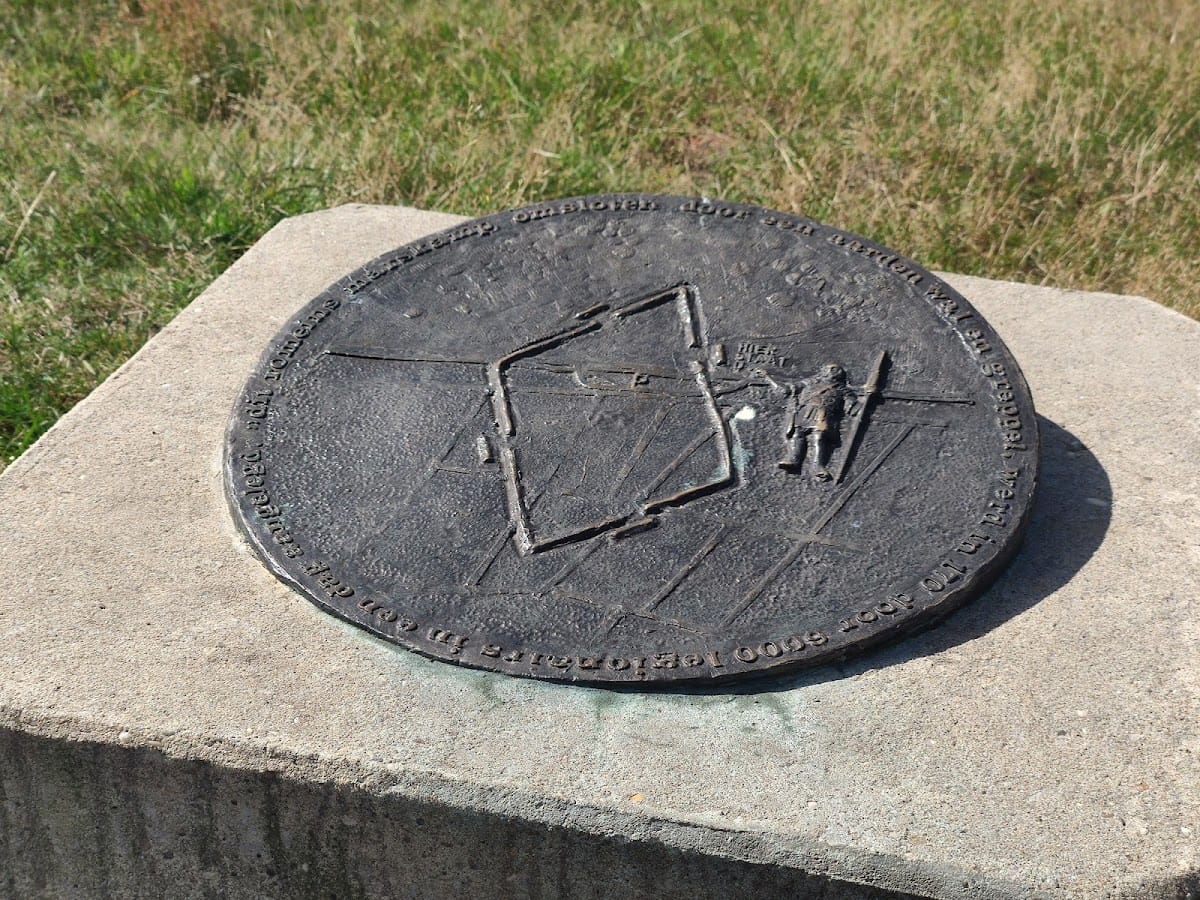
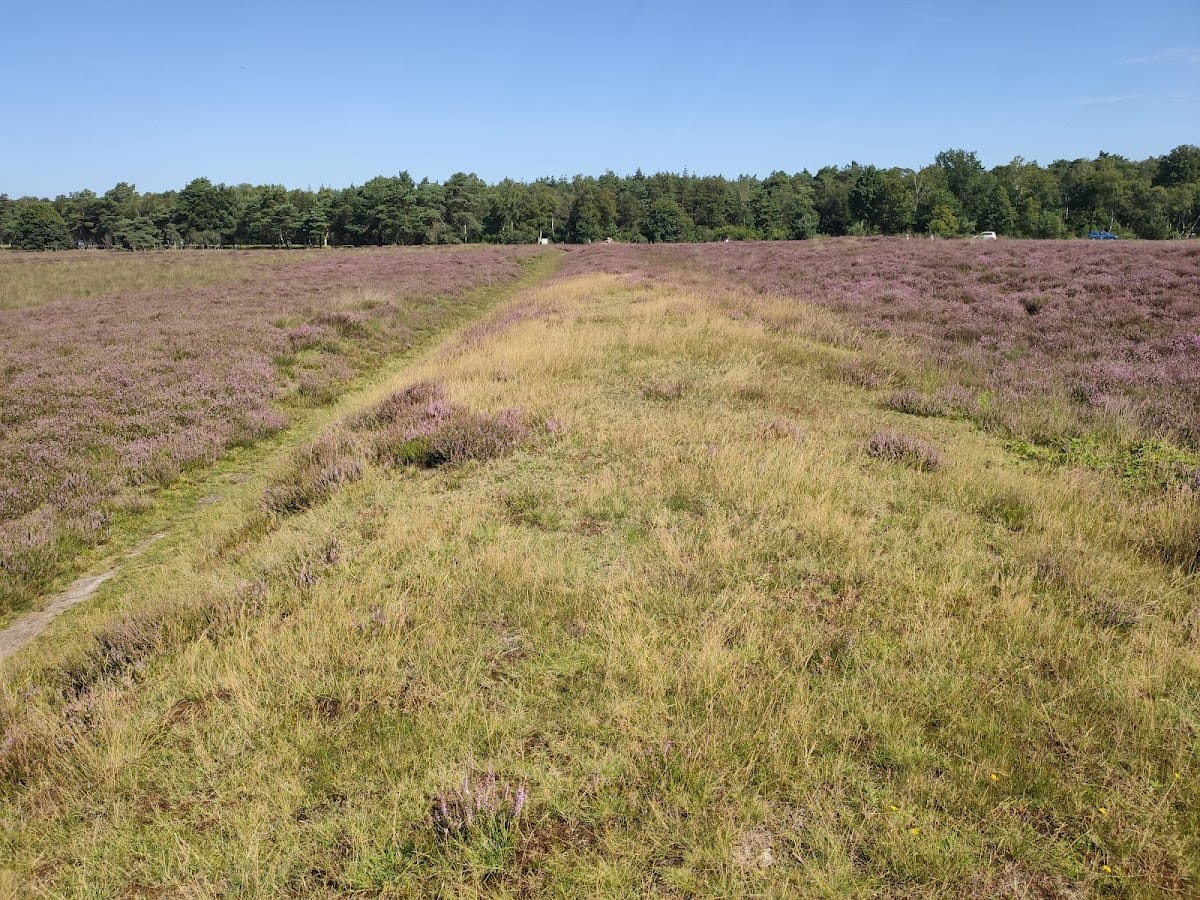
The enclosure follows a roughly trapezoidal plan measuring about 250 by 350 metres, giving an area close to nine hectares; the overall shape can still be made out from aerial views. Around the perimeter there survives an earthen rampart nearly one metre high, backed by a V-shaped ditch about 1.5 metres deep. Wooden defences once stood atop the rampart in the form of a palisade made from intersecting posts laid in a crisscross pattern.
Inside the enclosure, evidence points to a highly organised temporary camp. Excavation and surface traces reveal hundreds of tent positions laid out in regular rows; each tent unit housed eight men who lived and cooked together. Hearths and the impressions of wooden tent pegs hammered into the soil were exposed during fieldwork, confirming short-term occupation with on-site cooking and shelter arrangements. The camp occupies the highest ground locally, positioned where a sandy ridge gives way to lower, wetter terrain; contemporaries would have found the former shoreline of the Zuiderzee and the Flevomeer lake about a day’s march away. The earthwork remains are fragmentary in places but the ditch, rampart profile and internal peg and hearth traces survive in situ, with parts made more difficult to read where later tree planting and road construction disturbed the surface.