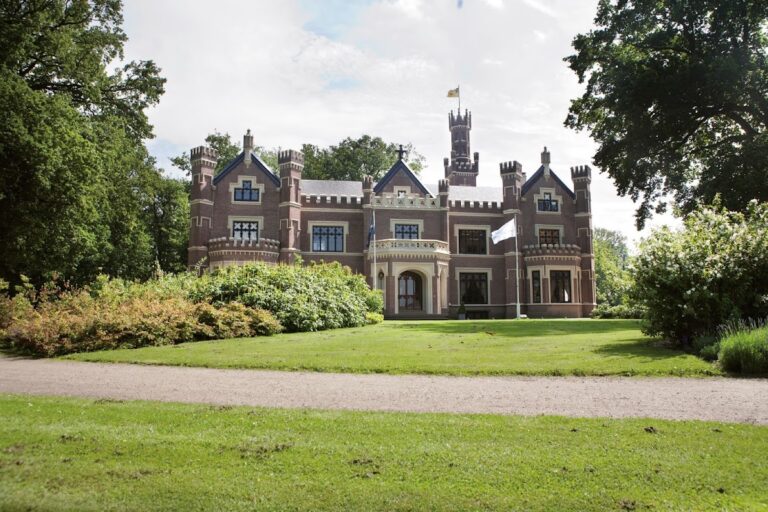
Kasteel De Vanenburg: A Seventeenth-Century Country Estate in the Netherlands


Site at a Glance
- Rating
- 4.6
- Popularity
- Medium
- Country
- Netherlands
- Primary era
- Classical
- External website
- Open
- Eras represented
- Classical, Modern
- Civilizations
- Dutch
- Site type
- Domestic
- Remains
- Castle
On this page7 sections
History
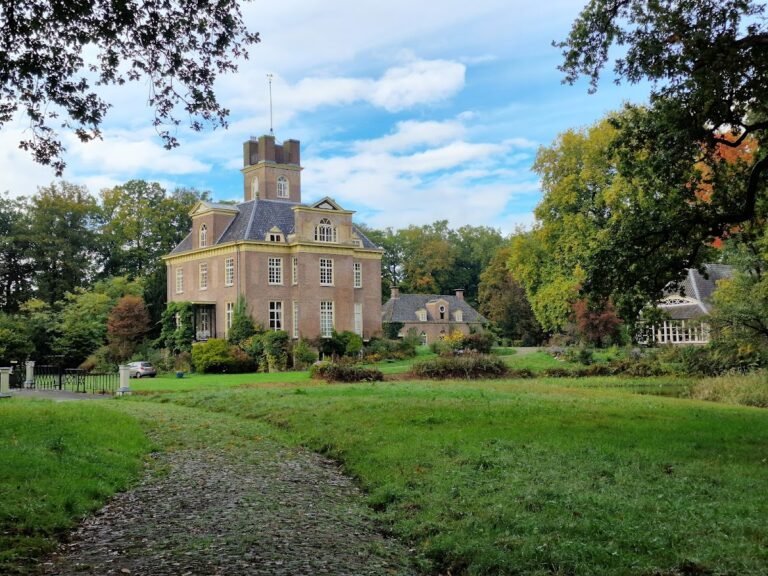
Kasteel De Vanenburg is a seventeenth-century country estate in Putten, the Netherlands, created as a rural residence that combined agricultural activity with the leisure use of a country house. Its principal house was commissioned in 1664 from Amsterdam architect Philips Vingboons, while the estate retained its productive farming role.
Medieval origins and agricultural use
The name Vanenburg, written as Vaenborch in early records, appears in 1389, when Abdinghof Abbey of Paderborn granted the property as a fief to Wolf van Putten. Abdinghof was a medieval abbey in Paderborn. The early history of the estate is connected with the monasteries of Werden, Elten, and Abdinghof, which administered distant landed possessions through the occupants of their principal farms.
In 1559, the monastery of Paderborn acquired the Putten lands from Werden. Among these holdings was an estate called “gut tho Nulde,” which later became Vanenburg. Following several leases and sales, the property came entirely into the possession of Jan van Angeren in 1622. After his death, it was divided among his children. Records from this period show that a house already stood on the estate, and tradition places it about a quarter of an hour’s walk west of the later house.
Peter van Appeltoorn bought the estate in 1637. After his death, it was auctioned, and Hendrick van Essen became the highest bidder. From 1389 to 1645, Vanenburg had an agricultural function. Under Hendrick van Essen, the new house gave the property the character of a country estate, a rural residence used by wealthy owners for leisure and seasonal occupation alongside productive land.
The Van Essen house and later ownership
In 1664, Hendrick van Essen and his second wife, Geertruid Margarethe van Varick, commissioned Philips Vingboons to design a country house at Vanenburg. Their coat of arms, dated 1665, was placed above the entrance. The descendants of Hendrick van Essen continued the combined economic and recreational use of the estate until the end of the eighteenth century.
In 1745, Philips Hendrik van Goltstein married the heiress Judith Margareta van Essen. Their son, Jonkheer Evert Jan Benjamin van Goltstein, was strongly Orangist. The Orangists supported the House of Orange, and opposition to its power became a central issue during the Patriot era, a period of late-eighteenth-century Dutch political upheaval. Van Goltstein lost the estate during that period. His son, Hendrik Rudolph Willem van Goltstein van Oldenaller, who had recently become a baron, bought Vanenburg back in 1820.
After Hendrik’s death in 1868, the property passed to his daughter Anna Frederika Everdine and her husband, Frederik Willem Jacob van Aylva baron van Pallandt. They commissioned a new house. The castle’s basic structure remained intact, but the existing outbuildings were demolished and replaced. The original Vingboons house had disappeared by the nineteenth century. It may have been burned by Patriots around 1795 or demolished later, although the cause and date remain uncertain.
Twentieth-century disruption and restoration
After Anna Frederika died in 1917, her nephew Hugo “Joep” baron van Pallandt dissipated the inheritance. Vanenburg was auctioned in 1931, and the house has not been privately occupied since then. After the auction, the property became a holiday colony.
During the German occupation of the Netherlands in the Second World War, Vanenburg served as a Jewish forced-labor camp. The camp was evacuated in October 1942. Its Jewish inmates were taken to Westerbork, a transit camp used for the deportation of Jews and other persecuted people, and were subsequently deported to Eastern Europe, where they were murdered. A memorial threshold was installed at Vanenburg in 2023.
After the war, the property became a government training school for the Civil Defence organization. Deterioration and modernization then threatened the survival of the complex. In 1996, the Vanenburg Group, the investment company of Jan Baan, moved into the property and restored the castle to its original condition. The group sold the estate to Duo-Invest in 2013. The hotel joined Best Western on 11 April 2014, and the Vanenburg Group bought Kasteel De Vanenburg back in 2019. The site is protected as a Rijksmonument, a monument of national importance under Dutch law, with monument number 530629.
Remains
The surviving complex is based on the form created by Philips Vingboons in the seventeenth century, although the present house incorporates nineteenth-century rebuilding. Its construction combines thick walls and heavy beams, and the house is associated with Eclecticism, an approach that draws forms from several historical styles. The nineteenth-century work preserved the castle’s basic structure while replacing the earlier outbuildings.
The country house
Vanenburg’s principal building originated in the commission of 1664 and was conceived as a strongly built country house. The present structure retains the basic arrangement of the castle despite the disappearance of the original Vingboons house and the later rebuilding. Two villas constructed at Willemspark in The Hague in 1860 may have influenced the designer responsible for the nineteenth-century house.
Heraldic stone and present complex
The Van Essen–Van Varick heraldic stone, first placed above the entrance in 1665, was later found in the moat of the nearby Oldenaller estate. It was subsequently installed in the pediment of the present country house, preserving a direct physical link with the seventeenth-century owners. The restored complex is used as a hotel, restaurant, wedding venue, and conference and meeting venue.
Nearby sites