Roc-aux-Sorciers: A Magdalenian Rock Shelter and Art Site in France
Site at a Glance
- Popularity
- High
- Country
- France
- Primary era
- Stone Age
- Eras represented
- Stone Age
- Civilizations
- Unclassified
- Site type
- Civic
- Remains
- Rock Art
On this page10 sections
History
Roc-aux-Sorciers is a prehistoric rock shelter in Angles-sur-l’Anglin, France, occupied during the Magdalenian, a cultural period of the Upper Paleolithic in western Europe. Its Middle Magdalenian occupation dates to around 15,000 years ago, with later Upper Magdalenian occupations around 12,000 years ago. The site’s carved art has been interpreted as evidence that monumental works could be part of life in a rock shelter, rather than being confined to deep caves.
Magdalenian occupation
A collapse of the shelter roof sealed layers associated with the Middle Magdalenian occupation. People used the shelter again during later Upper Magdalenian phases, after the collapse.
The relationship between habitation and art is clear, but the purpose of the occupation remains uncertain. The evidence points to a place where people lived rather than a sanctuary. It may have served as a seasonal hunting camp for one or more local groups, or as a place where people came to make art.
Place-name and archaeological discovery
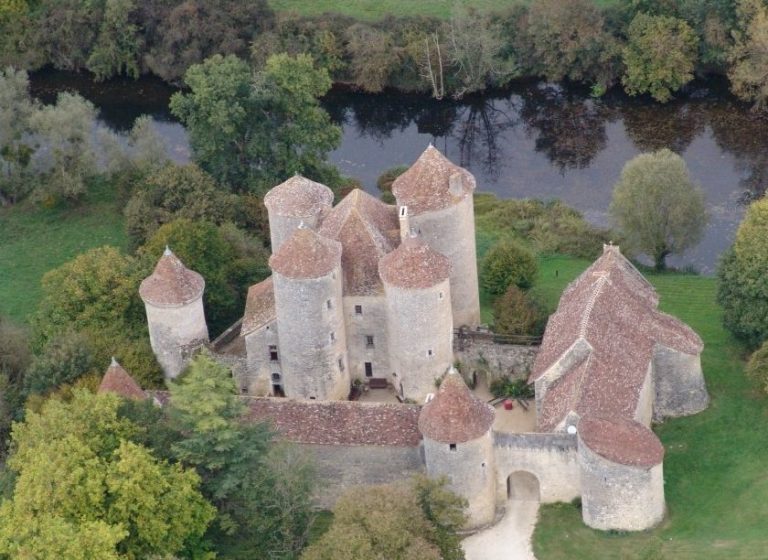
The name Roc-aux-Sorciers comes from a local tale that sorcerers and witches met at the site. Jacques Rougé recorded the name in 1904, before archaeologists identified prehistoric remains there.
Lucien Rousseau began investigating the area near the Taillebourg shelter in 1927 and identified prehistoric occupation. Among his finds was an engraved stone. Henri Breuil identified a mammoth in its design, and Rousseau published an account of the site in 1933.
Excavation and protection
Suzanne de Saint-Mathurin and Dorothy Garrod carried out intensive excavations from 1947 to 1957, then returned for more intermittent work through 1964. They uncovered the sculpted frieze in 1950 and recovered decorated blocks that had fallen from the Taillebourg shelter’s ceiling. Saint-Mathurin used the names Bourdois and Taillebourg for the excavated sectors, adopting the names of former owners of the parcels.
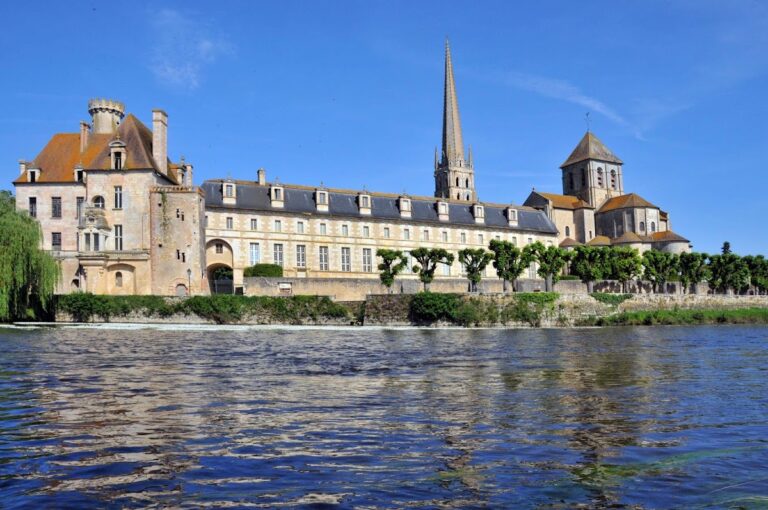
France designated the site a Historic Monument on 18 January 1955, a status that protects properties under the country’s historic-monument system. After Saint-Mathurin’s death in 1991, the site and her archives passed to the French state.
Research and interpretation
Research resumed in the early 1990s under François Lévêque and Geneviève Pinçon, leading to the first monograph on Roc-aux-Sorciers in 1997. Later multidisciplinary studies examined both objects recovered in the excavations and art still in place. A doctoral study of landforms at the site and in the Anglin valley followed in 2017–18.
Interpretations of the female figures have also differed. Jean-Pierre Duhard read them as showing different bodily conditions, including pregnancy, and argued that the figures had ordinary rather than exaggerated proportions. Paul Bahn criticized this approach for giving too little weight to stylization in prehistoric art.
Remains
The site lies in a south-facing limestone cliff at the foot of the Douce cliffs, on the right bank of the Anglin. The cliff is formed from Jurassic marine sedimentary rock. Two distinct parts make up the shelter: the shallow, downstream Bourdois overhang and the deeper, upstream Taillebourg cave, which forms an entrance chamber and was formerly called the Lucien Jacob cave. The listed length is 25 m plus 10 m across the two parts. An unexcavated zone between them is preserved as an archaeological reserve.
Bourdois shelter frieze
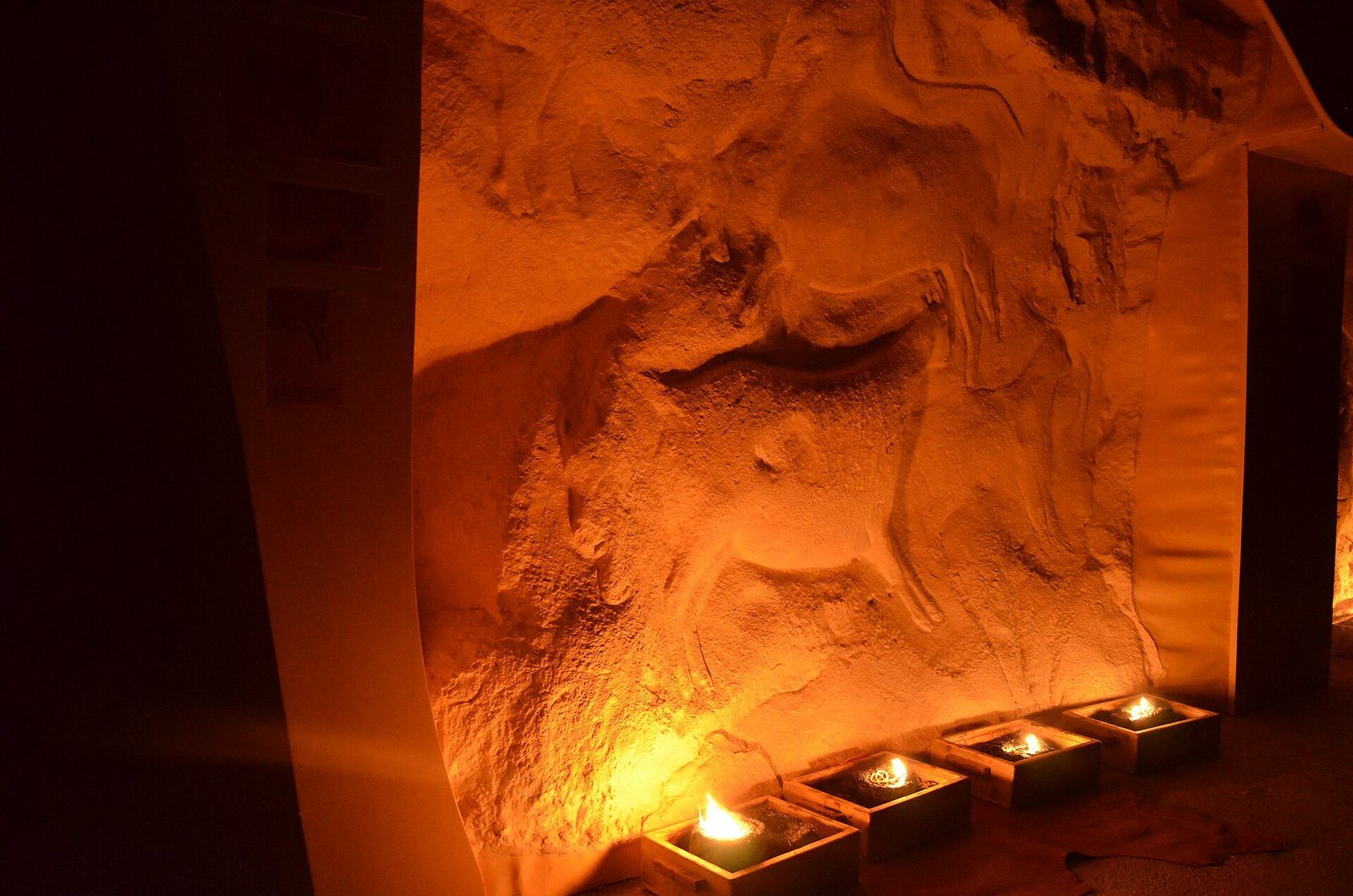
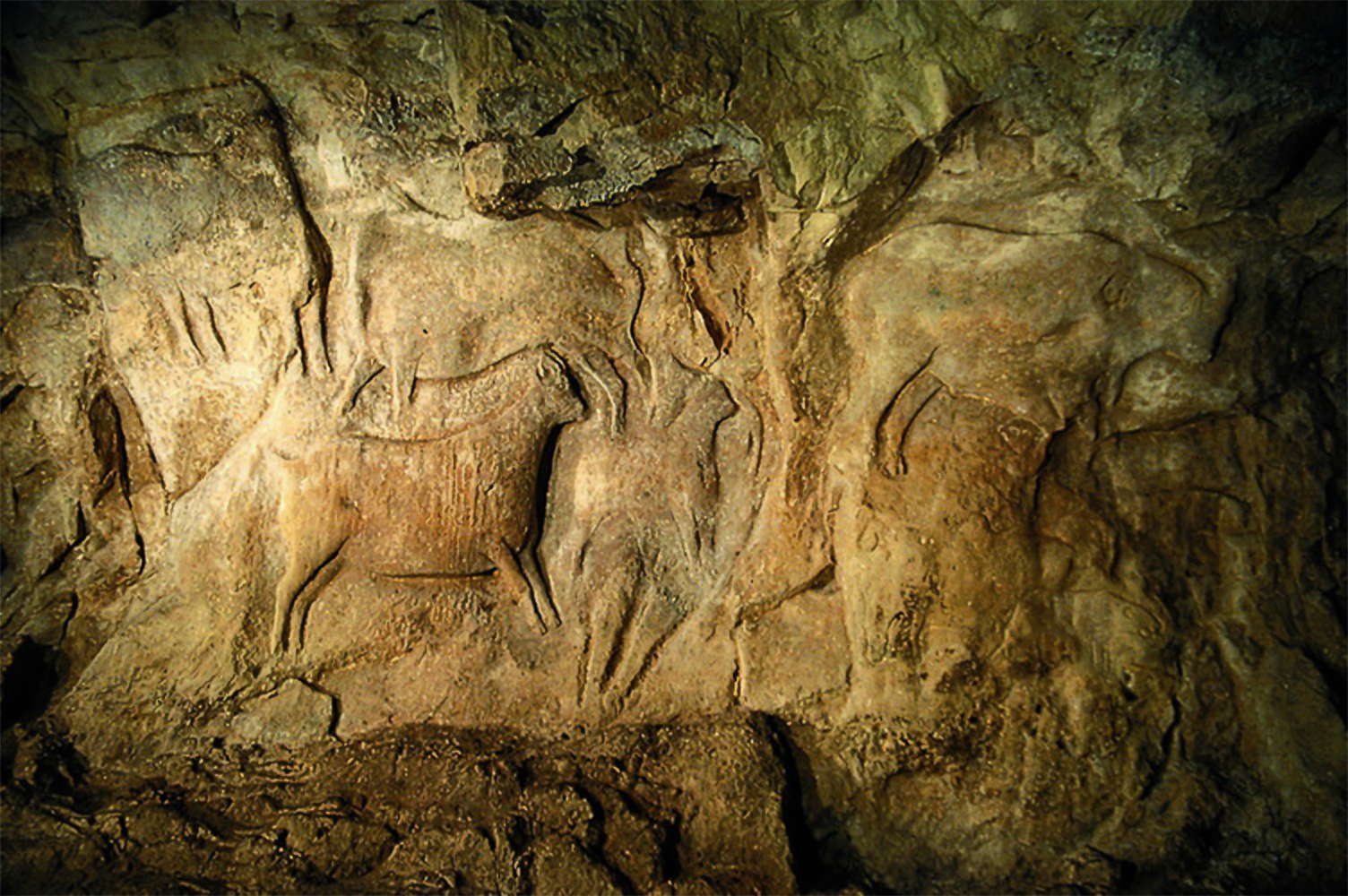
The Bourdois shelter preserves about 20 m of sculpted frieze. Large raised carvings sit alongside finer engravings low on the wall, and small patches of red and black pigment survive. The figures include bison, horses, ibex, felines, human faces and female forms missing their heads and feet, conventionally called “Venuses.”
Many figures have naturalistic anatomy, with their forms brought out by changes in light. Other details are stylized, including the eyes, the apparent movement of horses and the women’s sexual characteristics. Sediment still covers the frieze’s lower part, where excavation continues.
Taillebourg ceiling art
Decorated blocks from the collapsed Taillebourg ceiling bear carved, engraved and sometimes painted figures of animals and people, including bison, horses, ibex, felines and a man. The blocks removed from the site are held at the National Archaeology Museum in Saint-Germain-en-Laye. A sculpted and painted bison remains in place on the vault. The fall of overhanging rock helped shield the open-air art from erosion.
Archaeological deposits
Layers at the shelter contain hearths at the foot of the sculptures, along with portable art, ornaments, lamps and tools made from flint, bone, reindeer antler and ivory. Animal remains include saiga, reindeer, cave bear, mammoth, wild goats, wolves, foxes and felines.
Carved rings
Carved rings follow natural ridges in the rock and help divide figures into panels. Their purpose is uncertain; they may have served practical uses, carried symbolic meaning, or done both.