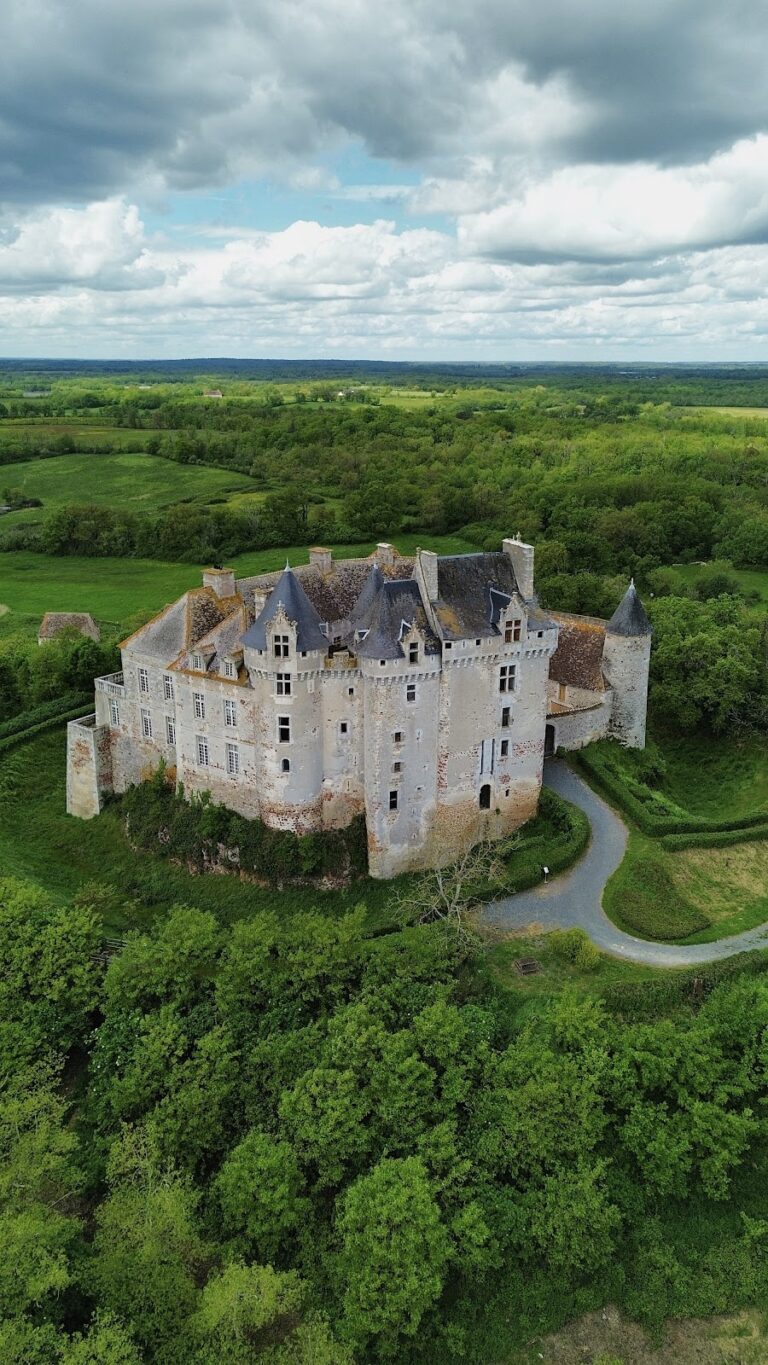
Fontgombault Abbey: A Benedictine Monastery in France


Site at a Glance
- Rating
- 4.7
- Popularity
- Low
- Country
- France
- Primary era
- Medieval
- External website
- Open
- Eras represented
- Medieval, Modern
- Civilizations
- French
- Site type
- Religious
- Remains
- Monastery
On this page10 sections
History
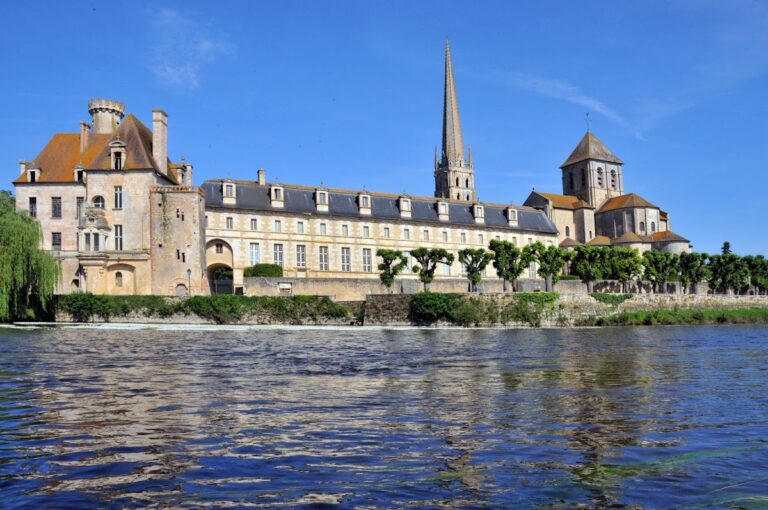
Fontgombault Abbey is a Benedictine monastery in France, at Fontgombault in the Indre, founded in 1091 in the medieval Romanesque period. It stands on the right bank of the Creuse near the spring of Gombaud and belongs to the Archdiocese of Bourges and the Solesmes Congregation, a Benedictine congregation especially associated with monastic liturgy and the restoration of Gregorian chant.
Foundation and medieval expansion
A foundation tradition preserved in the Chronicle of Maillezais places an eremitic community in caves along the Creuse from 1079. In 1091, Pierre de l’Étoile, also known as Petrus a Stella, and his companions established the monastery. The monks followed the Rule of Saint Benedict, which regulates communal prayer, work, and discipline, and Pierre became the first abbot.
Pierre began building the abbey church but died of ergotism, poisoning caused by grain contaminated with ergot fungus, in 1114. The abbots Guillaume and Airaud continued the work. During the twelfth and thirteenth centuries, Fontgombault expanded its influence by founding about twenty priories.
War, destruction, and early modern change
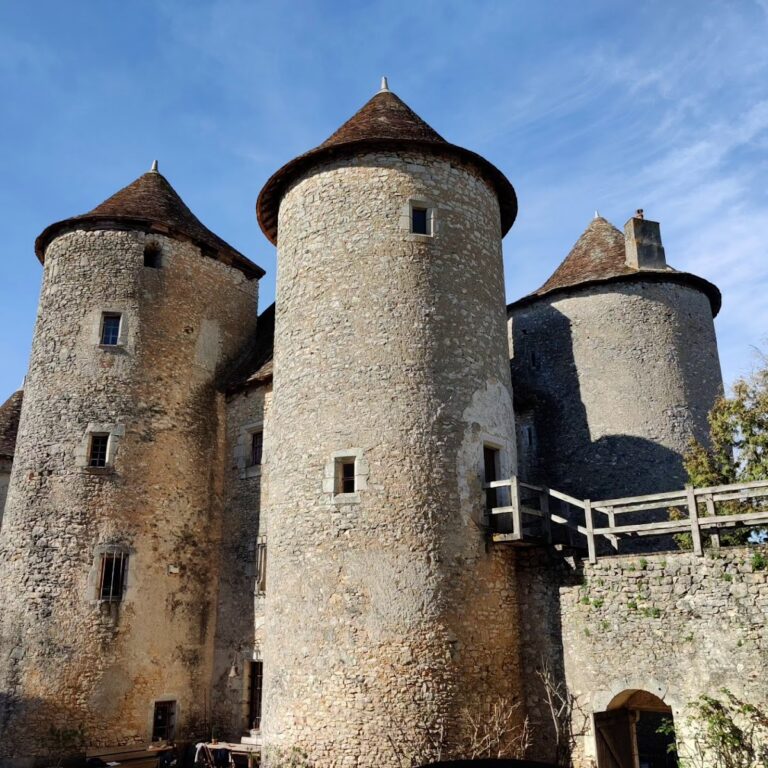
English forces seized the abbey and its domains in 1369 during the Hundred Years’ War, the long conflict between the English and French crowns. Bertrand du Guesclin expelled them in 1372. The fortified round tower incorporated into the present abbey hostelry is associated with this period of military insecurity.
In the fifteenth century, the abbots ordered the digging of numerous ponds. Together with the abbeys of Saint-Cyran-en-Brenne and Méobecq, Fontgombault contributed to the development of fish farming in the Brenne. The abbey was later plundered by mercenaries serving the family of François de Sully, then pillaged and burned by Calvinists in 1569 during the French Wars of Religion. Jean d’Harambure, a Huguenot and supporter of Henry IV, received the abbey’s benefice on 6 February 1609.
Restoration took place at the end of the seventeenth century under Dom Nicolas Andrieu, who served as prior from 1674 to 1705. Anselme Mornet and Jean-François de Chamillart later served as abbots. Chamillart was also bishop of Senlis and was elected to the Académie française in 1702.
Lazarist occupation and revolutionary destruction
By 1741, the Benedictine community had declined to five monks. Archbishop Frédéric Jérôme de Roye de la Rochefoucauld then transferred the complex to the Lazarists, a Catholic congregation devoted to clerical formation and missionary work. They established a seminary at Fontgombault and conducted missions in the surrounding region, remaining there until 1786.
The French Revolution brought the partial destruction and nationalization of the abbey. It was sold as a national property and used as a stone quarry. Madame Dupin bought part of the property, excluding the church, and her heirs later sold it in separate lots.
Trappist restoration and twentieth-century uses
Trappists, members of the Cistercian Order of the Strict Observance, acquired Fontgombault in 1849. Under Abbot Pierre-Marie Lenoir, they restored its religious use, maintained the agricultural estate, and established a kirsch distillery in 1899. Anti-congregation laws led to their expulsion in 1904 and 1905. The expelled monks later founded the Monastery of Our Lady of Jordan in Oregon.
After their departure, Louis Bonjean purchased the abbey and installed a button factory. Following his death in 1914, the buildings became a military hospital for wounded Belgian soldiers from 1915 to 1918. A total of 6,279 Belgian soldiers stayed there, and some who died were buried in the village cemetery. From 1919 to 1948, the complex housed a diocesan seminary for late vocations, which closed because of a lack of vocations.
Benedictine revival and contemporary religious life
In 1948, Germain Cozien, abbot of Solesmes, restored Fontgombault for monastic use and sent twenty-two monks from Solesmes to re-establish a Benedictine community. The abbey has remained active since then and has become the most prolific foundation of Solesmes. It founded or established Notre-Dame de Randol in 1971, Notre-Dame de Triors in 1984, Notre-Dame de Gaussan in 1994, and Clear Creek Abbey in the United States in 1999. In 2013, thirteen monks went to Saint-Paul de Wisques to strengthen its declining community.
Fontgombault belongs to the Solesmes Congregation and maintains Gregorian chant and traditional Latin liturgical practices. These practices have made it an important center of French Catholic traditionalism, and the abbey is associated with the Association Petrus a Stella and the traditionalist milieu.
From 22 to 24 July 2001, the abbey hosted the Fontgombault Liturgical Conference, which sought to initiate a renewed liturgical movement. Cardinal Joseph Ratzinger, then prefect of the Congregation for the Doctrine of the Faith and later Pope Benedict XVI, took part and delivered two lectures, including the closing address.
Antoine Forgeot was abbot from 1977 to 2011. In 1990, while holding that office, he intervened on behalf of Paul Touvier and stood surety for his release. Touvier, who had been convicted of crimes against humanity, had previously found temporary refuge at the abbey while evading prosecution. Forgeot resigned in 2011 and died on 15 August 2020. Jean Pateau, formerly the abbey’s cantor and prior, was elected abbot on 18 August 2011. In 2013, while serving as a municipal councillor of Fontgombault, he supported the mayor’s stated conscientious objection to celebrating same-sex marriages.
On 29 June 2019, the abbey received Jean-Claude Romand during his conditional release after his conviction for multiple murders. He remained there until his definitive release in 2022. The abbey church was classified as a French Monument historique in 1862, and parts of the wider complex were registered in 1934. The abbots Édouard Roux, Jean Roy, Antoine Forgeot, and Jean Pateau held office respectively from 1953 to 1962, 1962 to 1977, 1977 to 2011, and from 2011 onward.
Remains
Romanesque abbey church
The abbey church is a Romanesque building, a medieval style defined by massive masonry, rounded arches, and compact structural forms. Its Latin-cross plan is oriented toward the southeast, and its choir is slightly offset to the left. The façade, transept, and choir date from the twelfth century. Their Romanesque forms and finely worked capitals have been praised for the clarity of their lines and the imposing character of the choir.
The choir has double aisles and five chapels projecting around the apse. The apse rises in three levels, with large arcades below, further arcades opening toward the roof spaces, and upper windows framed by arcades. Large openings around the ambulatory, the passage behind the main altar and around the apse, admit light to the interior, as do the upper apse windows. By contrast, the transept side walls are comparatively austere and contain two large windows.
The original façade survives. Its portal has four successive rows of curved archivolts, bands of molding that follow the curves of the arch, and follows Poitevin Romanesque practice by having no tympanum, the infilled area enclosed by a portal arch. The nave was rebuilt in the nineteenth century. It contains a central vessel and side aisles, with one window in each of its eight bays.
The church has an interior length of 80.40 metres. The nave measures 47.88 metres, the transept is 29.33 metres wide, and the main nave vault reaches 17.60 metres at its keystone. The dome rises to 22.70 metres.
Hostelry and surviving monastic fabric
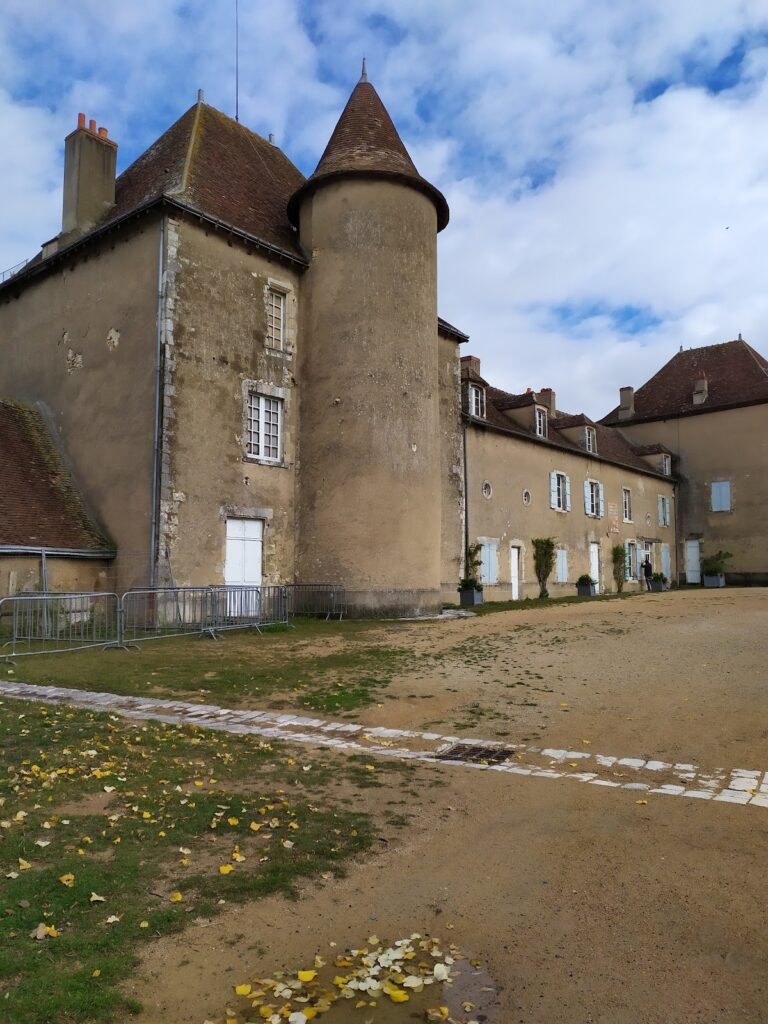
A fortified round tower survives within the present abbey hostelry. Its defensive form reflects the insecurity of the site during the Hundred Years’ War. After the destruction of the abbey during the French Revolution, the wider complex was reduced largely to the cloister and a few courses of masonry that had supported arches.
Power station
The abbey is energetically autonomous through a power station on the Creuse.