Angles-sur-l’Anglin Castle: A Medieval Fortress in France


Site at a Glance
- Rating
- 4.5
- Popularity
- Medium
- Country
- France
- Primary era
- Medieval
- External website
- Open
- Eras represented
- Medieval
- Civilizations
- French
- Site type
- Military
- Remains
- Castle
On this page7 sections
History
Early fortress and medieval development
Angles-sur-l’Anglin Castle is a medieval fortress in France, occupying a rocky promontory above the Anglin River. An earlier motte, a raised earthwork mound used as the base of a fortification, occupied the site before the present castle. The stronghold guarded the frontier of Poitou from the tenth century and is documented by 1025.
The present castle originated in the twelfth century. At the end of the thirteenth century, Guillaume de Bruges, bishop of Poitiers, bought it from the Lezay family. It then remained under the ownership of the bishopric, the territory and institutional jurisdiction governed by a bishop, until the French Revolution. Major changes and additions took place during the fifteenth century.
War and episcopal rule
During the Hundred Years’ War, the prolonged conflict between the English and French crowns that affected France from the fourteenth to the fifteenth century, Guichard III, lord of Angles, held important military and administrative positions. He served as seneschal of Saintonge, a senior administrative and judicial official, and became marshal of Guyenne, a senior military commander, after Poitou came under English control in 1356.
In 1372, Bertrand du Guesclin, a leading French commander during the Hundred Years’ War, led the siege that recovered the castle from the English. During the troubled sixteenth and seventeenth centuries, control passed successively among Protestants, the Catholic League, royal forces, and supporters of the Fronde. The Catholic League was a Catholic political and military movement during the French Wars of Religion, while the Fronde consisted of rebellions against royal authority in seventeenth-century France. The bishops later abandoned the castle.
Destruction, protection, and ownership
During the French Revolution, the castle was used as a public quarry, changing the condition of the medieval complex. The Société des antiquaires de l’Ouest bought it in 1923, and the commune acquired it in 1986. France classified the castle as a historic monument on 10 February 1926.
A local legend says that the English captured the stronghold after cutting a precipitous staircase along the cliff in a single night. The natural fissure, later modified by people, became known as the “English Trench.”
Remains
Promontory and defenses
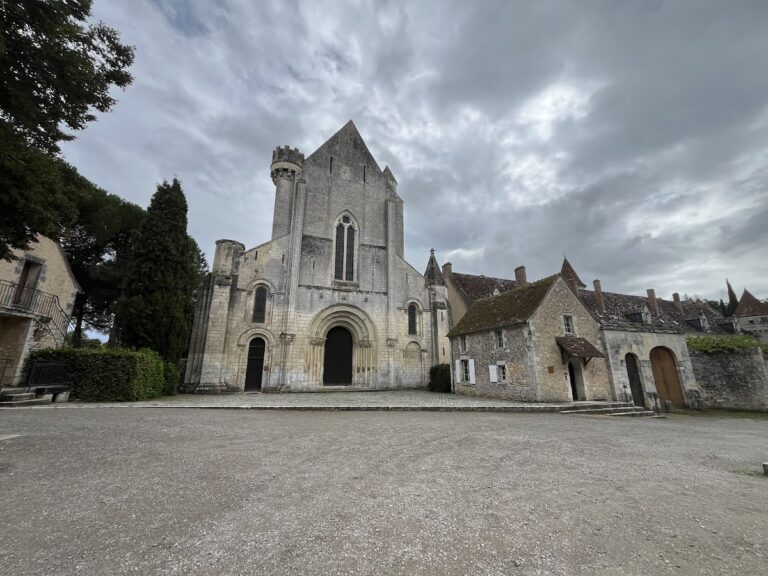
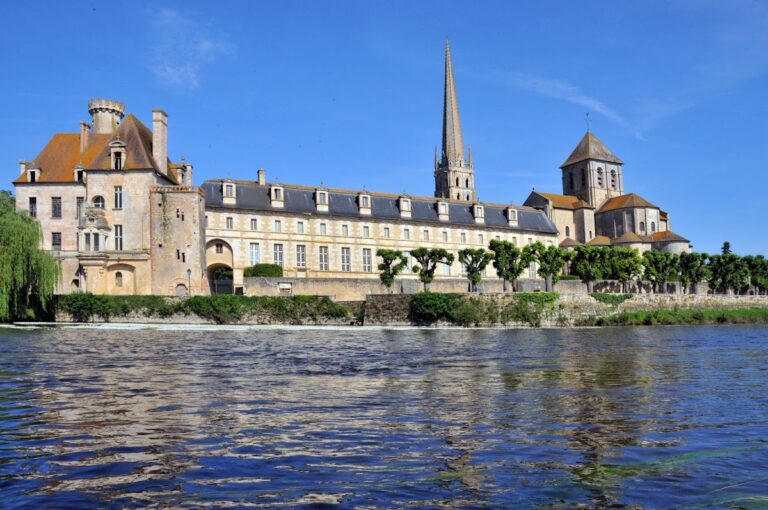
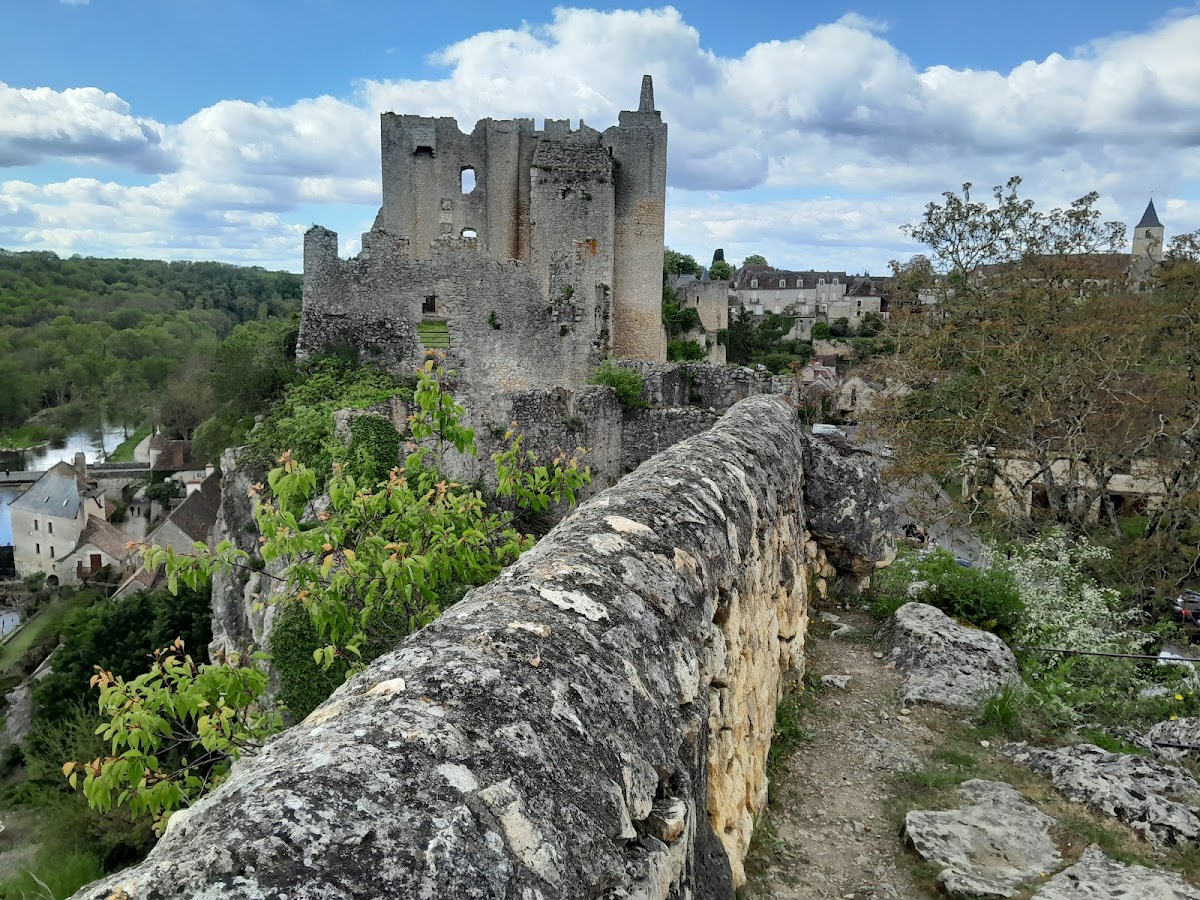
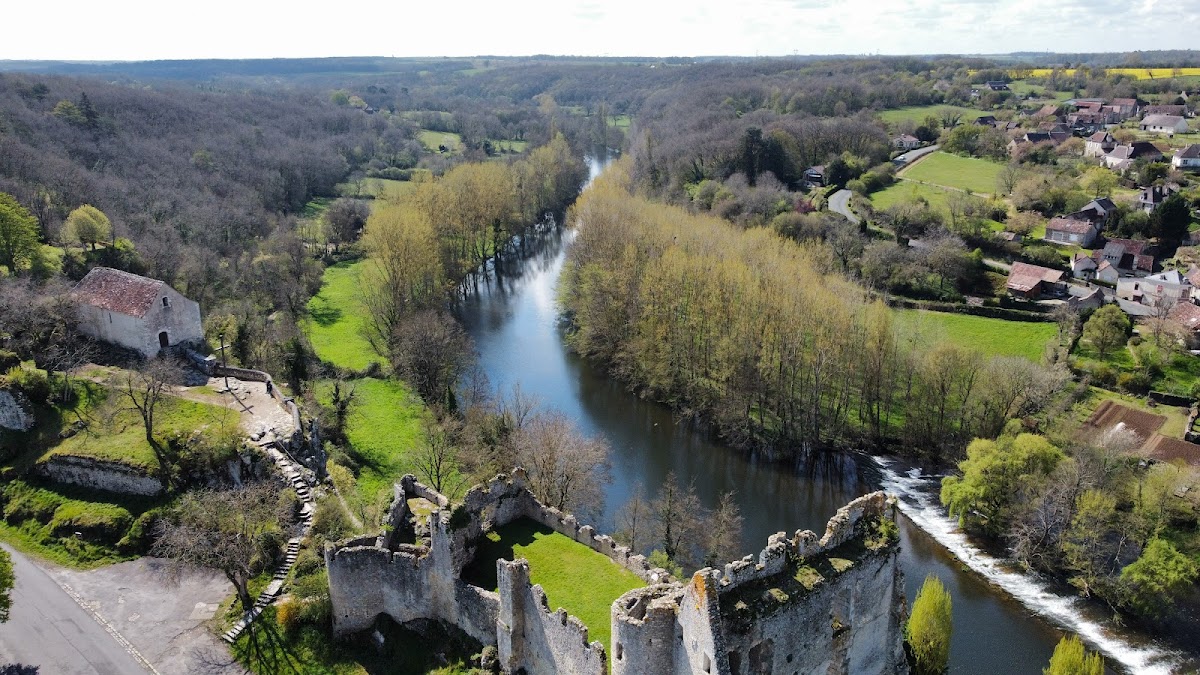
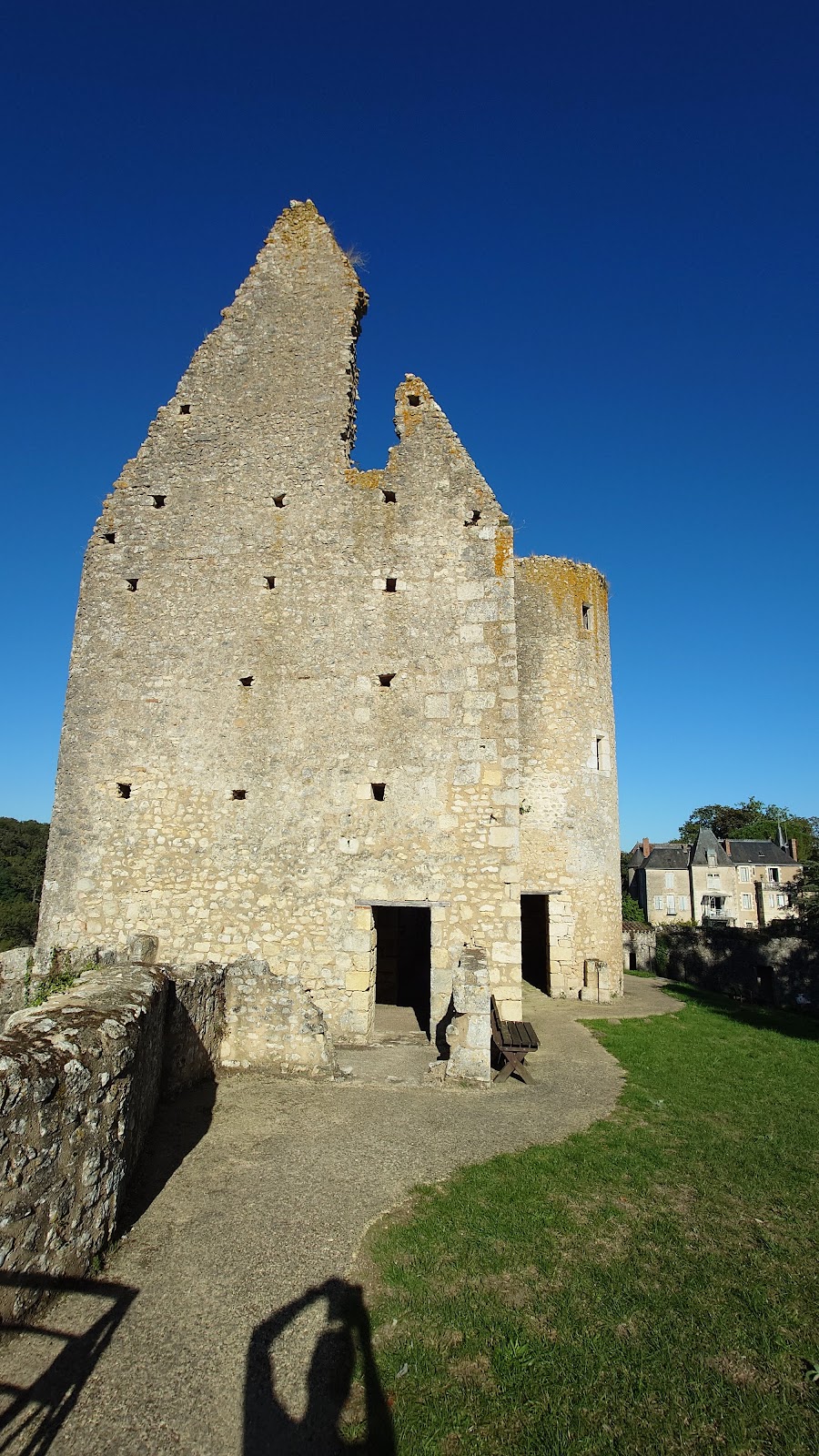
The castle stands on a rocky promontory overlooking the Anglin River, a short distance before its confluence with the Gartempe, south of the village of Angles-sur-l’Anglin and near the boundaries of Touraine and Berry. The ridge is about 125 metres long and between 10 and 50 metres wide. A dry valley borders its eastern side, while the river lies along the other. At the head of the promontory, a ditch cut into the rock blocked access to the site. The castle is now a ruin, but substantial architectural remains survive. The nearby village developed on a height beyond the ravine that isolates the castle, as well as below it and around the river bridge.
Keep and residential buildings
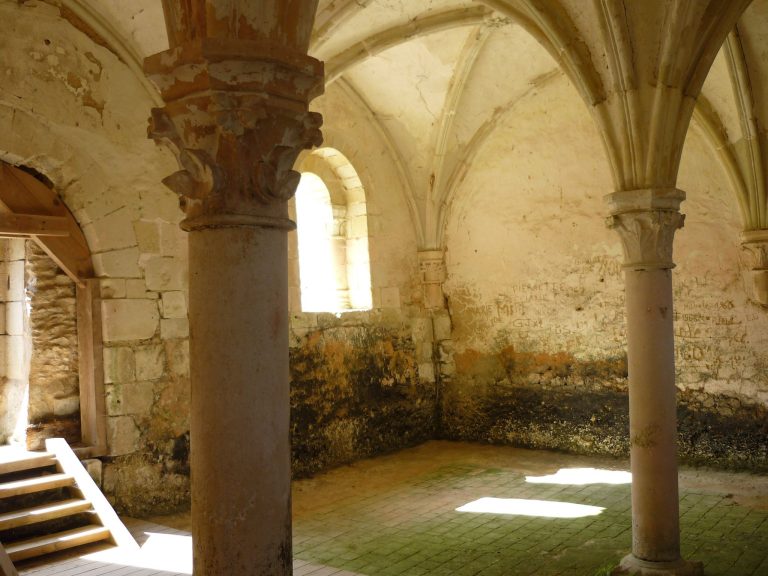
A buttressed keep, the castle’s principal fortified tower and a defensive residential structure, was erected in the middle of the promontory during the twelfth century. The keep and a vault belong to this phase. Seigniorial lodgings stood behind the keep and at the tip of the promontory. During the fifteenth century, Bishop Hugues de Combarel altered the keep and built the area known as the “new castle.” His successor, Guillaume de Charpagne, continued the work. These structures form the principal surviving architectural remains of the ruined stronghold.