Reinegg Castle: A Medieval Hill Castle in South Tyrol


Site at a Glance
- Rating
- 4.4
- Popularity
- Very Low
- Country
- Italy
- Primary era
- Medieval
- Eras represented
- Medieval
- Civilizations
- Holy Roman Empire
- Site type
- Military
- Remains
- Castle
On this page10 sections
History
Reinegg Castle is a high-medieval hill castle in Italy, above Sarnthein in the Sarntal of South Tyrol. Architectural evidence places its construction in the second quarter of the thirteenth century, although earlier structures cannot be excluded. The castle first appears in written records in 1263 under the name castrum Sarentine, when it served as the administrative center of the Counts of Eppan’s lordship of Sarnthein.
Lordship and medieval ceremonies
In 1273, Reinegg was granted as a fief, property held from a superior lord in return for service or obligations, to Meinhard II, a ruler of the County of Tyrol and Duke of Carinthia. The castle also hosted an important family celebration in 1265, when the daughter of its castellan, the lord of Velturno, married Alberto of Matsch, a member of the Matsch noble family.
In 1363 or 1364, Petermann von Schenna received Reinegg and its associated administrative office as a Habsburg life fief. The Habsburgs were the ruling dynasty whose possessions included territories in the eastern Alps. The grant carried an annual remuneration of 100 Bernese marks, a medieval monetary unit associated with Bern. After Petermann’s death, Duke Leopold granted the castle to Konrad II of Fraunberg-Haag.
Later ownership and preservation
In 1635, David Wagner, a merchant from Augsburg based in Bolzano, acquired Reinegg. His family was later raised to the rank of barons and counts of Sarnthein and retained the castle into the twentieth century. Reinegg subsequently passed out of the family’s ownership, although its later ownership history is uncertain.
A local tradition places the castle’s origin around 370, when a barbarian army allegedly besieged the settlement. The story says that inhabitants survived for two years through a concealed passage, deceived the besiegers with the sight of a roasted ox, and capitulated only after the passage was discovered and blocked. The passage and stone-tipped arrows found in a ditch below the tower are associated with this tradition, while its chronology remains unestablished.
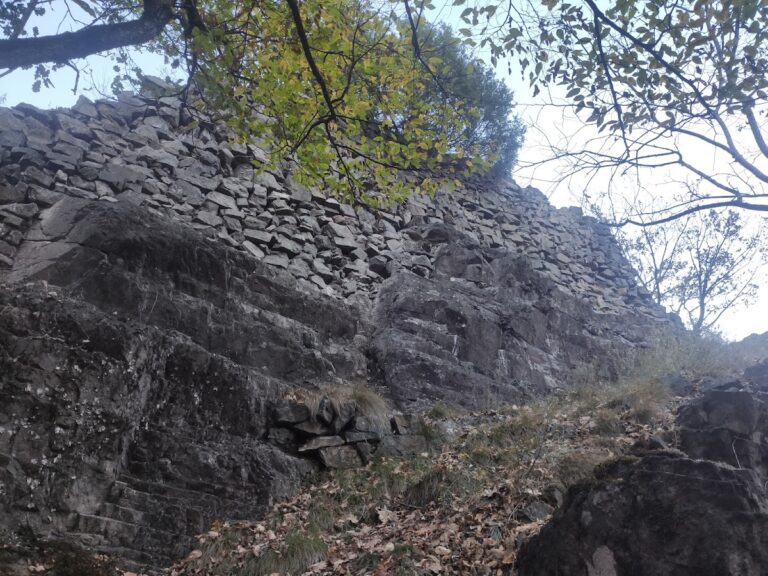
Reinegg is protected as a historic monument. On 11 April 2015, part of the surrounding wall collapsed suddenly. The surviving complex retains substantial historic fabric, but the castle is privately owned and not publicly accessible.
Remains
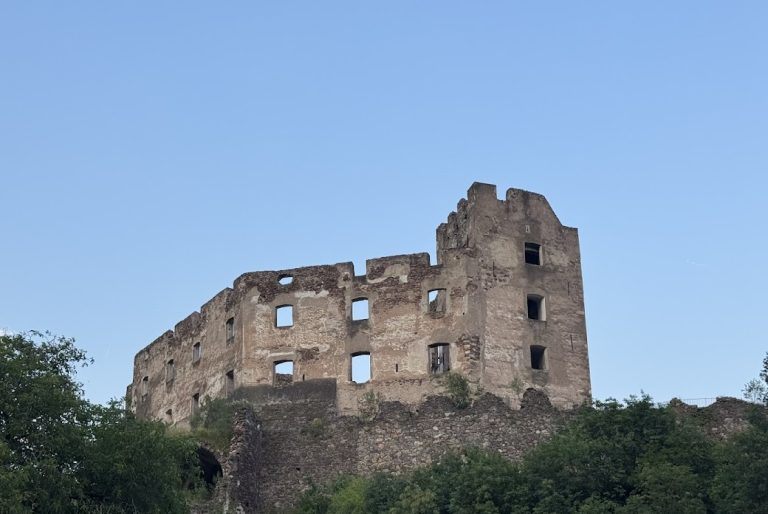
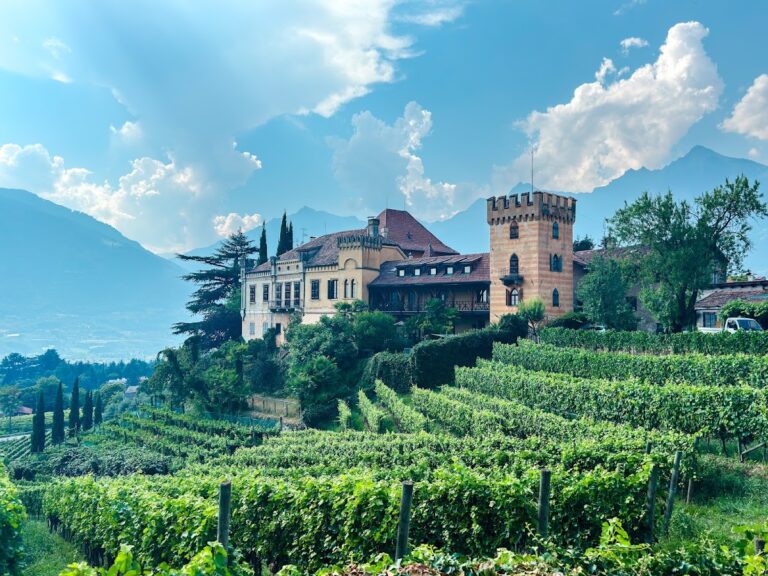
Reinegg Castle stands at approximately 1,100 metres above Sarnthein. Its surviving medieval complex combines a principal fortified tower, an entrance tower, a chapel, a representative residential palace, three outer defensive enclosures, and service buildings. These elements preserve the arrangement of a hill castle that joined administrative, residential, religious, and defensive functions.
Fortifications and residential buildings
Keep and defensive enclosures
The keep, the castle’s principal fortified tower, forms part of the medieval defensive system. A crenellated entrance tower controls access to the complex and bears the coats of arms of the House of Austria and the Counts of Tyrol. Three outer defensive enclosures protect the approach to the inner stronghold. The surrounding wall suffered a partial collapse in 2015, while much of the wider historic fabric remains in place.
Residential palace
The representative residential palace, also known as a palas, was the main living and ceremonial building within the castle. Its windows are arranged in coupled three-part openings. The original residential building reportedly consisted of one large hall decorated with Gothic columns, linking the earliest recorded accommodation with the castle’s later representative functions.
Saint George’s Chapel
The castle chapel is dedicated to Saint George, a Christian martyr traditionally venerated as a military patron. Its thirteenth-century frescoes include a painting dated to approximately 1250, described as the oldest fresco in the Sarntal valley. The chapel forms part of the medieval complex alongside the residential and defensive buildings.
Subterranean connection
Passage to the farmstead
A passage or tunnel connects the castle with a farmstead about 600 metres away. Its physical existence is associated with the local siege legend, which describes concealed deliveries of supplies during a prolonged attack. The passage therefore remains connected both to the castle’s physical structure and to the tradition surrounding its early history.
Nearby sites