Reigate Castle: A Medieval Castle in Surrey




Site at a Glance
- Rating
- 4.5
- Popularity
- Low
- Country
- United Kingdom
- Primary era
- Medieval
- Eras represented
- Medieval, Modern
- Civilizations
- British, Norman
- Site type
- Military
- Remains
- Castle
On this page6 sections
History
Reigate Castle is a former castle in Reigate, England, United Kingdom, associated with the Norman de Warenne family and the medieval development of the town. William the Conqueror, the Norman ruler who became king of England after the Conquest of 1066, granted the surrounding land to his supporter William de Warenne, who became Earl of Surrey in 1088.
The castle is believed to have been commissioned by William de Warenne, 2nd Earl of Surrey, the son of William de Warenne. Although the family’s southern base was at Lewes in Sussex, it also held castles in Yorkshire and Normandy. Around 1150, the de Warennes ordered the construction of a town below the castle, creating the settlement that became the basis of modern Reigate.
The origin of the name Reigate remains uncertain. It may come from “Roe-deer Gate,” referring to the entrance to the de Warenne deer park, or from “Rhie-gat,” a phrase understood to mean roughly “the river’s course.” In 1216, during a French campaign in southern England, the castle was captured by French forces.
Later Medieval Ownership
In 1347, Reigate Castle passed to the FitzAlan family, the Earls of Arundel. From 1397, it was held by successive lords of the manor of Reigate. A lord of the manor was the holder of a local feudal estate and its associated rights, and members of the Howard family were among those who held the castle during this period.
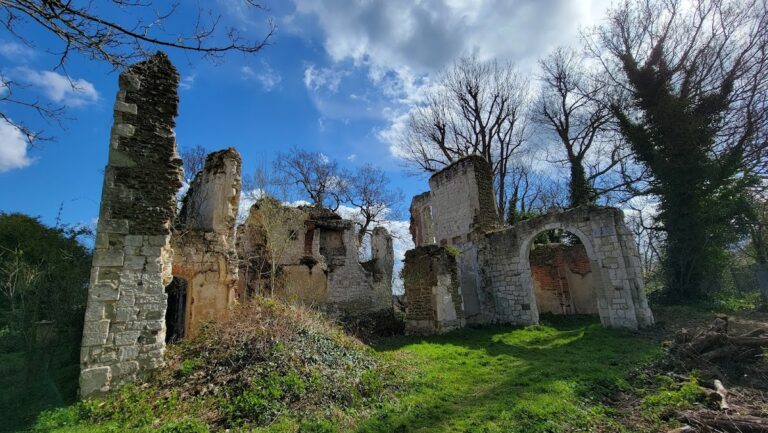
The castle remained occupied until the sixteenth century, after which it fell into disrepair. In 1648, during the English Civil War, it was demolished after serving as a garrison for Royalists, supporters of the monarchy, involved in a Royalist uprising.
Later Commemoration and Use
A local tradition claims that rebellious barons met in caves beneath the castle before Magna Carta was signed, discussing the charter’s details. Magna Carta, issued in 1215, placed limits on royal authority and affirmed certain rights of the English barons, but the tradition about the meeting has no supporting evidence.
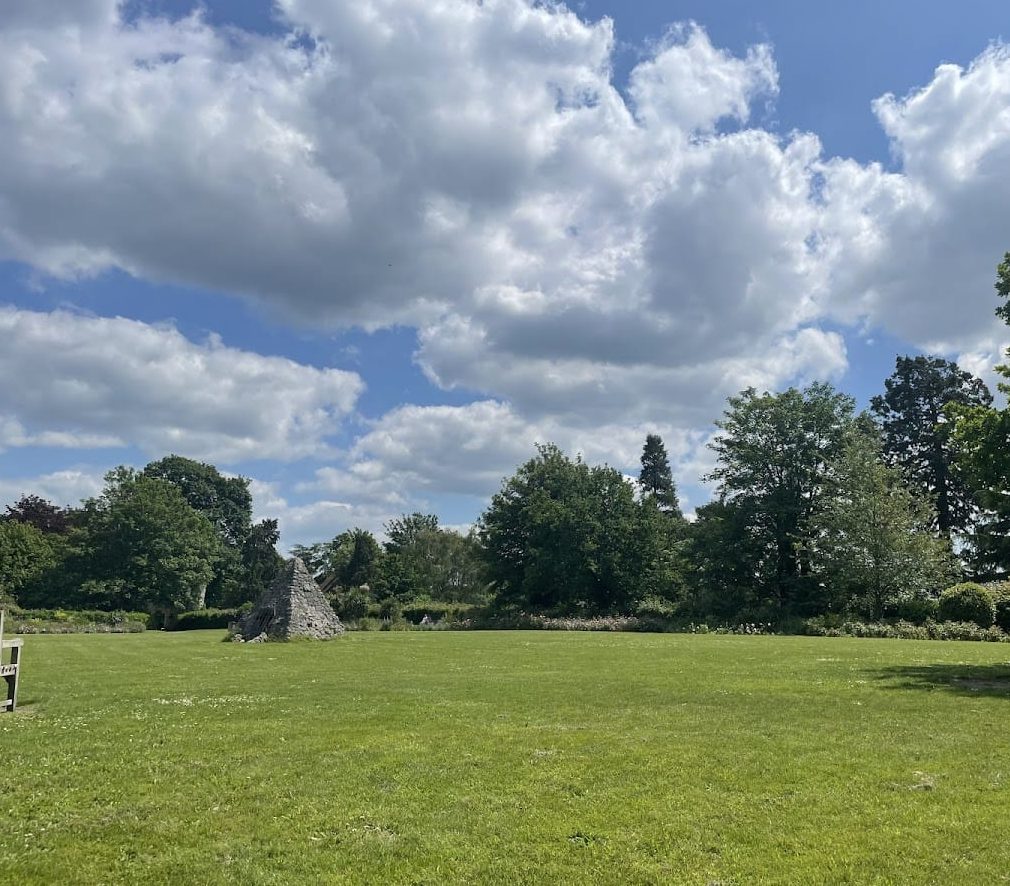
The grounds later became public gardens known as Castle Grounds. The castle gate is also the principal feature of the municipal coat of arms of Reigate and Banstead. In 1823, the Reigate Castle Tunnel was constructed beneath the grounds. It is believed to have been Europe’s first road tunnel and is now used only by pedestrians.
Remains
The surviving site is arranged as a public park and garden, with an ornamental gateway above the castle area and cave spaces beneath it. Barons’ Cave and Tunnel Road Cave are the two named cave areas associated with Reigate Castle, while the tunnel passes below the grounds.
Castle Grounds and Gateway
The principal visible architectural feature is an eighteenth-century gateway built over the castle ruins in 1777. It is a folly, a deliberately ornamental structure designed in the style of an earlier period, and takes the form of a medieval castle entrance rather than serving as a practical defensive gateway. An inscription appears in English on one side and Latin on the other. It states that Richard Barnes paid for the structure himself to preserve the memory of William, Earl Warren, who had formerly lived there and was regarded as a defender of the country’s liberties.
Caves and Tunnel
Barons’ Cave lies below the castle site and is considered to have formed part of the castle. The caves beneath the grounds are described as extensive. Reigate Castle Tunnel, constructed in 1823, runs beneath the gardens and is pedestrianised. Tunnel Road Cave is another named cave area connected with the site.