Rappoltenkirchen Castle: A Medieval Fortress and Historicist Residence
Site at a Glance
- Popularity
- Medium
- Country
- Austria
- Primary era
- Modern
- Eras represented
- Medieval, Modern
- Civilizations
- Austria-Hungary, Habsburg, Holy Roman Empire
- Site type
- Domestic
- Remains
- Castle
On this page7 sections
History
Rappoltenkirchen Castle is a castle in Rappoltenkirchen, Austria, with a medieval core and a nineteenth-century historicist redesign. In 1358, its fief was linked to Austria’s chief master of the hunt, a senior court officer overseeing the ruler’s hunting establishment.
Origins and the hunting office
Rappoltenkirchen was probably granted in 1186 by Ottokar IV, the last Duke of Styria, to the free nobles of Lengenbach. It was first recorded in 1210. The settlement was initially called Rapotenkirchen, a name understood to suggest that Count Rapoto founded it. By 1236, the Lengenbach nobles had passed it to some of their vassals. In the first half of the thirteenth century, it passed through the Babenbergs, Austria’s ruling dynasty until 1246, to the Schenken family of Dobra.
In 1358, Duke Rudolf IV of Austria renewed the chief-huntsman office and tied it to Rappoltenkirchen as an official fief, meaning a right held from a superior in return for obligations. The knight Friedrich von Kreisbach became its first holder. The small fortress then acquired the name Huntsman’s Fortress, referring to the office. The Kreisbach family gained a byname meaning “travelers” because its members took part in military campaigns across Europe and the East. The office later passed from Wilhelm von Kreisbach, who was married to Anna von Doppel, to the Doppel family.
From fortress to palace
Rappoltenkirchen was pledged to Wolfgang von Laßberg in 1417 and to the Sepeck family the following year. Sepeck knights held it as a fief from 1428 to 1468 and transformed the fortress into a palace. The castle was destroyed in the Riederberg earthquake of 1590.
Later ownership and rebuilding
The Barons of Questenberg owned the castle from 1627. It passed to the Counts of Kuefstein in 1710, then through Prince Franz Josef von Dietrichstein to Baron Georg von Sina zu Hodos und Kizdia in 1821. Alterations followed in the 1820s. From 1869 to 1874, the castle was extensively remodeled in a project that incorporated older parts. It passed by inheritance to the Princes Ypsilanti in 1884. The castle suffered heavy damage in 1945 and was restored in 1997 and 1998.
Remains
Main castle
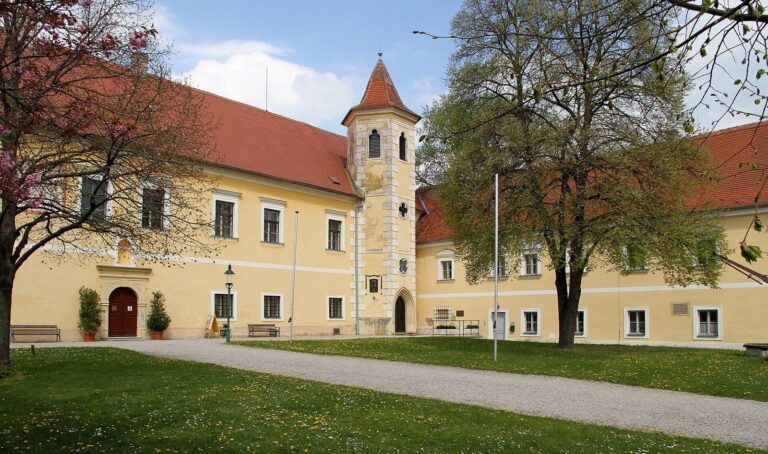
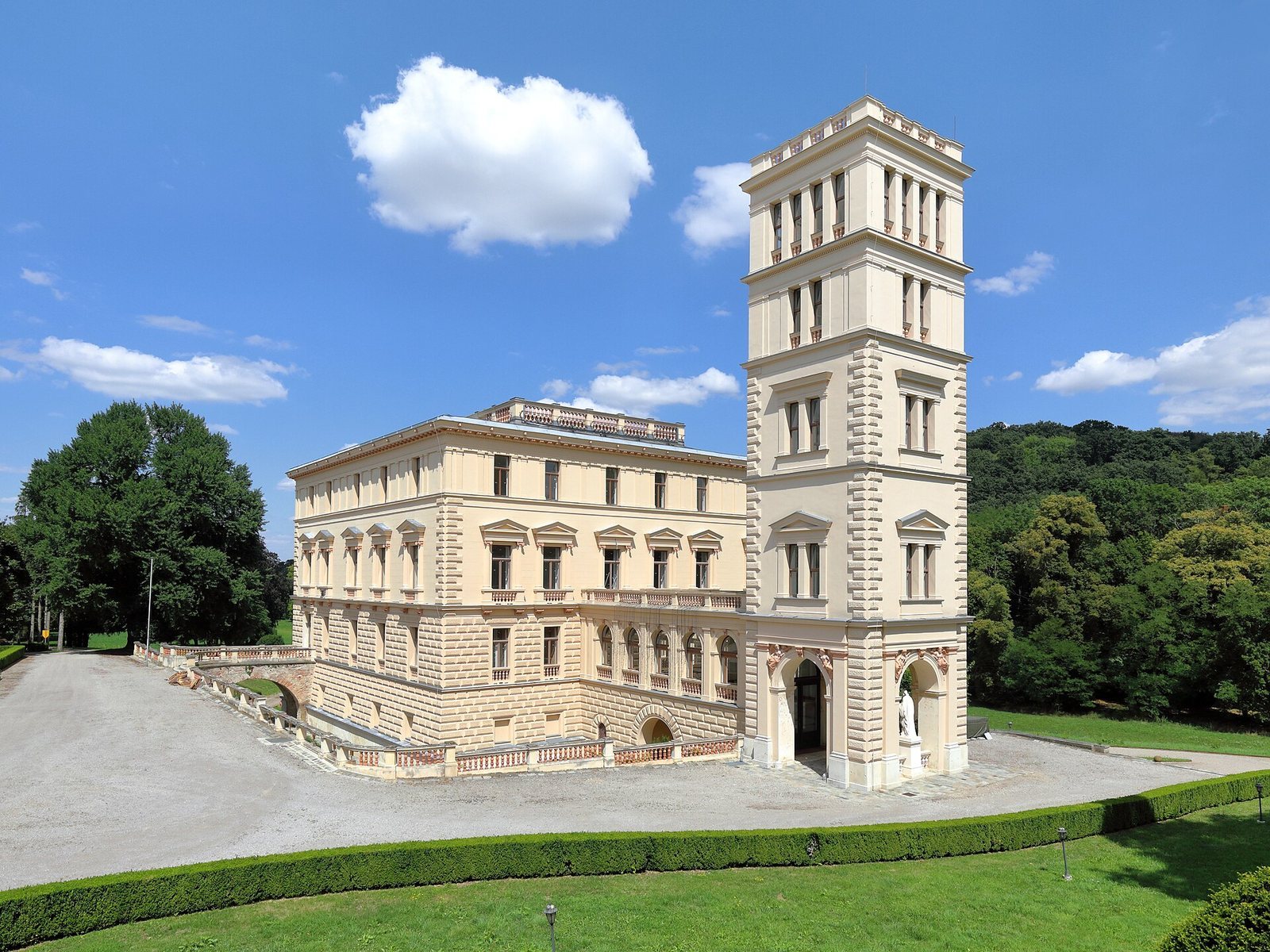
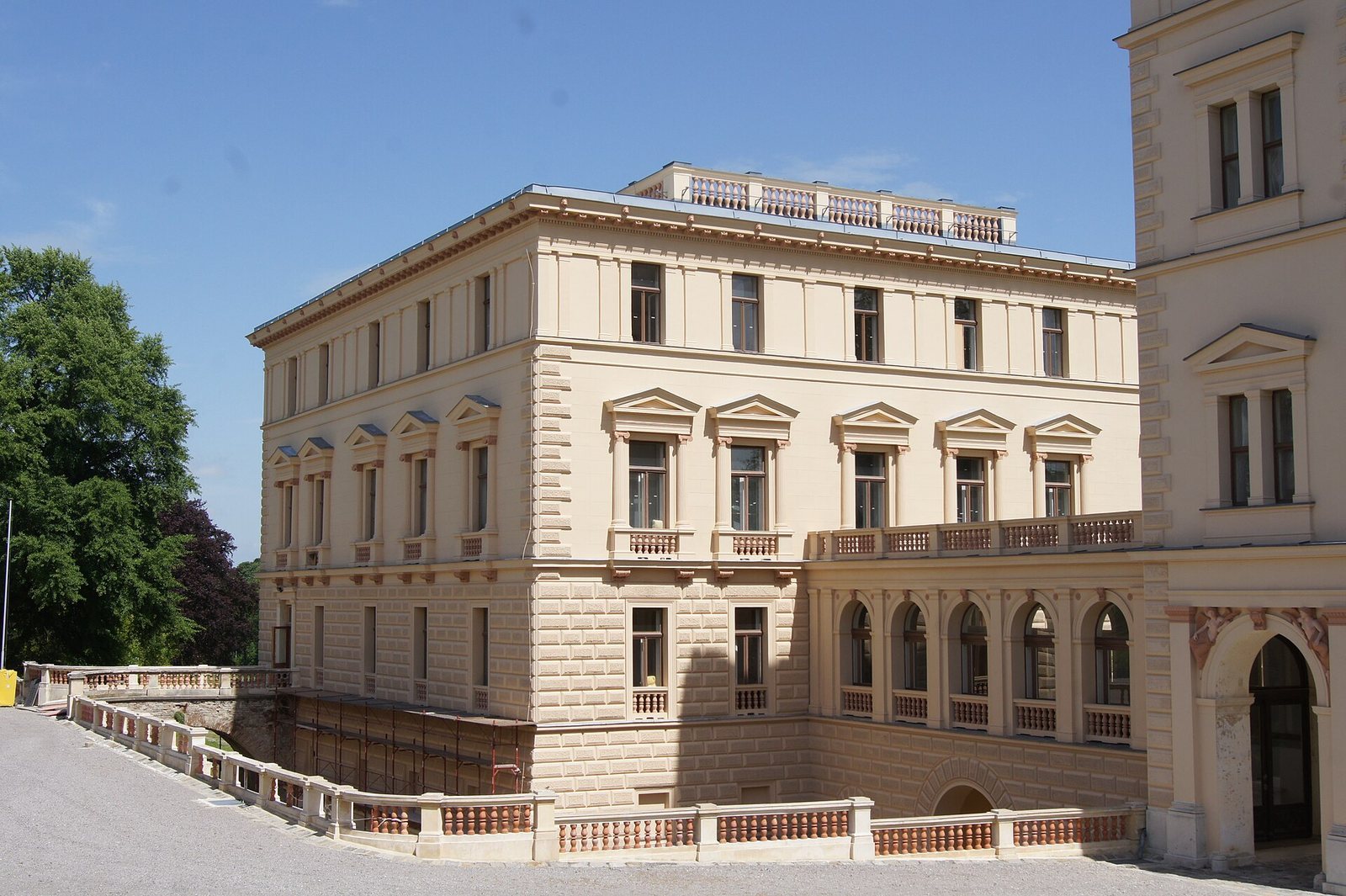
The castle stands beside the parish church in the settlement of Rappoltenkirchen, within the municipality of Sieghartskirchen in Lower Austria. A park surrounds the massive, rectangular main block, which was built over an earlier four-wing structure. Its longer side has eight window bays and its shorter side has five.
A connecting passage joins the four-wing structure to a tower standing in front of it on the southeast. At the center, a stair hall rises through four storeys beneath a glass roof, occupying the space of the former castle courtyard.
Chapel and outbuildings
The castle chapel, used as a mausoleum, stands separately on higher ground to the east. Other buildings include a steward’s house southwest of and in front of the castle, a wine cellar set into the hillside to the southeast, and a gatekeeper’s house at the park’s northern end. An entrance gate dating to 1873 accompanies the gatekeeper’s house.