Ragusa Cathedral: The Cathedral of Saint John the Baptist in Sicily
Site at a Glance
- Popularity
- High
- Country
- Italy
- Primary era
- Early Modern
- Eras represented
- Early Modern, Modern
- Civilizations
- Habsburg, Italian, Kingdom of Sicily, Kingdom of the Two Sicilies, Spanish
- Site type
- Religious
- Remains
- Cathedral
On this page18 sections
History
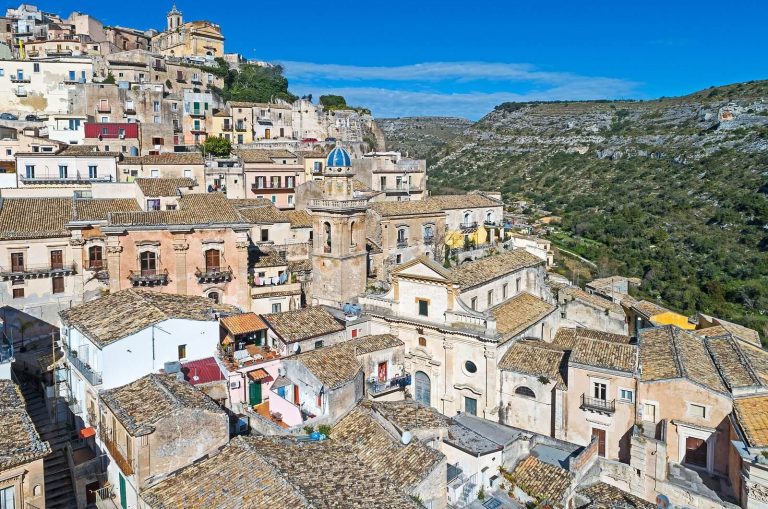
Ragusa Cathedral, dedicated to Saint John the Baptist, who baptized Jesus in the Gospels, is a Roman Catholic church in Ragusa, Italy. Its late Baroque building developed through successive reconstruction after the 1693 earthquake. Together with the Mother Church of San Giorgio, it became one of the city’s principal places of worship.
The church before and after the earthquake
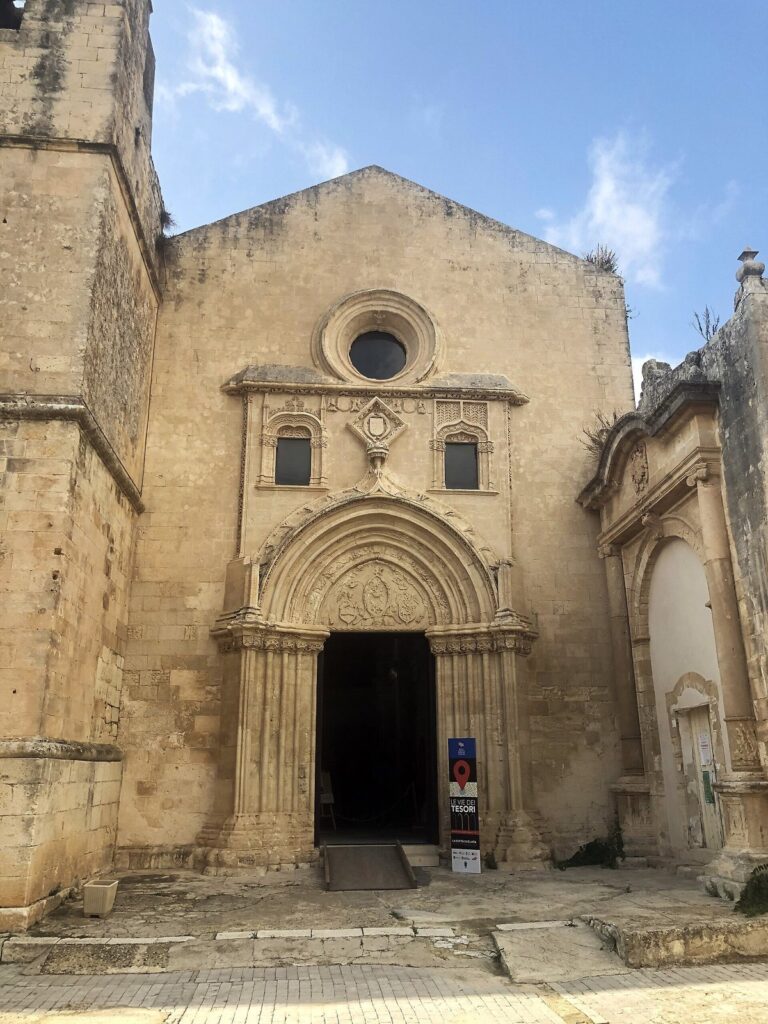
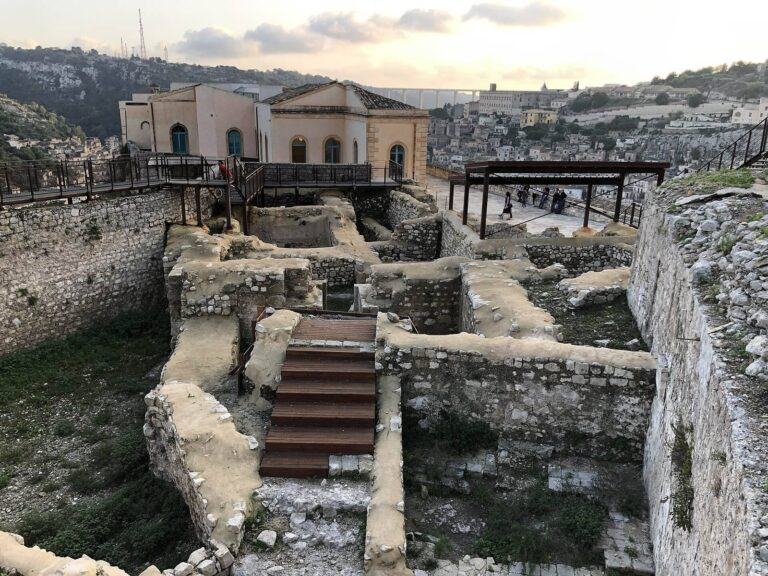
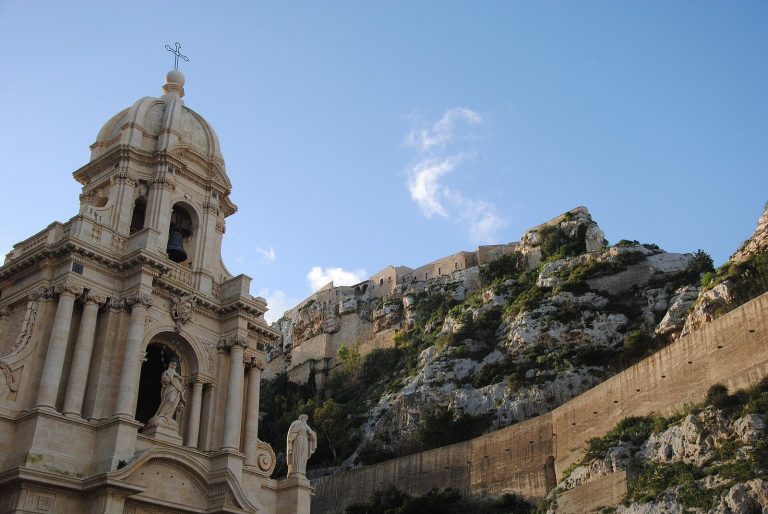
Before the earthquake, a church dedicated to Saint John the Baptist stood in western Ragusa, beneath the walls of the medieval castle. The earthquake severely damaged it. A replacement was built in the Patro district, at the heart of the new upper town. Its foundation stone was laid on 15 April 1694, and it opened for worship on 16 August that year. The four-month building effort produced a small church that soon proved inadequate for the expanding district. Toward the end of the eighteenth century, the church of Saint Agnes was built over the remains of the earlier church beneath the castle.
Expansion and civic division
Ragusa’s supporters of Saint John and Saint George had long been divided. The Saint John faction rebuilt its church first, intensifying tensions with Saint George’s supporters in the older part of the city. The 1693 earthquake had altered the balance between the two parts of Ragusa. San Giovanni gained independence in 1714, and its enlargement was then ordered.
Work on a larger church at the same site began in 1718. Giuseppe Recupero and Giovanni Arcidiacono, master builders from Acireale, directed the construction and may also have contributed to its design. The building was completed in 1777 and consecrated on 30 May 1778 by Giovanni Battista Alagona, bishop of Syracuse.
The rivalry between the two factions also shaped Ragusa’s civic and church organization. Appeals by the rectors of the two churches to the Holy See’s Congregation of Rites, the Catholic authority responsible for liturgy and religious rites, led to the municipality’s division on 10 December 1865. The city had separate mayors, two principal churches, and two archpriesthoods, church jurisdictions under archpriests. Saint John the Baptist was the patron of upper Ragusa’s Saint John faction, while Saint George was the patron of the other faction.
Cathedral of the Diocese of Ragusa
On 6 May 1950, the Diocese of Ragusa was established as a territory separated from the Archdiocese of Syracuse. The church then became the cathedral and the seat of the diocese’s bishops. It remains an active Roman Catholic cathedral following the Roman Rite, the principal liturgical tradition of the Latin Church. Restoration work across the building took place from 1992 to 1995. In 2002, the cathedral was included in UNESCO’s World Heritage listing of the Late Baroque Towns of the Val di Noto in southeastern Sicily.
Recurring observances honor the nativity and martyrdom of Saint John the Baptist. The martyrdom feast includes a procession and traditions known as Sarcia and Cuccagna. A liturgical observance with the exposition of a relic is also held on the twenty-ninth of each month.
Remains
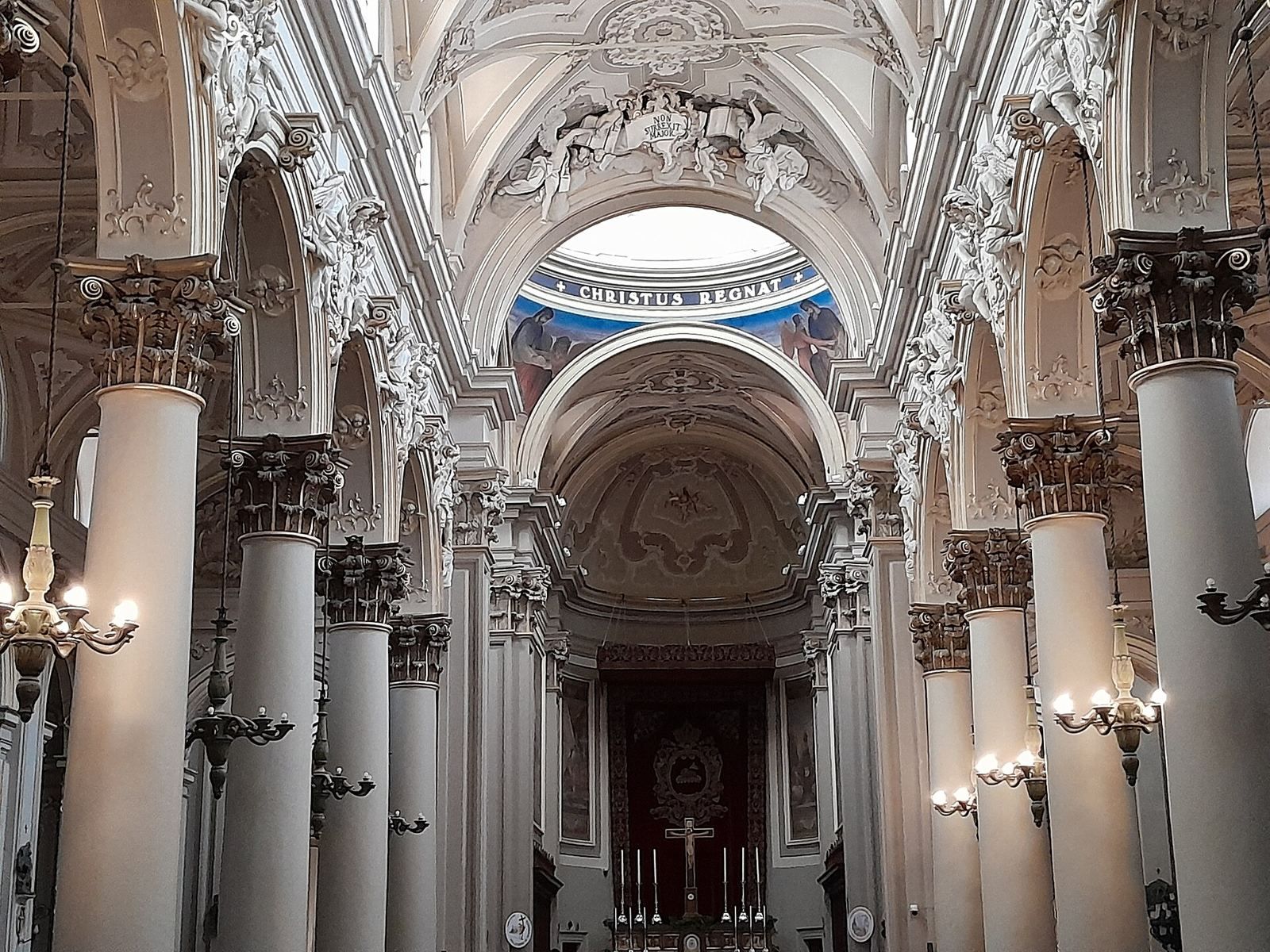
The cathedral combines a richly decorated late Baroque exterior with an interior laid out as a Latin cross, with a long nave crossed by a transverse arm. The sanctuary area around the main altar ends in a recessed apse. Local bituminous limestone was used in the building, whose interior is now plastered.
Exterior architecture
Façade and portals
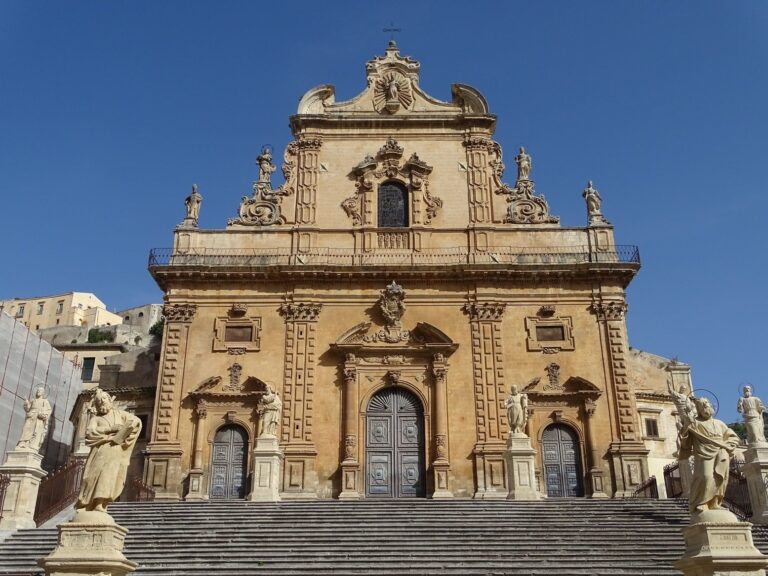
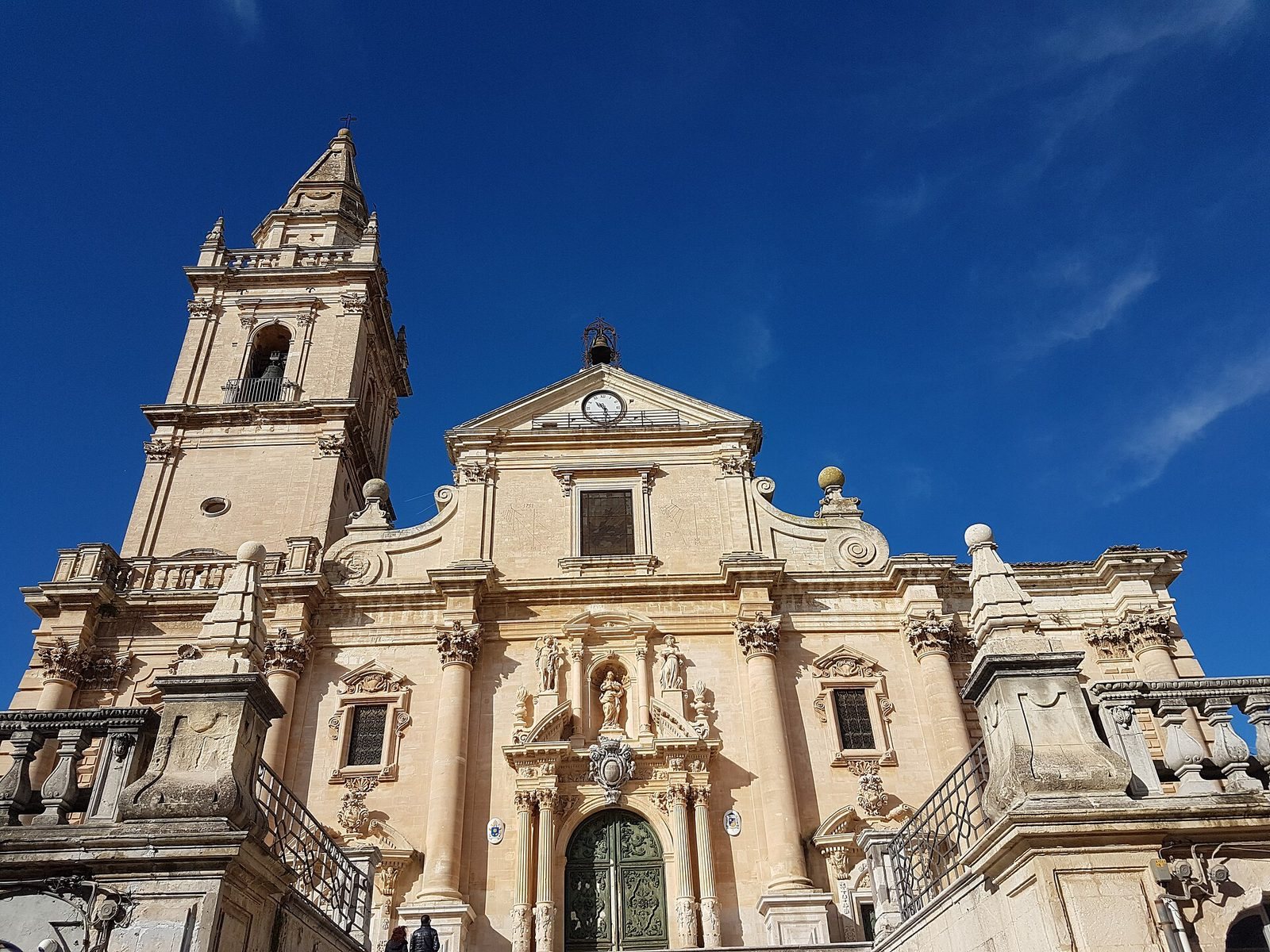
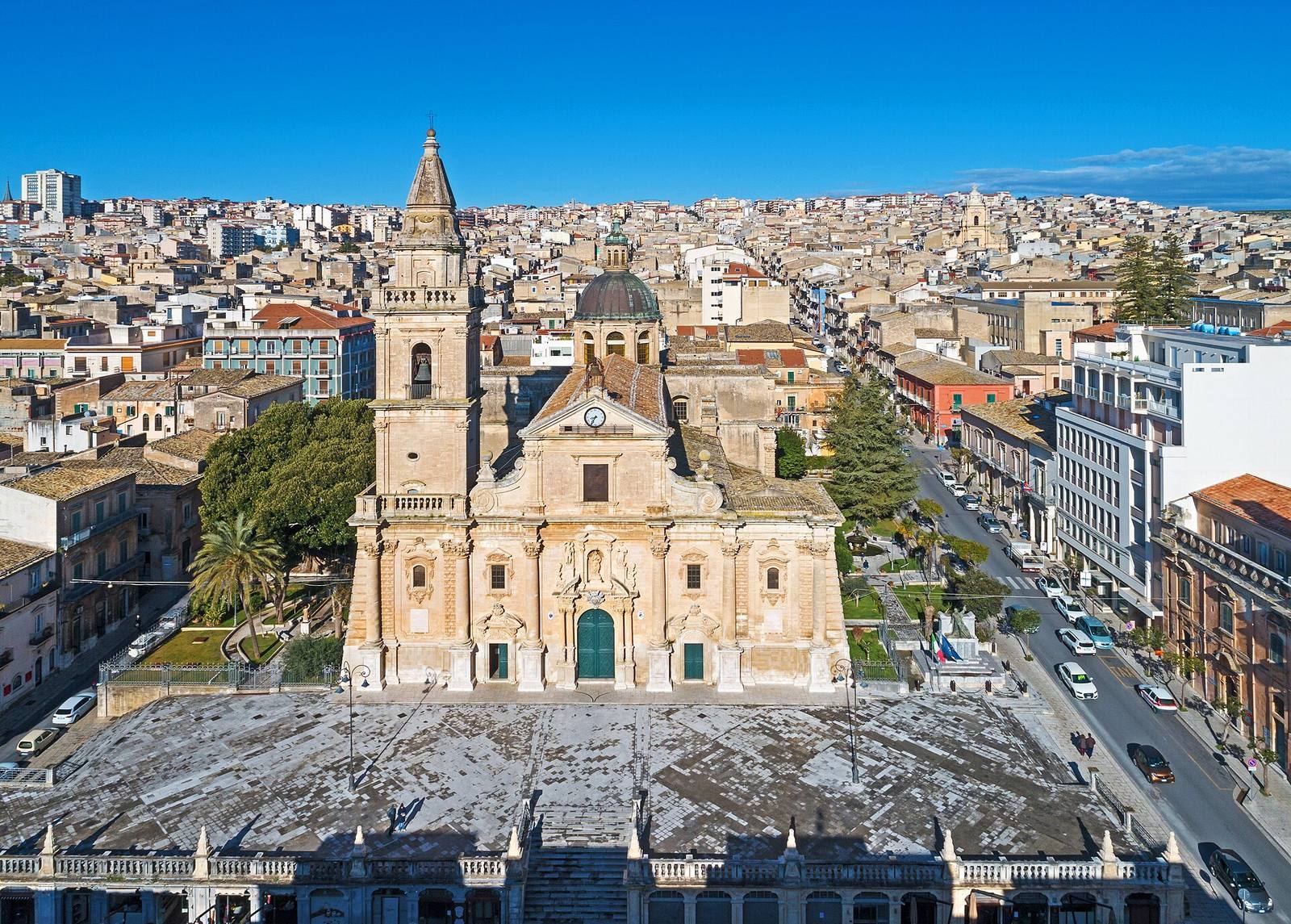
The monumental façade is arranged in five sections, with large columns on tall bases and pilasters, flat wall supports, featuring rough-faced masonry. Similar supports continue along the sides. Three portals pierce the richly carved and sculpted front. The central portal is framed by two pairs of carved columns that support a broken pediment, whose upper form is interrupted. Statues of Saint John the Baptist and Saint John the Evangelist flank it; the Evangelist is distinct from the Baptist and is traditionally identified as one of Jesus’s apostles. A central niche holds the Virgin Mary as the Immaculate Conception, the Catholic belief that Mary was conceived without original sin. The portal resembles the marble portal of Acireale Cathedral.
Forecourt and sundials
A broad forecourt stands above the adjoining square and is enclosed by a balustrade of local bituminous limestone built in 1745. Two large sundials, dated 1751, occupy the upper level of the façade. One follows Italian hours, counting from sunset to sunset; the other follows French hours, measured from midnight to midnight.
Bells and towers
A bell tuned to E-flat 3 is set into the façade. The bell tower on the left rises about 50 metres and contains four bells tuned to C 3. A second tower was planned for the right side, but construction stopped at its base, built in 1820.
Interior layout and decoration
Stonework and floor
The church’s Latin-cross plan brings the nave and crosswise transept together beneath a dome. The carved capitals, made in 1731 by master builder Carmelo Cultraro, were later gilded. The floor, laid in 1848, is formed from slabs of local bituminous limestone with geometric inlays in limestone. During the first half of the nineteenth century, members of the Ragusan Cultraro family’s richly carved, gilded limestone altars in the side aisles were dismantled. Simpler chapels with polychrome marble altars took their place.
Nave and side chapels
The first bay on one side contains a marble baptismal font topped by a bronze sculpture made by Carmelo Cappello in 1955. The second has an altarpiece of Saint Isidore the Farmer, a Spanish saint associated with agriculture, dated 1773 and by an unknown artist. A painting of Gregory the Great, pope and theologian, by Paolo Vetri occupies the third bay. The fifth holds a painting of the Immaculate Conception by Dario Querci, and the sixth contains the organ. Across the nave, the first bay has a wooden Saint John the Baptist carved in 1838 by Carmelo Licitra, known as Giuppino. The second holds a wooden Saint Joseph, regarded in Christian tradition as Mary’s husband and Jesus’s earthly guardian; the third has a painting of Philip Neri, a sixteenth-century Italian priest who founded the Oratory, attributed to Sebastiano Conca. A painting of the Three Marys, women followers of Jesus associated with his crucifixion and burial, is in the fifth bay; the sixth contains Francesco Manno’s 1780 painting of Christ at the Column. The fourth bay on each side has a side entrance, one toward Corso Italia and the other toward Corso Vittorio Veneto.
Transept chapels
The right arm of the transept contains the Nativity chapel. Its painting, by an unknown artist and of unknown date, has features associated with eighteenth-century Neapolitan art and is surrounded by angels and an image of the Eternal Father. Beneath the altar is a Nativity scene with terracotta figures dated 1800. The chapter hall is also in this arm. In the left arm, the chapel of Our Lady of Good Counsel, also called the Altar of the Crucifix, surrounds a bronze crucifix with stucco figures of Faith, Hope, and Charity. The sacristy is located in this arm as well.
Apsidal chapels
The right chapel is dedicated to the Blessed Sacrament, the Eucharist in Catholic belief. Giuseppe Marino made its altar in 1787. Marble high-reliefs by Giuseppe Prinzi, dated 1870, depict the Sacrifice of Melchizedek, a biblical king and priest who blessed Abraham, and the Last Supper, Jesus’s final meal with his disciples. In the left chapel, dedicated to Saint John the Baptist, Paolo Vetri’s 1906 painting shows the young saint in the desert. It was made as an ex-voto, an offering connected with a vow, in association with the presence of the young Marchioness Schininà. Nineteenth-century marble reliefs there depict the saint’s birth and beheading.
Vaults, dome, and painted decoration
Large framed panels above the columns carry biblical verses referring to Saint John the Baptist. Crispino Corallo carved them in limestone in 1741, and stucco angels were added later. In 1776 and 1777, Giuseppe Gianforma and his son Gioacchino decorated the nave and presbytery vaults with gilded Rococo stucco, an ornate style known for delicate decoration. They also created large niches surrounded by statues in the transept walls. The dome above the point where the nave and transept meet was raised in 1783. Copper sheets were added in the early twentieth century to stop rainwater from threatening its structure.
Primo Panciroli frescoed the main altar and presbytery walls in 1926 with scenes of Saint John the Baptist preaching and being beheaded, as well as images of Saint Elizabeth and Saint Zechariah, his parents in Christian tradition. In 1933, Salvatore Cascone painted the four Evangelists on the curved triangular supports beneath the dome. In 1954, he decorated the baptismal area with scenes from the Old and New Testaments.
Organ and devotional works
Serassi organ
The Serassi brothers of Bergamo built the organ in 1857; it was installed in the church the following year and enlarged by the Tamburini firm of Crema in 1968. Now positioned above the main entrance, its three-part façade includes 23 pipes from the 16-foot Principal rank, arranged in a 9–5–9 pattern. The 16-foot measure refers to the nominal length of the rank’s lowest pipe. The older two-manual, mechanically operated console remains beneath it. The enlarged instrument has three hand keyboards, an electrically operated console with 61 keys, a 32-note radial pedalboard played with the feet, and 85 stops controlling pipe ranks. Its formerly separate bass and treble stops were combined.
Lenten canvas and other works
A large Passion canvas, locally called the taledda, is hung during Lent to cover the apse. Painted in monochrome grey by an unknown artist between 1773 and 1792, it depicts the Crucifixion and is among the oldest surviving works of its kind in the province of Ragusa. The cathedral’s original devotional image of its patron saint is identified as a stone statue of Saint John the Baptist dated 1513. An altarpiece of the martyrdom of Saints Cosmas and Damian, early Christian physician-martyrs, is signed by Matteo Battaglia and dates from before 1756; it is kept in the parish priest’s office.
The associated episcopal palace is Schininà di Sant’Elia Palace, and a museum is associated with the cathedral.