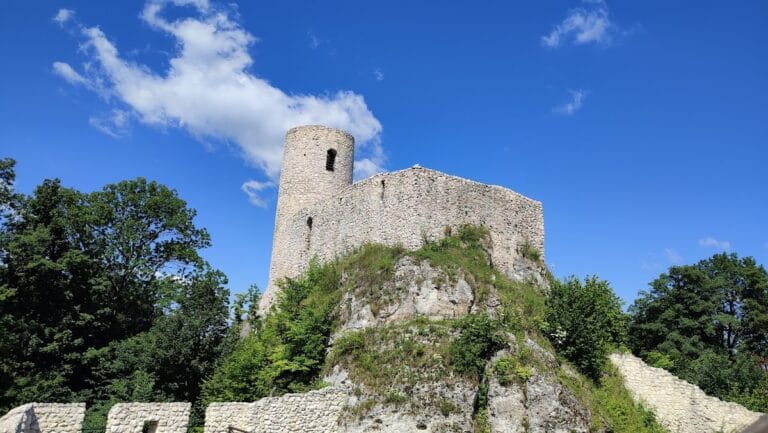
Rabsztyn Castle: A Medieval Border Fortress in Poland
Site at a Glance
- Rating
- 4.6
- Popularity
- Medium
- Country
- Poland
- Primary era
- Medieval
- External website
- Open
- Eras represented
- Medieval, Early Modern
- Civilizations
- Kingdom of Poland, Polish–Lithuanian Commonwealth
- Site type
- Military
- Remains
- Castle
On this page13 sections
History
Rabsztyn Castle is a historic castle ruin in Rabsztyn, Poland, whose origins lie in a wooden fortification built during the second half of the thirteenth century. The castle later formed part of the Eagles’ Nests, a chain of medieval fortresses placed on high limestone outcrops in the Kraków–Częstochowa Upland. It guarded the border with Bohemia, the Kraków–Wrocław trade route, and the residence of royal district officials known as starosts.
Origins and royal administration
Archaeological research places the earliest defensive work on the limestone rock in the second half of the thirteenth century. The foundation date of the masonry castle remains uncertain, although its first written references, from 1396, name Gregory, the chapel chaplain, and Iwo, the burgrave of Rabsztyn. A burgrave was the official responsible for administering and defending a castle.
The first stone complex probably took shape during the reign of Casimir III the Great, the fourteenth-century king associated with extensive castle building and royal fortification in Poland. It initially consisted of a residential building and a tower. The name Rabsztyn probably comes from the German term Rabenstein, meaning “raven rock.” The castle’s origins have also been linked, at different times, with Bishop Jan Muskata, Wenceslaus II of Bohemia and Poland, and the Toporczyk noble family of Morawica.
In the late fourteenth century, King Władysław II Jagiełło pledged the royal castle to Spytek II of Melsztyn. After Spytek died in 1399, ownership passed to his widow, Elżbieta Melsztyńska, and the castle remained with the Melsztyn family until the middle of the fifteenth century. In 1412, at the request of Jan of Tarnów, the voivode, or governor, of Kraków, the tower and well were rebuilt or altered. The work cost 52.5 grzywnas, a medieval unit of account and weight used in financial records.
The Melsztyn and Tęczyński families
After Elżbieta’s estate was divided, Rabsztyn went to her son Jan Melsztyński. When Jan died in 1431, a royal judgment awarded the castle to his brother Spytek III Melsztyński rather than to Jan’s daughter Jadwiga. Spytek joined a Polish Hussite confederation opposed to Kraków Bishop Zbigniew Oleśnicki. He was defeated and killed at the Battle of Grotniki in 1439, after which the Crown confiscated his property, including Rabsztyn Castle.
King Władysław III restored the castle to Spytek’s widow, Beatrice of Szamotuły, as a royal tenancy, meaning a leased royal holding. A legal settlement in 1441 then transferred it to Jadwiga of Książ, the daughter of Jan Melsztyński. Her marriage that year to Andrzej Tęczyński brought Rabsztyn into the Tęczyński family, which later became known as the Rabsztyński family.
In 1443, the king ordered the Tęczyński family to strengthen the castle. Andrzej Tęczyński probably raised the masonry tower by adding an upper section built of brick. After Tęczyński was killed, six Kraków councillors were executed for taking part in the killing, while three others were imprisoned at Rabsztyn until Kraków paid compensation. The episode shows that the castle served not only as a frontier stronghold but also as a royal instrument in political and judicial disputes.
The Boner period and military conflict
The castle and its estates remained with the Tęczyński and Rabsztyński families until 1509. In that year Andrzej Rabsztyński of Tęczyn, a Kraków canon and starost of Płock, died without a surviving line. In 1511, the Crown Treasurer Andrzej of Kościelec acquired Rabsztyn for 4,000 florins, gold coins and a widely used European monetary unit. After his death in 1515, the castle was leased to Jan Boner, a banker from Alsace. The Boner family then controlled the Rabsztyn starosty for four generations.
Around 1523, Jan Boner’s nephew Seweryn Boner took control of Rabsztyn. He already held Ojców and soon acquired Ogrodzieniec as well. After his death in 1549, the castle passed to his son, also named Seweryn Boner. In 1573, the younger Seweryn hosted King Henry of Valois at Rabsztyn.
Rabsztyn became involved in the anti-Habsburg campaign of 1587–1588, a conflict connected with the struggle over the Polish throne and the attempted intervention of Maximilian III of Habsburg. The garrison was commanded by Gabriel, also called Hawryło, Hołubek, a Cossack captain in Polish service who was later associated with the Zaporozhian Cossacks. He repelled an attack by the Zborowski family and, aided by miners from Olkusz, defeated a force sent to support Maximilian during his siege of Kraków.
Renaissance transformation and decline
When the younger Seweryn Boner died without issue in 1592, Rabsztyn passed to the Firlej family and their heirs. After 1599, Mikołaj Wolski, a diplomat and Rabsztyn starost, began building a late-Renaissance palace on the site of the lower castle. Late-Renaissance architecture revived classical forms in a later phase of the Renaissance tradition. Zygmunt Gonzaga Myszkowski may have continued the work after Wolski’s death in 1630.
The Swedish Deluge, the Swedish invasion and occupation of much of the Polish–Lithuanian Commonwealth during the mid-seventeenth century, brought severe damage. Retreating Swedish troops burned and plundered Rabsztyn in 1657, an event recorded in the inspection of 1660. Reconstruction was attempted but never completed. Parts of the complex remained in use into the eighteenth century, after which the castle was abandoned. Its owners moved to an eighteenth-century manor and farm on the southern side of the castle hill.
During the second half of the nineteenth century, treasure hunters destroyed surviving parts of the lower castle, including its tower and walls. The main tower, described as the oldest part of the castle, survived until the beginning of the twentieth century. The remaining ruins are now protected as a historic monument and as part of Poland’s cultural heritage. They entered the historic-monument register under designations dated 17 May 1947 and 2 November 1982, and the site is owned by the municipal authorities of Olkusz.
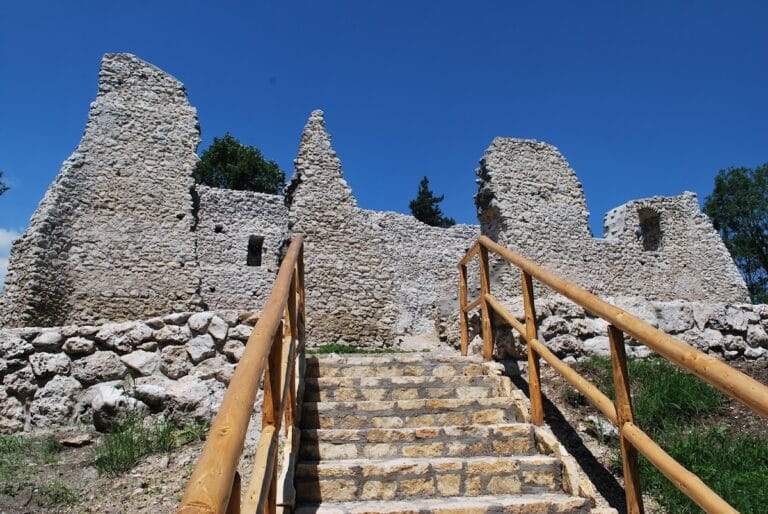
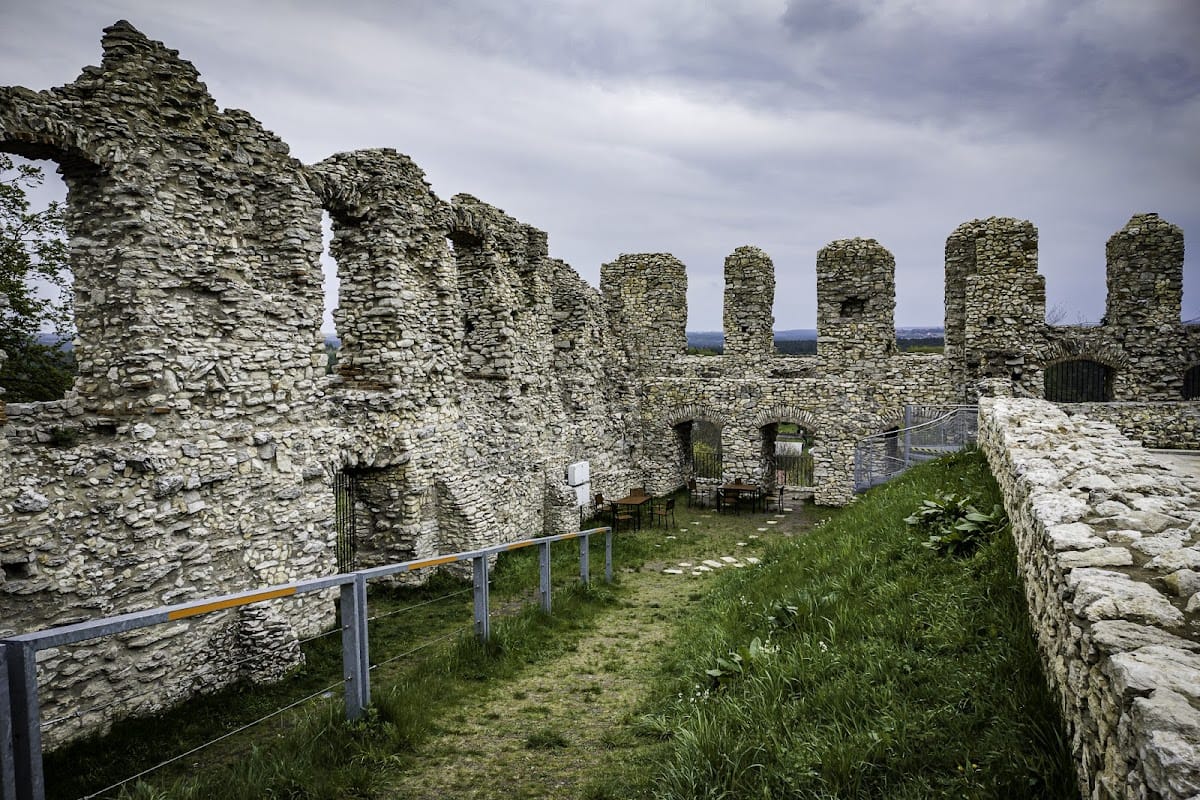
Partial reconstruction by the Rabsztyn Castle Association and the Olkusz municipal authorities was completed by 2021, while adaptation work continues in some rooms. An earlier phase placed the guard tower and main gate into service in 2009. Annual knightly tournaments and the Juromania cultural festival also continue at the castle, maintaining its place as a historic and cultural landmark.
Remains
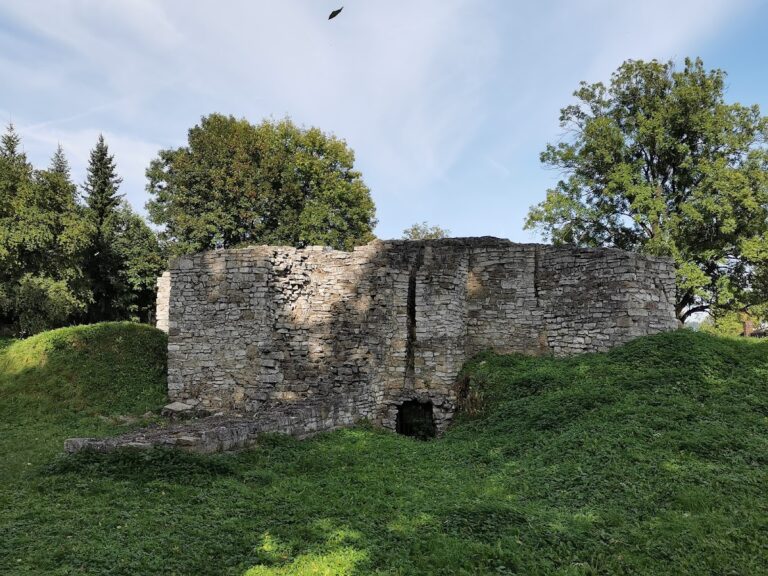
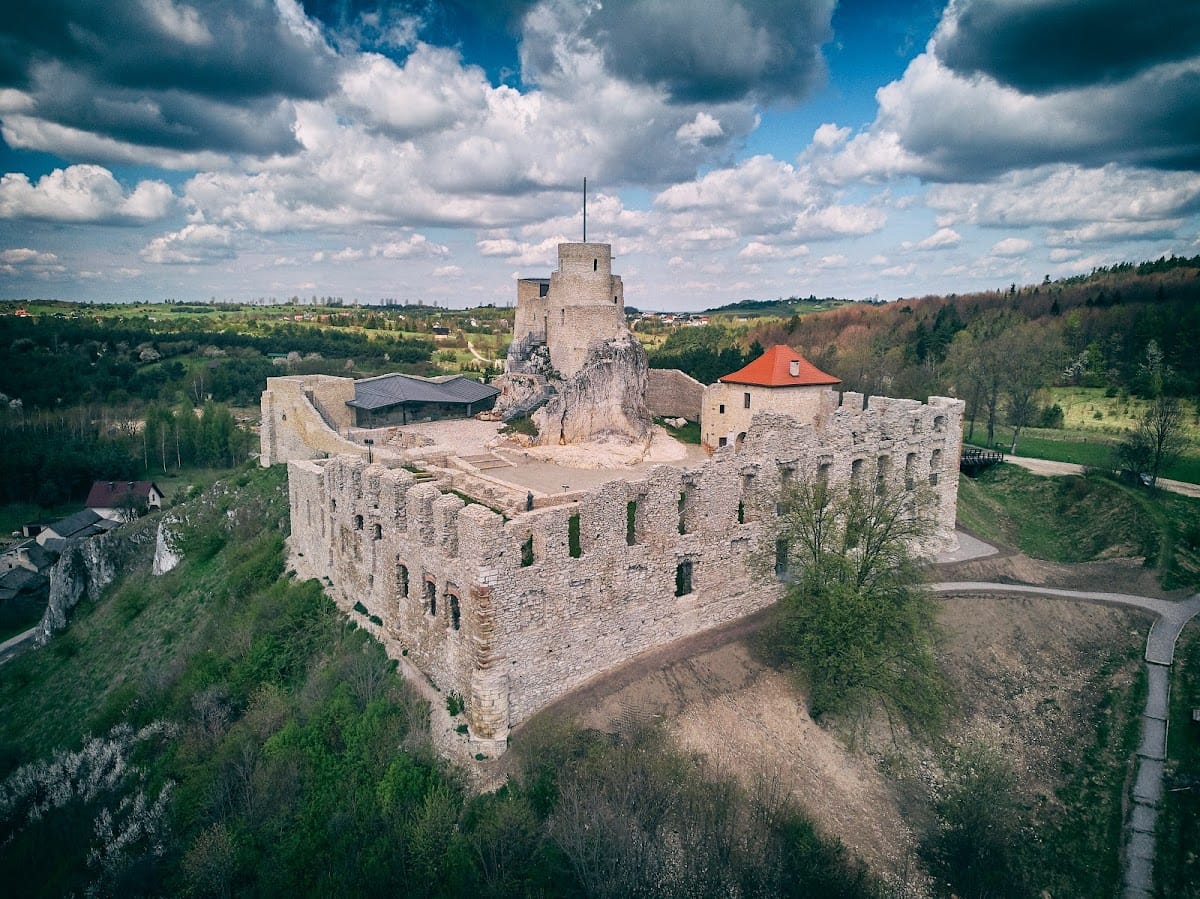
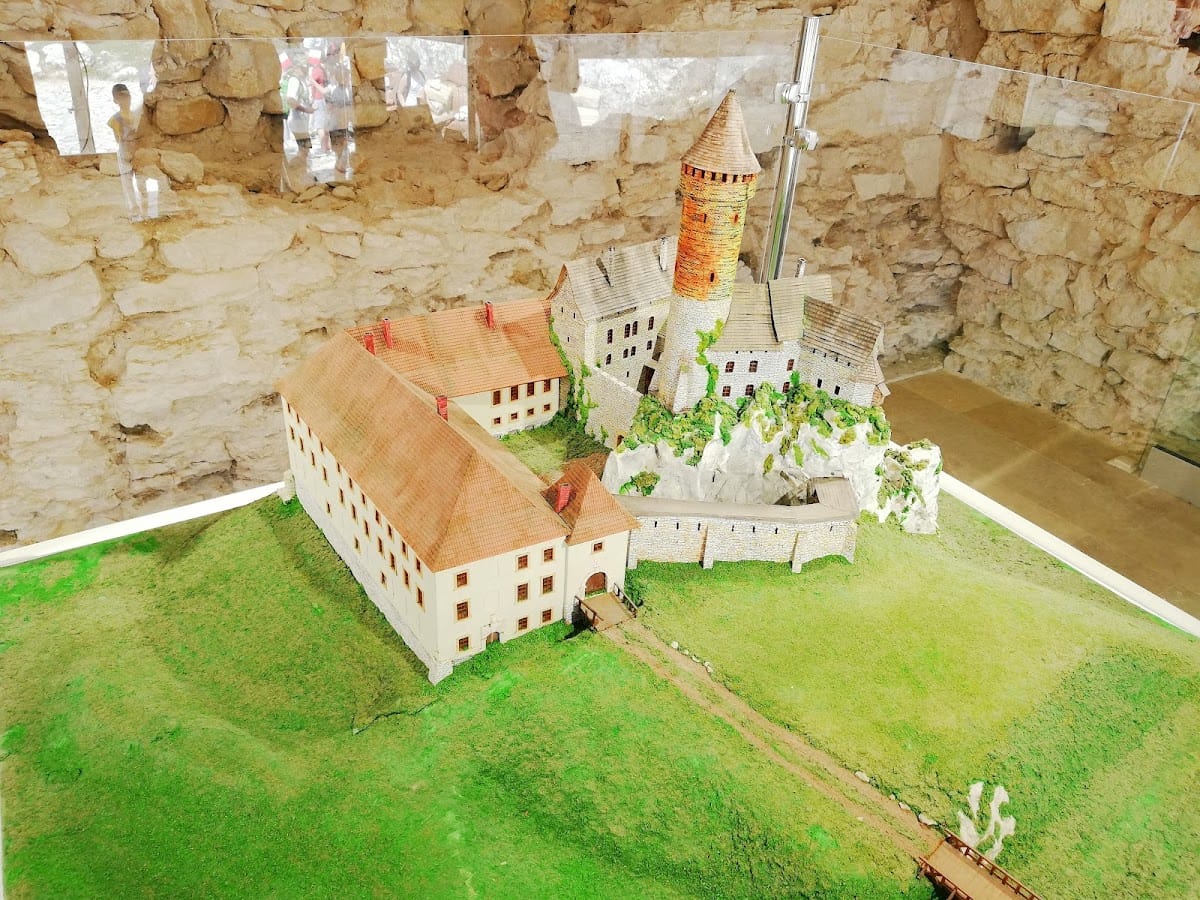
Rabsztyn Castle occupies a difficult-to-reach limestone outcrop on Rabsztyn Hill in the Kraków–Częstochowa Upland. The complex is arranged in three sections, known as the upper, middle, and lower castles. Its earliest architecture was Gothic, while later work introduced Renaissance forms. Ruined masonry stands alongside partially reconstructed elements, including the main gate and guard tower.
The upper castle
Residential building and main tower
The upper castle contained a residential building known as a kamienica and the main tower. The tower was rectangular in its lower part and semicircular above. During the middle of the fifteenth century, its upper section was raised in brick and given an octagonal form. This alteration belongs to the period when the Tęczyński family strengthened the castle and enlarged its defensive structures.
The middle castle
Courtyard, buildings, and well
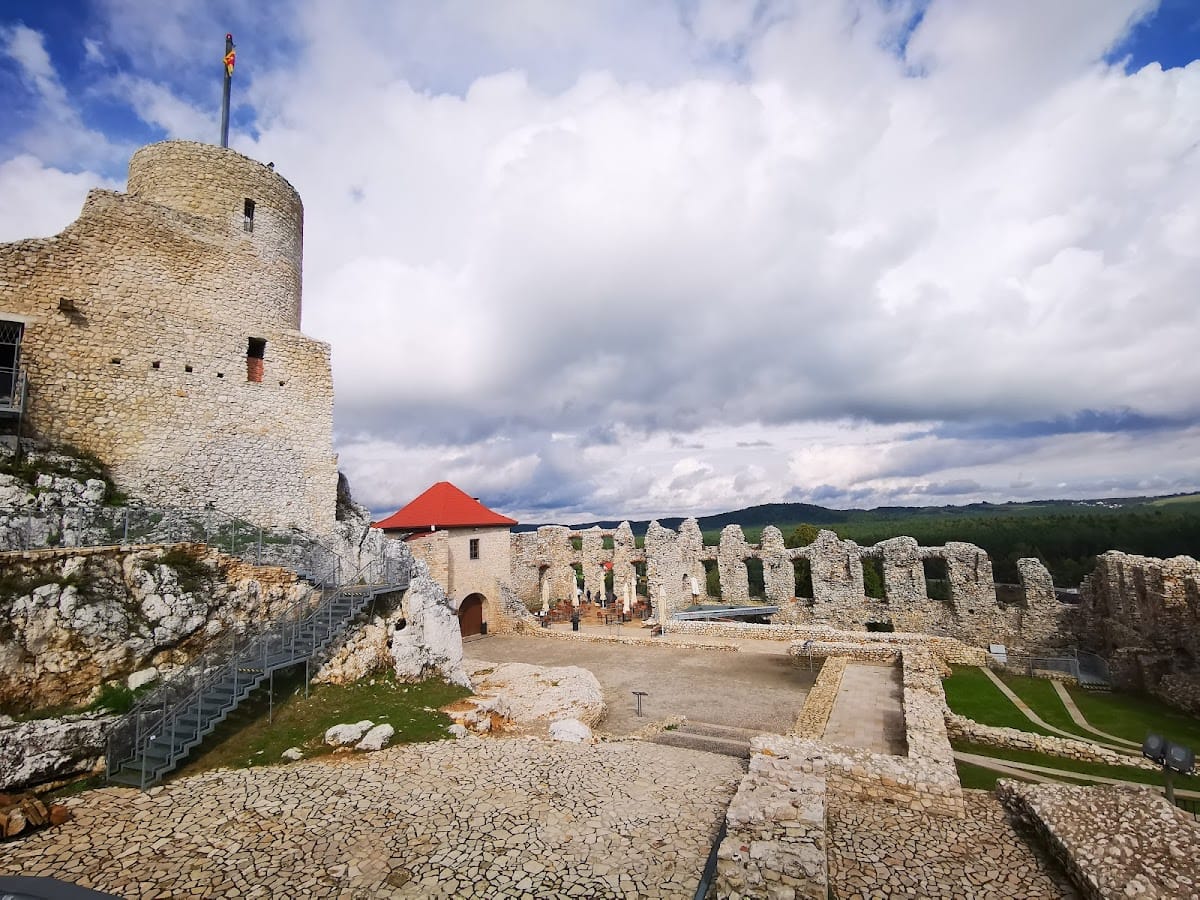
The middle castle contained two residential and service buildings, a corner watchtower, an entrance wall with a gate, and a courtyard. A deep well descended to the level of the village of Rabsztyn, supplying the complex from within its fortified enclosure. The well was among the features rebuilt or altered in 1412, together with the castle tower.
The lower castle
Gate tower and defensive enclosure
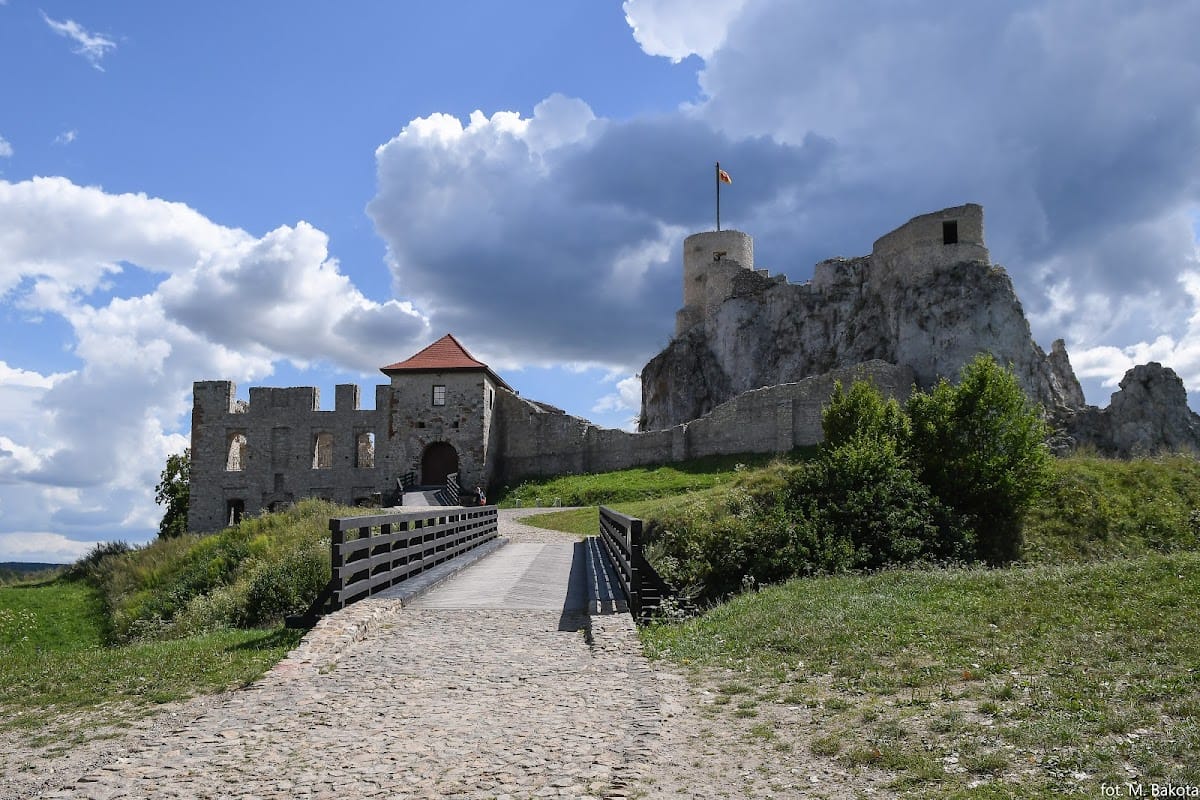
The lower castle originally included a gate tower reached by a bridge that had formerly been a drawbridge. A curtain wall, meaning a fortified wall linking defensive structures, and a castellum, or fortified enclosure, completed this part of the complex. A dry moat and bridge lay north of the castle, while artillery earthworks once rose above the moat. The defensive character of the lower castle had already been partly reduced by the development of firearms.
Late-Renaissance palace
At the turn of the sixteenth and seventeenth centuries, part of the lower castle walls was demolished to make room for a large late-Renaissance palace. The palace stood at the foot of the upper castle and contained approximately forty rooms. A wall with a gate tower and a deep moat separated the palace complex from the rest of the hill. Its surviving fabric is now incorporated into the wider ruins and partially reconstructed areas of Rabsztyn Castle.