Czerna Monastery: A Discalced Carmelite Hermitage and Formation House in Poland
Site at a Glance
- Rating
- 4.8
- Popularity
- Medium
- Country
- Poland
- Primary era
- Early Modern
- External website
- Open
- Eras represented
- Early Modern, Modern
- Civilizations
- Polish–Lithuanian Commonwealth
- Site type
- Religious
- Remains
- Monastery
On this page18 sections
History
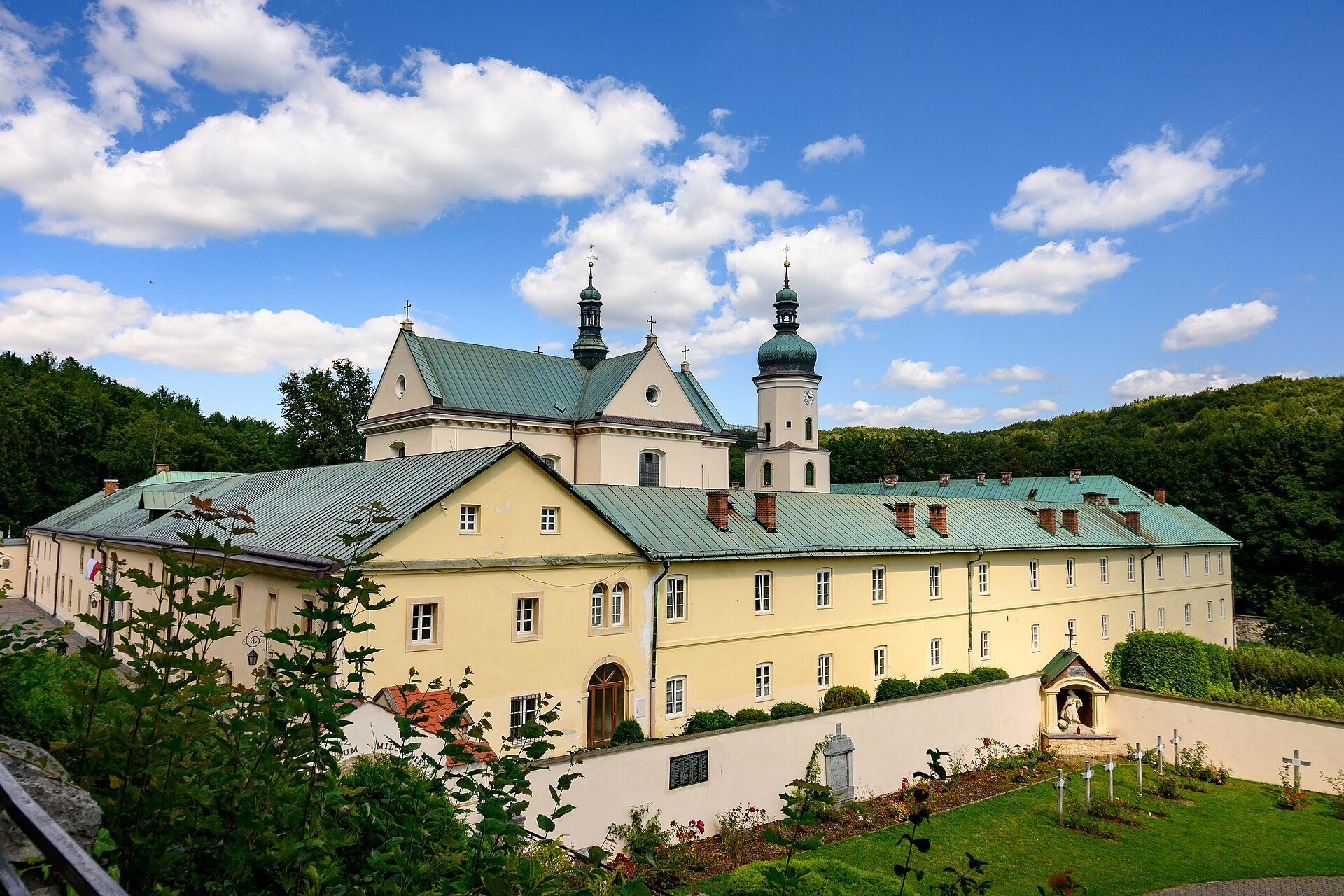
Czerna monastery is a male Discalced Carmelite monastery and formation house in Poland, founded in 1629 in Czerna, Lesser Poland. The Discalced Carmelites are a reform branch of the Carmelite order known for a stricter contemplative and ascetic life, while a formation house prepares members for religious service. The monastery church of Saint Elijah was built between 1631 and 1640 in the Early Baroque period and consecrated in 1644.
Foundation and hermitage
Agnieszka of the Tęczyński family, widow of Mikołaj Firlej, the Kraków voivode, founded the monastery and endowed it with the villages of Paczółtowice, Siedlec, and Żbik, the Chechło mill, and part of Żary. A tradition recorded by Hugo Kołłątaj says that Carmelite provincial visitor Father Gerard persuaded Firlejowa to support the foundation after a wandering Carmelite monk had freed her from the influence of Jesuits. This account belongs to local tradition rather than established history.
From its foundation until 1805, the complex functioned as a hermitage under papal enclosure, a form of monastic separation that restricted access to the enclosed religious community. The faithful were not admitted during this period. In 1672, the prior also prohibited local peasants from travelling to Kraków so that they would perform corvée labor on monastery lands.
Religious change and later history
When the church was removed from enclosure in 1805, Czerna became a center of devotion to Our Lady of Mount Carmel and Saint Raphael Kalinowski. Our Lady of Mount Carmel is a title of the Virgin Mary closely associated with Carmelite spirituality. The church’s image of Our Lady of Mount Carmel received papal crowns in 1988.
The monastery also became involved in difficult episodes of nineteenth- and twentieth-century history. On 22 July 1869, the prior was arrested after questioning about his admitted knowledge of the confinement of Barbara Ubryk in the Discalced Carmelite nuns’ convent on Kraków’s Wesoła Street. He was accused of complicity. During the Second World War, Prior Alfons Mazurek was murdered by the Nazis at Nawojowa Góra in 1944.
The monastery cemetery commemorates Discalced Carmelites murdered during the Second World War and members of the order persecuted or sent to penal camps in Kazakhstan by Soviet occupation authorities. The hermitage of Saint Agnes was rebuilt between 1966 and 1969, and Stations of the Cross were constructed on the hillside between 1986 and 1990.
Protection and historical setting
Czerna monastery stands in the Eliaszówka Valley, beside the Eliaszówka Valley forest nature reserve. The complex and church were entered in Poland’s heritage register as protected monument A-197 on 20 October 1970. The grounds also form part of the Czerna Natura 2000 area, a European network of protected places, because the monastery cellar shelters a breeding colony of lesser horseshoe bats.
Remains
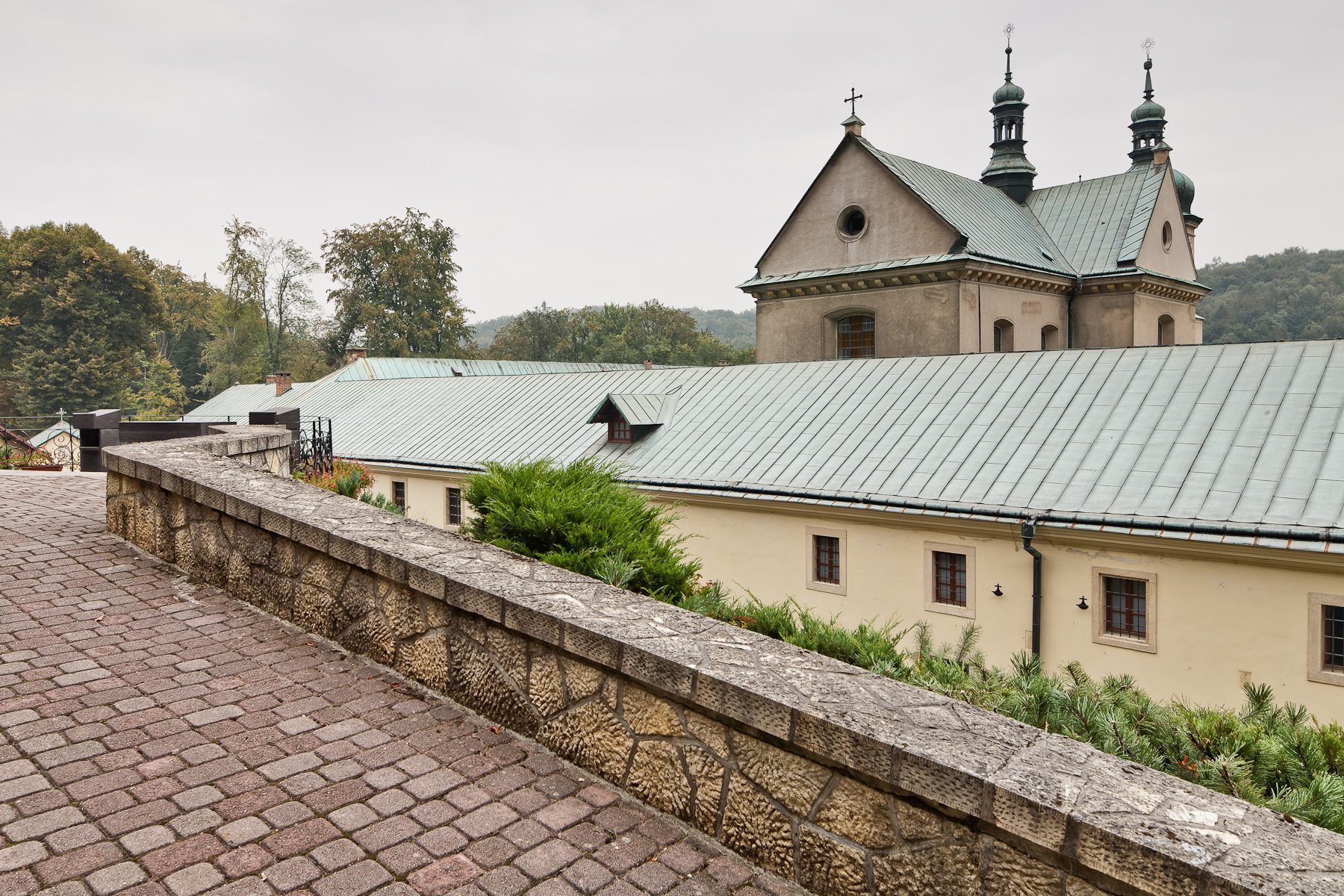
The monastery occupies a forested hillside about 430 metres above sea level. Its main complex forms a quadrilateral measuring approximately 70 by 70 metres. A small church on a cross-shaped plan stands at the center, while side wings contain communal rooms and monks’ cells linked by a cloister. A cemetery adjoins the buildings. The wider enclosure was once surrounded by a monastic wall, and woodland still conceals remains of former religious structures.
Enclosure and hermitage remains
Monastic wall and hermit houses
The original enclosure covered 80 hectares and was bounded by a wall more than four kilometres long and 2.5 metres high. Built between 1640 and 1672, the wall survives in ruined sections. Twelve hermit houses once stood within the enclosure, while traces remain of four. The rebuilt hermitage of Saint Agnes is one of the surviving or reconstructed hermit structures.
Grottoes and Hermit Bridge
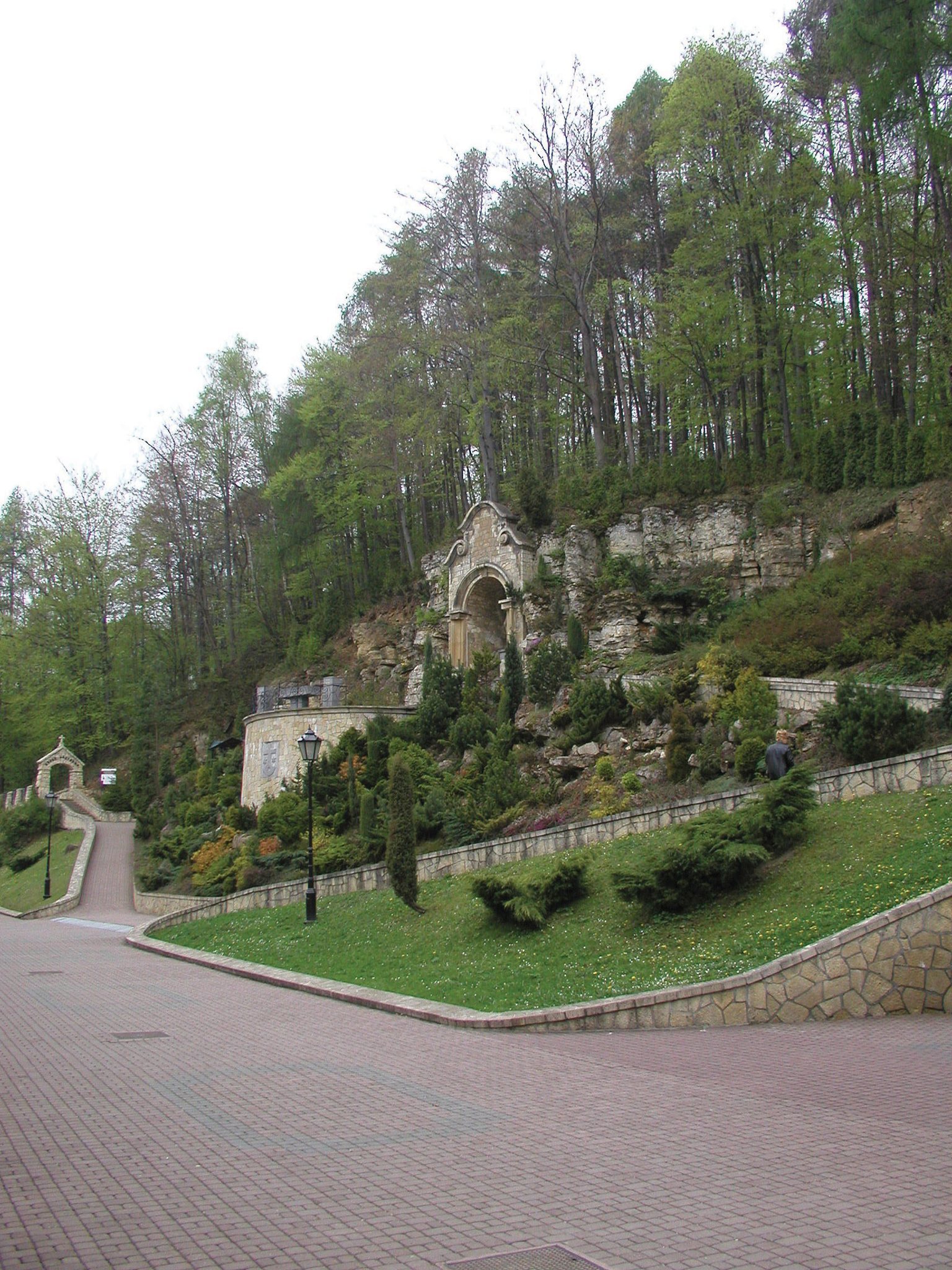
Two of the original three rock grottoes survive within the former hermitage landscape. The ruins of the Hermit Bridge, also called the Devil’s Bridge, cross the Eliaszówka stream. The bridge dates from 1671 to 1691 and is associated with numerous legends.
Mining traces
Depressions beside forest paths mark filled-in extraction adits from calamine mining at the turn of the nineteenth and twentieth centuries. Calamine is a zinc-bearing ore. These depressions preserve traces of an economic activity that took place within the wider monastic landscape.
Church and courtyard
Church of Saint Elijah
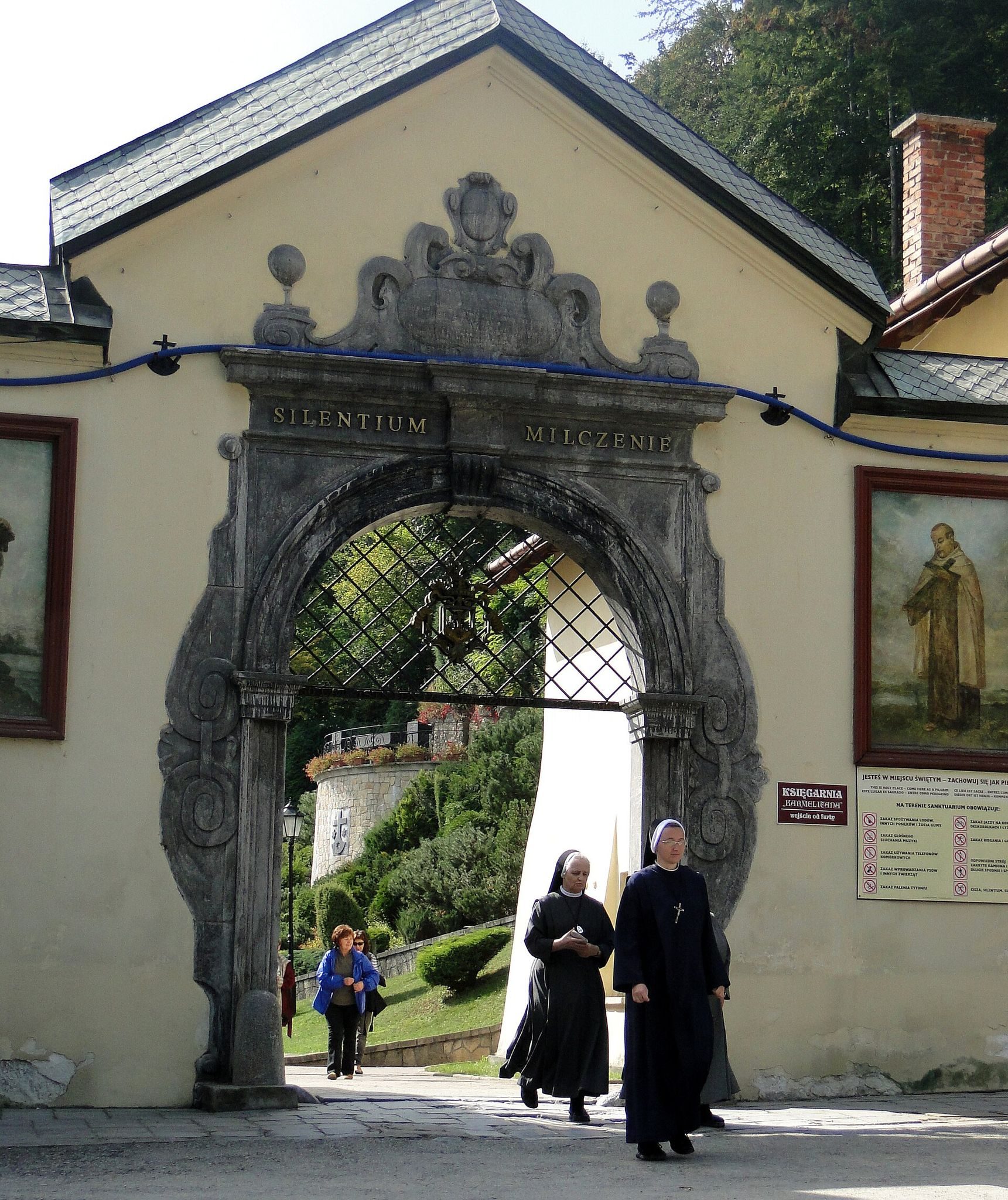
The Church of Saint Elijah is an Early Baroque building on a Latin-cross plan, with a longer nave crossed by a shorter transept. A tower distinguishes the church. Dębnik black marble, once quarried from a site belonging to the monastery, appears in the altars, floor, candlesticks, and entrance portal. The portal carries the inscription Ipse Deus locum secretum quaeret. O beata solitudo. O sola beatitudo.
The entrance contains the burial place of Agnieszka Firlejowa beneath the floor. The chapel of Saint John of the Cross and the chapel of Saint Raphael Kalinowski adjoin the church. The latter contains the saint’s remains. Saint Raphael Kalinowski was a nineteenth-century Polish Discalced Carmelite priest and religious figure.
Altars and religious images
The high altar contains a painting of Saint Elijah made by Tomasz Dolabella in 1640. Saint Elijah is the biblical prophet associated in Carmelite tradition with the order’s contemplative and prophetic ideals. A side altar holds a venerated seventeenth-century image of Our Lady of Mount Carmel measuring 208 by 107 centimetres.
Well and hillside features
A well in the monastery courtyard was cut into solid rock between 1644 and 1651. It is 21.5 metres deep and two metres in diameter, and a later shingled dome supported by eight columns covers it. In front of the church, a square contains a grotto made in 1995. Alfred Kotowski created its monument to the prophet Elijah, scenes from Elijah’s life, and a sculpture of the raven said in the Bible to have brought him food. The grotto also contains a heart-shaped spring.
A field altar stands on the hillside in front of the church, with a viewing point above it since 2005. The hillside Stations of the Cross contain sculptures by Alfred Kotowski, together with several chapels built between 1986 and 1990.
Cemetery and commemorative features
Hermits’ burial place and chapels
The cemetery occupies a plot measuring 40 by 24 metres and has an iron cross at its center. Between 1673 and 1837, deceased hermits were buried in a crypt beneath the church. In 1948, the remains of 60 hermits were moved from the crypt to a common grave in the cemetery.
Three corner chapels are dedicated to Saint Teresa of Jesus, Saint Mary Magdalene, and Saint Joseph. They contain, respectively, a Baroque statue, a black-marble relief, and a nineteenth-century folk-style statue. The relief of Saint Mary Magdalene came from the hermitage of Saint Mary Magdalene across the Eliaszówka stream toward Paczółtowice. It is the surviving remnant of the altars formerly installed in the hermitage chapels.
Monuments and religious memorials
Beside the chapel of Saint Joseph stands the tomb of the Sisters of the Infant Jesus Carmelites from the Czerna Retreat House. The cemetery also contains a monument to Father Dominic of Saint Cajetan, whose secular name was Michał Horwath. Memorial plaques mark the former burial places of Saint Raphael of Saint Joseph and Blessed Father Alfons Maria of the Holy Spirit, whose secular name was Józef Mazurek.
Beside the former burial place of Blessed Alfons is the grave of the Venerable Servant of God Brother Francis of Saint Joseph, whose secular name was Jerzy Powiertowski. A marble epitaph on the northern cemetery wall commemorates Father Telesfor of Saint Joseph, Józef Sołtysik, a prior who rendered distinguished service to the monastery.
Military and wartime commemorations
On the southern side of the cemetery stands the tomb of Aleksander Błędowski, a general of the Polish forces during the November Uprising, who died in 1831. Ferdynand Kuhn made the tomb. Authorities of the Republic of Kraków ordered part of its inscription destroyed in 1836 because they considered it insulting to the honor of the Russian army.
A tablet on the cemetery wall lists Discalced Carmelites murdered during the Second World War and exemplary members of the order. Other graves commemorate Carmelites persecuted by Soviet occupation authorities, including Father Beniamin of the Holy Family, Father Marian of the Sacred Heart of Jesus, Father Jakobin of Saint Gerard, and Brother Hiparion of Saint Teresa.
Natural setting
The monastery cellar shelters a breeding colony of lesser horseshoe bats. Geoffroy’s bat and the greater mouse-eared bat also occur in the area. The immediate surroundings include fertile Carpathian beech forest, which forms part of the wooded landscape around the surviving monastic enclosure.