Queen Mary’s House: A Late-Sixteenth-Century Residence and Peel Tower in Jedburgh
Site at a Glance
- Popularity
- Medium
- Country
- United Kingdom
- Primary era
- Early Modern
- Eras represented
- Early Modern
- Civilizations
- Kingdom of Scotland
- Site type
- Military
- Remains
- Tower
On this page7 sections
History
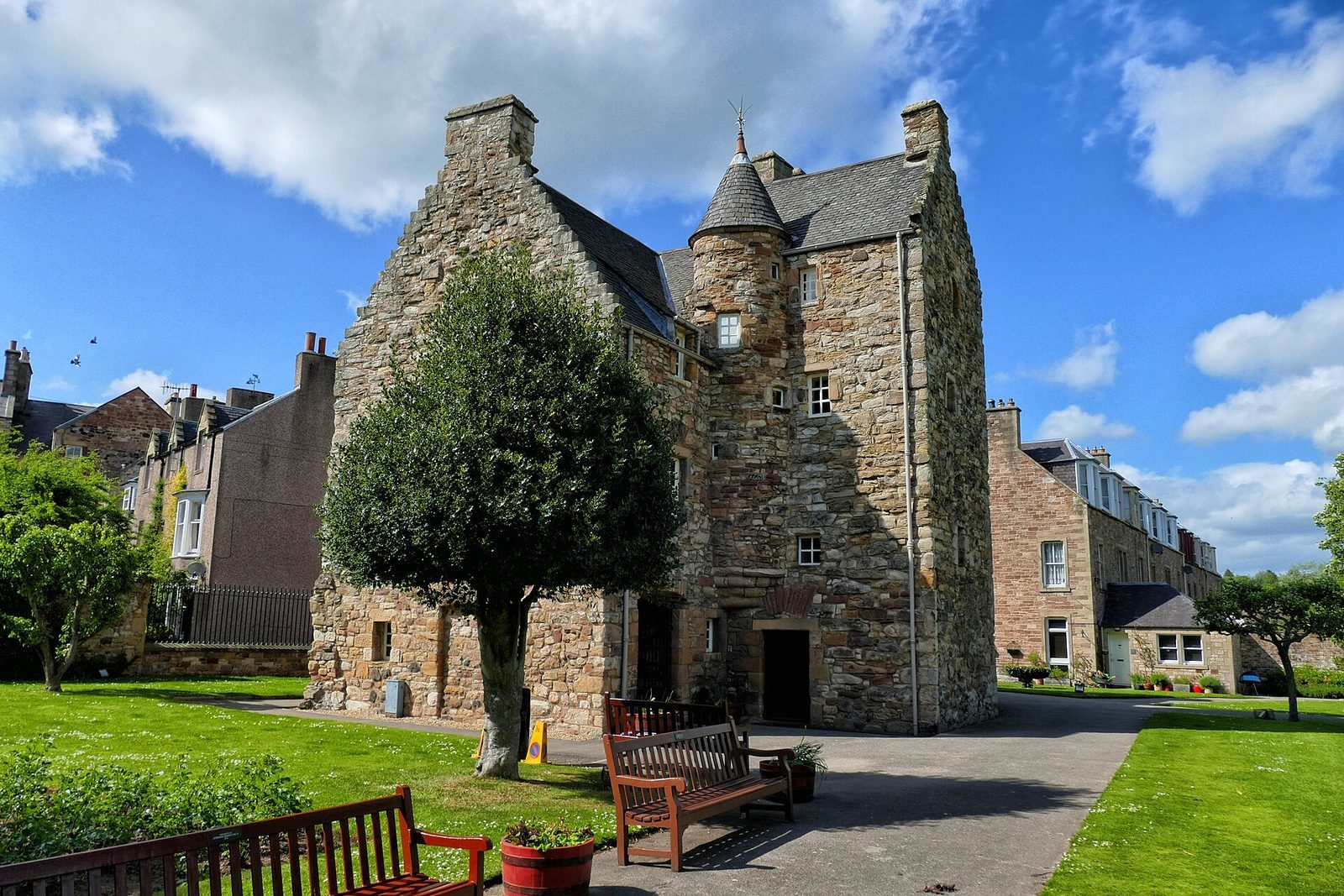
Queen Mary’s House is a late-sixteenth-century residence in Jedburgh, United Kingdom, built for a local laird. It is the last surviving of six peel towers, or fortified tower houses, erected in the surrounding area after Jedburgh Castle was destroyed in 1409. Tradition connects the house with Mary, Queen of Scots, but its construction date makes it doubtful that she stayed in this particular building.
Mary, Queen of Scots in Jedburgh
Mary came to Jedburgh in October 1566 to hold a justice ayre, a circuit court in which royal officials administered justice in a locality. She had announced her plans at Alloa on 28 July. The officials presiding over the court, known as the Lords Compositors, rented a house from Lady Ferniehirst. Mary also paid £40 to hire a house, but its identity is uncertain. Town authorities set prices for provisions during the visit, limiting a pint of good ale to ten pence.
While in Jedburgh, Mary learned that James Hepburn, Earl of Bothwell, had been wounded at Hermitage Castle in a fight with John Elliot of Park. She made a hazardous ride to see him and returned ill. Her illness may have been recurring, as she often complained of pain in her side. Fruit sent from Edinburgh for her included 20 pomegranates and six lemons or limes. A fire may have broken out in her lodging, prompting a move; red silk was sent from Edinburgh for new clothes, and she ordered meal and cheese to be taken to Hermitage Castle.
Mary made a testament at Jedburgh, describing herself as suffering from an “extreme malady.” It confirmed a will she had made while pregnant and left in safekeeping at Stirling Castle. On 25 October 1566, the Privy Council met in Jedburgh and issued a proclamation against private feuds and carrying weapons, offences punishable as treason by death. Huntly, Moray, Bothwell, Atholl, and Rothes attended. The French ambassador Philibert du Croc arrived on 15 October at Mary’s instruction, after spending five or six days at Holyrood.
Lord Darnley, Mary’s second husband, may have come to Jedburgh after hunting with his father, the Earl of Lennox, but Mary did not welcome him. The Book of Articles, a schedule of accusations against Mary, claimed that she asked Agnes Keith, also called Annas, wife of her half-brother James Stewart, Earl of Moray, to pretend Moray was ill so Darnley would stay away. Darnley may have spent a night with a member of the Home family before Mary ordered him to Stirling. His whereabouts remain uncertain: John Lesley, Bishop of Ross, and du Croc placed him in Glasgow, while the Book of Articles and George Buchanan put him near Jedburgh, either in a cottage or the Bishop of Orkney’s lodging. Buchanan also placed Bothwell downstairs in the same house, in a narrative intended to damage Mary’s reputation.
After recovering, Mary rode to Kelso and visited Wark Castle and Berwick-upon-Tweed. She may later have said that she should have died at Jedburgh, since her life worsened afterward. She was eventually forced to abdicate, imprisoned after trying to escape to England, and executed.
Later ownership and restoration
In 1777, the house was occupied by Dr Lindsay and his wife, Jean. Ten years later their daughters guided the poet Robert Burns during his visit to Jedburgh, though this does not establish that he entered the house. Lieutenant General Robert Armstrong inherited it around 1819. After serving in the Russian army, he became head of the Saint Petersburg Mint and allowed his aunts to remain in the house until Elizabeth Armstrong died in 1869. F. S. Oliver, a director of Debenhams who lived at nearby Edgerston, gave the property to the town in 1928. It was restored under Edinburgh architect John Wilson Paterson. In 1971 it became a Category A listed building, the highest category in Scotland’s listing system.
Remains
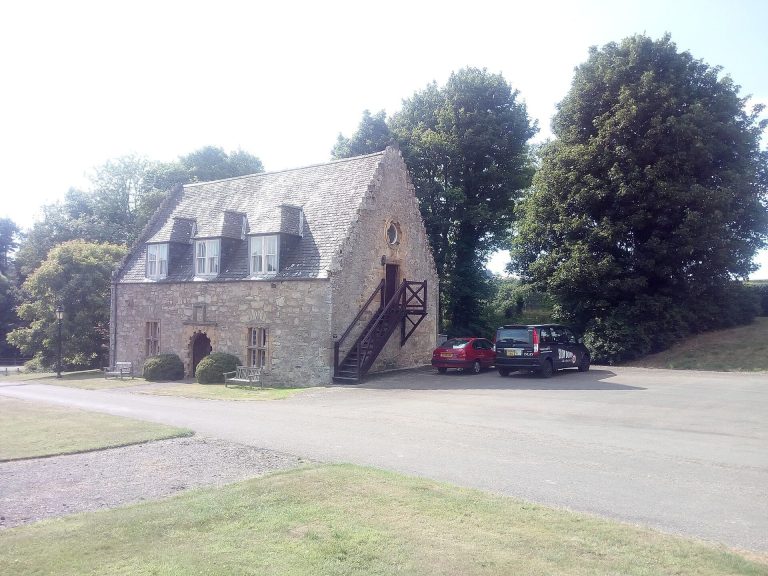
The house is a stone-built group comprising a three-storey building and a four-storey tower. Its roofs were first thatched, later tiled, and are now covered in grey slate.
Building and interior
The original entrance is thought to have faced Canongate Bridge, with access through what is now the garden. The building may once have formed part of an unbroken row of houses. Inside, a stone spiral staircase provides access between floors. A first-floor fireplace was moved during the seventeenth century.
Museum displays
The rooms contain artefacts and explanatory boards about the building and Mary’s life and execution. The museum also displays Mary’s death mask, a cast taken from a person’s face after death.
Grounds and painted views
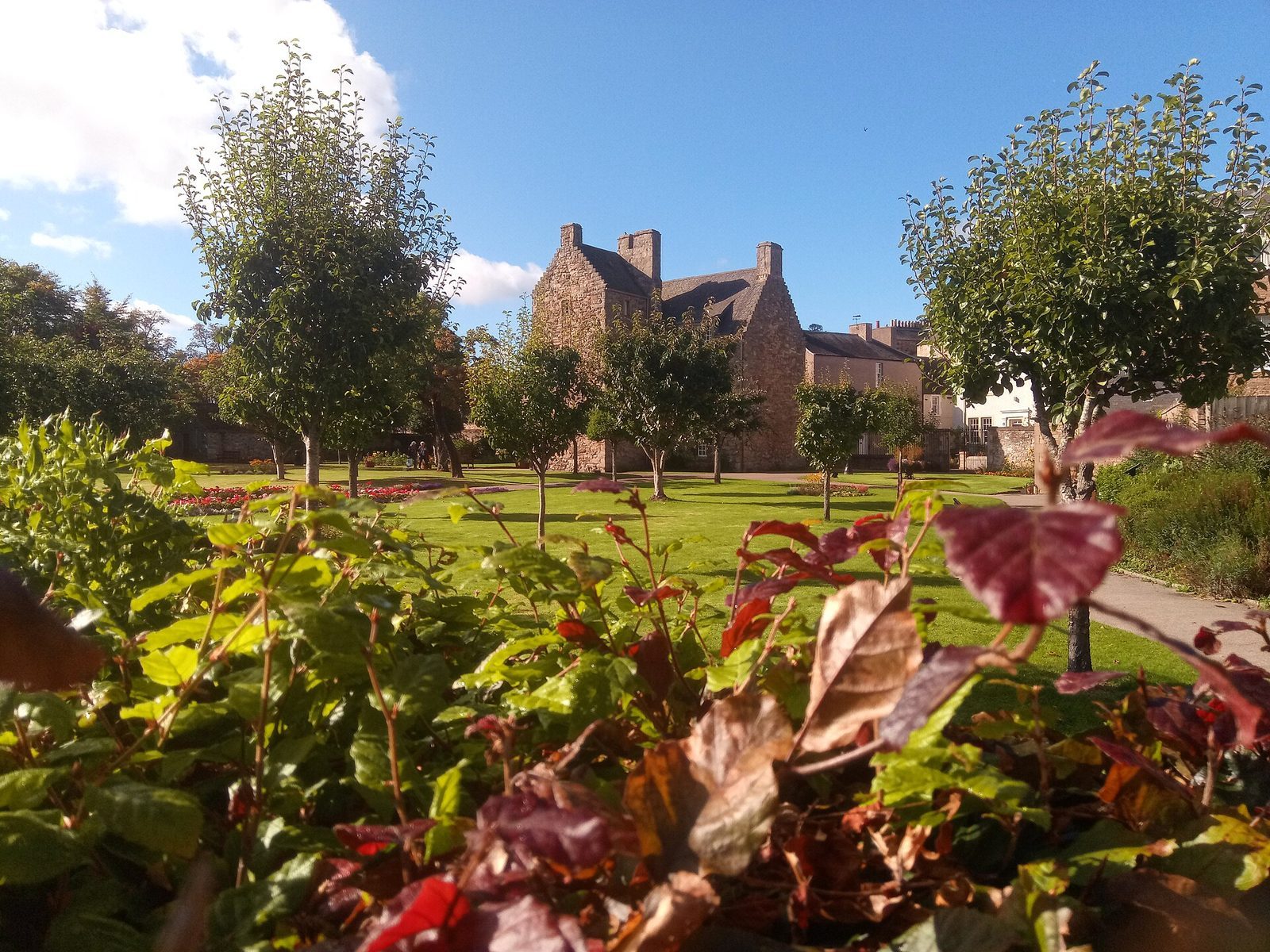
Pear trees planted in the twenty-first century grow in the grounds. They are of a variety cultivated locally when pear farming was an important occupation in Jedburgh. The house also appears in a watercolour by astronomer and artist Nathaniel Everett Green. In an 1879 painting, Arthur Perigal the younger depicted it in a rural setting, although it had always stood within the town.