Preah Ko: An Ancestral Temple of Hariharalaya
Site at a Glance
- Rating
- 4.6
- Popularity
- High
- Country
- Cambodia
- Primary era
- Medieval
- Eras represented
- Medieval
- Civilizations
- Khmer
- Site type
- Religious
- Remains
- Temple
On this page4 sections
History
Preah Ko is a Khmer Hindu temple in the former city of Hariharalaya, in Cambodia’s Roluos area. King Indravarman I commissioned it in 879 as the city’s first temple, dedicating it to royal ancestors and family members and to Shiva, a major Hindu deity associated with creation, destruction, and transformation. The temple follows the Preah Ko style, an early Khmer architectural style named after the site.
Preah Ko was part of a wider royal building program. Jayavarman II, regarded as the founder of Khmer imperial rule, established the Khmer Empire in 802 and eventually made Hariharalaya his capital, where he died. Indravarman, who ruled from 877 to 889, succeeded Jayavarman III, son and successor of Jayavarman II. He was Jayavarman II’s nephew, a relative of Dharanindradevi, Jayavarman III’s mother, and had served as a royal aide. Before commissioning Preah Ko, Indravarman built the large reservoir Indratataka; in 881 he commissioned the mountain temple Bakong. Peaceful rule and revenue from the expanding kingdom helped sustain his building program.
The temple’s original name was Paramesvara, also rendered Sri Paramesvara. Inscription K-713 records the name, which refers to Shiva and was also Jayavarman II’s posthumous name. Preah Ko, meaning “Sacred Bull,” is the later name and refers to Nandi, Shiva’s bull mount.
Conservation work included a Hungarian project from 1994 to 1996 and a German project from 1991 to 2003. German-supported tower restoration began in the early 1990s, and later conservation was undertaken in cooperation with the APSARA Authority, Cambodia’s national body for managing and conserving the Angkor archaeological area. On 20 October 2021, the authority began repairs to the entrance-road paving and the third gate.
Remains
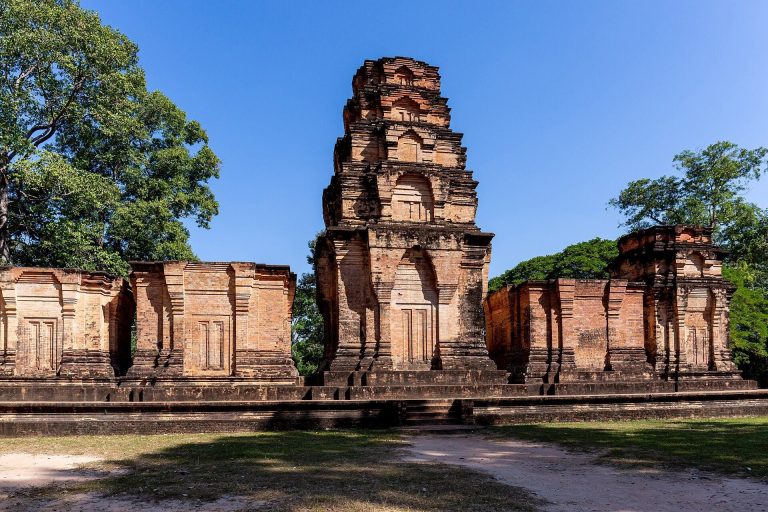
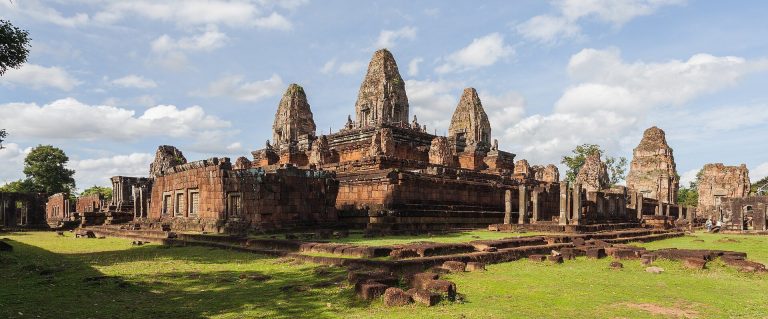
The temple complex is organized around an east-facing group of brick shrines within successive enclosures, built with brick, sandstone, and laterite. Laterite is an iron-rich soil material that hardens into building stone. Preah Ko lies about 15 km southeast of Angkor’s main temple group and 13 km east of Siem Reap, between Bakong and Lolei and west of the road to Bakong.
Enclosures and entrance
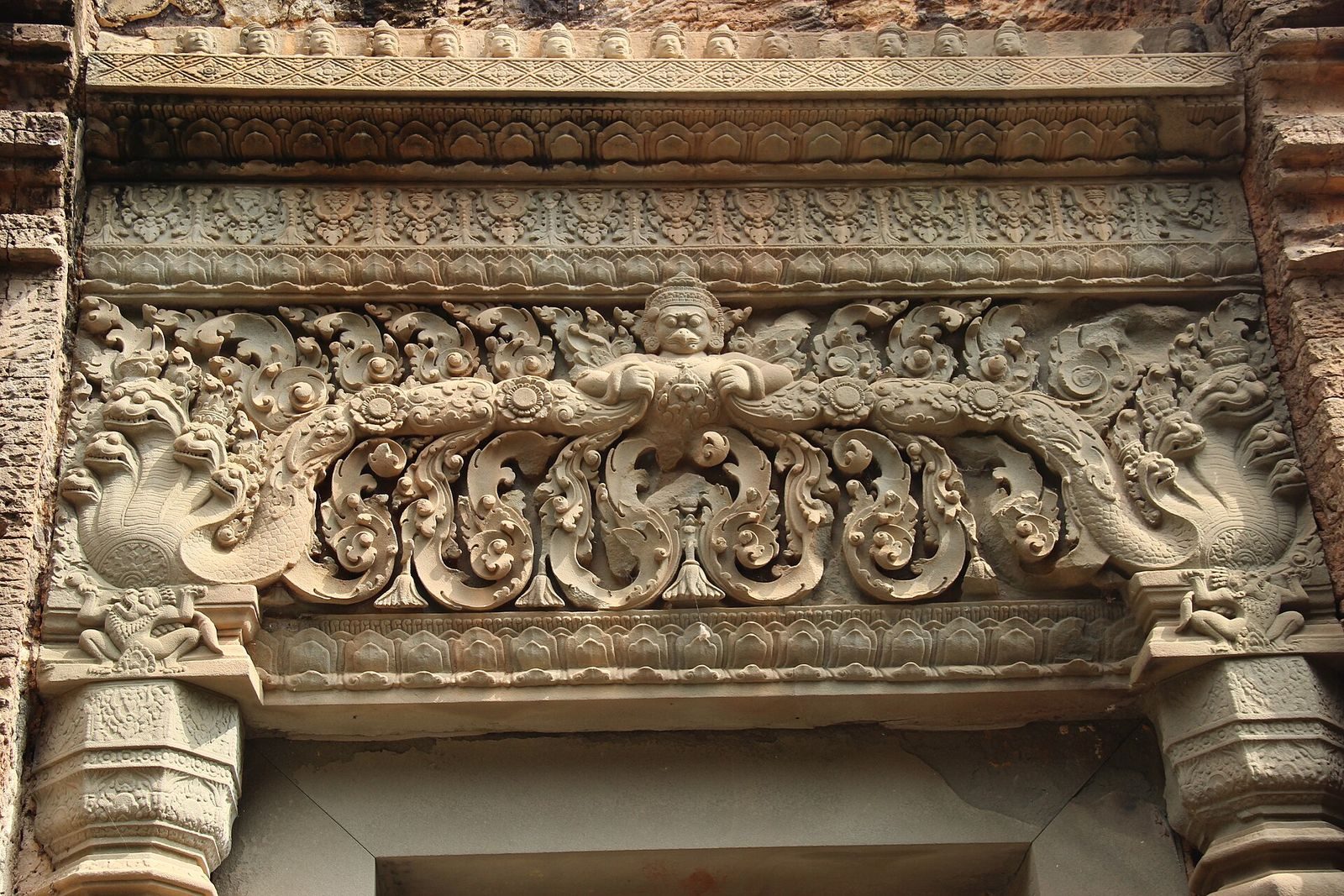
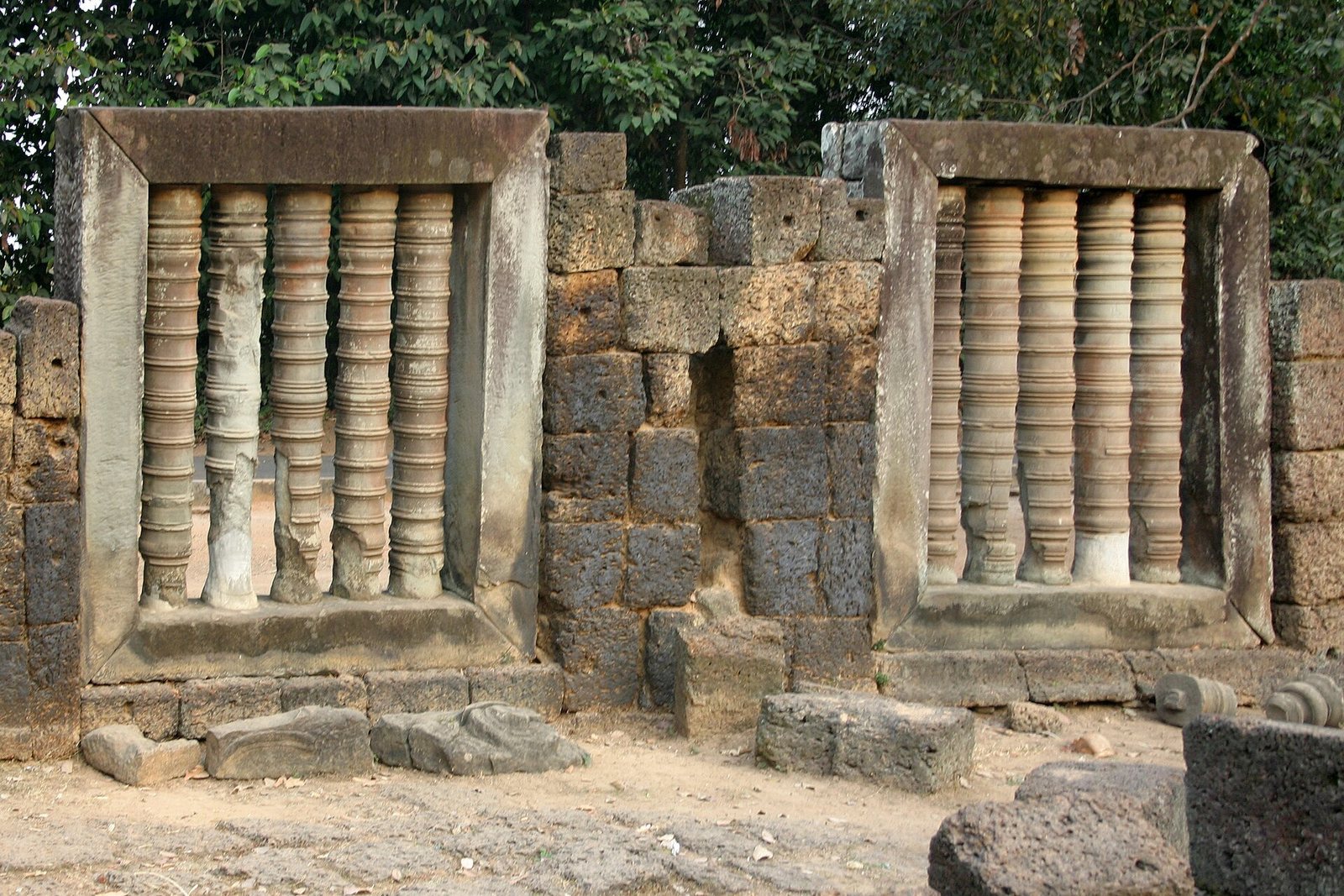
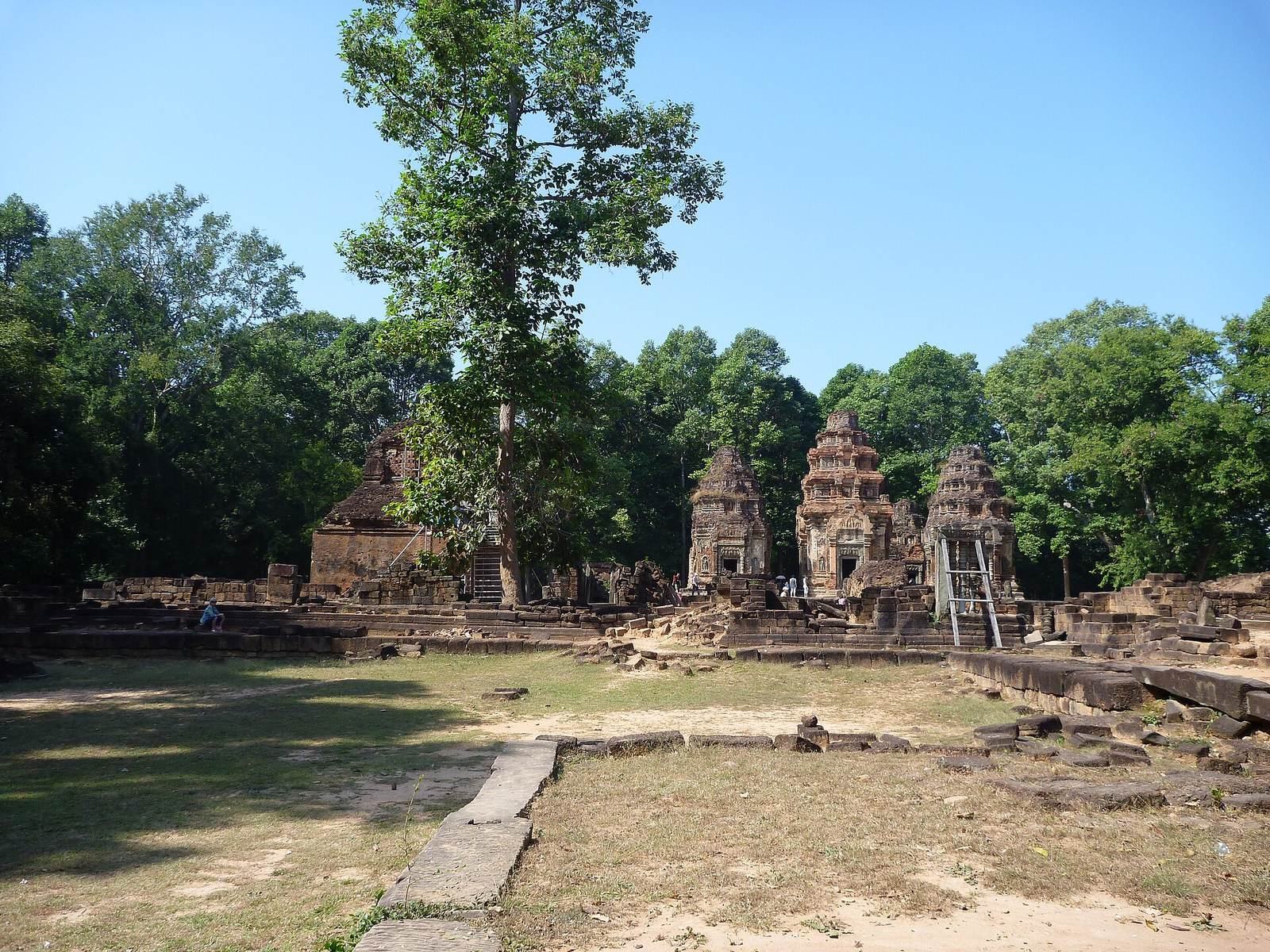
A moat surrounds the site, measuring about 500 m from east to west and 400 m from north to south. Within it are two laterite enclosure walls, approximately 97 by 94 m and 58 by 56 m. A third, brick enclosure once surrounded the temple platform; it is badly ruined, with scattered brick fragments remaining. The entrance in the first enclosure has carved sandstone windows and large window grilles, along with two tall sandstone posts, and its approach is paved with laterite. The second enclosure is heavily damaged. Just inside it stands a separate brick tower on the left, with sandstone decoration at its entrance and sandstone doorposts.
Shrine platform and towers
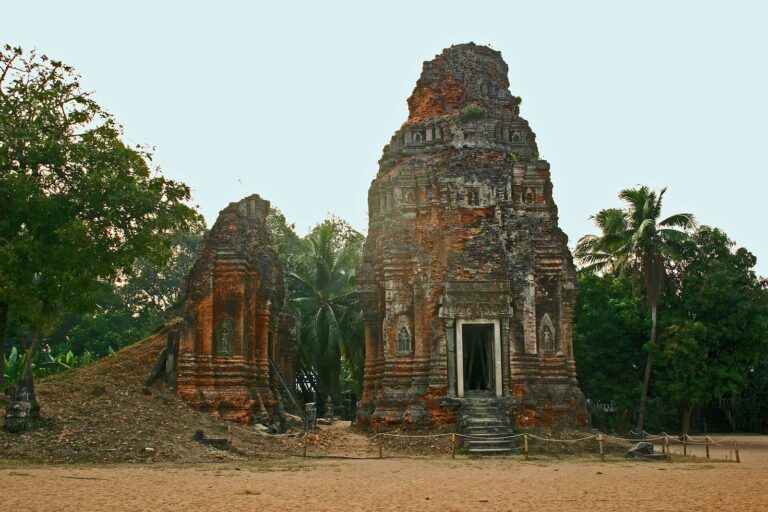
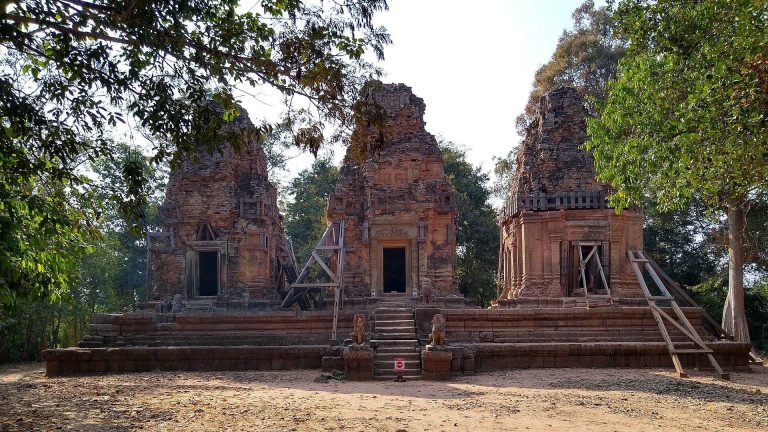
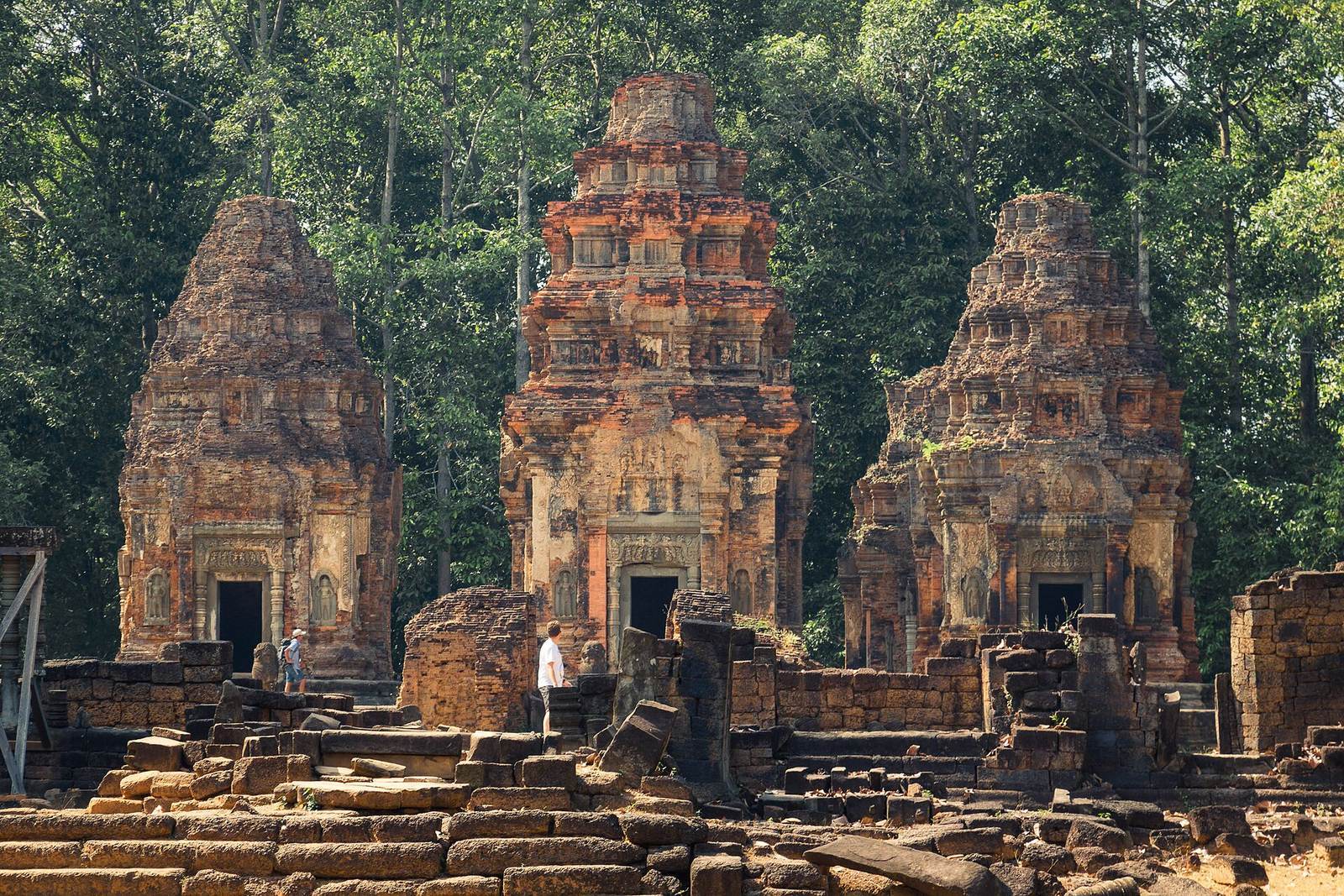
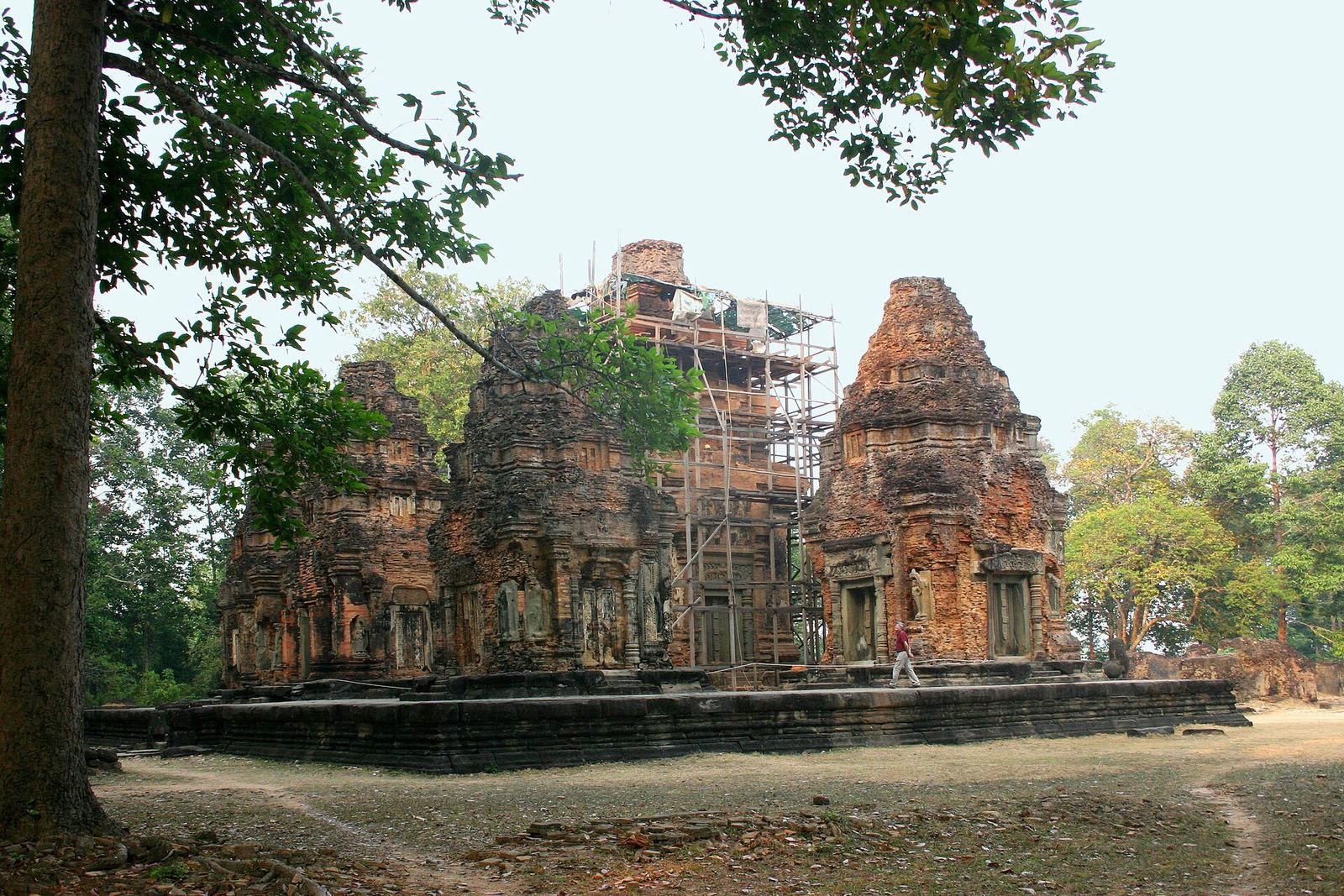
Six brick towers stand in two rows of three on a single sandstone platform, all facing east. The central tower in the front row is tallest and sits slightly farther west than the two flanking towers; the three towers in the rear row are smaller. The central front tower is dedicated to Jayavarman II. The southern front tower honors Indravarman I’s father, represented as Prithivindreshvara, while the northern one is dedicated to his maternal grandfather, represented as Rudreshvara. The three rear towers are dedicated to the wives of these men. Shiva imagery or symbols appear in the principal sanctuaries. Three sandstone statues of Nandi face the central towers. The temple’s eastward orientation was associated with auspiciousness for the birth of living beings.