Château de Coarraze: A Historic Estate in Béarn, France


Site at a Glance
- Rating
- 4.1
- Popularity
- Very Low
- Country
- France
- Primary era
- Early Modern
- External website
- Open
- Eras represented
- Medieval, Early Modern
- Civilizations
- French, Kingdom of Navarre
- Site type
- Domestic
- Remains
- Castle
On this page11 sections
History
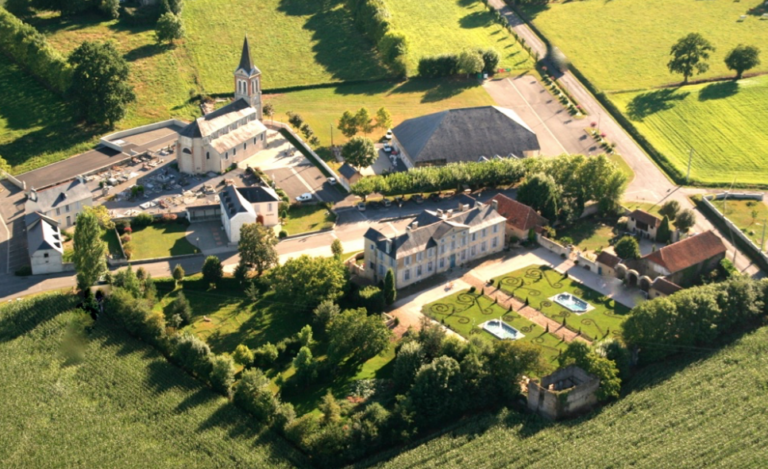
Château de Coarraze is a historic estate in France, occupying a strategic hill above the Gave de Pau. The lordship of Coarraze was established in the twelfth century, and it became one of the twelve baronies whose holders could enter the Estates of Béarn, the representative political assembly of the principality.
Medieval lordship and Renaissance rebuilding
A first stone castle was built in the fourteenth century. At the end of the fifteenth century, the estate passed by inheritance to Gaston de Foix, Count of Carmain and Baron of Coarraze. Repeated disputes between Gaston de Foix and Jean d’Albret led Jean d’Albret to order the castle’s demolition in 1506. Jean d’Albret, a member of the ruling Albret family associated with Navarre and Béarn, subsequently became its owner.
The Albret-Miossens family rebuilt the residence around 1520 in the Renaissance style. This later château became connected with the childhood of Henri IV, the Bourbon monarch who became king of Navarre in 1572 and king of France in 1589. Henri I d’Albret, King of Navarre, sent his grandson Henri to Coarraze for a healthy rural upbringing under the care of his aunt Suzanne de Bourbon, Baroness of Miossens. Henri IV retained strong memories of the estate and often returned with his cousin Henri d’Albret-Miossens, who later became his companion in arms.
Destruction and eighteenth-century reconstruction
The château was burned in 1684 and then faded from prominence for slightly more than twenty years. Jean de Montaut, a councillor of the Parliament of Navarre, acquired the estate and began a complete rebuilding of the present château in 1755. Construction continued from 1755 to 1758.
Jean-Louis de Dufau acquired the entire estate in 1863. He was the first president of the Pau Court of Appeal and mayor of Coarraze. His descendants continued to own the property, which remains a private residence. The Domaine de Coarraze, including its built and unbuilt elements, was listed as a historic monument in its entirety by an order dated 24 June 2011. The protection includes the château and its dependencies, the organized part of the walled domain, the entrance gateway, and the gardens.
Remains
The surviving estate combines an eighteenth-century residence with elements from earlier fortifications and domestic buildings. Its principal components include the present château, the medieval keep, remains associated with the second castle, and features in the park.
Château and earlier structures
Present residence
The present eighteenth-century château has three levels. The north side has six window bays and the south side has seven. Kitchens and service rooms occupy the lower level, while the raised garden level contains the formal reception rooms and the master apartment. Other bedrooms are arranged on the first floor beneath mansard roofs. Two classical pediments crown the building.
Medieval keep
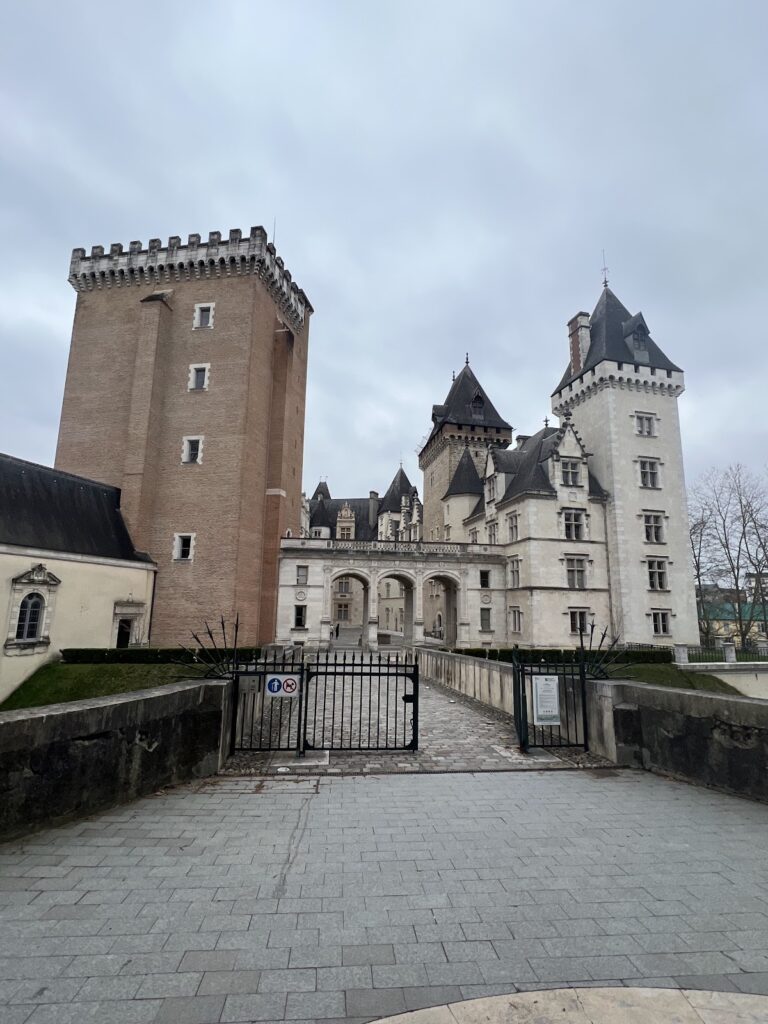
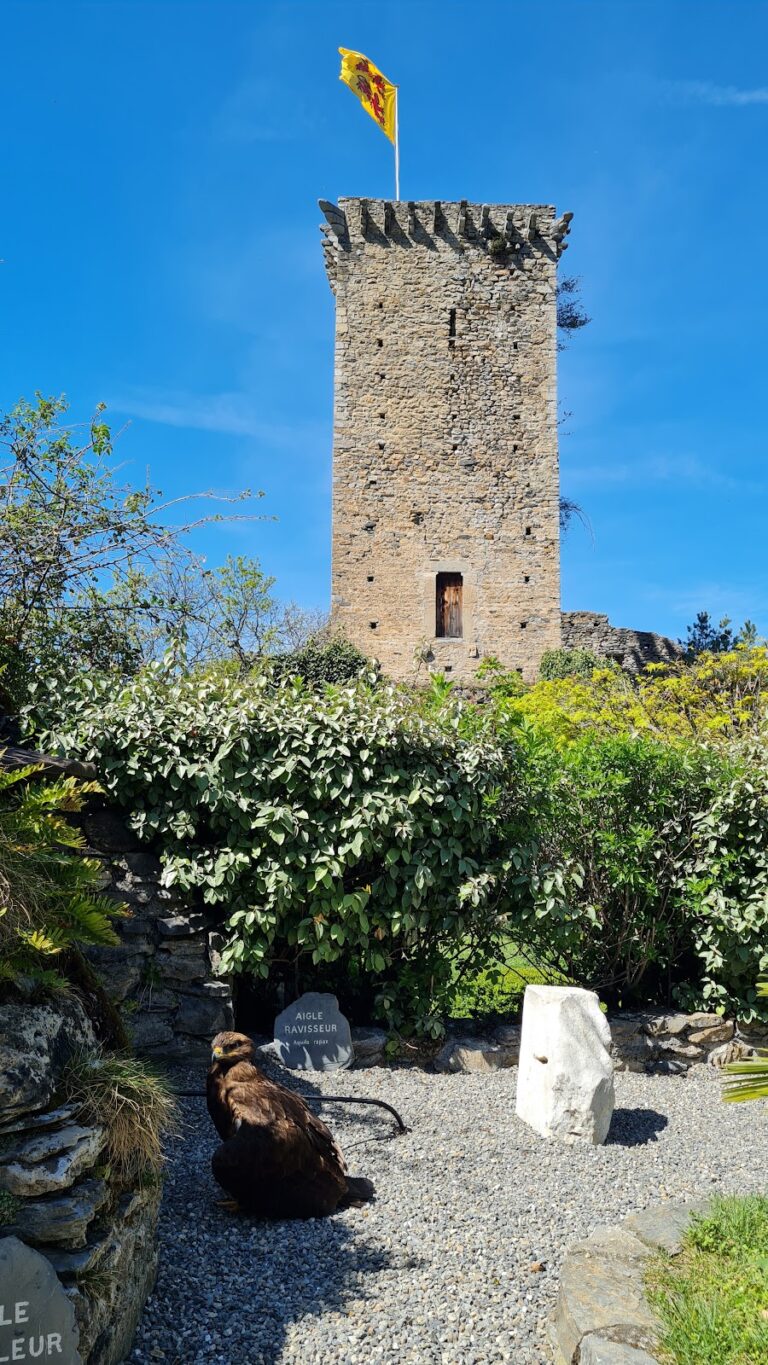
The keep, or principal fortified tower of a medieval castle, is the oldest surviving part of the feudal castle. It is described as one of the last such keeps still standing in Béarn.
Second castle remains
Remains of the second castle survive in the stables below the present château and in a monumental entrance gateway. These elements preserve parts of the estate’s earlier arrangement beneath and around the eighteenth-century residence.
Park and interior features
Park icehouse
An old icehouse survives in the park. Such a building was used to store ice for later use, making it part of the estate’s historic service infrastructure.
Principal salon
The principal salon retains a rare eighteenth-century wallpaper decorated with chinoiserie, a European decorative style adapting Chinese and other East Asian motifs. The room also preserves numerous high-quality wood-panelled features.
Nearby sites