Porta Saragozza: A Medieval Gate and Pilgrimage Route in Bologna
Site at a Glance
- Popularity
- Medium
- Country
- Italy
- Primary era
- Modern
- Eras represented
- Early Modern, Modern
- Civilizations
- Papal States
- Site type
- Military
- Remains
- Gate
On this page7 sections
History
Porta Saragozza is a medieval city gate in Bologna, Italy, first built in the 13th century as part of the city’s third circuit of walls. Its later history brought together religious processions, urban transport, and civic cultural life.
Medieval gate and pilgrimage route
For much of its early history, the gate was considered a secondary entrance and saw limited use. In 1334, it was modified to include a drawbridge spanning the moat around it. About nine of the twelve gates in the original wall circuit survive.
Work on the Portico di San Luca, a covered passage connecting the gate to the Sanctuary of the Madonna of San Luca, began in 1674 and ended in 1739. Afterward, the gate became the starting point for an annual procession carrying the venerated image of the Madonna, a title for the Virgin Mary, to the sanctuary. Earlier processions began at Porta Sant’Isaia. The gate also acquired the names Porta Sacra, or “Holy Gate,” and Porta dei Pellegrini, or “Gate of the Pilgrims.” Christian tradition attributes the image to Luke, one of the four Gospel writers.
Rebuilding and urban transport
Between 1857 and 1859, engineer and architect Enrico Brunetti Rodati led a radical rebuilding that replaced the medieval gatehouse with a substantially altered structure. Architect Giuseppe Mengoni completed the work. The project formed part of a wider movement to restore medieval remains in Italian cities.
A tram line passing through Porta Saragozza opened in 1883, linking Bologna with Casalecchio and Vignola. From 1907, urban tram lines 18 and 19 also served the section inside the city walls.
Civic and cultural uses
In 1982, Bologna’s authorities assigned rooms in the gatehouse to the Circolo Culturale XXVIII giugno. It became Italy’s first public space given to an association devoted to homosexual culture. On 28 June, a march in support of the LGBT movement, starting in Piazza Maggiore, ended at the gate. In 1985, the association joined the newly formed Arcigay network, an Italian organization advocating for LGBT rights; Arcigay’s national headquarters were based in the gatehouse.
The local circle, known as Il Cassero, moved to the Salara under a new agreement with the city on 2 March 2002. A Bologna Pride parade began at Porta Saragozza in 2012. In 2004, the gatehouse became home to the Museum of the Blessed Virgin of San Luca, created to present the devotional, historical, artistic, and cultural heritage associated with the image. Its core collection came from Dr. Antonio Brighetti. Restoration work renewed the gate between 2007 and 2009.
Remains
The surviving complex brings together the rebuilt city gate and the covered route leading from it toward the Sanctuary of the Madonna of San Luca. The gate stands at Piazza di Porta Saragozza, where the road toward Casalecchio meets Bologna’s ring boulevards, which follow the line of the lost third wall circuit.
Gatehouse and approach
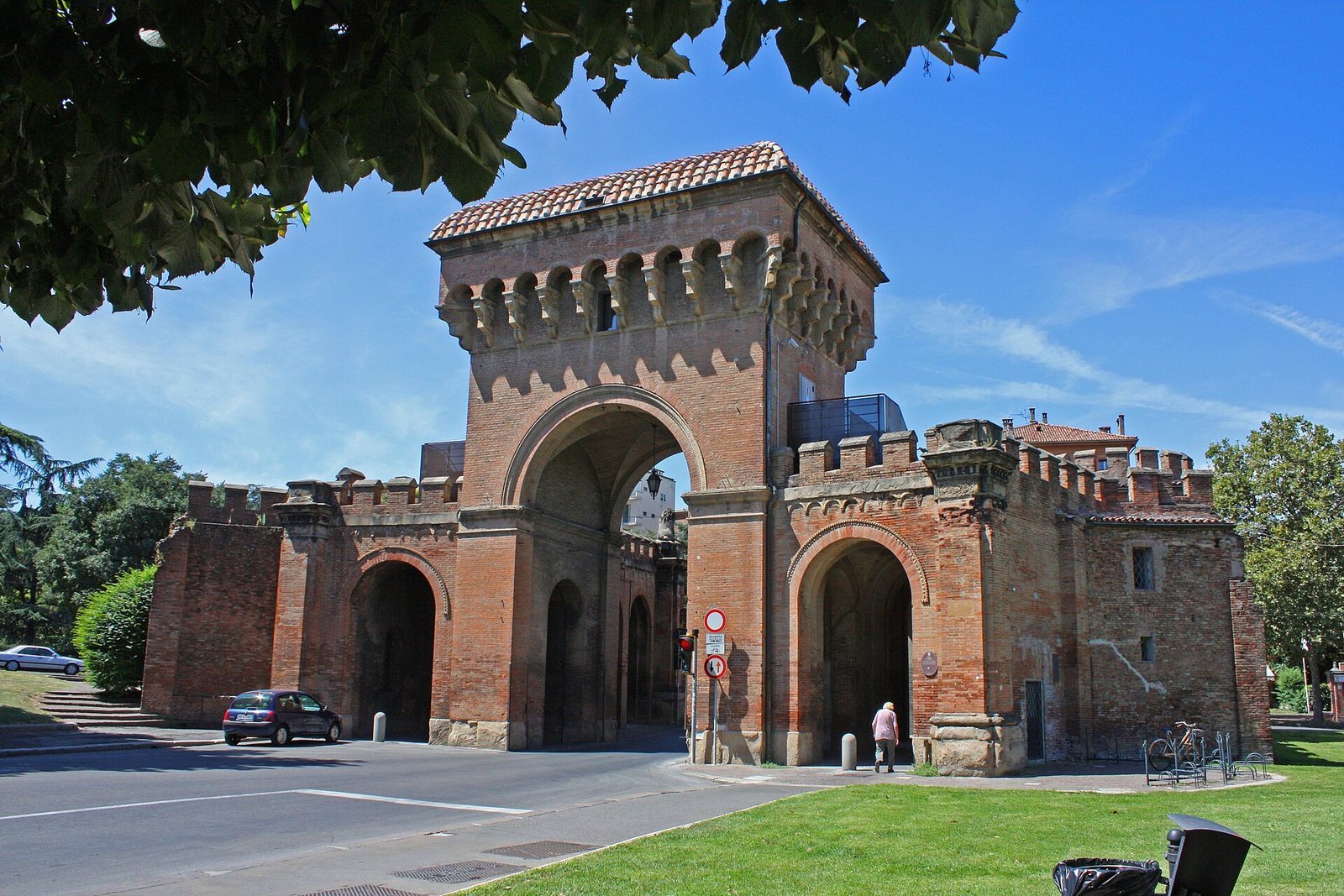
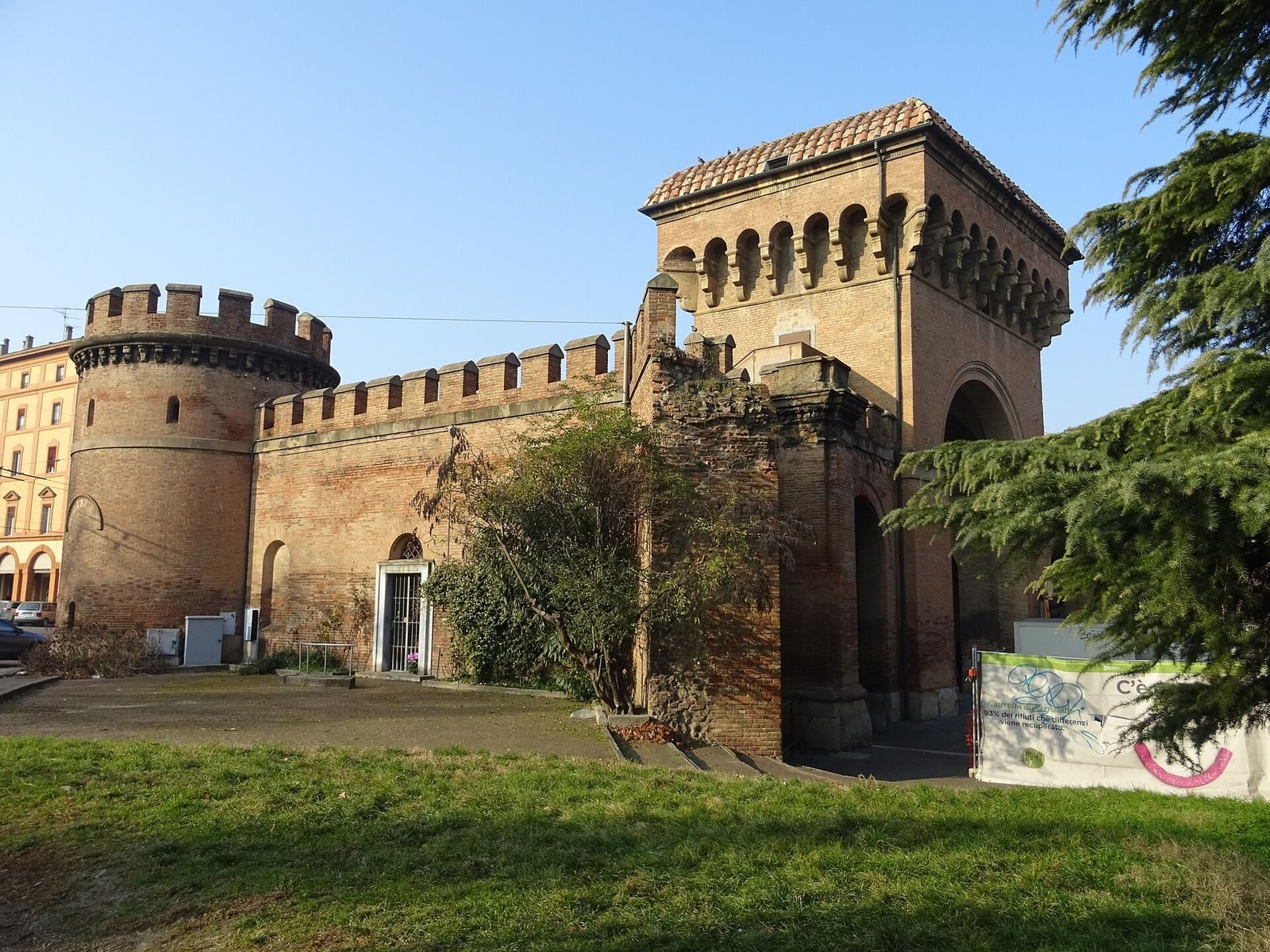
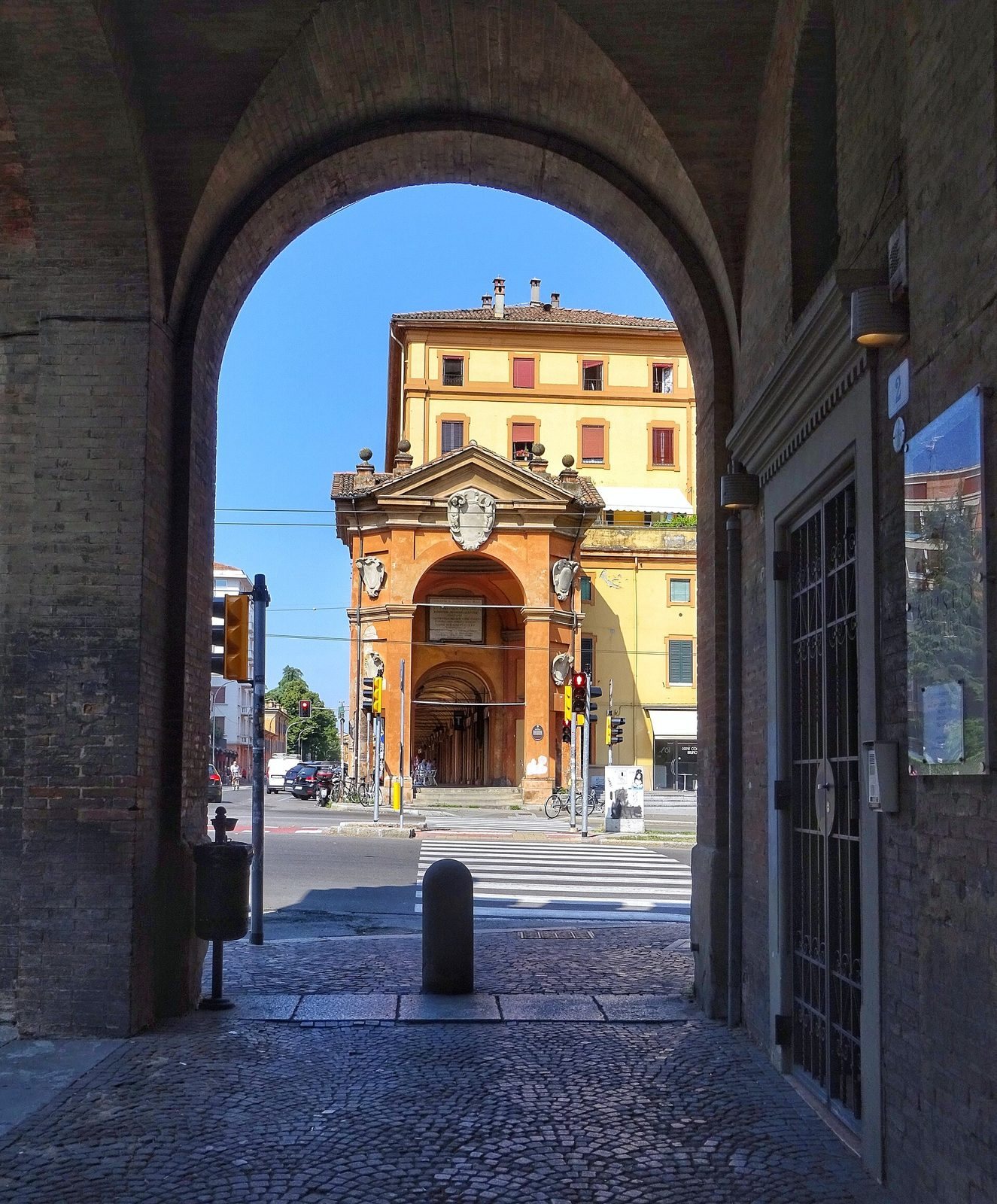
The present gate has a central passage and gatehouse flanked by two cylindrical towers. Connecting portico structures with crenellated arches link the composition, giving the gate a castle-like outline. The towers belong to the later rebuilding. A plaque is set at the center of the gate’s exterior.
Portico di San Luca
The Portico di San Luca extends from Porta Saragozza to the Sanctuary of the Madonna of San Luca. Its covered passage forms a continuous connection between the gate and the sanctuary.