Collegio di Spagna: A Medieval College for Iberian Students in Bologna
Site at a Glance
- Popularity
- High
- Country
- Italy
- Primary era
- Medieval
- Eras represented
- Medieval, Early Modern
- Civilizations
- Papal States
- Site type
- Civic
- Remains
- University
On this page14 sections
History
The Collegio di Spagna is a medieval college in Bologna, Italy, founded by Cardinal Gil Álvarez de Albornoz in the fourteenth century to support students from the Iberian Peninsula at the University of Bologna. Albornoz’s testament, made at Ancona on 29 September 1364, established the institution and named its students his universal heirs, beneficiaries of his estate as a whole. The college was built in 1365–1367, with Albornoz contributing to the work, and began receiving resident scholars, known as fellows, in 1369.
Foundation and purpose
First called the Spanish House, or Domus Hispanica, the college provided a home and support for talented young clerics preparing for church careers and lay students from the Iberian Peninsula, including Spaniards and Portuguese. Its fellows studied across the university’s disciplines, while theology, canon law, the rules governing the Christian Church, and law were also taught within the college.
The college occupied the former houses of the Delfini family. In the early 1360s, Albornoz had helped Bologna’s inhabitants free the city from Giovanni da Oleggio’s rule. The college’s statutes placed its continuing protection in the hands of Bologna’s civic authorities and recognized the city’s support for its students.
Influence and royal protection
The Collegio di Spagna became a model for later institutions, including the Colegio Viejo in Salamanca, founded in 1401, and other Spanish university colleges established during the fifteenth and sixteenth centuries. It remains the longest-established college admitting students from abroad, and no other medieval college of the same kind survives in continental Europe.
Antonio de Nebrija became a fellow in 1465 and began work at the college on the first grammar of the Castilian language, published in 1492. Juan Ginés de Sepúlveda joined in 1515. His descriptions of college meals mention bread, wine, and 450 grams of veal; because the kitchens were a long way from the dining hall, meals seem often to have been served cold.
In 1530, Charles I of Spain, who also ruled as Emperor Charles V, established royal protection for the college. An inscription in the chapel records this protection, which continued under Philip II and later Spanish kings. Charles V also stayed at the college for four months around his imperial coronation in Bologna. The procession to the ceremony at the Basilica of San Petronio set out from the college.
Closures and recovery
The War of the Spanish Succession, a European conflict over who would inherit the Spanish throne, led to the college’s closure. In 1715, its rector and fellows petitioned Bologna’s Senate for permission to reopen it. During the French invasion, Napoleon suppressed the institution by decree in 1796. On 11 April 1812, its property was seized and sold; Bologna’s citizens later helped defend the college and secure the return of confiscated assets.
An attempt to take control of the college’s assets threatened its survival in the early twentieth century. Joaquín Ignacio de Arteaga y Echagüe, an heir of the Albornoz family line, helped preserve the institution. Statutes adopted in 1919 established the Board of Patrons as its governing body, affirmed Albornoz’s will as its fundamental charter, and made the head of his family line the board’s lifelong president. The college is private, receives no public subsidies, and has privileges associated with extraterritoriality, a legal status placing an institution outside ordinary jurisdiction in specified respects.
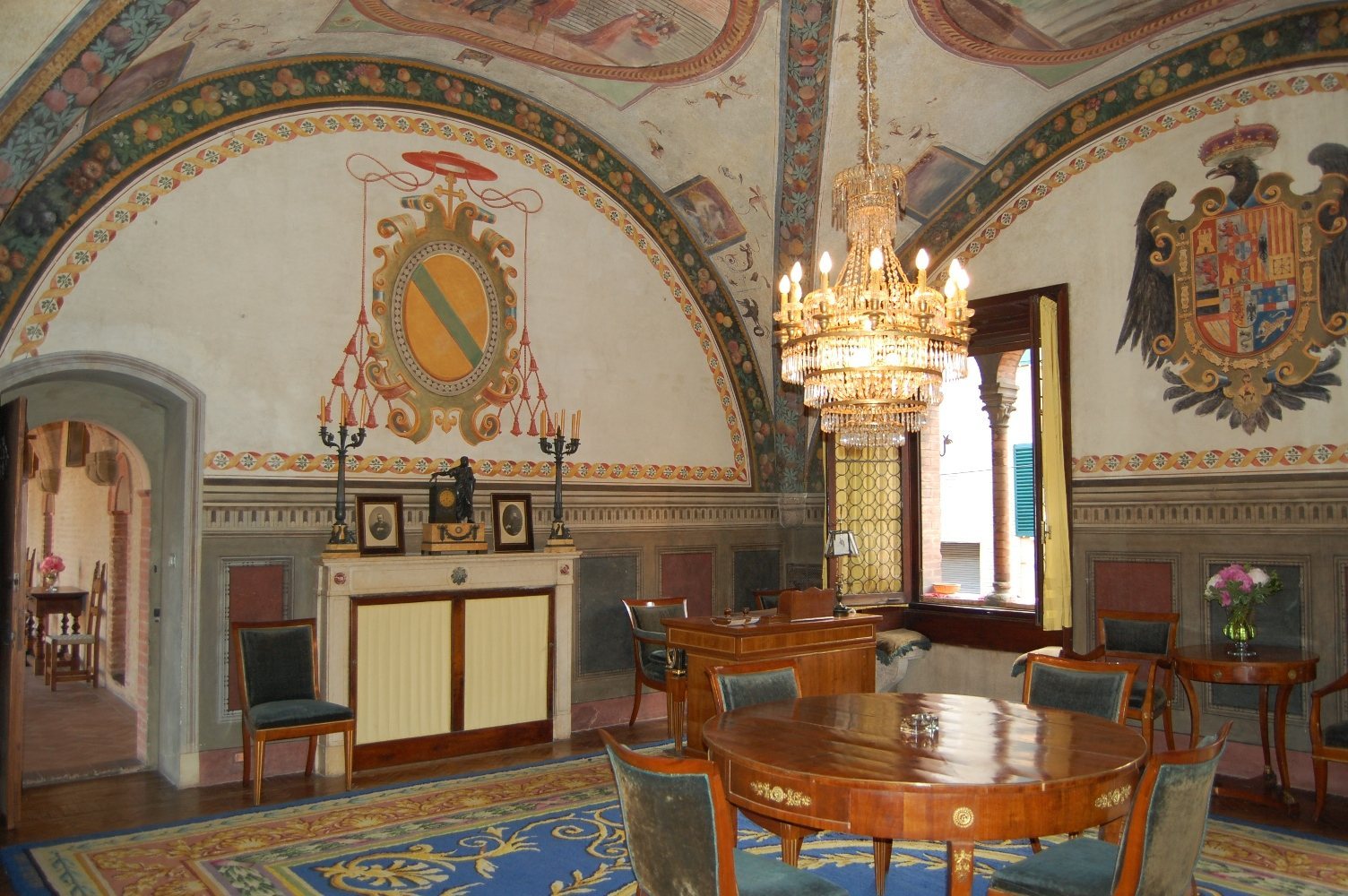
A restoration and consolidation campaign led by rector José Guillermo García-Valdecasas ran from 1978 to 2010 and was completed in 2011. The work revealed important wall paintings and removed later additions made to imitate Gothic design. In 2012, the college received the Europa Nostra European Union cultural-heritage award, with particular recognition for the restoration of its paintings. Historically, the college admitted men only. In July 2020, it announced that women would be admitted for the first time and that scholarships would be established for female students.
Remains
Plan and exterior
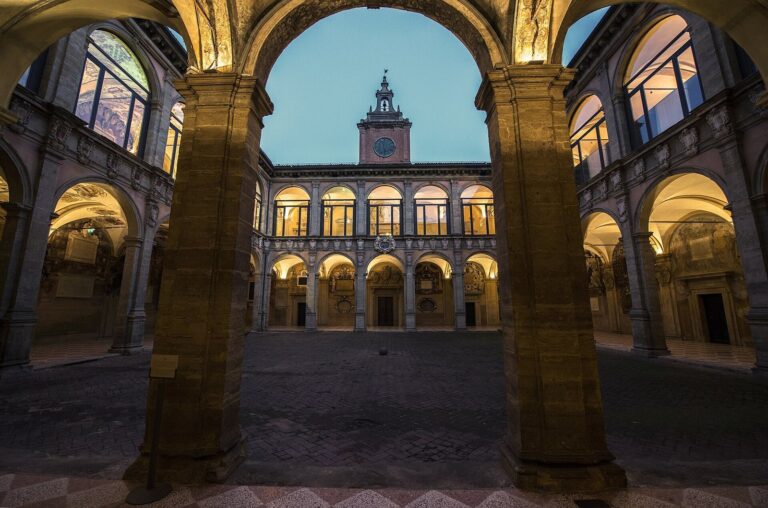
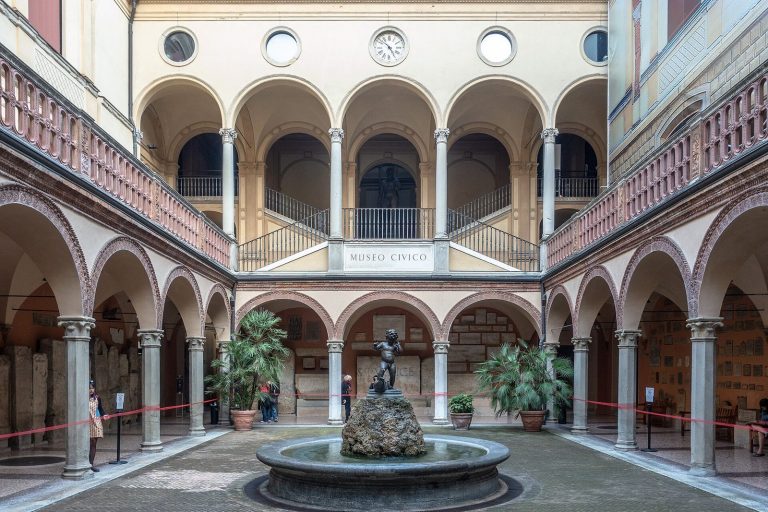
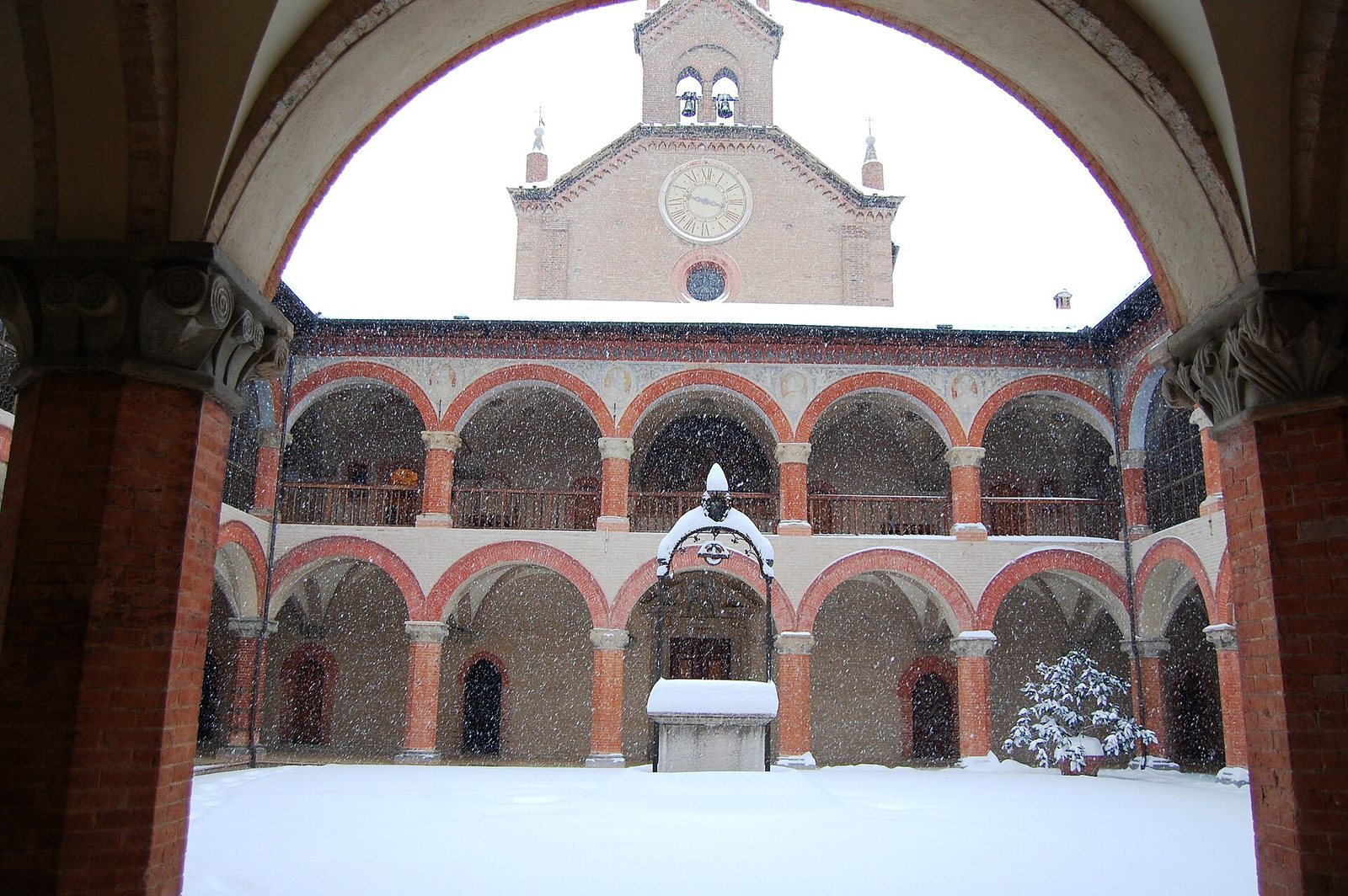
The two-storey college is arranged around a central courtyard bordered by arches, with rooms around it and a connection to the church of Saint Clement. Designed by Matteo Giovannelli, known as Gattapone, the building was commissioned by Albornoz, who entrusted Giovannelli with overseeing its construction. Its layout and defensive form were intended to give the college a degree of self-sufficiency from the surrounding city.
Courtyard and rooms
The courtyard forms the building’s central space, while the students’ rooms face outward. Together, these arrangements place the residential rooms around the court within the college’s fortified outer structure.
Exterior and entrance
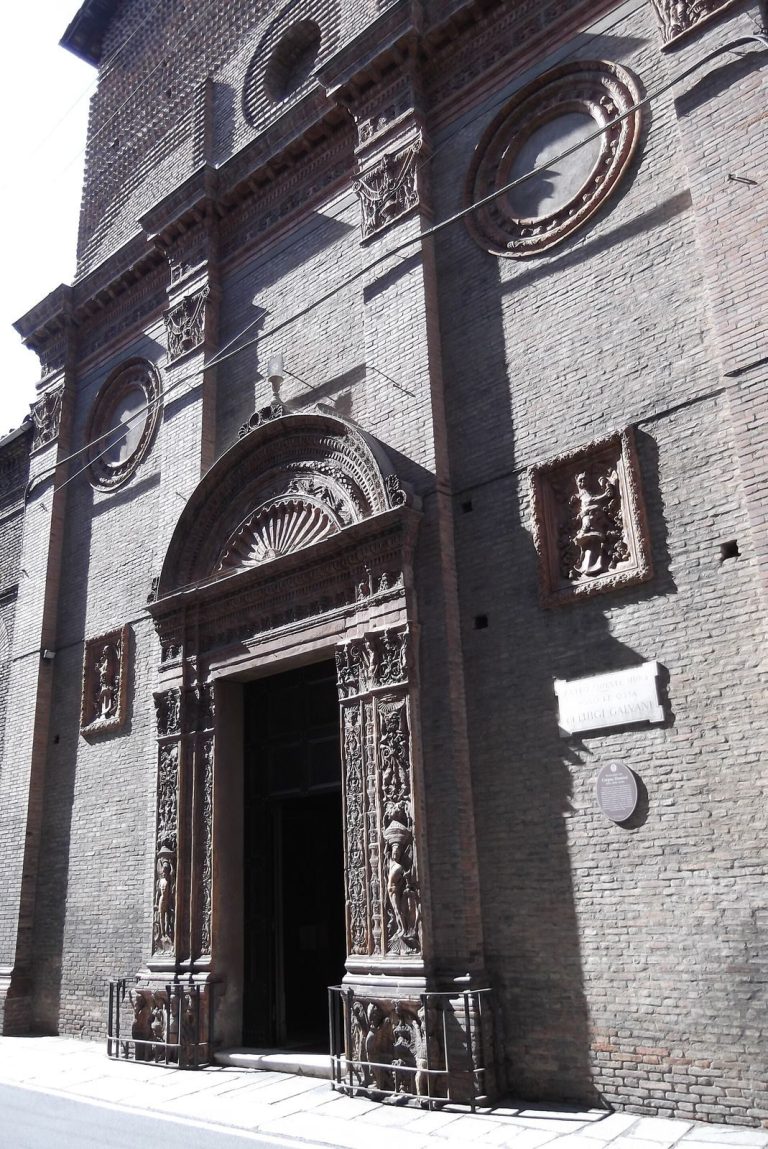
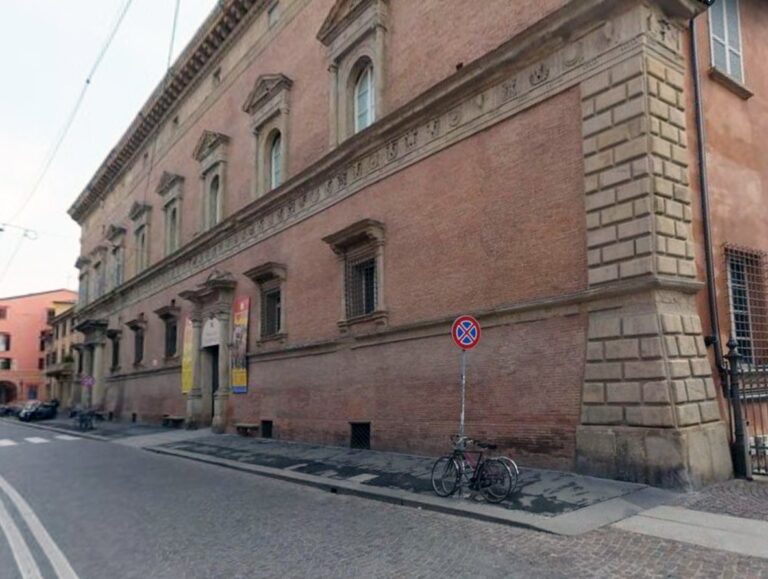
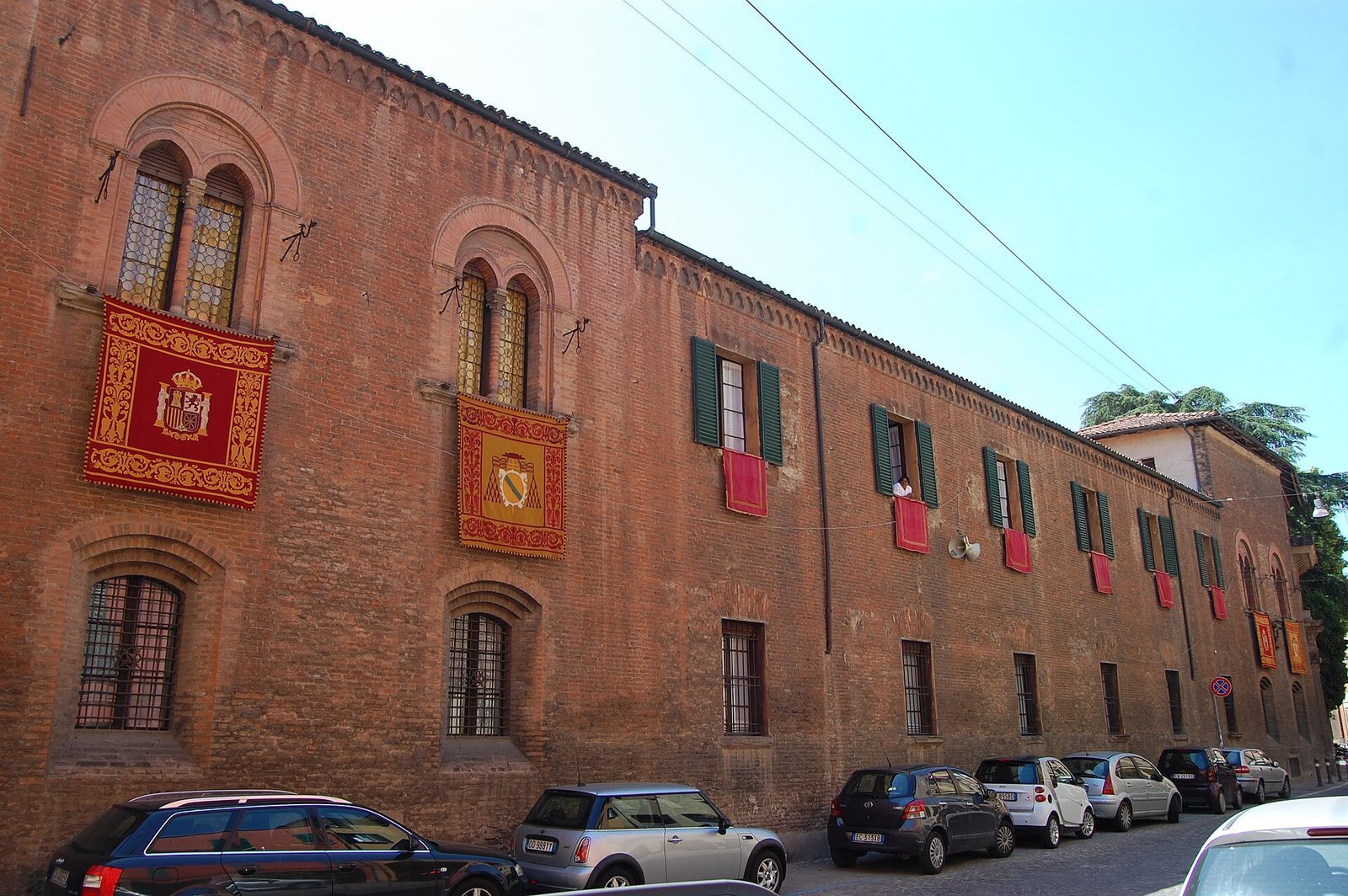
The exterior has a fortified, crenellated form, with alternating raised sections and gaps along the defensive wall. The outer façade was later remodelled in the Renaissance style, part of a European cultural and artistic movement that began in Italy in the fourteenth century. The building’s portal, made by Andrea da Formigine, bears the date 1525.
Church of Saint Clement
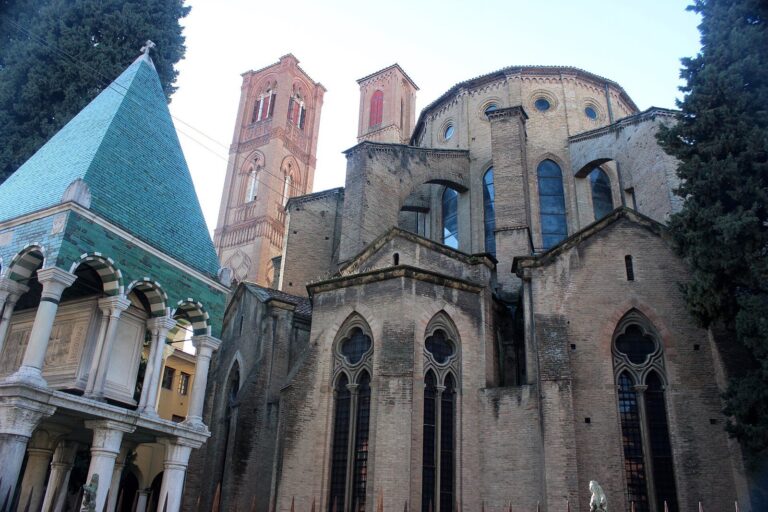
The church connected to the courtyard is Gothic, a medieval architectural style often associated with pointed arches and ribbed vaults. It is dedicated to Saint Clement, an early Christian leader traditionally regarded as the third pope.
Paintings and library
Portico paintings
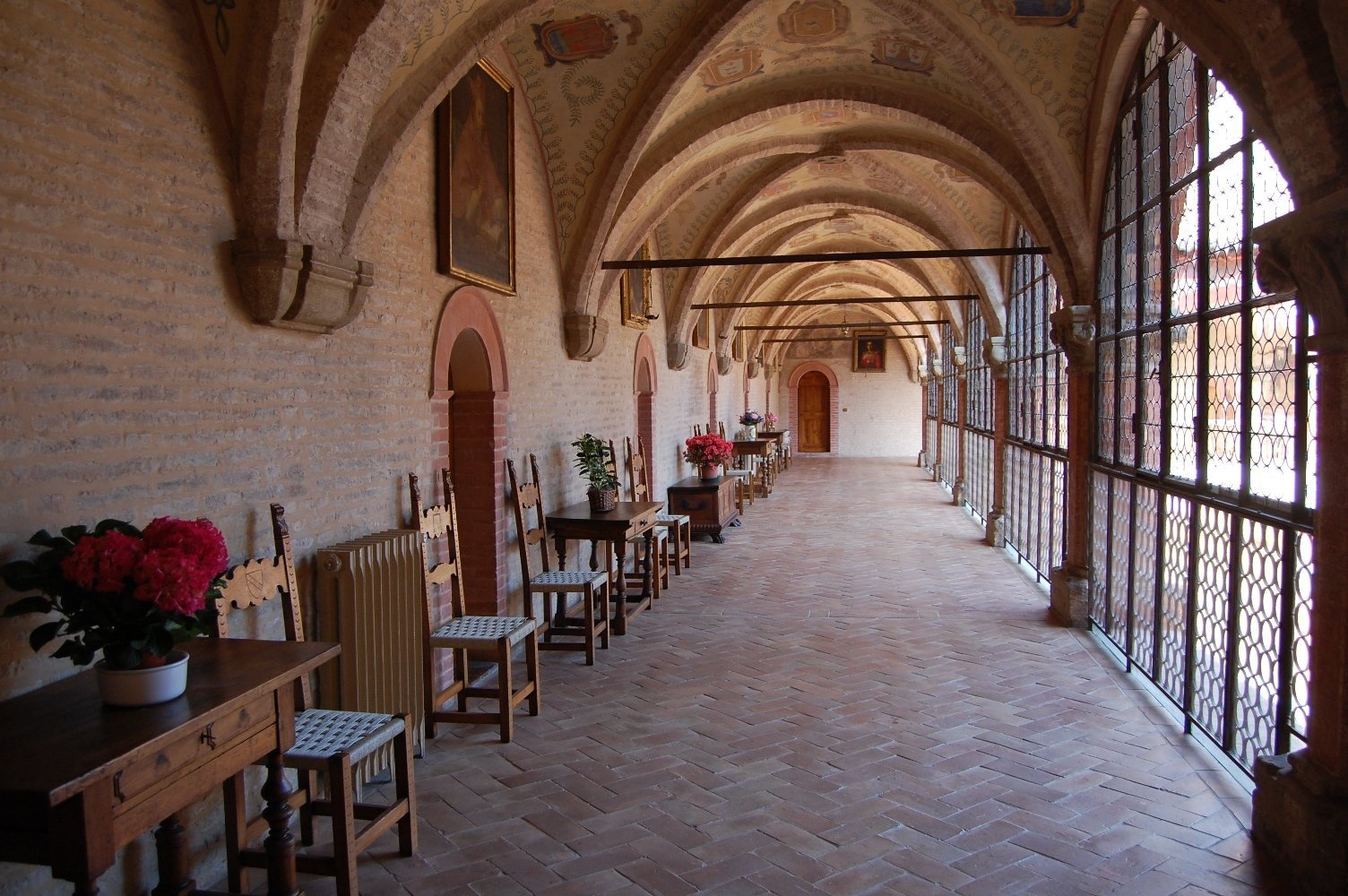
The portico contains three frescoes, paintings made on plaster. One is by Annibale Carracci and is in very poor condition; the other two are by Bartolomeo Ramenghi, also known as Bartolomeo da Bagnacavallo.
Chapel artworks
The chapel of Saint Clement contains a multi-panel painting, or polyptych, by Marco Zoppo. A fresco by Camillo Procaccini in the chapel’s apse, its rounded end, was destroyed in 1914.
Madonna of Humility
The college also holds a late-fourteenth-century image of the Madonna of Humility, depicting the Virgin Mary seated on the ground rather than enthroned. Lippo di Dalmasio painted the work.
Library
The college library holds numerous illuminated manuscripts, books decorated with hand-painted images and ornament.