Porta di Santa Maria: Chioggia’s Historic City Gate
Site at a Glance
- Popularity
- Low
- Country
- Italy
- Primary era
- Medieval
- Eras represented
- Medieval, Early Modern
- Civilizations
- Venetian
- Site type
- Military
- Remains
- Gate
On this page9 sections
History
Medieval Origins and Conflict
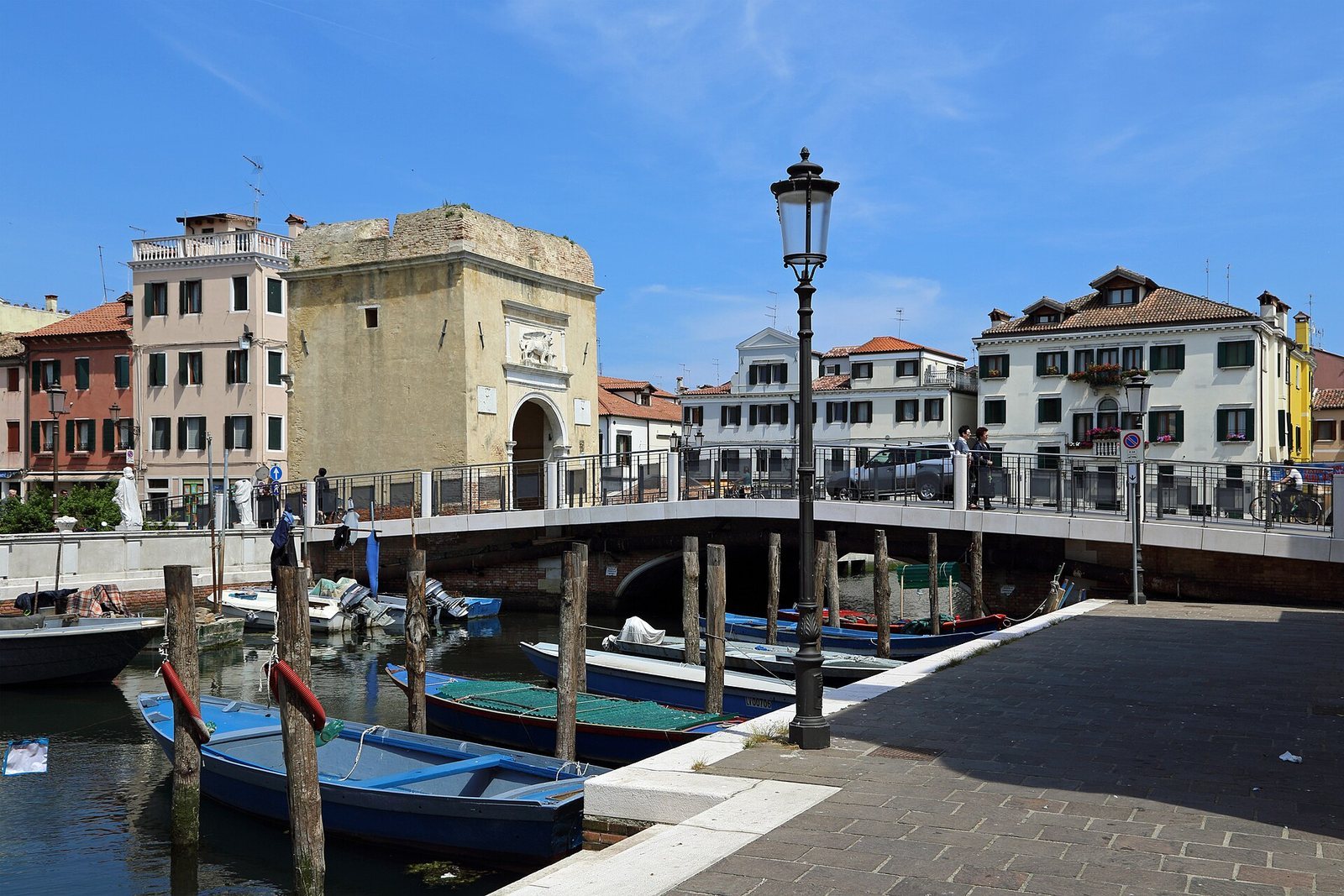
Porta di Santa Maria is a historic city gate at the southern end of Corso del Popolo in Chioggia, Italy. A wooden watchtower guarded the southern approach before a stone tower and gate were built in the early 14th century. The gate became the only land entrance to the medieval walled city and its central defensive strongpoint. A lead seal found during foundation work on the bridge between Chioggia’s two islands refers to the tower during the rule of Doge Giovanni Soranzo, Venice’s elected head from 1312 to 1328.
The gate helped defend Chioggia during repeated conflicts with Padua over the lagoon’s saltworks. During the Genoese occupation, the Genoese also used it as a strategic position and displayed there the banner of their ally, the king of Hungary.
Rebuilding and Changing Names
The gate was rebuilt in 1520 under city governor Gerolamo Barbarigo, and later ceased to serve a defensive purpose. Its name, Porta di Santa Maria, refers to an image of Mary inside the structure. In March 1782, Pope Pius VI passed through Chioggia on his way to Vienna to meet Habsburg emperor Joseph II about Church affairs. Bishop Civran, civic and religious officials, and local residents welcomed him near Cavanella Po. Pius stayed at Palazzo Grassi and left for Venice the next day.
The later name Porta Garibaldi recalls Giuseppe Garibaldi’s visit to Chioggia in 1867 and is also associated with his Expedition of the Thousand, the 1860 campaign in Sicily and southern Italy that advanced Italian unification. In peacetime, the gate marked the edge of urban expansion. “Beyond the gate” became a local expression for the area outside the historic centre.
Urban Change and Conservation
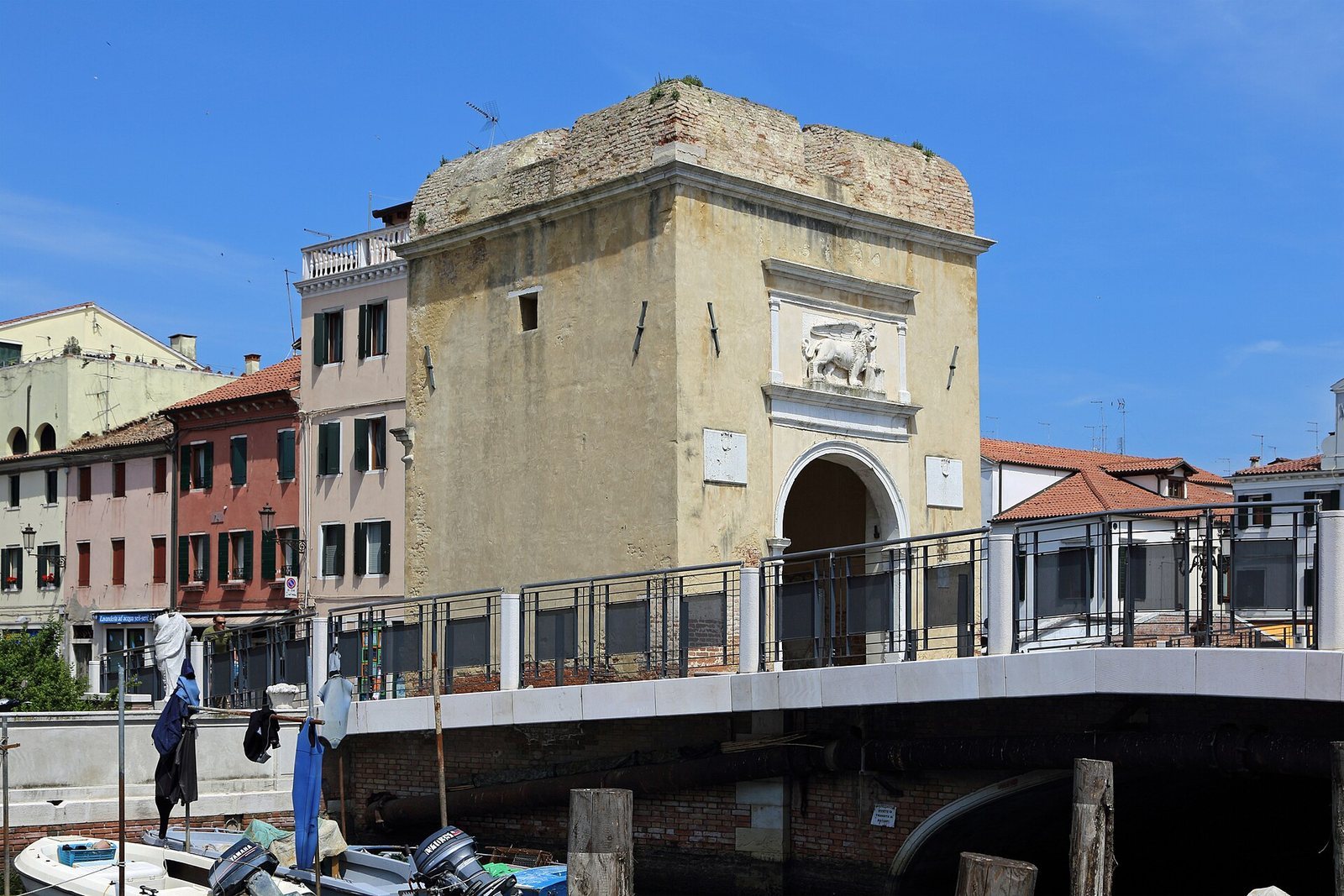
As housing gradually replaced sections of the city walls, buildings came to flank the gate. Those beside the tower were demolished in the 1920s to open the route into the centre to motor traffic. After the Second World War and again later in the 20th century, plans to demolish the gate for road access were abandoned. Instead, the bridge at Corso del Popolo was widened and two side lanes were made, requiring the removal of sections of wall and adjoining buildings.
In November 2018, Chioggia’s public works department commissioned a restoration project to address the structure’s deteriorated roof and repair its fabric.
Remains
Gate and Setting
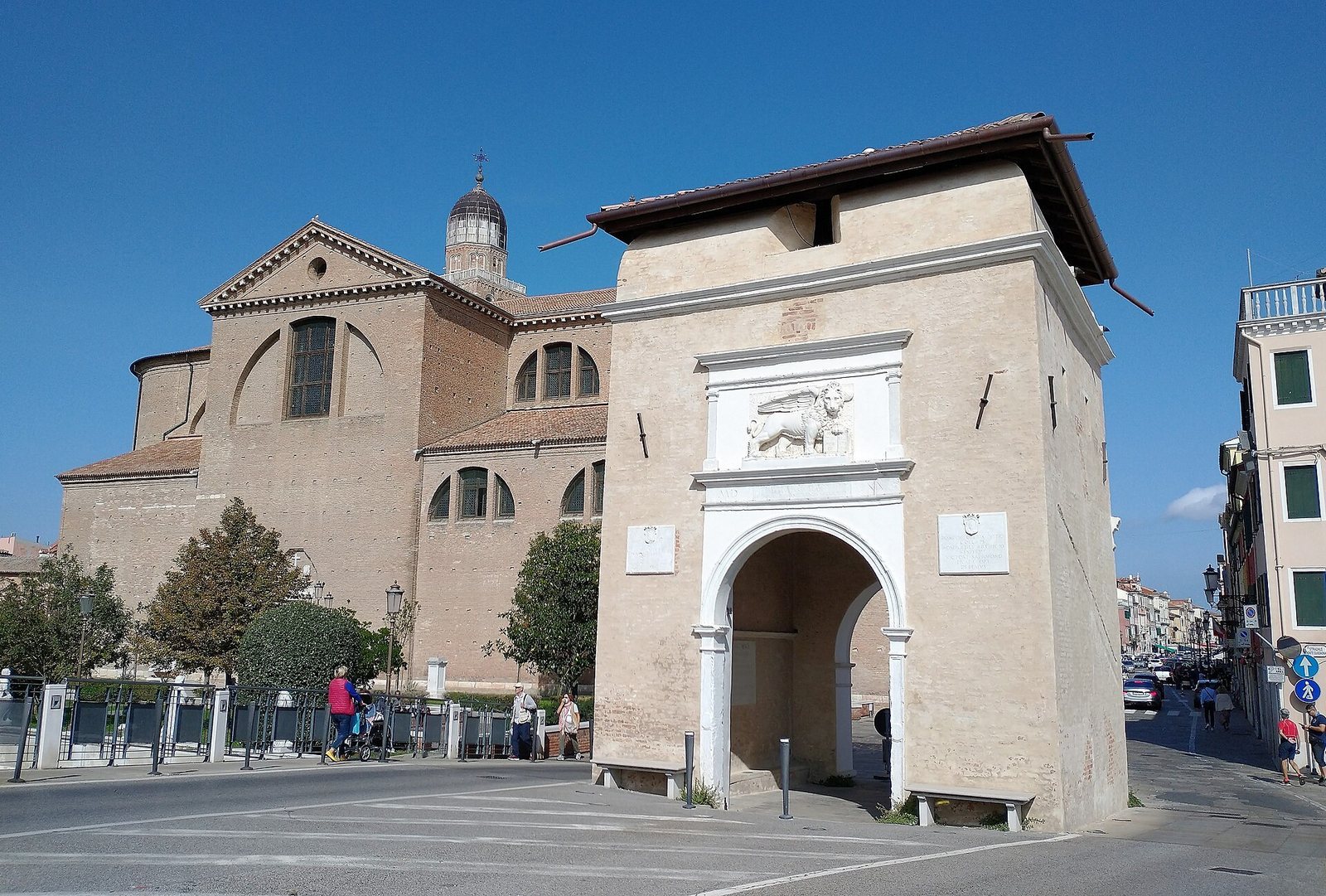
The surviving structure takes the form of a tower with a passage through its base. It stands at the southern end of Corso del Popolo, a north–south street that later became Chioggia’s main medieval thoroughfare.
Street Alignment
The street follows a line identified with the Roman cardo maximus, the principal north–south street in Roman town planning. Corso del Popolo is about 840 metres long.
Exterior Features
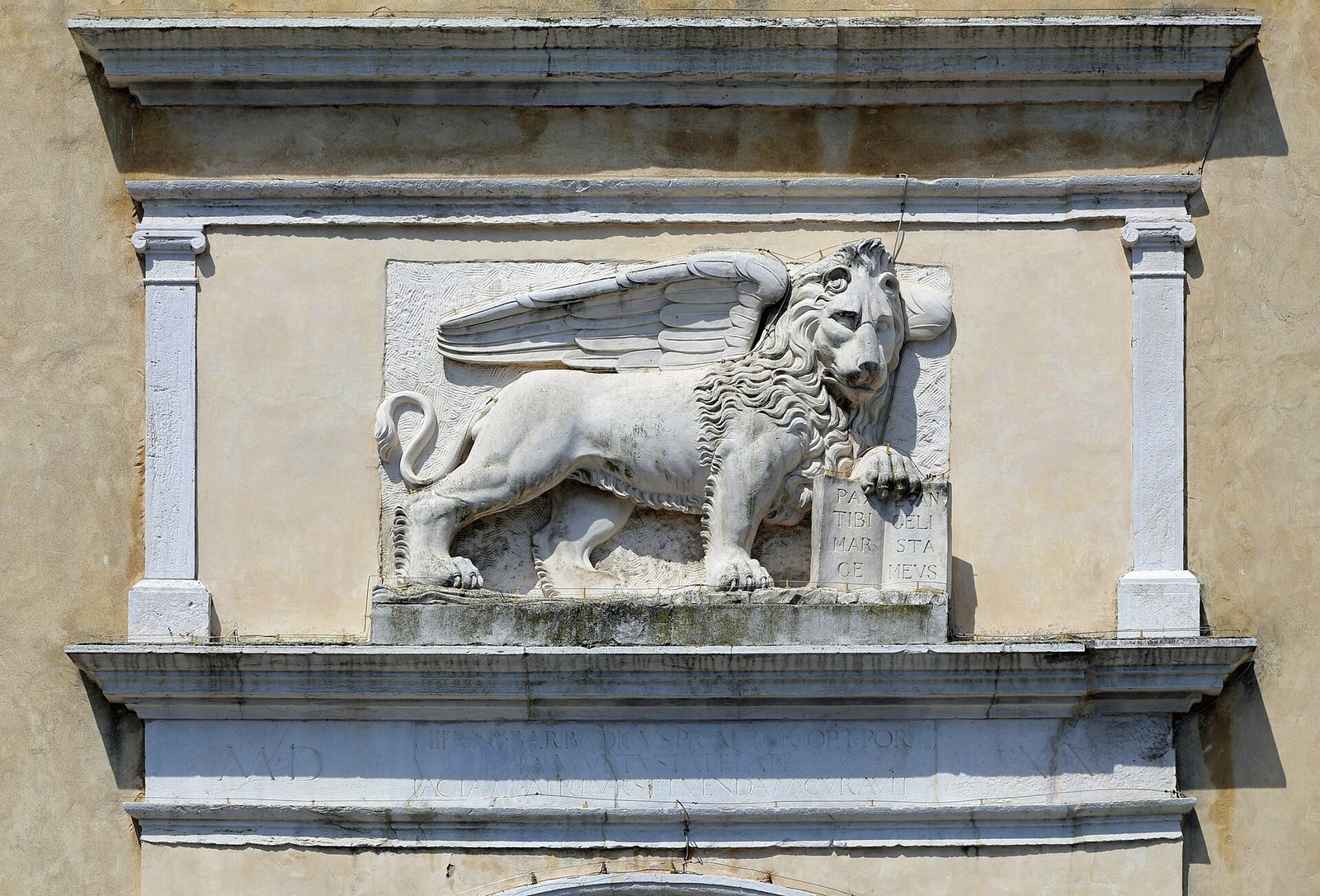
Above the outer passage is a low relief of the Lion of Venice, the emblem of the Venetian Republic, dated 1520. Two other plaques refer to the bridge’s rebuilding in 1549.
Interior and Restoration Proposals
Inside the tower, an image of Mary gives the gate its name, and a Latin inscription commemorates Pope Pius VI’s passage through Chioggia. Two marble benches stand at ground level. The 2018 restoration proposals included removing old interior and exterior plaster, repairing damaged areas with handmade solid bricks and leaving the brickwork exposed. They also proposed a timber roof covered with clay tiles, cleaning the marble with non-corrosive products, and adding suitable lighting.