Santa Maria Assunta: Parish Church and Sanctuary in Loreo
Site at a Glance
- Popularity
- Low
- Country
- Italy
- Primary era
- Early Modern
- Eras represented
- Early Modern
- Civilizations
- Venetian
- Site type
- Religious
- Remains
- Church
On this page13 sections
History
Santa Maria Assunta is a Roman Catholic church in Loreo, Italy, dedicated to the Assumption of Mary, the Catholic belief that she was taken into heaven, body and soul. A church under this dedication is recorded in Loreo from 1094; the present Baroque building developed from a seventeenth-century replacement and took its current form after later alterations. It serves as Loreo’s parish and archpriestal church, a parish led by an archpriest, or senior priest, within the Diocese of Chioggia, a church district overseen by a bishop.
The earlier church
The church’s earlier building was partly destroyed and partly rebuilt over the centuries. A fifteenth-century structure was later modified in the seventeenth century, before the community sought a larger replacement.
Seventeenth-century rebuilding
During the first half of the seventeenth century, Loreo’s religious community asked the Diocese of Chioggia for permission to build a church better suited to its needs. Around 1658, Bishop Francesco Grassi approved the demolition of the old church, which he judged both dilapidated and too cramped. A fire also struck the church in the mid-seventeenth century. Baldassare Longhena, a leading architect in seventeenth-century Venice, designed its interior afterward.
The replacement church was built in the second half of the seventeenth century and consecrated in 1675. It was first designated the parish church and later called a duomo, an Italian term for a principal church that does not by itself mean a diocesan cathedral.
Eighteenth-century changes
Alterations in the eighteenth century gave the church its present appearance. In 1739, an image of the Madonna of Charity was brought into the church. Miracles had been attributed to the image since 1736, and the church also took the title Sanctuary of the Blessed Virgin of Charity. Our Lady of Charity is a devotional title for Mary.
Remains
Exterior
Setting and perimeter
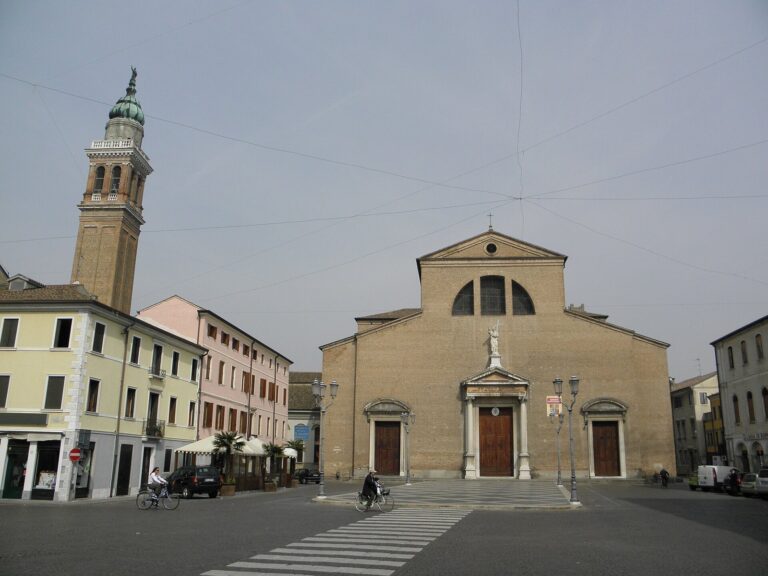
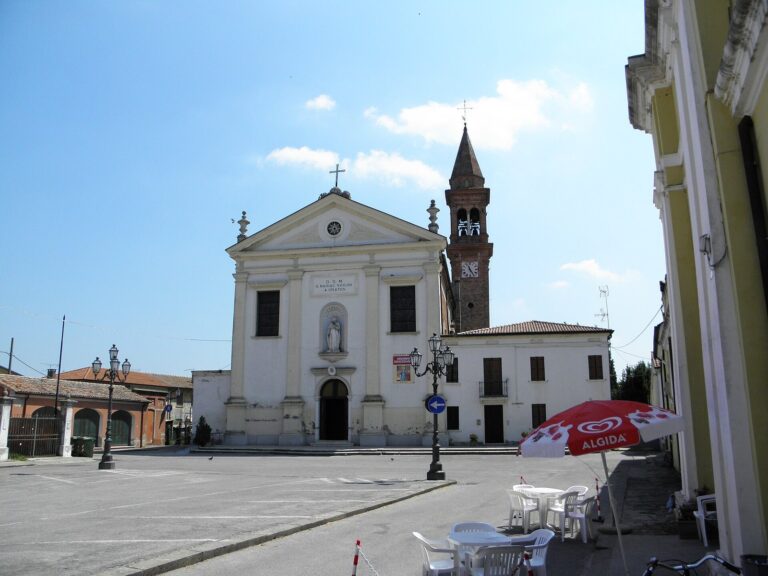
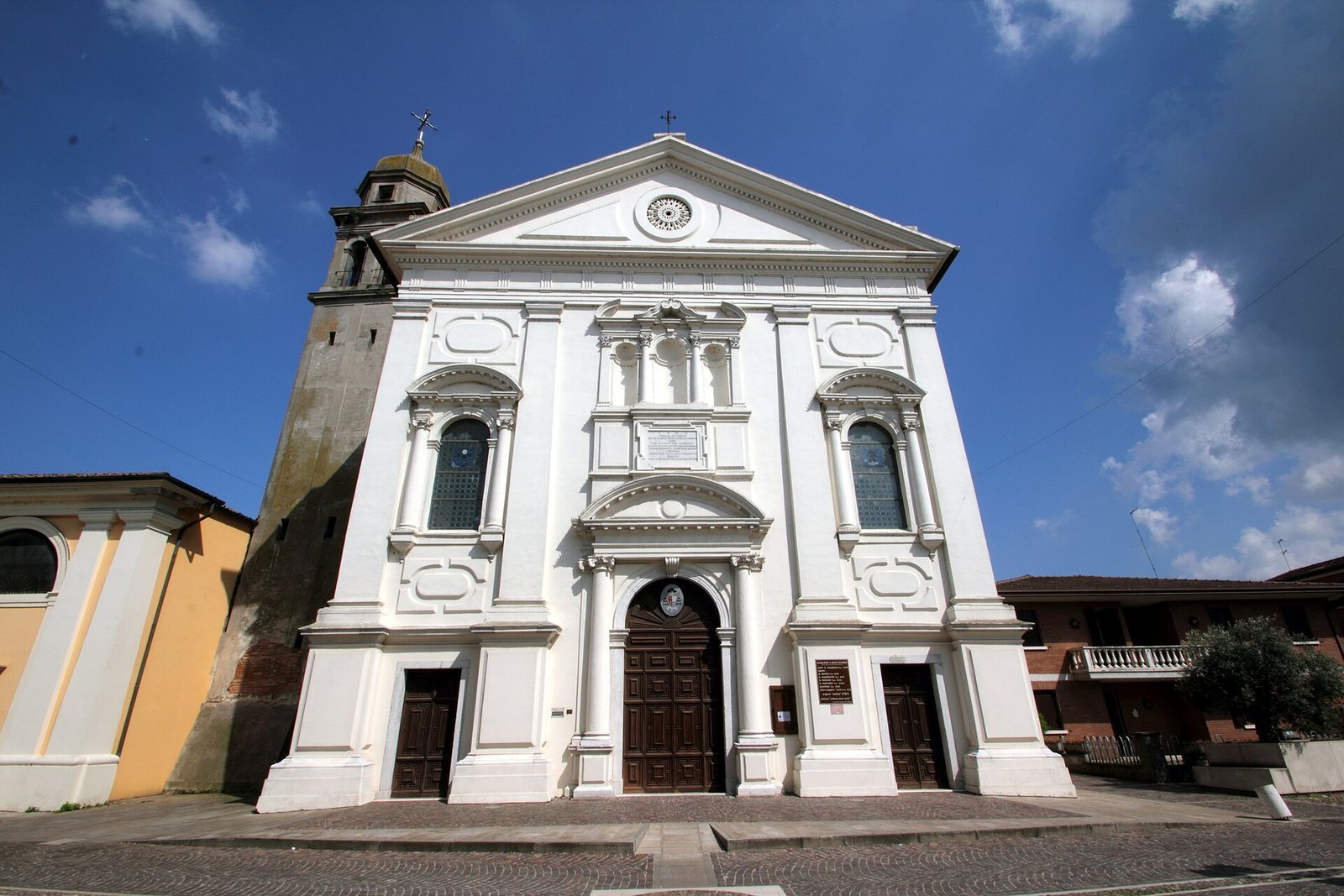
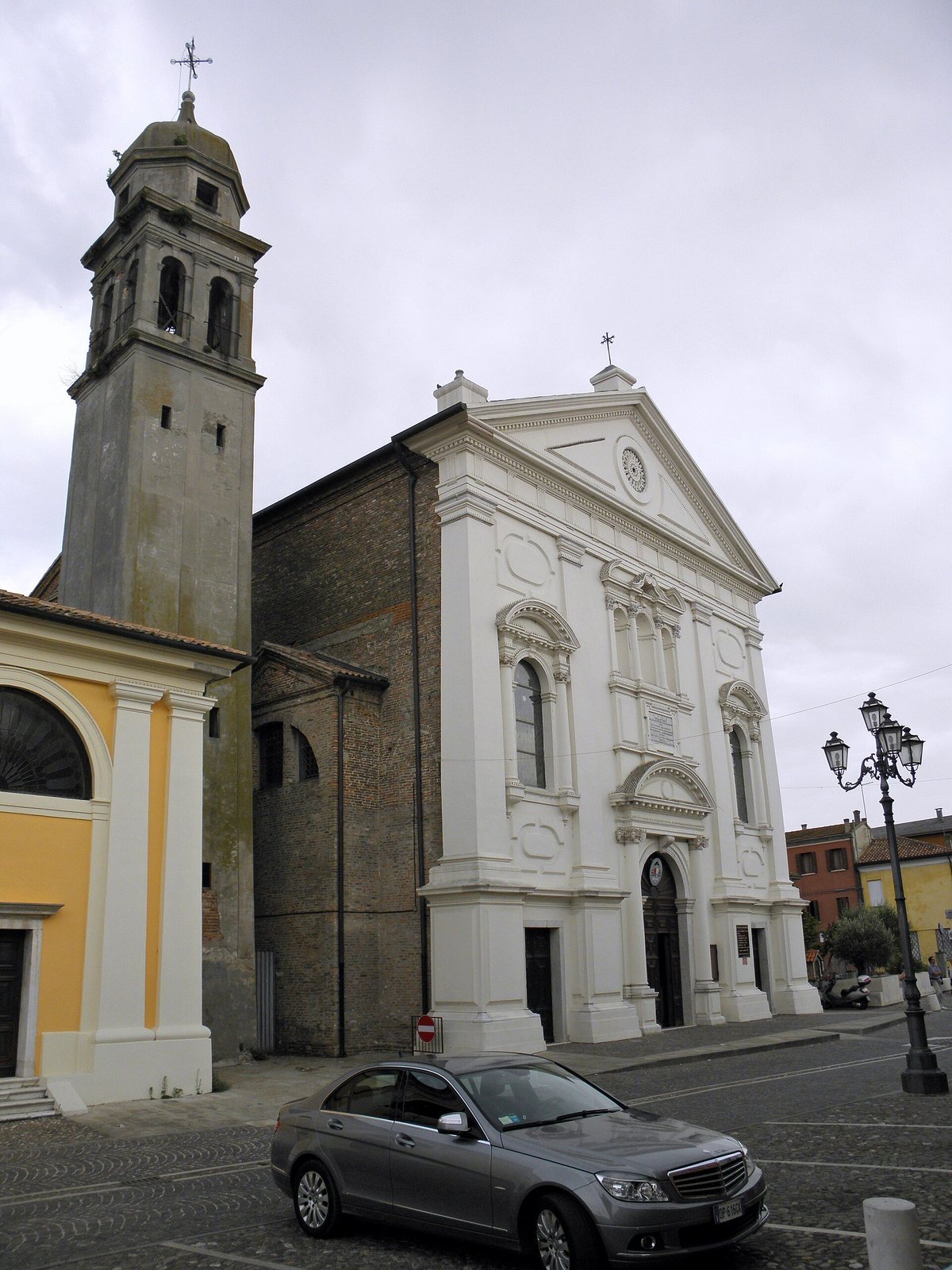
The church faces Piazza del Longhena in Loreo, with adjoining buildings touching it slightly. Its outer perimeter is rectangular and continuous: the larger chapels do not extend beyond the smaller ones. The bell tower stands to the left of the church and is the work of Tranquillino Carrisi.
Baroque façade
Longhena designed the Baroque façade using the Cathedral of Chioggia as a model. Four Tuscan pilasters, shallow supports attached to a wall, rise from high pedestals and divide the front into three sections. They carry an entablature, the horizontal structure above supports, decorated with metopes and triglyphs, alternating panels and upright blocks in a classical frieze. A triangular pediment, the feature above this structure, crowns the façade.
The side windows have shrine-like frames with Ionic half-columns and semicircular pediments edged with small toothlike blocks. At the center, Ionic half-columns frame the entrance portal, above which a three-part window sits beneath an interrupted semicircular pediment. A plaque dedicated to the Virgin of Charity is centered on the façade.
Interior
Nave and chapels
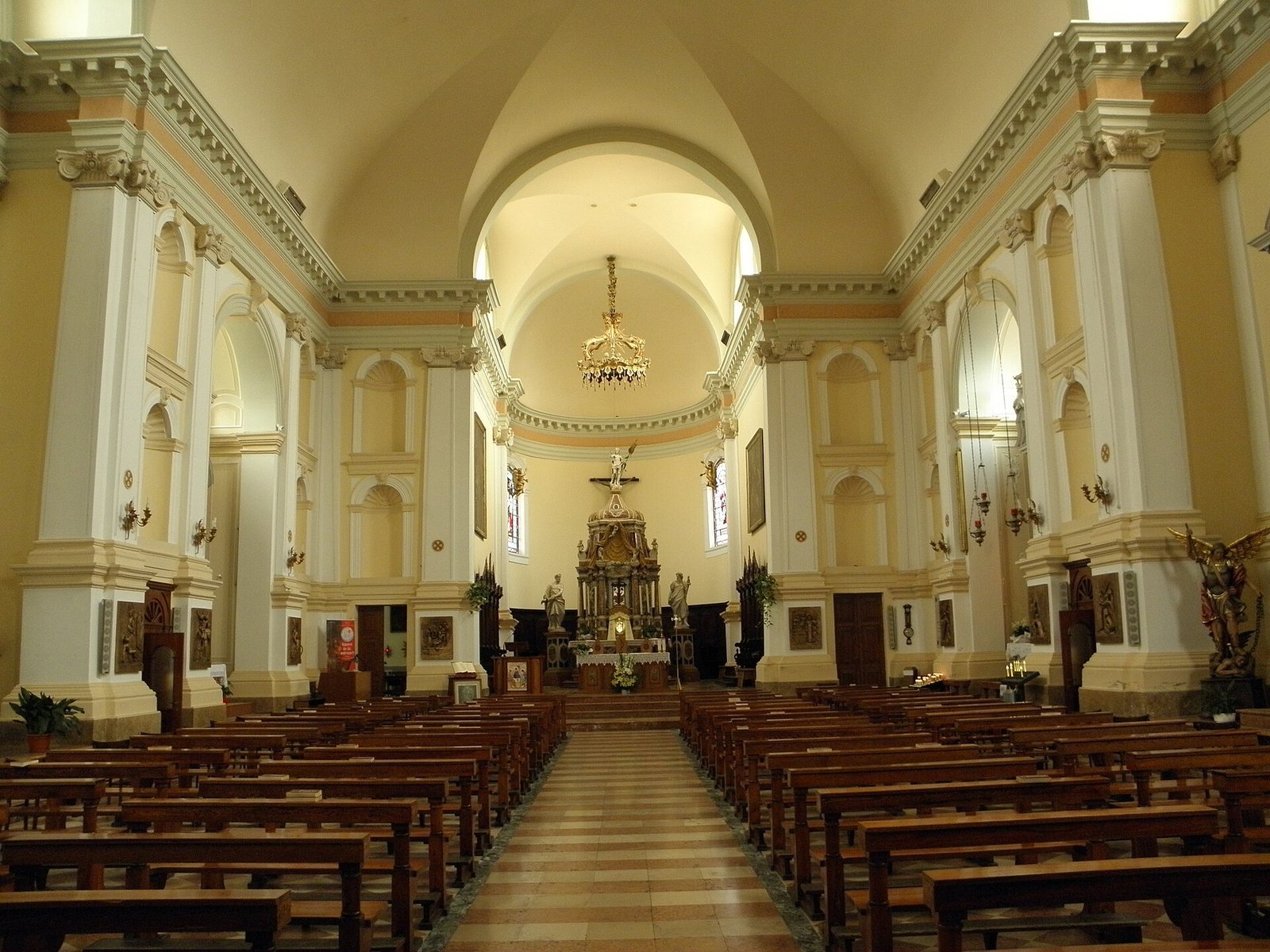
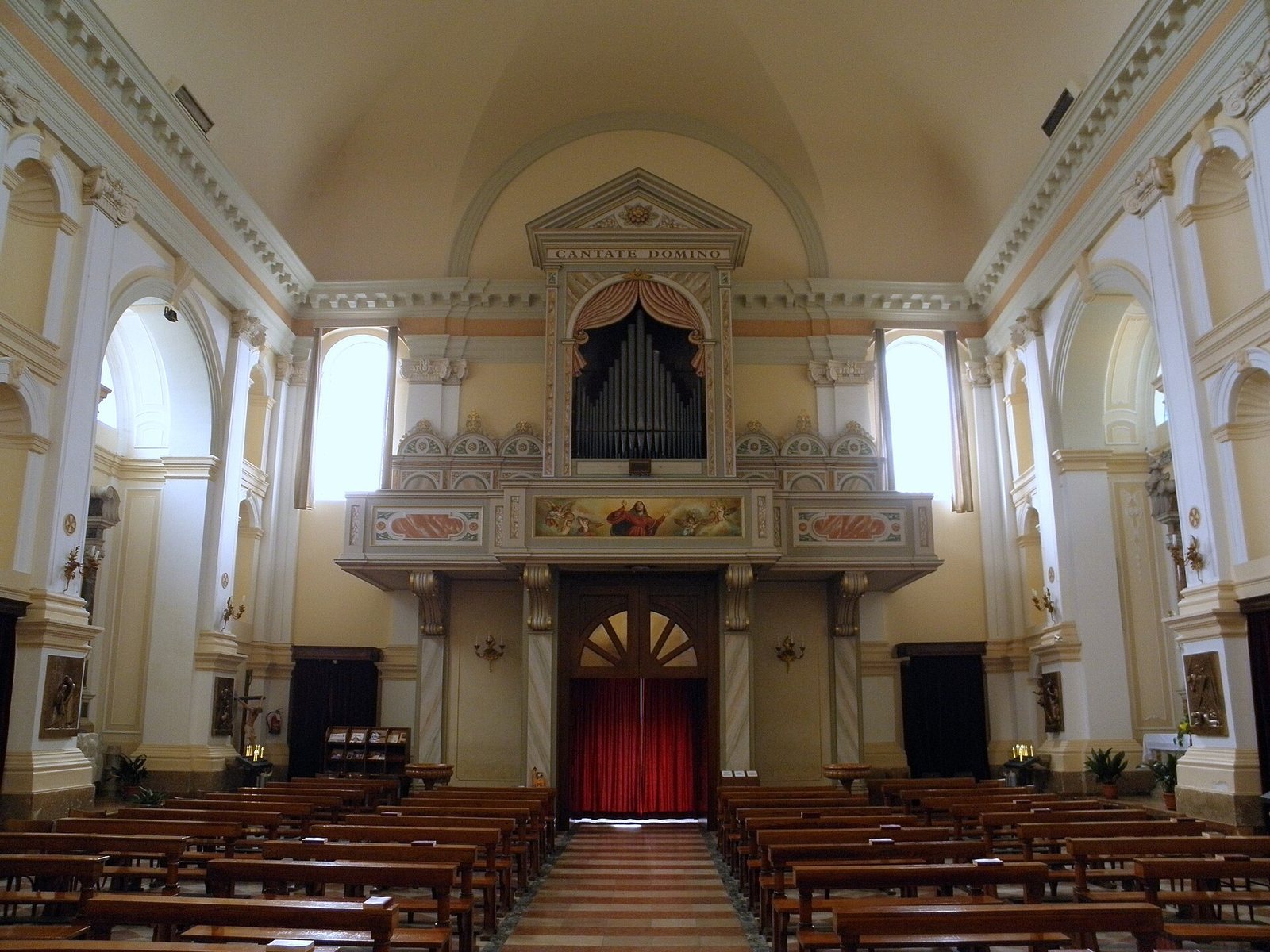
The church has a lengthwise plan with a single nave, the main longitudinal space, covered by cross vaults formed by intersecting vaults. Three chapels line each side. Wall sections with paired pilasters separate them, and the central chapel on each side is taller and wider than the others.
Presbytery
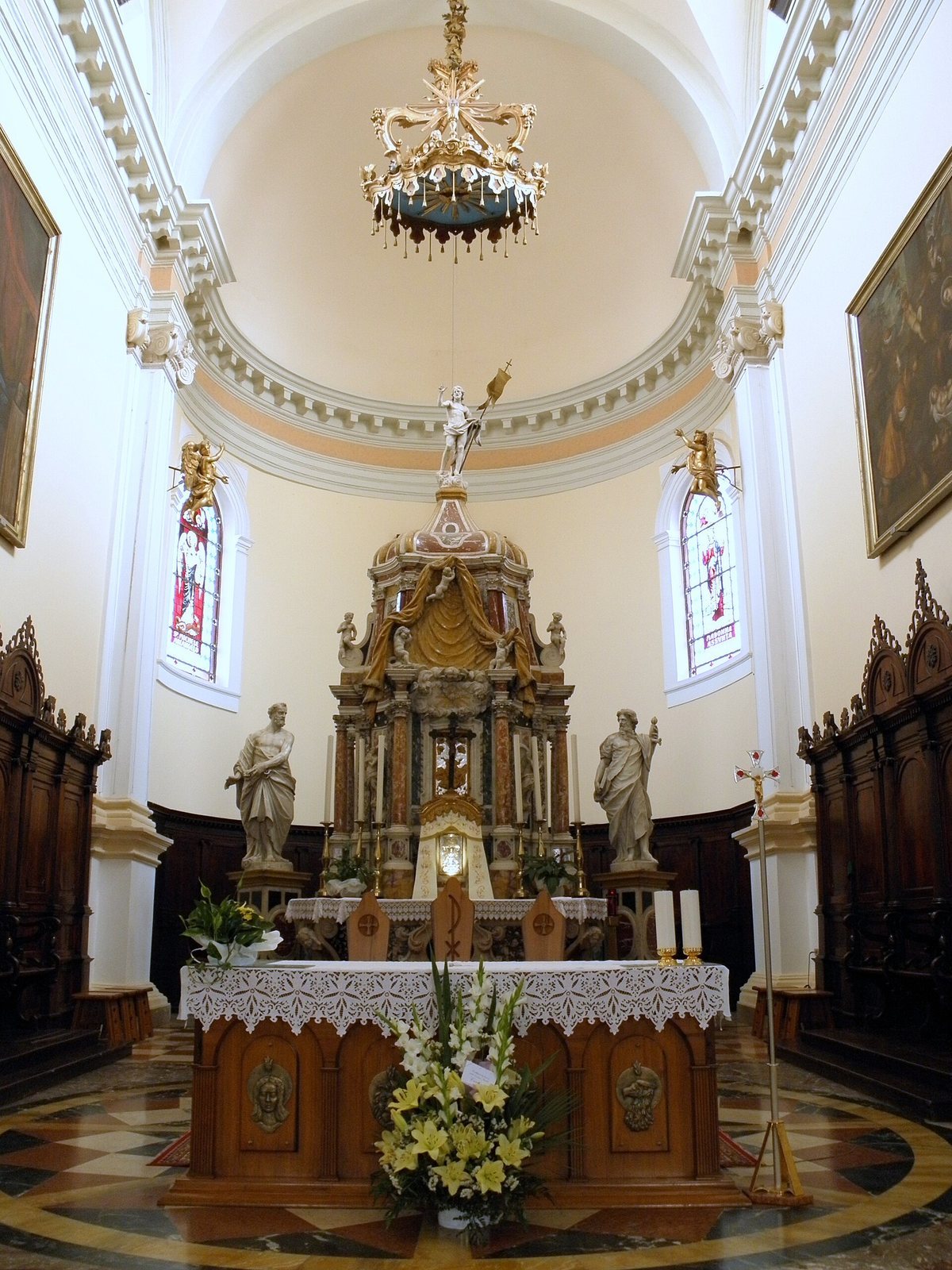
The presbytery, the area around the altar used by clergy, consists of a rectangular chapel under a barrel vault, a continuous tunnel-shaped ceiling, and a semicircular apse, a recess at the end of the church. Ionic pilasters divide the interior and support a continuous entablature, from which the cross vaults rise. Longhena based his interior design in part on Santa Maria di Nazareth in Venice.
Altars and choir furnishings
The church contains eight altars. Its Baroque high altar was made by Antonio Tarsia and is decorated with statues of Saints Peter and Paul by Giuseppe Torretti. Wooden choir stalls stand in the church, while a raised choir loft contains a pipe organ built by Gaetano Callido.
Paintings
Two oil paintings on canvas hang on the presbytery’s side walls: A Miracle of the Blessed Virgin by Pietro Damini (1592–1629) and The Adoration of the Shepherds by Antonio Vassilacchi, also known as L’Aliense (1556–1629). Other works in the church are by Venetian-school painters, artists associated with Venice and the Veneto, including Vassilacchi, Damini, Andrea Vicentino, and the eighteenth-century painter Antonio Marinetti.