Santa Giulia: A Roman Catholic Church in Livorno
Site at a Glance
- Popularity
- Low
- Country
- Italy
- Primary era
- Early Modern
- Eras represented
- Early Modern
- Civilizations
- Grand Duchy of Tuscany
- Site type
- Religious
- Remains
- Church
On this page10 sections
History
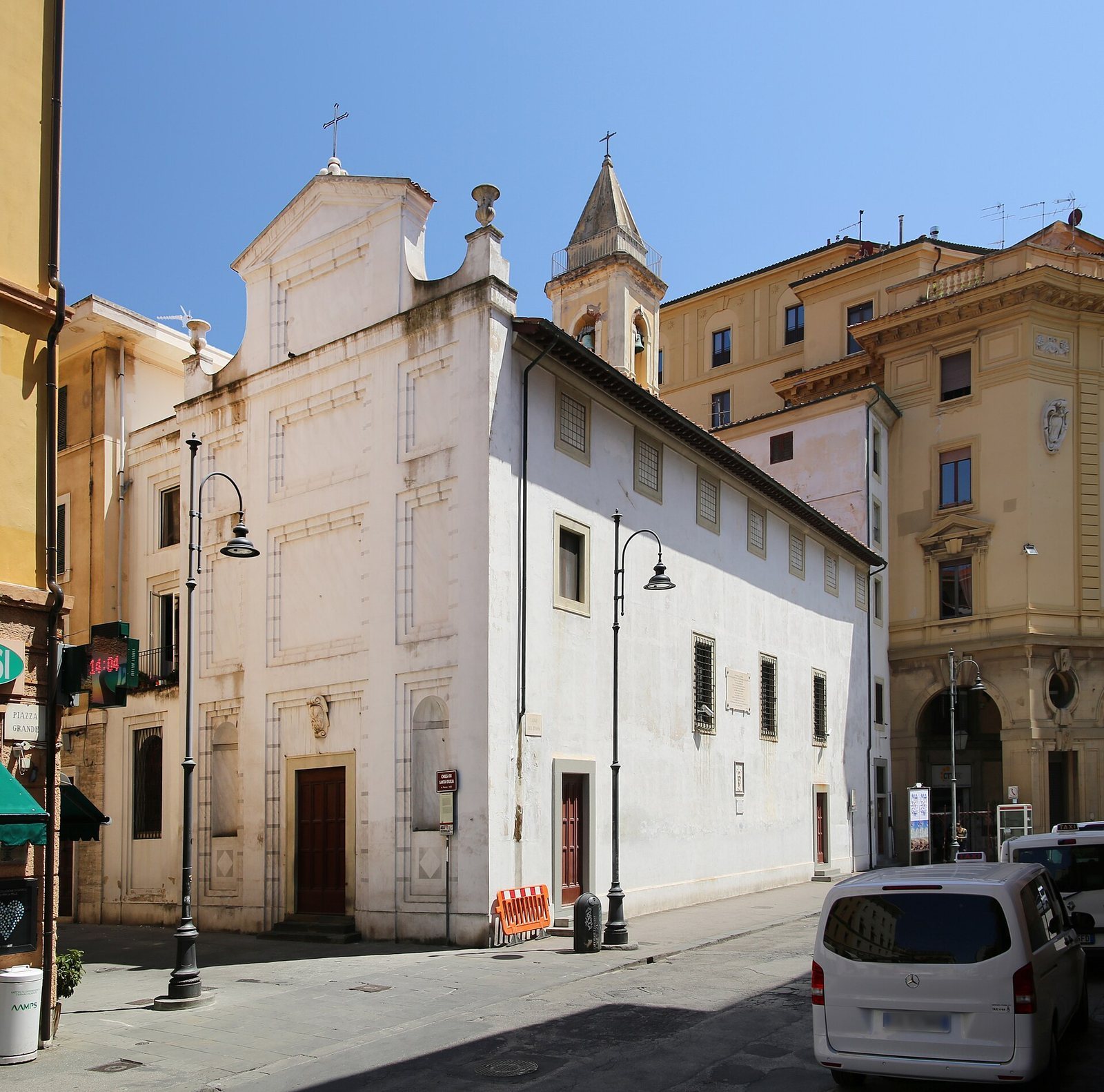
Santa Giulia is a Roman Catholic church in Livorno, Italy, dedicated to the city’s patron saint. Its present building, in late Renaissance and Baroque styles, was begun on 22 May 1602 and completed in the first half of the seventeenth century.
Saint Julia and the confraternity
By the ninth century, Saint Julia was venerated in Livorno, where a medieval church dedicated to her stood near today’s Piazza Guerrazzi. Julia is a Christian martyr traditionally associated with Carthage. Tradition holds that some of her relics remained where they came ashore. Their journey is said to have led from Carthage to Corsica after the Vandals arrived, then to Brescia by way of Porto Pisano, through the efforts of Desiderius’s wife and daughter. Desiderius was a king of the Lombards, a Germanic people who ruled parts of Italy in the early Middle Ages.
From the second half of the thirteenth century, Livornese gathered at Cala Liburna in a confraternity, a lay religious association devoted to shared worship and charitable activity. It was formally recognized in the early fourteenth century and later took the official name Confraternity of the Blessed Sacrament and Saint Julia.
Churches and institutional change
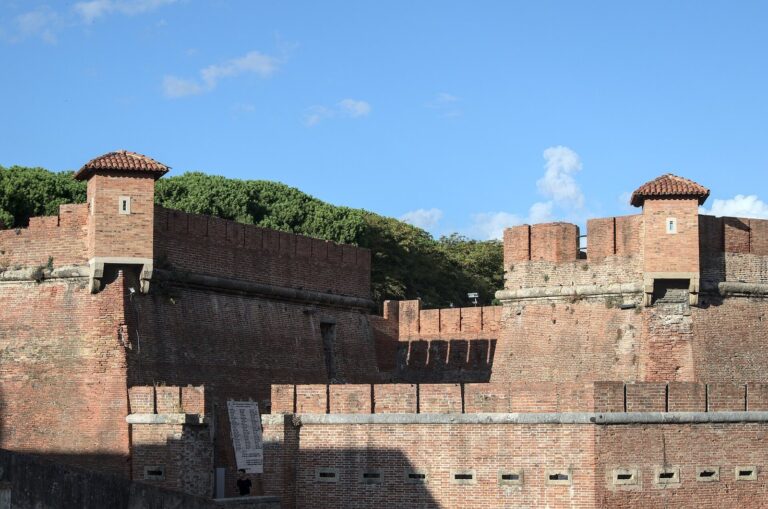
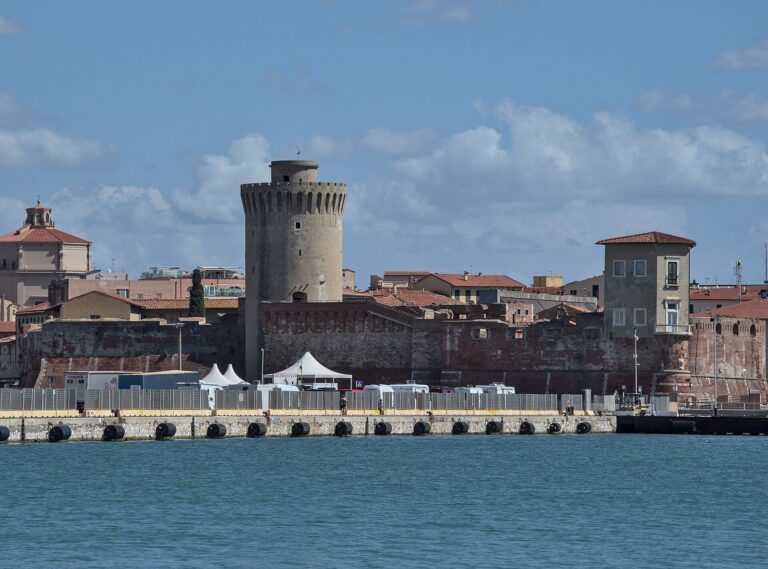
Until the early decades of the sixteenth century, a parish church dedicated to Saint Mary and Saint Julia stood near Livorno’s Old Fortress. It was demolished to make way for the fortress moat. The confraternity then used a small warehouse behind the convict prison as a prayer space, before building Santa Giulia beside the cathedral. In 1696, the adjoining cemetery area was turned into an oratory dedicated to Saint Ranieri, commissioned by Cosimo III de’ Medici, grand duke of Tuscany. Livorno then belonged to the Diocese of Pisa, where Ranieri was the patron saint.
The confraternity was later elevated to archconfraternity, a higher-ranking confraternity. It gained material and symbolic privileges, along with use of Santa Giulia and its museum, the San Ranieri oratory, and an outlying cemetery for members and their families.
War damage and restoration
Santa Giulia suffered extensive damage during the Second World War and was subsequently restored. Restoration of the San Ranieri wall paintings began in the late 1950s under Leone Lorenzetti, with the aim of repairing damaged areas and making the scenes easier to read. The church façade was restored in 2008 to recover its earlier form.
Remains
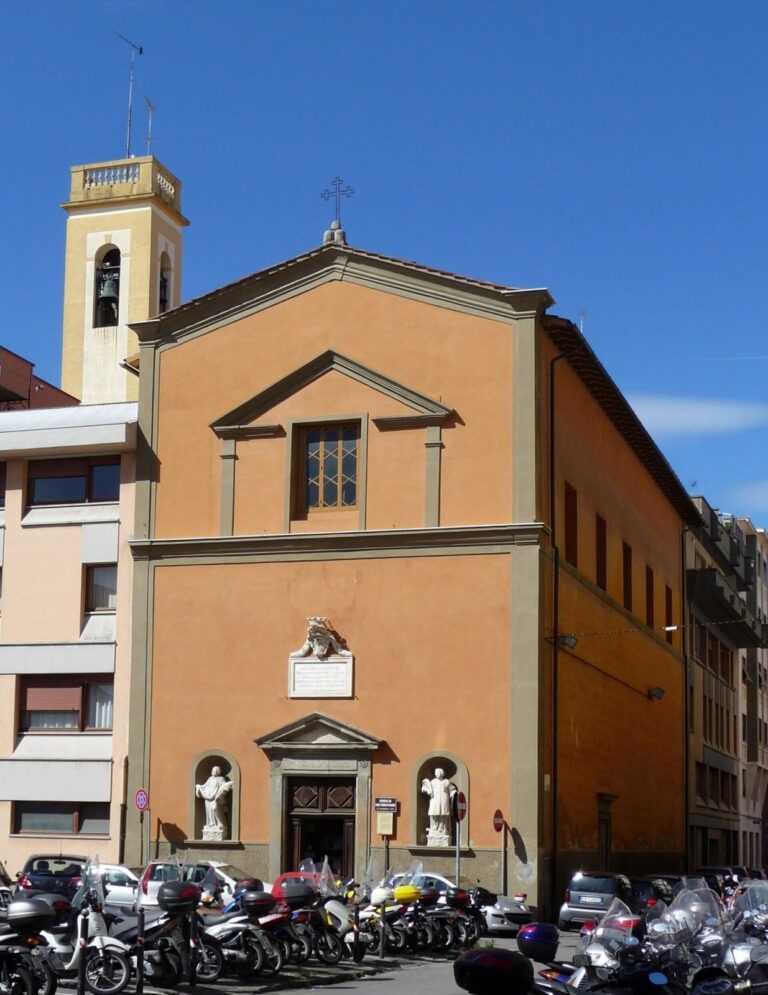
Santa Giulia stands beside Livorno Cathedral, a short distance from Piazza Grande, at the edge of a broad curved, open space bordered by a portico. This space was built behind the cathedral’s apse during Italy’s Fascist period. The church has a plain exterior, a rectangular main hall preceded by an entrance hall, and an adjoining oratory and museum.
The church
Facade and bell tower
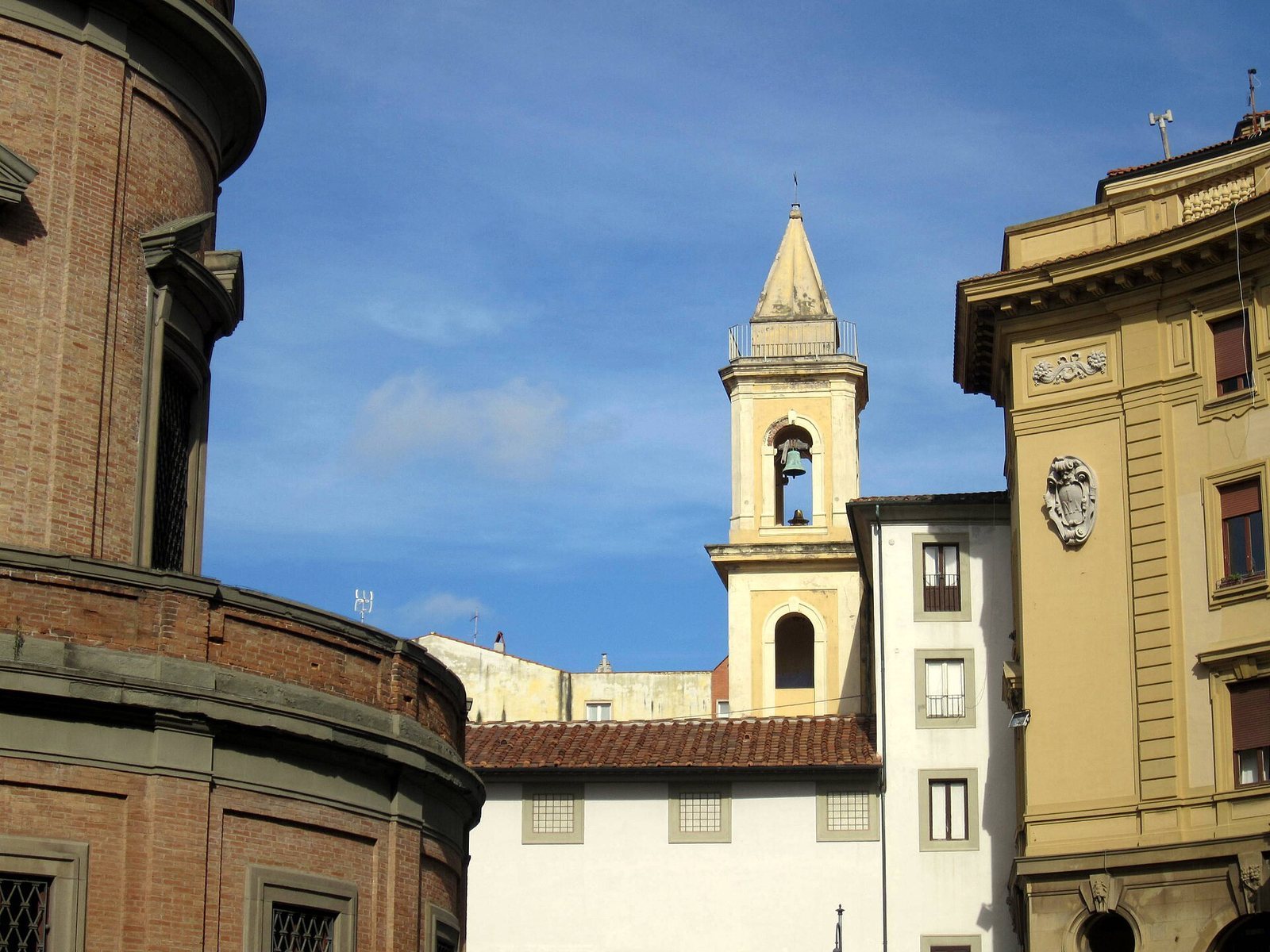
The façade has two niches, and a small bell tower rises along its left side. The niches first held statues of Saint Jerome and Saint Anthony Abbot. After those fell into ruin, statues of Saints Peter and Paul were installed in 1848; the later statues were destroyed during the Second World War. The 2008 restoration returned the façade to its earlier configuration without replacing its sculpture.
Interior and altar
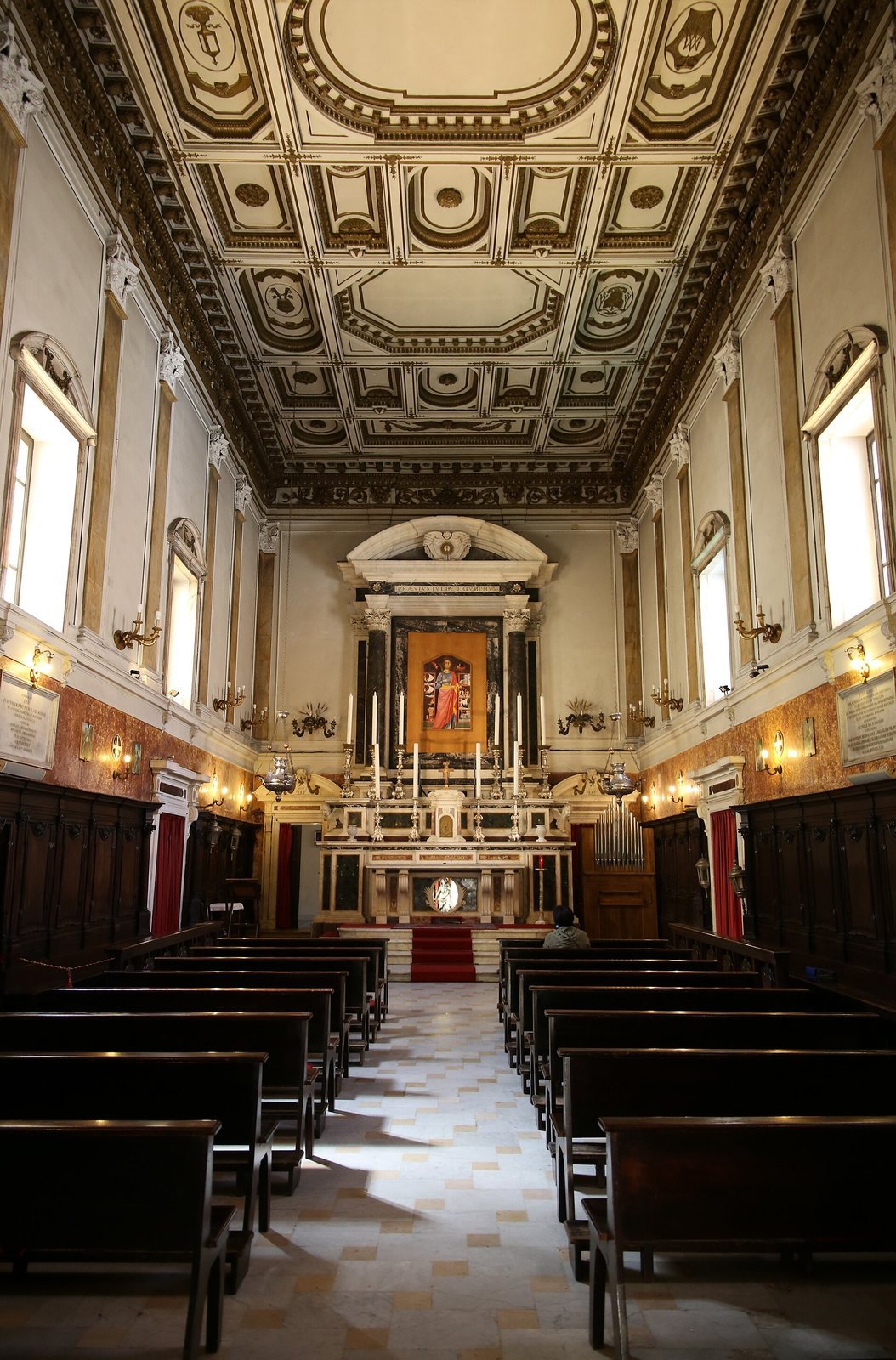
The interior is a rectangular hall preceded by an entrance hall. The war destroyed the carved wooden ceiling, furnishings, and confraternity archive, after which the interior was restored. The seventeenth-century high altar is associated with a panel of Saint Julia dated to the thirteenth century and attributed to the Master of San Torpè, a conventional name for an otherwise unidentified painter. The original panel is kept in the confraternity’s museum.
Museum objects
The museum also preserves sacred furnishings and a panel showing Saint Julia in the tradition of Giotto. The panel came from the confraternity’s church and, earlier, from a destroyed parish church of Saint Julia near the old port.
Oratory of San Ranieri
A side door connects the church to the oratory. Its marble floor contains burials of prominent Livornese families, while wall paintings cover the walls and curved ceiling. The eighteenth-century scenes by Francesco Natali and Alessandro Gherardini depict episodes from Ranieri’s life. War damage and water infiltration after the loss of the roof covering affected the paintings. About 55 percent is attributable to the original work; the remainder resulted from restoration.