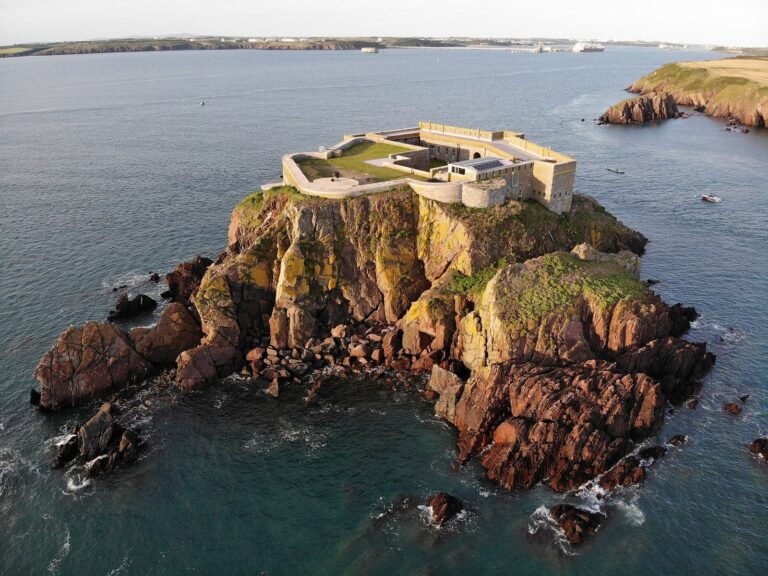
Popton Fort: A Palmerston Coastal Defence Fort
Site at a Glance
- Rating
- 4.8
- Popularity
- Very Low
- Country
- United Kingdom
- Primary era
- Modern
- Eras represented
- Modern
- Civilizations
- British
- Site type
- Military
- Remains
- Fort
On this page6 sections
History
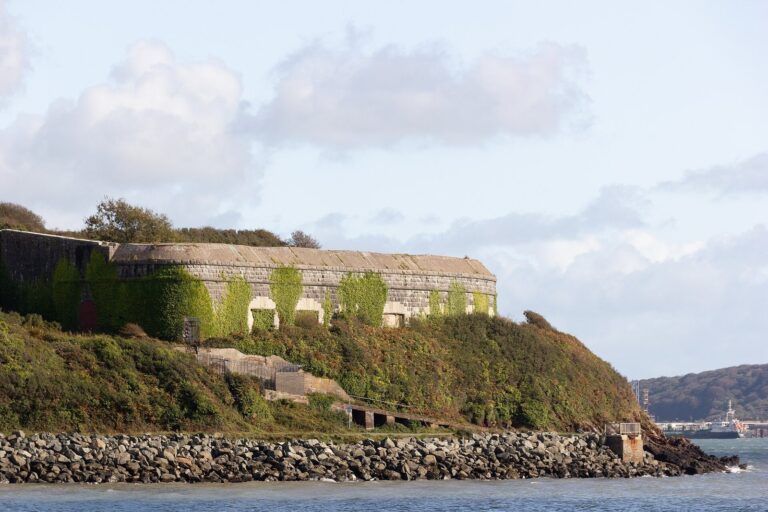
Popton Fort is a coastal fortification in the United Kingdom, built in the mid-19th century as part of Milford Haven’s inner defence line. Construction began in 1859, and the fort was completed in 1864 at a cost of £76,000. It was a Palmerston fort, part of the British coastal-defence programme promoted by Prime Minister Lord Palmerston, and worked alongside Fort Hubberstone on the opposite bank.
Military reuse and industrial conversion
The fort was abandoned at the beginning of the 20th century, then returned to service during the Second World War. In 1957, BP acquired it for use as an oil terminal and renovated the structure.
Popton Fort is privately owned and forms part of Valero’s Angle Bay Refinery, with use as a company headquarters. It became a Grade II* listed building in 1996, a category for buildings considered particularly important and of more than special interest.
Remains
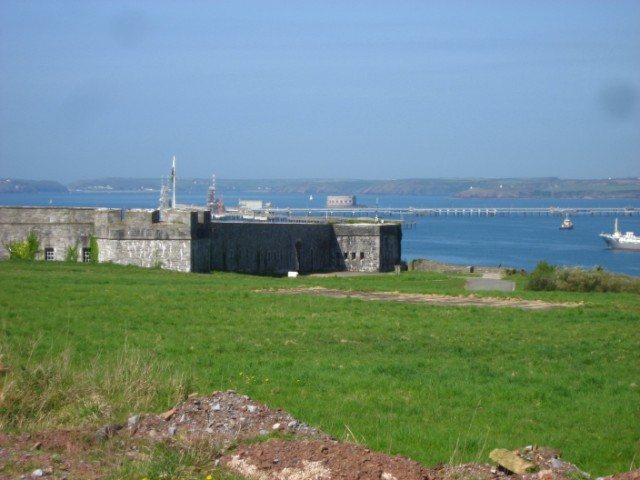
Built of stone, Popton Fort has tapering hexagonal ramparts with pentagonal bastions, or projecting defensive works, at the corners. A broad, sloping area of clear ground lies in front, while a ditch follows the southern side. Two batteries occupy the fort’s western and northern sides.
Fortifications and military facilities
Gun batteries
A battery is a group of artillery guns or their prepared positions. The western position was Moncrieff Battery, and the northern one was Open Battery. The fort’s armament included eleven 9-inch, 12-ton rifled muzzle-loading guns in casemates, along with ten guns in open emplacements. Rifled muzzle-loading guns were loaded through the barrel’s mouth, with grooves inside the barrel imparting spin to the projectile. Casemates were protected gun positions, while open emplacements were exposed positions.
Barracks
Barracks at the rear could house ten officers, five staff sergeants and 158 other ranks, meaning military personnel below commissioned-officer rank. Their facilities included a canteen, washrooms and a hospital.