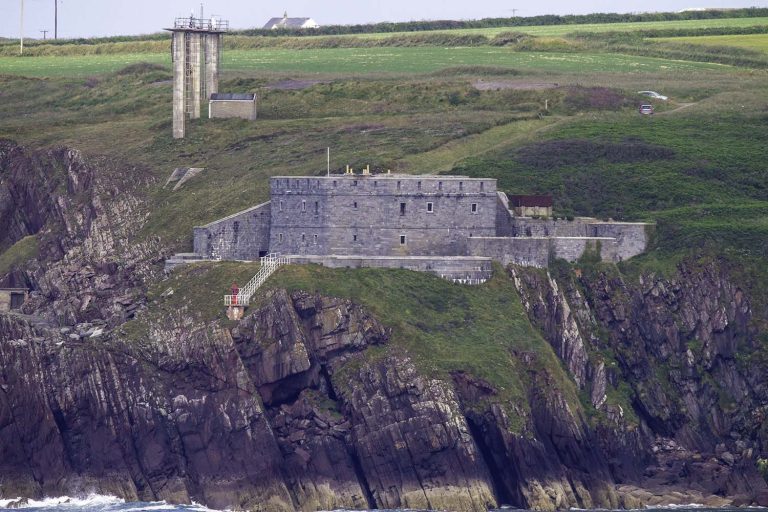
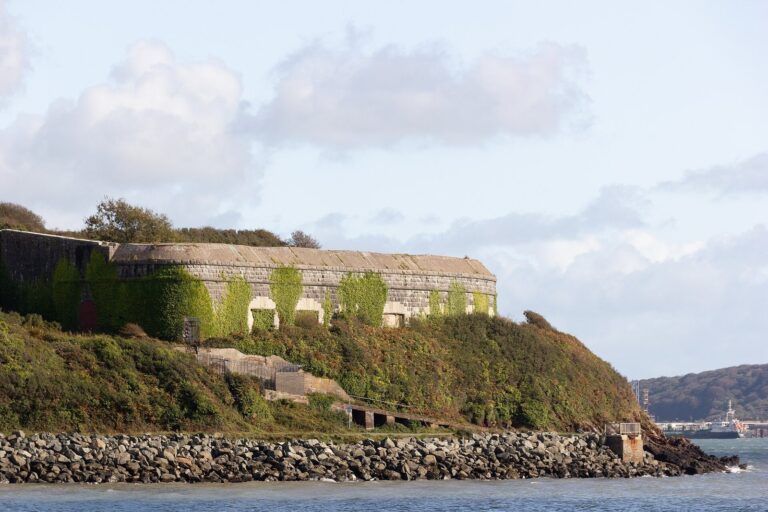
Thorne Island: A Coastal Artillery Fort at Milford Haven
Site at a Glance
- Popularity
- Very High
- Country
- United Kingdom
- Primary era
- Modern
- Eras represented
- Modern
- Civilizations
- British
- Site type
- Military
- Remains
- Fort
On this page7 sections
History
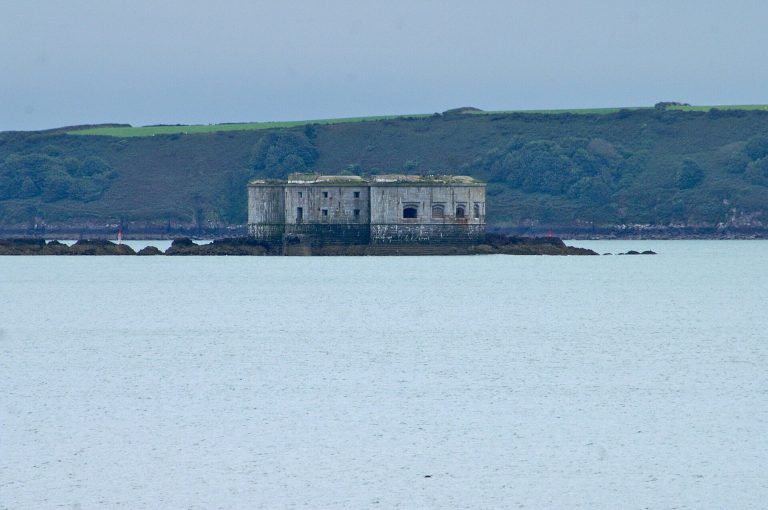
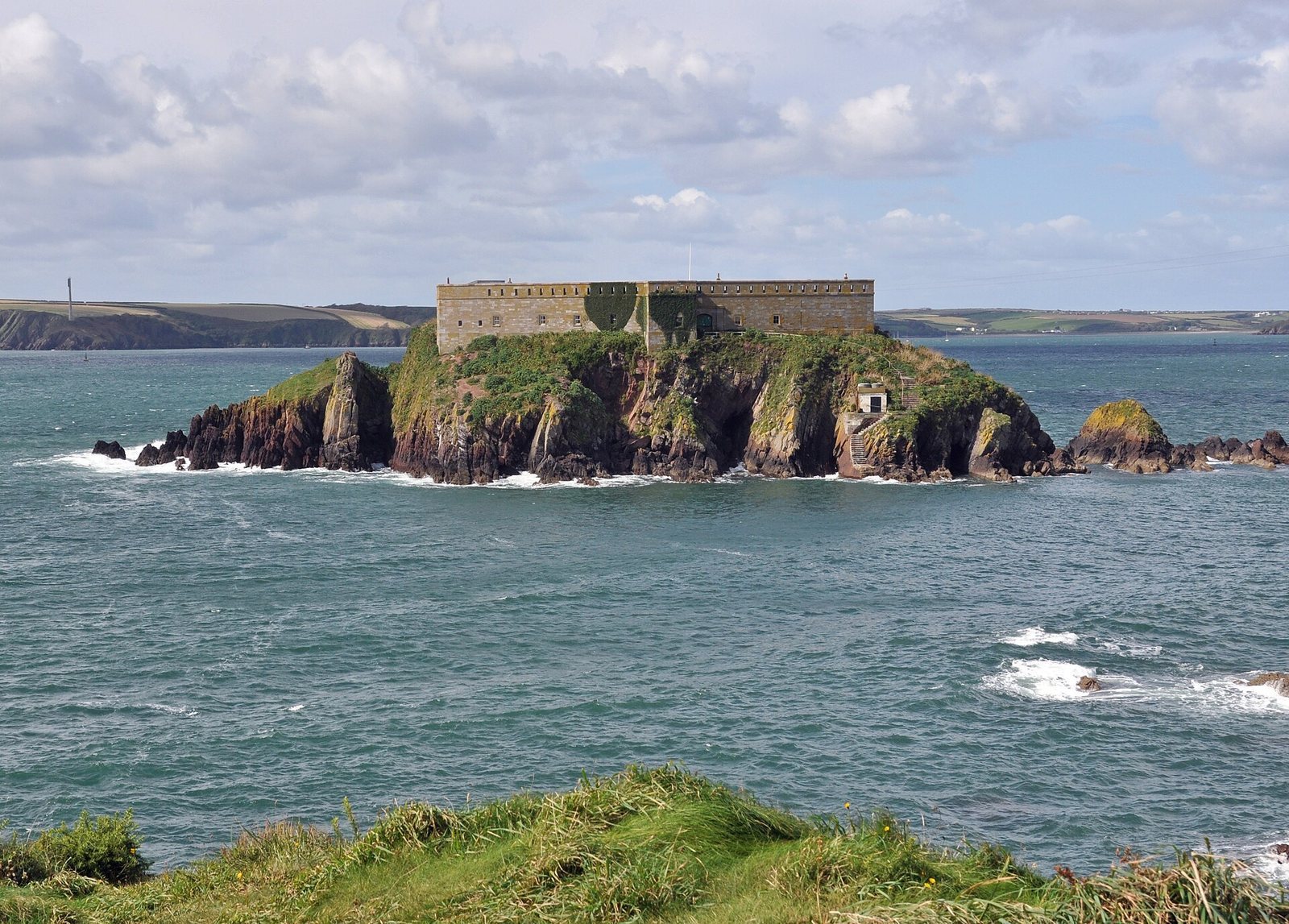
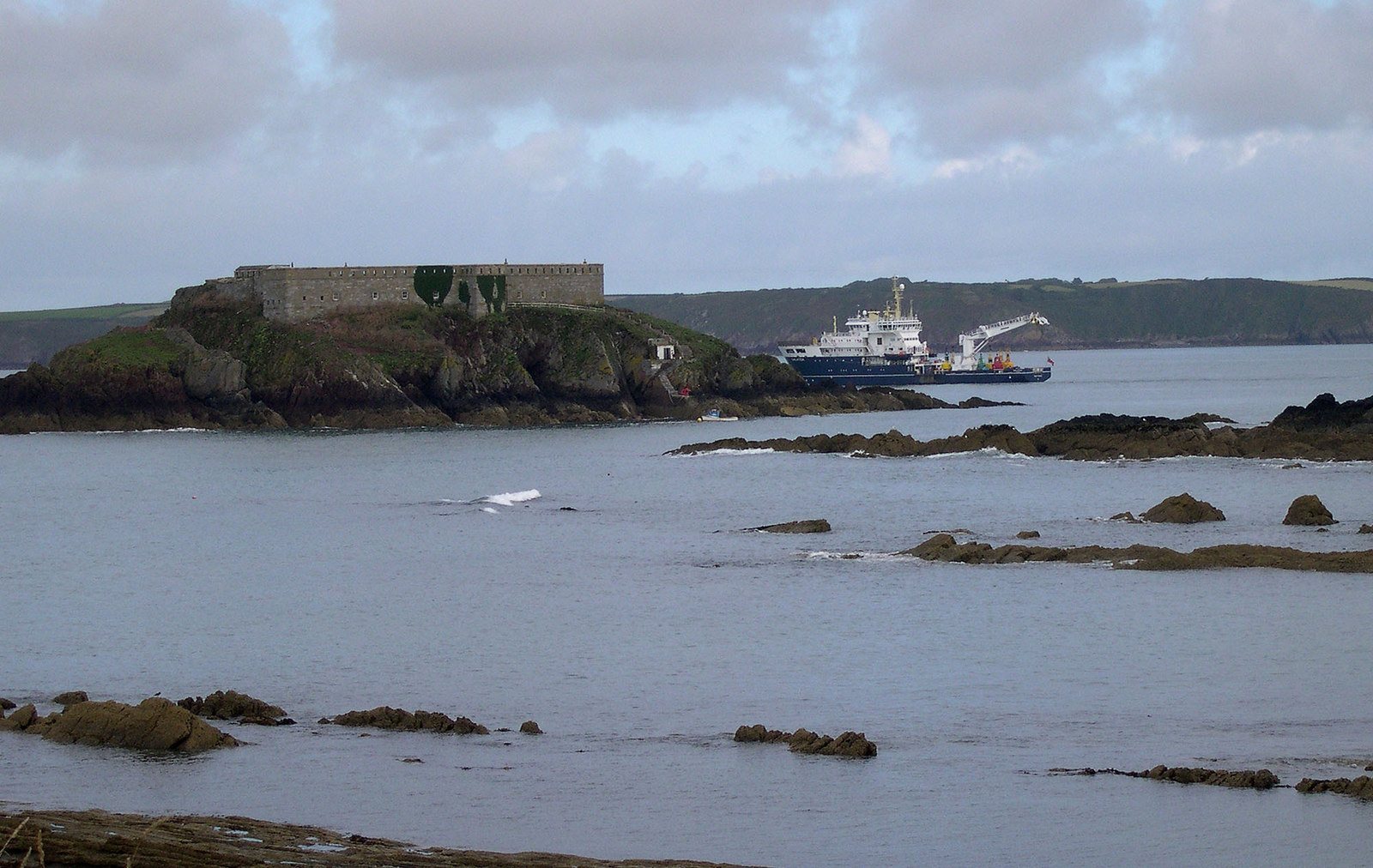
Thorne Island is a rocky islet and coastal artillery fort at the entrance to Milford Haven in the United Kingdom. Construction began sometime after 1852, as Britain sought to strengthen the defences of the haven and the former Royal Dockyard at Pembroke Dock.
Plans and coastal defence
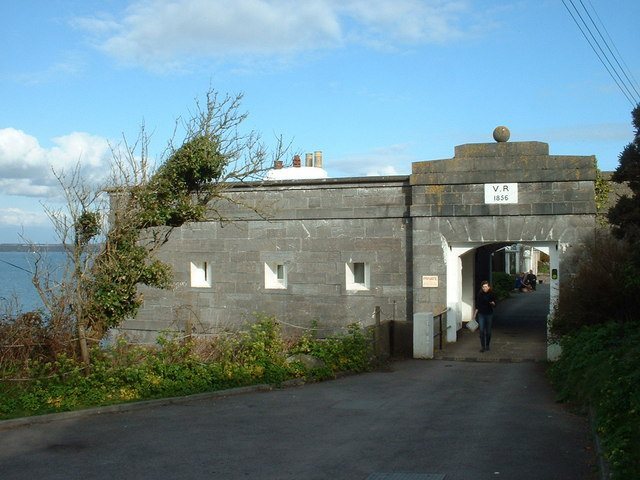
A proposal to fortify the island was made in 1817, but no work followed at that time. Plans advanced amid concern in the 1850s over the growing strength of the French Navy, memories of the French invasion and three-day occupation of Fishguard, and the expansionist policy of Napoleon III, emperor of France from 1852 to 1870. The date 1854 is carved above the fort entrance, although the precise start of construction is not known.
In 1860, the Royal Commission on the Defence of the United Kingdom, a body that assessed the country’s defences, judged that Thorne Island, Dale Fort, and West Blockhouse Fort could deny an enemy the use of the anchorage. However, the forts could neither stop war steamers from passing nor adequately protect the dockyard and haven. The commission linked this weakness to the number and size of the guns, and recommended building more forts or strengthening existing ones. Twelve forts were eventually built around the entrance to Pembroke Dock and Milford Haven, including Fort Hubberstone, Popton Fort, and Stack Rock Fort.
Hotel use and restoration
The fort became a hotel in 1947. In 1996, it received Grade II* listed status, a high level of protection for particularly important buildings. Its listing recognized it as a well-preserved part of the Milford Haven defences associated with Lord Palmerston, a British statesman and prime minister. Mike Conner bought the property in May 2017 and spent five years restoring it to habitable condition.
The Loch Shiel disaster
In 1894, the sailing ship Loch Shiel, built in 1878, struck rocks off the island and sank. All 33 passengers and crew were rescued. Two members of the Angle lifeboat crew and the lifeboat’s honorary secretary received silver medals from the Royal National Lifeboat Institution, Britain’s lifeboat and sea-rescue organization. The rescue was later likened to Wales’ “Whisky Galore.”
The ship was carrying cargo from Scotland to Adelaide, including gunpowder, beer, and about 60 cases of Glasgow whisky. Customs officers recovered some of the cargo. Soon after the sinking, two local men from the same family drowned while trying to bring a keg ashore, and another person died from alcohol poisoning.
Remains
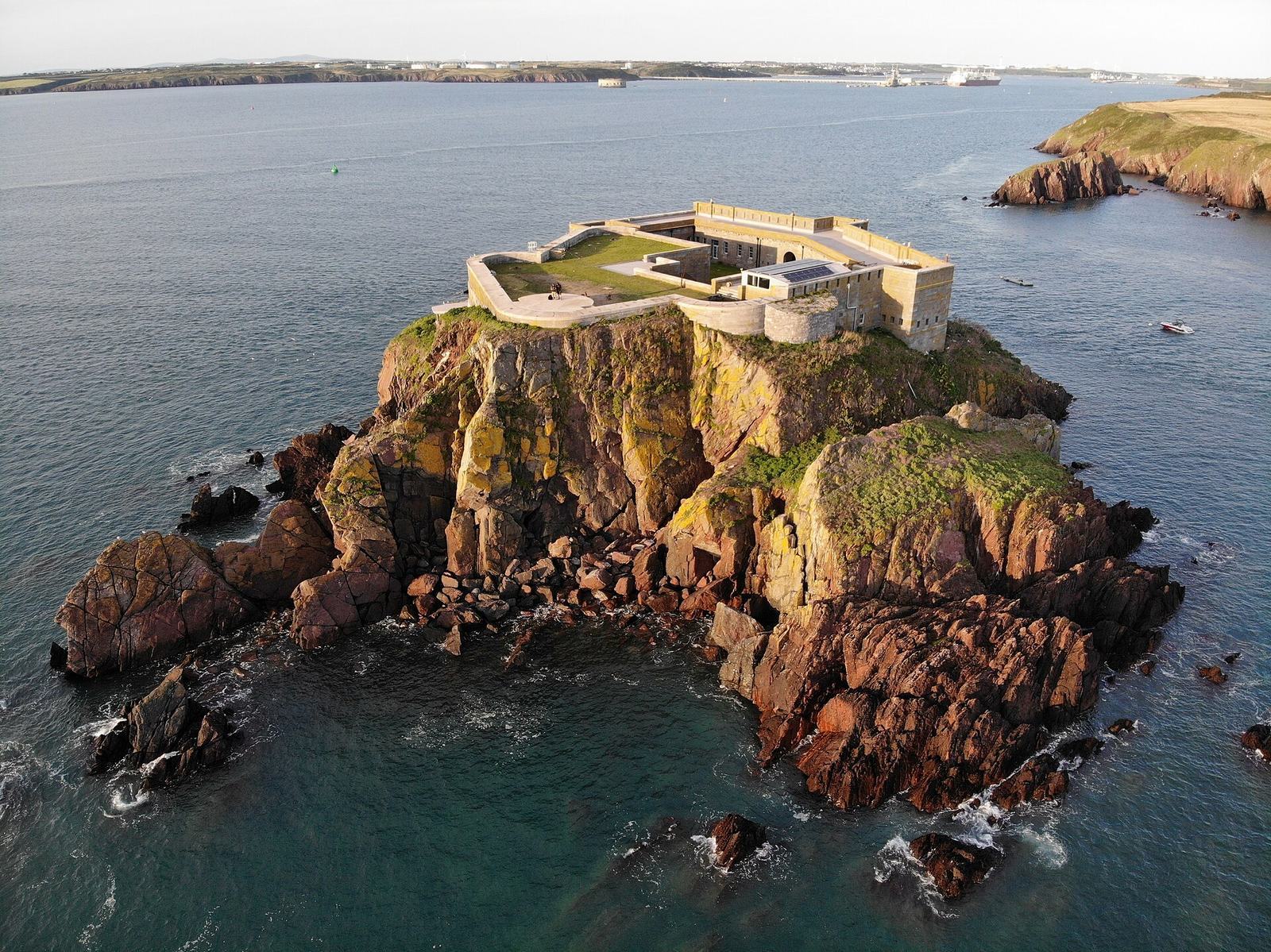
The fort stands on a rocky islet of about 2 acres (8,100 square metres), positioned to command the entrance to Milford Haven’s anchorage and the approach to the former Royal Dockyard at Pembroke Dock. Its irregular plan separates a seaward gun battery from defensive barracks on the landward side.
Fort and defensive works
The seaward battery was designed for five rifled, breech-loading 7-inch Armstrong guns and four 68-pounder guns, all placed in open positions to fire over a parapet. On the landward side, defensible barracks have a loopholed parapet overlooking the entrance. The carved date “1854” sits above that entrance. The restored fort is habitable and has running water.
The Loch Shiel wreck
The Loch Shiel wreck lies among the rocks off the island, part of an area where more than twelve wrecks are considered of interest to divers. Some bottles remain among the wreck and are described as undrinkable. Divers have also recovered full beer bottles from the ship. The beer was apparently untainted by seawater, though flat, and bottles have sold at auction for £1,000.