Ponte Sant’Angelo: Hadrian’s Bridge to His Mausoleum in Rome
Site at a Glance
- Popularity
- Very High
- Country
- Italy
- Primary era
- Classical
- Eras represented
- Classical, Early Modern, Modern
- Civilizations
- Italian, Papal States, Roman
- Site type
- Infrastructure
- Remains
- Bridge
On this page11 sections
History
Hadrian’s bridge and Roman conflict
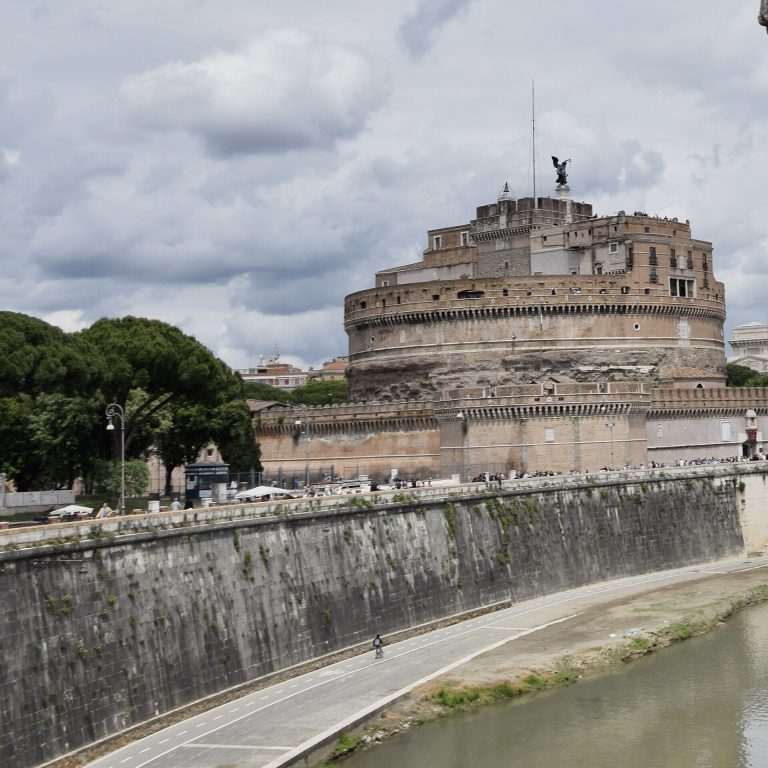
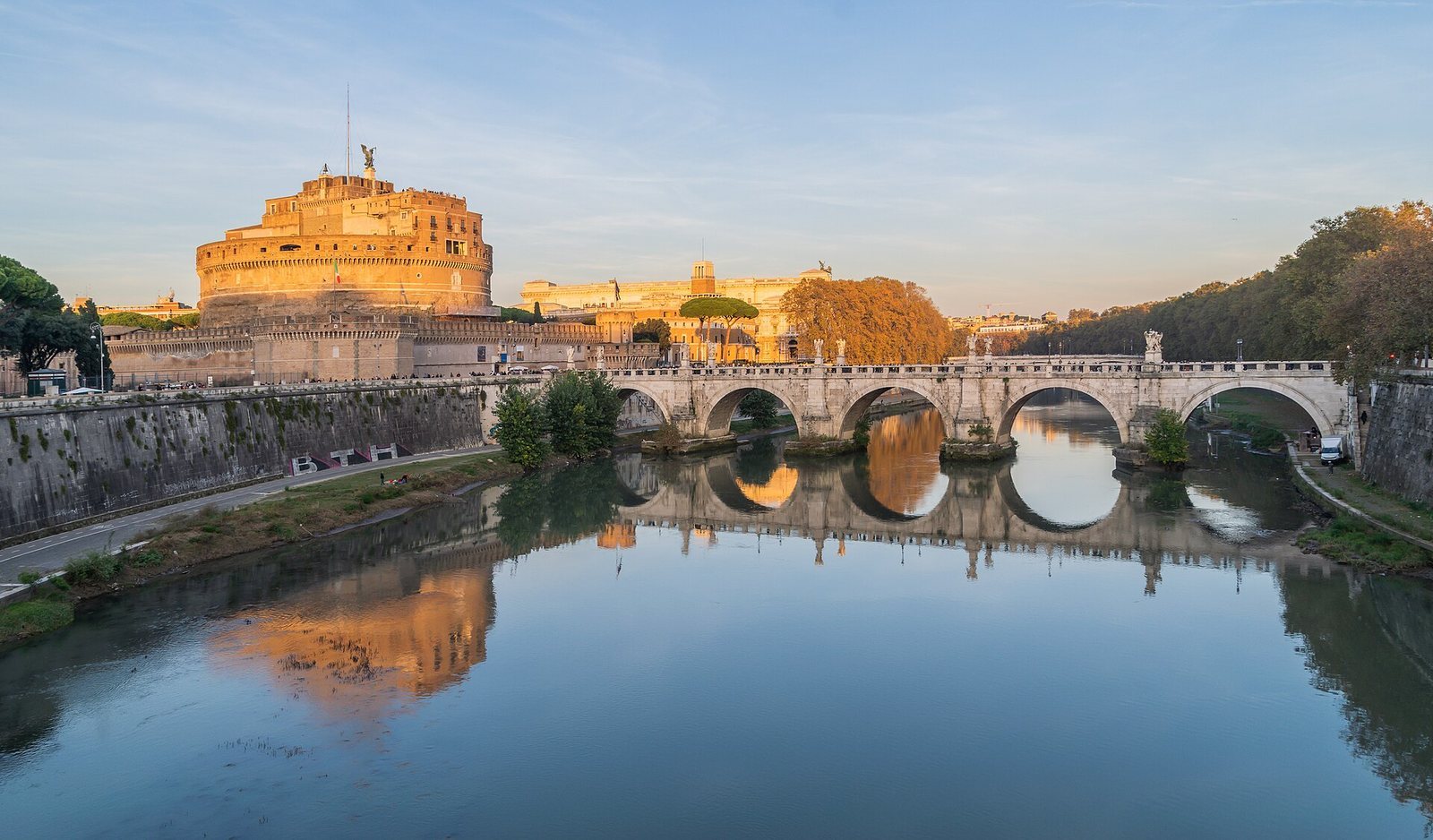
Ponte Sant’Angelo is a Roman bridge across the Tiber in Rome, Italy, completed in 134 CE under Emperor Hadrian to connect the city center with his new mausoleum. Originally called the Aelian Bridge, or Pons Aelius, it was designed by Demetriano, according to the attribution associated with the bridge.
In July 472, the military commander Ricimer led Gothic troops across the bridge in an attack on eastern Rome, which was defended by Emperor Anthemius. The Goths were a Germanic people, and Anthemius ruled as Roman emperor from 467 to 472.
Pilgrimage and civic change
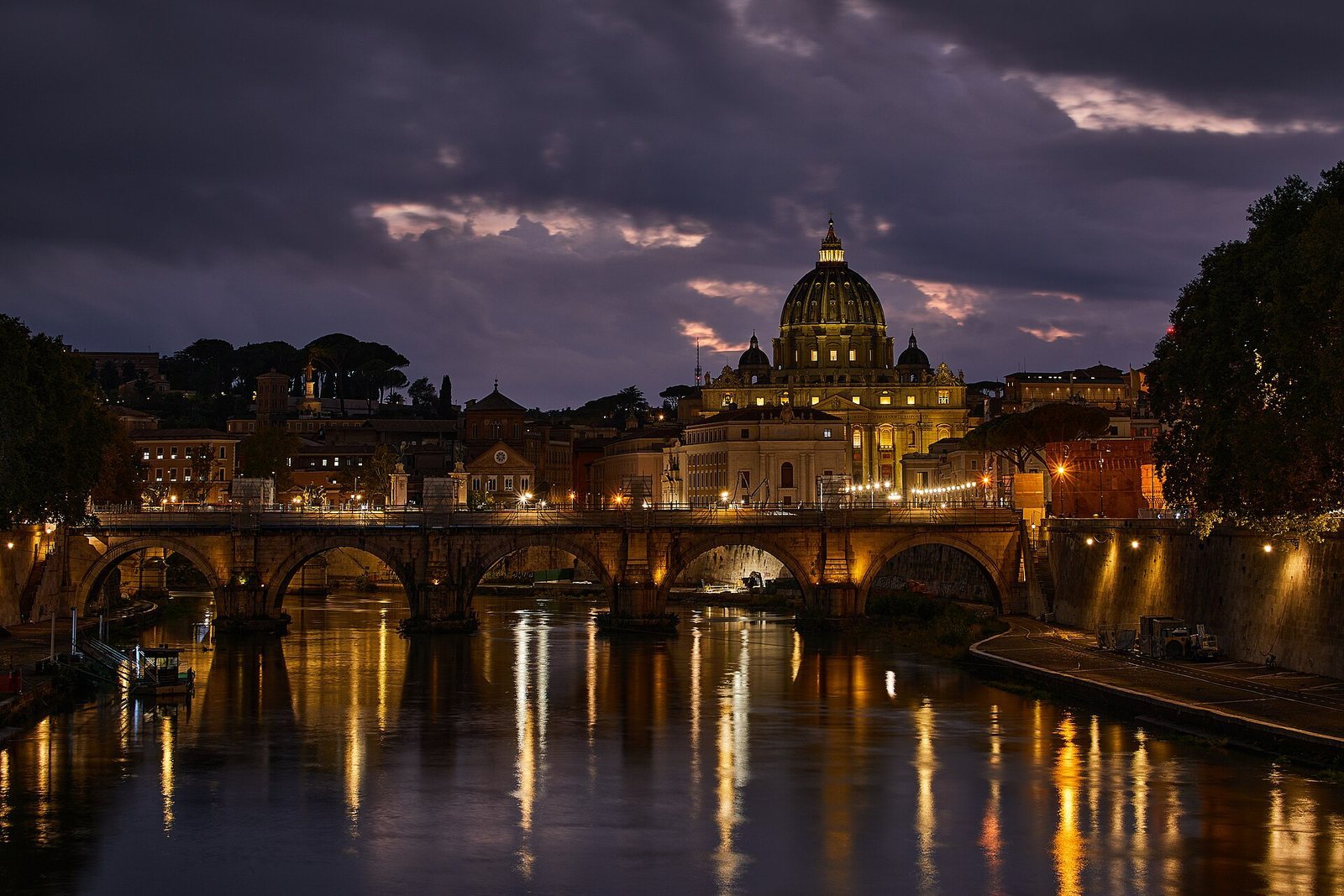
During the early Middle Ages, pilgrims used Ponte Sant’Angelo to reach St Peter’s Basilica after Nero’s Bridge had fallen into ruin. The bridge became known as the Bridge of Saint Peter, or pons Sancti Petri. In the sixth century, under Pope Gregory I, the bridge and nearby castle took the name Sant’Angelo. The name was linked to a legend that an angel appeared above the castle and announced the end of a plague.
For the Jubilee of 1300, a special Catholic holy year associated with pilgrimage, traffic was divided into lanes for people traveling toward St Peter’s Basilica and those returning. Dante Alighieri describes this arrangement in Canto XVIII of the Inferno, part of the Divine Comedy. He probably witnessed the crowds during the Jubilee.
The crowds caused disaster in 1450, when the bridge’s balustrades gave way and 172 people died. Houses and a Roman triumphal arch nearby were then demolished to widen the pilgrims’ approach. Two small, round chapels were later built near the bridge, one dedicated to Saint Mary Magdalene and the other to the Holy Innocents, the children whom the Gospel of Matthew says Herod ordered killed in Bethlehem. Both chapels were demolished in either 1527 or 1530 for defensive reasons.
Papal patronage and later alterations
In 1535, Pope Clement VII assigned the bridge tolls to the installation of statues of Saints Peter and Paul. Later additions included eight secondary figures, which were eventually replaced by the angels of the seventeenth-century programme. For centuries from the sixteenth century, executions took place in nearby Piazza di Ponte, and the bodies of those executed were displayed on the bridge as a warning. Bindo Altoviti’s Palazzo Altoviti stood beside the piazza, on a stretch now crossed by the Lungotevere road coming from Piazza Pasquale Paoli.
Pope Clement IX commissioned a new protective parapet in 1669, designed by Gian Lorenzo Bernini. The ten angels planned for it were commissioned in 1667 and installed in 1670. Bernini directed the work of his pupils, while he and his son Paolo made two of the original figures. Copies were placed on the bridge instead.
At the end of the nineteenth century, construction of the Lungotevere led to the removal of the bridge’s old approach ramps and their replacement with arches. The bridge gave its name to Rome’s Ponte district and is now reserved for pedestrians.
Remains
Bridge structure and approaches
The bridge crosses the Tiber between the Ponte and Borgo districts. It is 135 metres long and 7 metres high, and its widest arch spans 18 metres. Five arches form the present crossing, with the three central arches belonging to the Roman structure. The bridge was built of peperino, a volcanic stone, and faced with travertine, a form of limestone. Its roadway has raised sidewalks and travertine balustrades. Originally, approach ramps were carried on smaller arches, three on the left bank and two on the side toward Hadrian’s mausoleum. The ramps were removed in the late nineteenth century, when two arches were built in their place.
Sculpture on the bridge
Saints Peter and Paul
At the end opposite Castel Sant’Angelo stand statues of Peter and Paul, attributed respectively to Lorenzetto and Paolo Romano. Peter holds keys, while Paul carries a sword. Inscriptions at their bases express pardon for the humble and requital for the proud. Their pedestals also bore the names Rione XIV and Borgo, identifying Rome’s historic districts.
The Evangelists and biblical patriarchs
An earlier group comprised eight stucco figures, stucco being a plaster-based material used in sculpture. Made by Raffaello da Montelupo on the orders of Pope Paul III, they represented the four Evangelists, traditionally associated with the authorship of the canonical Gospels, and the biblical patriarchs Adam, Noah, Abraham, and Moses.
The angels of the Passion
The ten angels on the parapet carry objects associated with the Passion, the Christian account of Jesus’s suffering and death. Sculpted clouds support the figures, raising them against the sky when seen from below. Their bases bear inscriptions drawn from biblical and liturgical texts. Antonio Raggi’s angel carries a column, and Lazzaro Morelli’s bears scourges. Paolo Naldini made the bridge’s crown-of-thorns copy, while Cosimo Fancelli’s angel holds the sudarium, a cloth linked in Christian legend with Veronica wiping Jesus’s face.
Naldini’s other angel carries a garment and dice, recalling the casting of lots for Jesus’s clothing; Girolamo Lucenti’s carries nails. Ercole Ferrata’s figure bears a cross, and the angel with a cartouche, an ornamental panel for an inscription, is a copy made by Bernini with help from Giulio Cartari. Antonio Giorgetti’s angel holds a sponge, while Domenico Guidi’s carries a lance. The original crown-of-thorns angel, made by Bernini and his son Paolo, and the original cartouche angel by Bernini date to 1668–1669. Their copies stand on the bridge; in 1729, Bernini’s heirs gave the originals to the Basilica of Sant’Andrea delle Fratte.
The Archangel Michael at Castel Sant’Angelo
A statue of the Archangel Michael stands above Castel Sant’Angelo and can be seen from the bridge. The version now there, the sixth, was installed in 1753. The original was made of wood, and the statue was replaced several times.