Pont du Diable: A Medieval Stone Bridge in Céret, France
Site at a Glance
- Popularity
- Medium
- Country
- France
- Primary era
- Medieval
- Eras represented
- Medieval, Early Modern
- Civilizations
- Crown of Aragon, French, Kingdom of Majorca
- Site type
- Infrastructure
- Remains
- Bridge
On this page5 sections
History
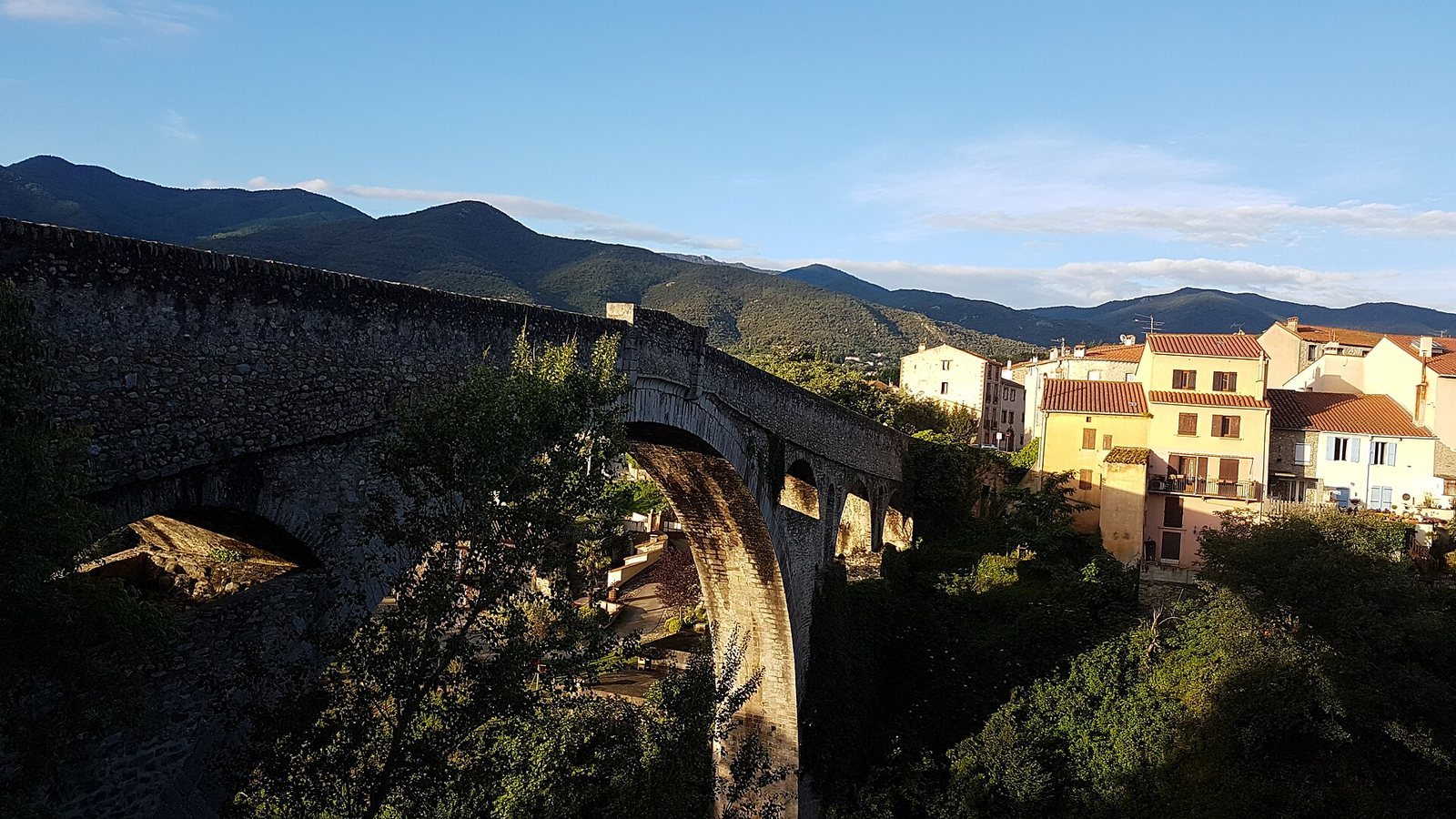
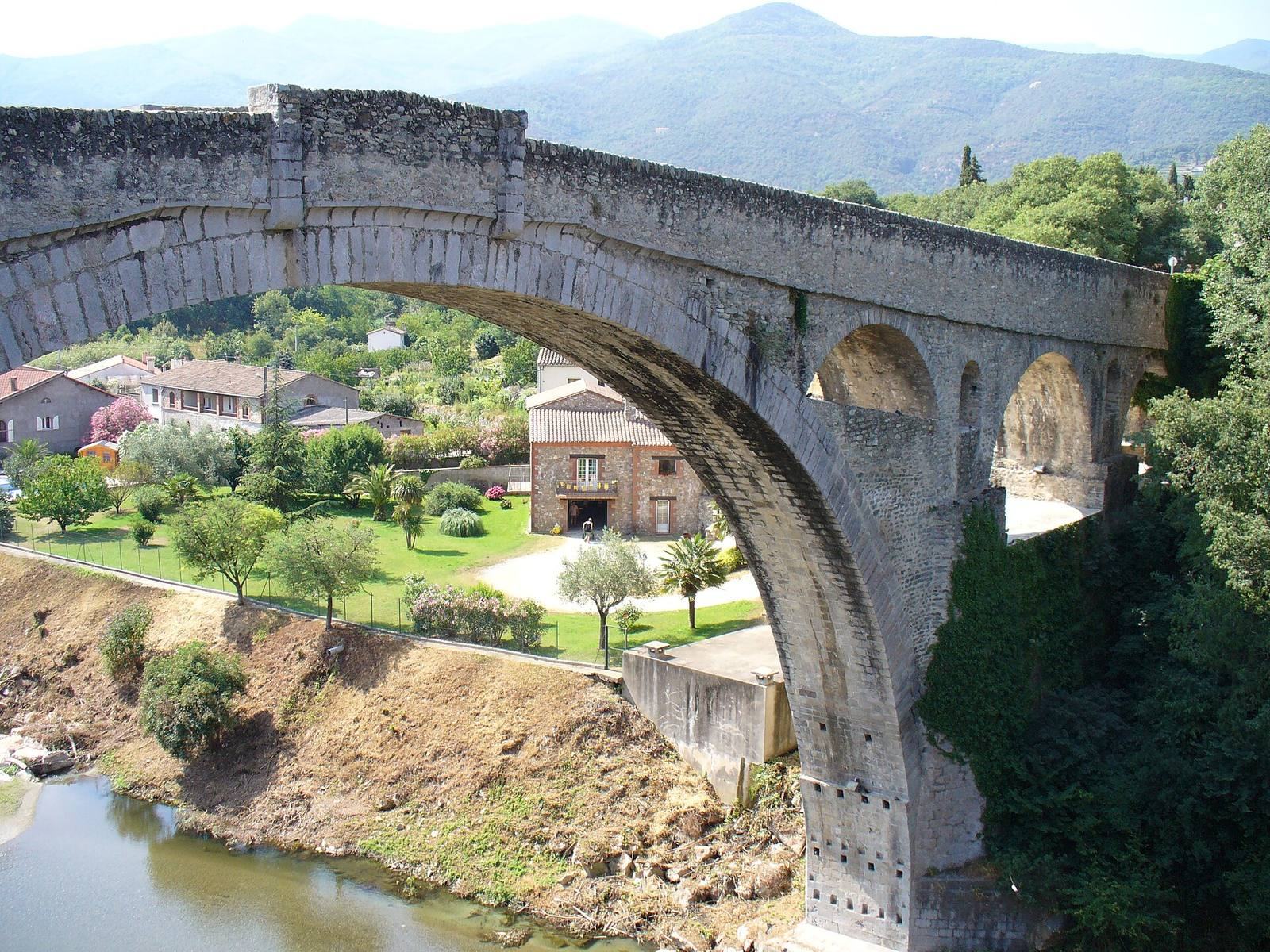
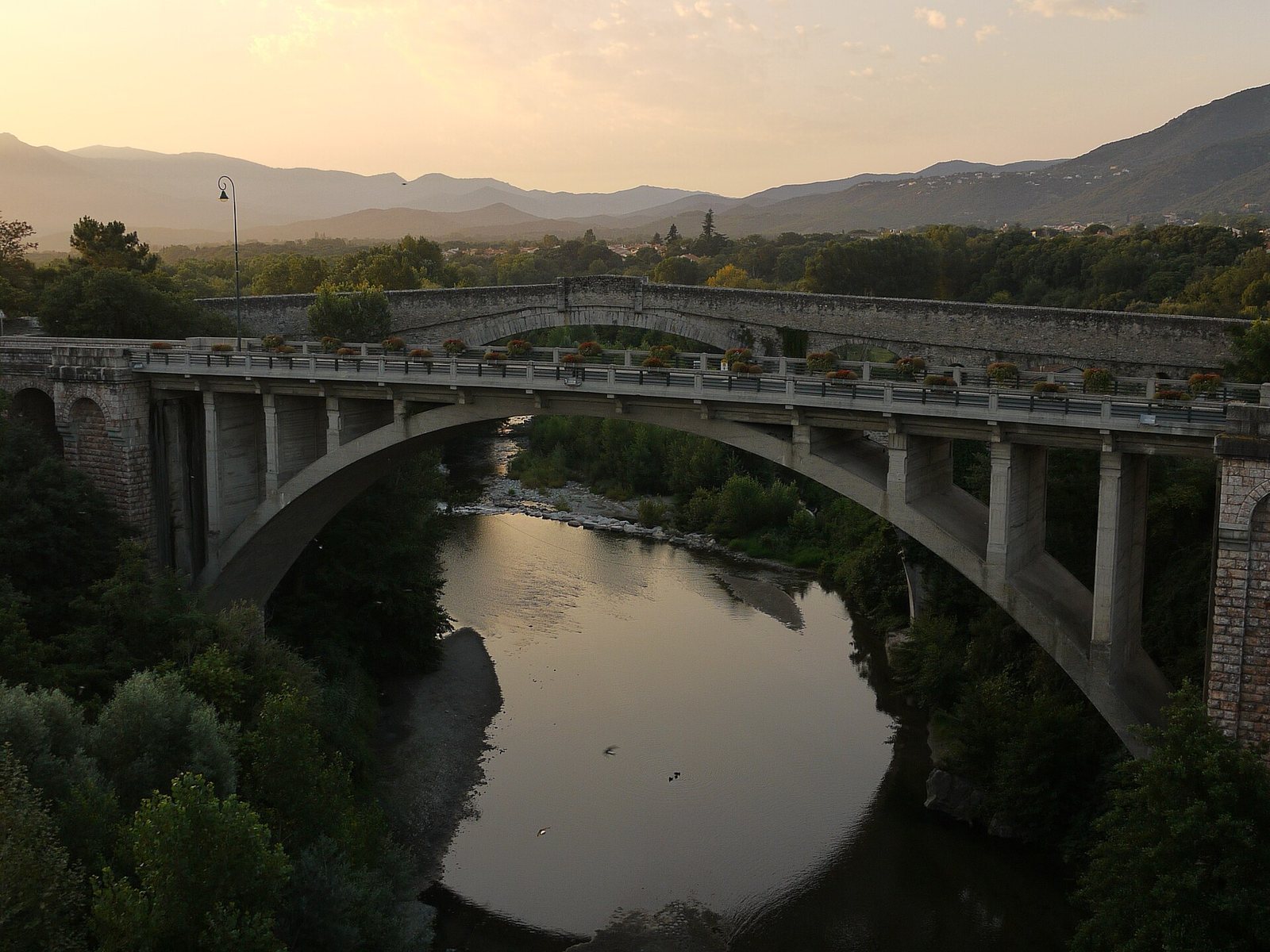
The Pont du Diable is a stone road bridge over the Tech River in Céret, France, built between 1321 and 1341.
Medieval construction and record
The town of Céret financed the bridge with support from neighboring villages. It replaced an earlier crossing called Pont Antic, Catalan for “Old Bridge.” Once completed, its arch surpassed that of Italy’s Ponte della Maddalena and held the record for the world’s longest stone arch until 1356, when Verona’s Castelvecchio Bridge overtook it.
Eighteenth-century repairs and the 1793 threat
The bridge underwent partial reconstruction and extensive repairs during the eighteenth century. In 1718, workers repaired its southern support. From 1735 to 1741, they repaved the roadway, sealed cracks, raised the end walls, and added reinforcing supports. Retaining walls along the avenue on the Perpignan side were rebuilt in 1750, followed by matching walls on the Céret side in 1762.
The bridge was damaged during the War of the First Coalition, a conflict in which several European powers fought Revolutionary France. In 1793, French Revolutionary general Luc Siméon Auguste Dagobert planned to destroy it to prevent the Spanish army from returning to Catalonia. Joseph Cassanyes, a representative in France’s National Convention, intervened just before demolition, and the bridge was later restored.
Names, legend, and cultural legacy
For much of its history, the bridge was generally called Pont de Céret. Other names included Pont Vieux and Pont Major de Céret, while writers in the eighteenth and nineteenth centuries also used Pont du Diable. Local stories explain the Devil’s name through a missing stone. In one version, the Devil failed to place the final stone before a rooster crowed; in another, he repeatedly removed a principal stone from a pier at night. A third story says he demanded the first creature to cross the bridge. An engineer sent a black cat with its tail tied to an iron pot, and the Devil dropped the final stone after mistaking the animal for an armored knight. These tales cast the Devil, a supernatural adversary in Christian tradition and European folklore, as the bridge’s thwarted builder.
The French government classified the bridge as a historic monument in 1840. In 1891, Georges Sorel, then a bridges-and-roads engineer in Perpignan, published an extensive study of its history and appearance. An old song from Northern Catalonia mentions the bridge, and the Catalan poet Jacint Verdaguer drew on its popular tradition in the seventh canto of his poem Canigó. Paul Cézanne, Auguste Herbin, and Vincent Bioulès painted it. A scene in André Hunebelle’s film The Hunchback, featuring three swordsmen sent to Spain to kill Lagardère and the Duke of Nevers’s daughter, was filmed at the bridge.
Remains
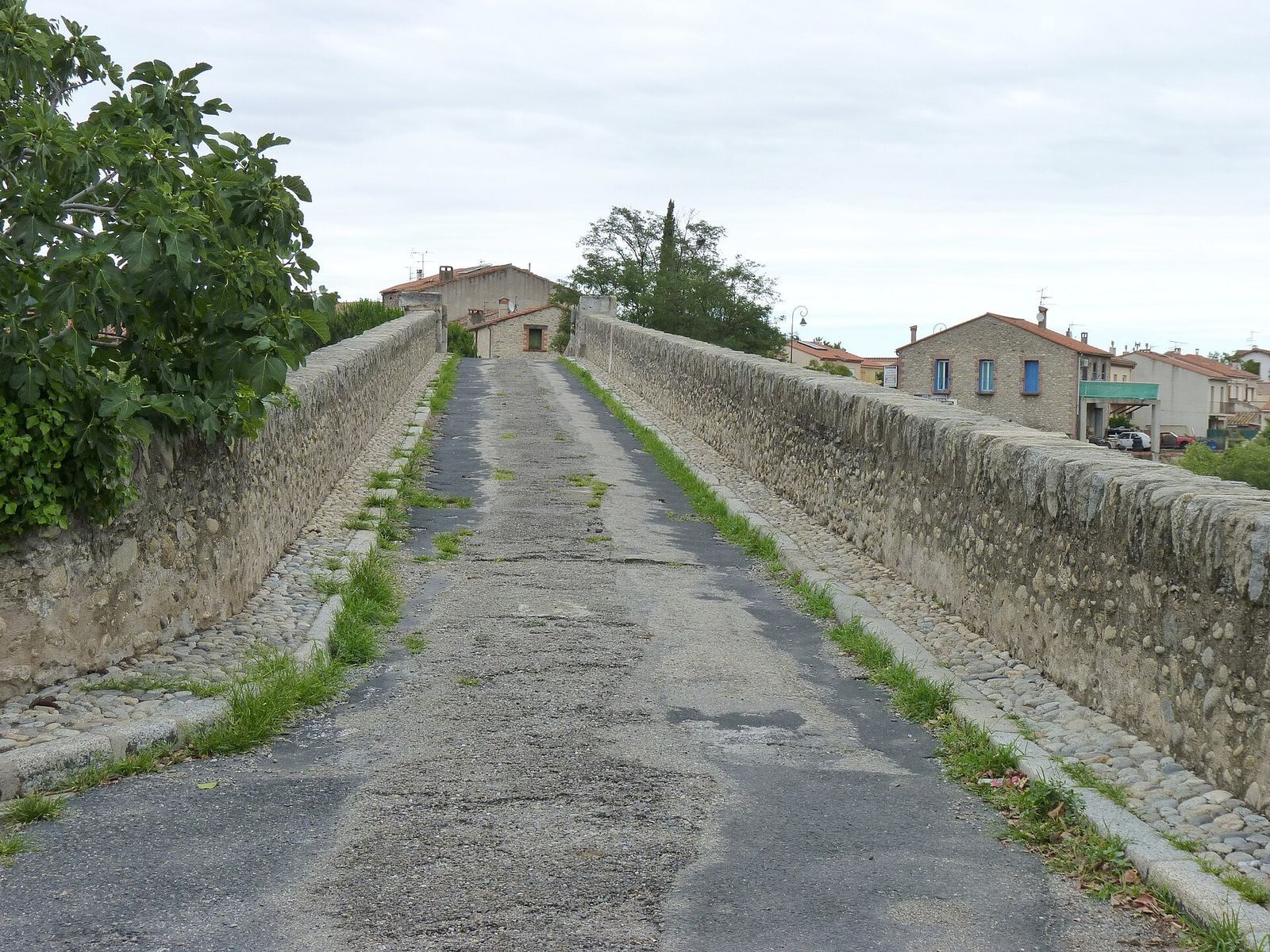
The stone-built road crossing spans the Tech River on a single arch. Its span, the distance between supports, is 45.45 metres, and the arch rises 22.3 metres at its highest point. The bridge is 4 metres wide. Its southern end meets Place du Pont beside the northern end of Avenue du Maréchal Foch; the northern end reaches the junction of Avenue des Aspres and Rue Joseph Guitard.
Some remains of the earlier Pont Antic survive. A description from 1722 notes that the roadway was paved and carried wheeled traffic, and that a chapel stood at one end of the bridge.