Pollok House: The Stirling-Maxwell Family Residence in Glasgow
Site at a Glance
- Popularity
- High
- Country
- United Kingdom
- Primary era
- Early Modern
- Eras represented
- Early Modern, Modern
- Civilizations
- British
- Site type
- Domestic
- Remains
- Elite Residence
On this page10 sections
History
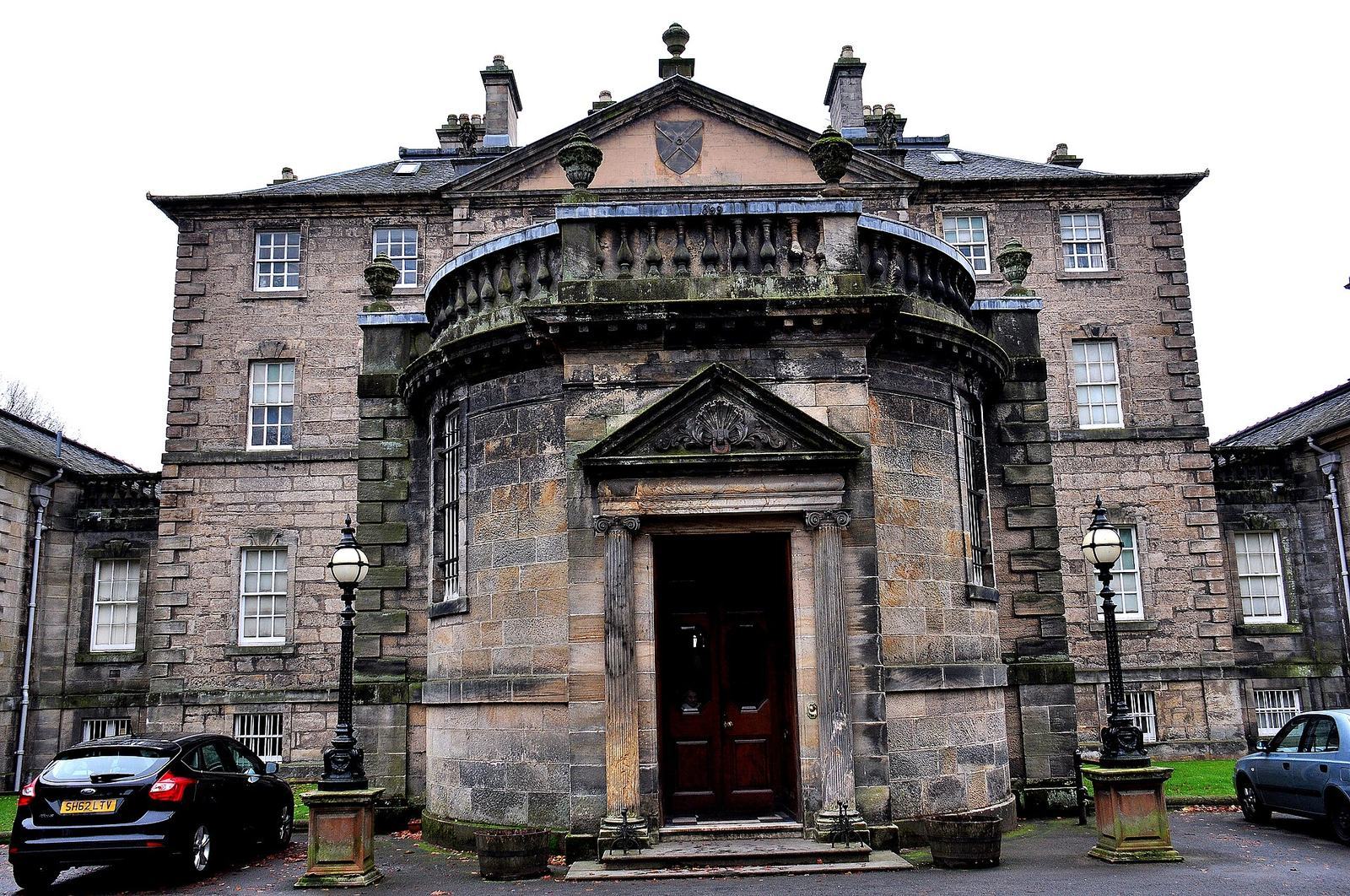
Pollok House is a country house in Glasgow, Scotland, United Kingdom, built in 1752 in the Palladian-Georgian style, which combines Georgian-era design with classical forms inspired by the Italian architect Andrea Palladio. The Stirling-Maxwell family owned the estate for nearly 700 years, and Pollok served as a Maxwell family residence for about six centuries.
The Maxwell estate and the eighteenth-century house
In 1677, five women, Janet Mathie, Annabell Stewart, Bessie Weir, Marjorie Craige, and Margaret Jackson, and one man, John Stewart, were accused of trying to kill Sir George Maxwell of Pollok through witchcraft. The allegation was that they had caused his illness by roasting a wax image of him. They were imprisoned on suspicion of witchcraft, making a pact with the devil, renouncing their baptism, and using magic to cause harm.
When the present house was built in 1752, William Adam was initially credited with its design, though his role may have been limited to consultation. Alexander Hunter Crawford modernised the interiors in 1899, and Rowand Anderson extended the house in the early twentieth century.
Public legacy
In 1931, Sir John Stirling-Maxwell took part in founding the National Trust for Scotland at a meeting held at Pollok House. The Trust is a charitable organisation that cares for historic buildings, landscapes, and other heritage in Scotland.
Dame Anne Maxwell Macdonald gave the house to the City of Glasgow in 1966. That year, it received Category A listing, Scotland’s highest listed-building grade, reserved for buildings of national or international importance.
Remains
The house forms the centre of an estate complex. Its main rooms include a hall finished with mahogany and marble, furnished private rooms, and a library holding 7,000 books. Servants’ quarters occupy the lower floor, while the uppermost floor provides accommodation for Maxwell family members visiting Glasgow.
Interior and collections
Paintings and furnishings
The house contains a private art collection with a particular emphasis on Spanish painting, an unusual focus for a British stately home, where aristocratic collections more often favoured countries associated with the Grand Tour, an extended cultural journey through Europe made by wealthy young people, especially between the seventeenth and nineteenth centuries. The collection includes works by El Greco, Francisco Goya, Alonso Sánchez Coello, and Bartolomé Esteban Murillo, as well as paintings by Peter Paul Rubens and William Blake. It also contains glassware, silverware, porcelain, and antique furniture.
Lady in a Fur Wrap, once associated with El Greco, is now attributed to Alonso Sánchez Coello. The collection also includes portraits of Philip II of Spain and Don Juan of Austria by Jooris van der Straeten, Rubens’s portrait of George Villiers, 1st Duke of Buckingham, and Mather Brown’s Girl at a Harpsichord. William Blake’s The Canterbury Pilgrims dates to 1808, and the collection includes other religious and visionary works by Blake.
Grounds and estate structures
Outbuildings and bridge
A group of offices, stables, and a sawmill stands beside the house, with parts of the complex dating to the eighteenth century. On the approach to the house, a stone arch bridge crosses the White Cart Water. It was built in 1757.
Gardens and Pollok Park Beech
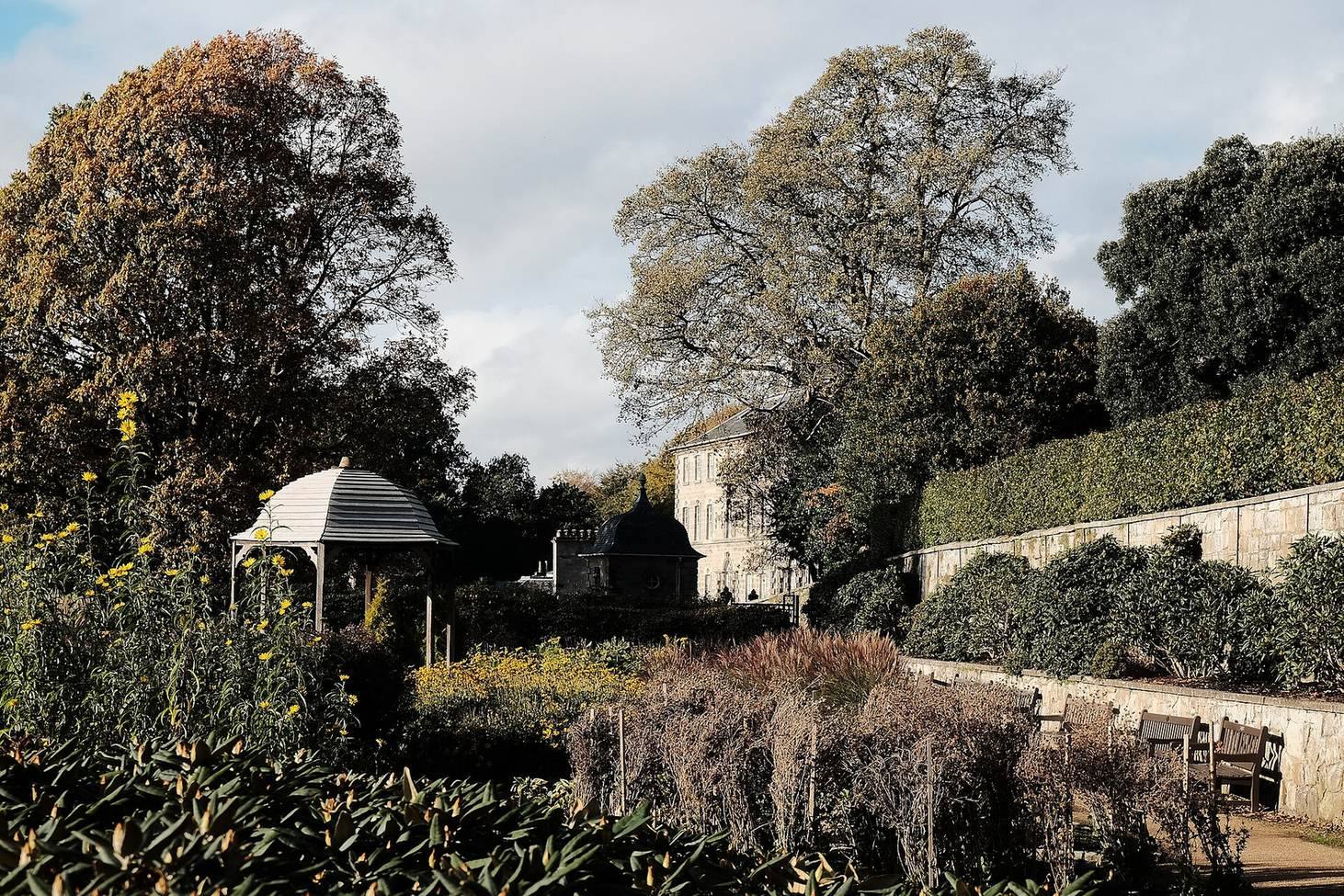
The extensive gardens include a walled garden around the house and more than 1,000 species of rhododendrons. Behind the main house stands the Pollok Park Beech, a Fagus sylvatica thought to be about 250 years old. Its swollen trunk measures 7 metres in girth at ground level and 10 metres at a height of 10 metres, and its branches form a gnarled mass.
Gate piers
Heraldic lions on the gate piers were carved in 1950 by sculptor John Marshall, following a design by sculptor Hew Lorimer.
Before the First World War, 48 servants attended to three members of the Maxwell family. The extensive lower-floor servants’ quarters formed part of the house’s working domestic layout.