Glasgow School of Art: An Art and Design School in Glasgow
Site at a Glance
- Popularity
- Very High
- Country
- United Kingdom
- Primary era
- Modern
- Eras represented
- Modern
- Civilizations
- British
- Site type
- Civic
- Remains
- University
On this page13 sections
History
The Glasgow School of Art is an art and design school in Glasgow, United Kingdom, founded in 1845 as the Glasgow Government School of Design. Its Mackintosh Building became an internationally renowned Glasgow landmark and a pioneering example of the Modern Style, Britain’s form of Art Nouveau, which used flowing forms and decorative design.
Foundation and early premises
The school adopted its current name in 1853. It began at 12 Ingram Street, moved to the McLellan Galleries on Sauchiehall Street in 1869, and later took up purpose-built premises on Renfrew Street. Its degrees are awarded by the University of Glasgow.
The school’s main buildings stand in Garnethill, an area whose development began in the early nineteenth century under William Harley, a Scottish businessman from Blythswood Hill.
The Mackintosh Building
Work on a new school building began in 1897, supported by a £10,000 gift from the Bellahouston Trust, using funds left by Moses Stevens. School director Francis Newbery selected Charles Rennie Mackintosh for the commission. Mackintosh and Margaret Macdonald Mackintosh designed the building, which was completed in two stages, in 1899 and 1909.
Campus expansion
In 2009, Steven Holl Architects, working with Glasgow-based JM Architects and Arup Engineering, won an international competition for a campus plan and its first new building. Work on the Reid Building began in 2011; it was structurally complete in 2013 and finished in 2014. The school named it for Dame Seona Reid, its director when the project was commissioned.
Fires and subsequent changes
On 23 May 2014, a fire began in the Mackintosh Building’s basement as students prepared for their degree show. Investigators concluded that gas released by an expanding-foam canister used near a hot projector ignited; the projector itself was not faulty. No one was injured. A fire-service investigation found that aspects of the building’s design helped the fire spread, and that fire and smoke dampers had not been fitted while the planned suppression system remained incomplete.
Restoration and recreation of Mackintosh’s design began in 2016, including work on the library interior. The project aimed for historical accuracy and used woods including longleaf pine and tulipwood. A second, more severe fire struck on 15 June 2018. There were no reported casualties. When the Scottish Fire and Rescue Service published its findings on 25 January 2022, after a three-and-a-half-year inquiry, the cause remained undetermined. Sprinklers had not been installed at the time of the fire; suppression-system components had arrived the day before, but installation and testing were still weeks away.
After the 2018 fire, director Tom Inns argued that the building should be saved and continue to serve as a working art school rather than become a museum. The school ended its restoration contract with Kier Group on 28 June 2018, followed by debris clearance and stabilisation work. In August 2020, it took legal action against Page\Park Architects, which had been responsible for restoration work. A Project Development Board was established in March 2021, and a strategic business case completed that summer set out a programme for restoration.
Following the 2014 fire, the Fine Art department temporarily moved to the Tontine Building in Merchant City. In September 2019, after acquiring and refurbishing the Stow Building from Kelvin College, the school began using it for all Fine Art courses. The Students’ Association building was transferred to the association in the late twentieth century. Its bar and club became a local music venue, but closed permanently in November 2019 because of financial difficulties, with 30 staff made redundant.
Remains
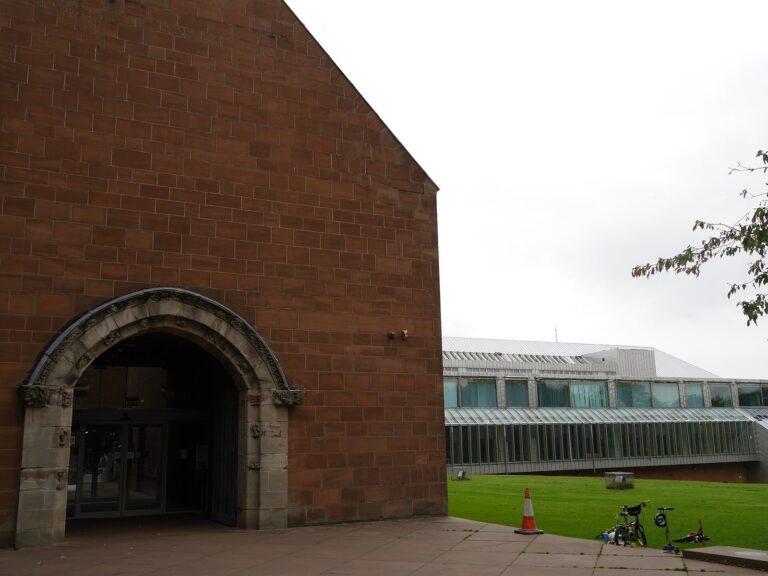
The school occupies several buildings around Renfrew Street in Garnethill. The Mackintosh Building is its historic landmark, while the Reid Building stands opposite it. Other buildings form part of the campus, including the refurbished Stow Building and the Students’ Association building.
Mackintosh Building
Design and use
Designed by Charles Rennie Mackintosh and Margaret Macdonald Mackintosh, the building is associated with the Modern Style. Before the 2014 fire, it served as the campus’s central building, housing the Fine Art Painting department, first-year studios, administrative staff and the Mackintosh Gallery, also known as the Mackintosh Museum. Its historic interiors included studios, stairways and a celebrated library.
Fire damage and surviving structure
After the 2014 fire, the initial fire-service estimate was that 90 per cent of the building and 70 per cent of its contents had been saved. The historic studios and stairways were badly damaged, and the library was destroyed. Water damaged the archive, which was subsequently air-dried and freeze-dried.
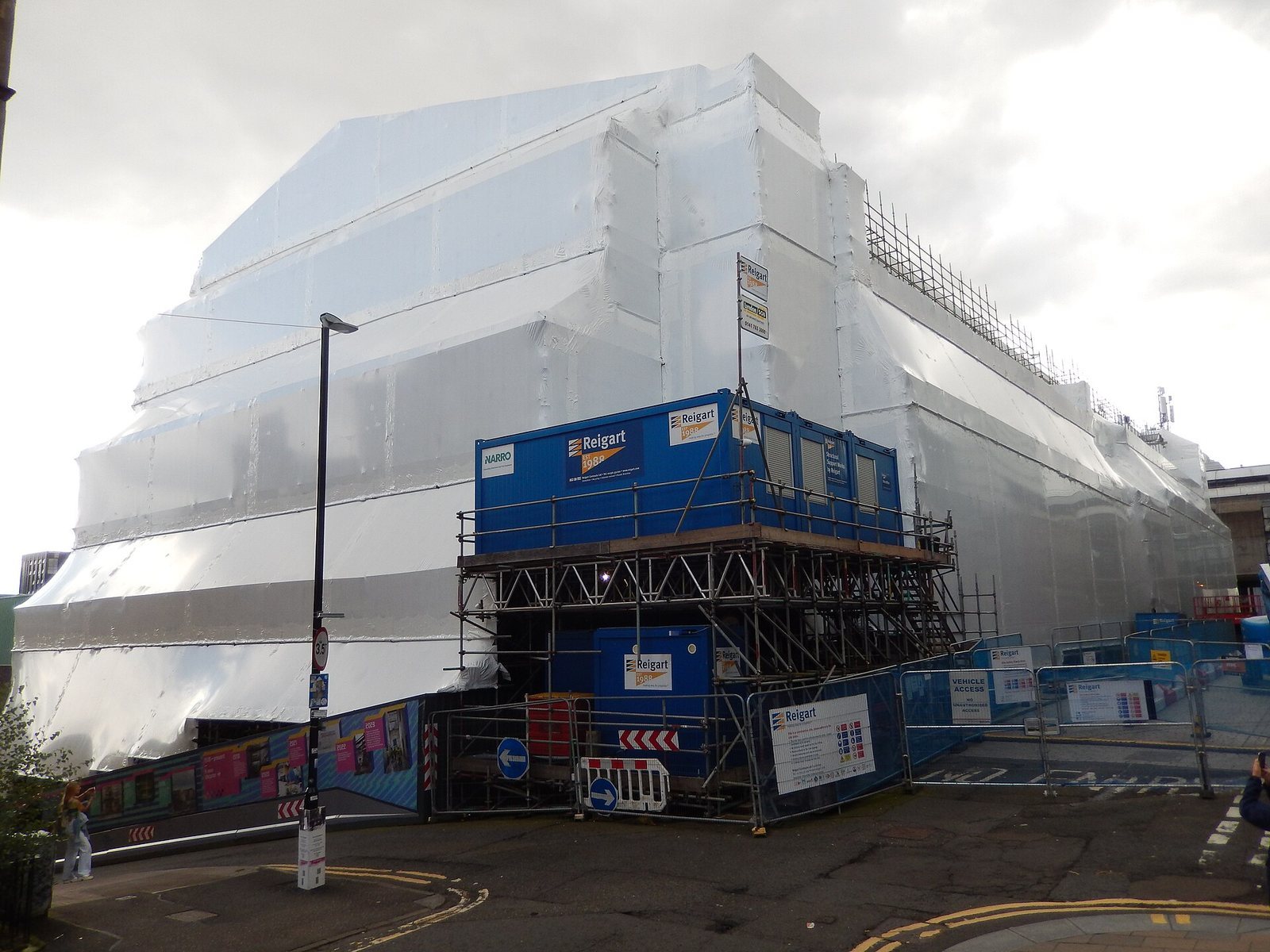
The fire-service investigation identified timber-lined walls, internal voids, original ventilation ducts running both vertically and horizontally, and a full-height shaft carrying building services between floors as features that helped flames, hot gases and smoke spread. The 2018 fire devastated the interior and extensively damaged the exterior. Early surveys indicated that much of the exterior remained, leaving the structure as a burnt-out shell. Sections of facade at risk of collapse, particularly on the south side, were partly dismantled and stabilised.
Other campus buildings
Reid Building
The Reid Building stands opposite the Mackintosh Building on ground previously occupied by the Foulis, Assembly and Newbery Tower buildings. Its glazing and cladding were damaged in the 2018 fire, and repair work was scheduled to finish in 2022. Its design was described as minimalist neo-modernism and criticised as crude and overbearing.
Stow Building
The Stow Building is a refurbished campus building acquired from Kelvin College and used for the school’s Fine Art courses.
Students’ Association building
Constructed in 1927 as the Assembly Building, this building later became known as the Art School. It housed a bar and nightclub.