Pobožje Monastery: A Medieval Orthodox Monastery in North Macedonia

Site at a Glance
- Rating
- 4.5
- Popularity
- Very Low
- Country
- North Macedonia
- Primary era
- Medieval
- Eras represented
- Medieval
- Civilizations
- Unclassified
- Site type
- Religious
- Remains
- Monastery
On this page7 sections
History
Medieval origins
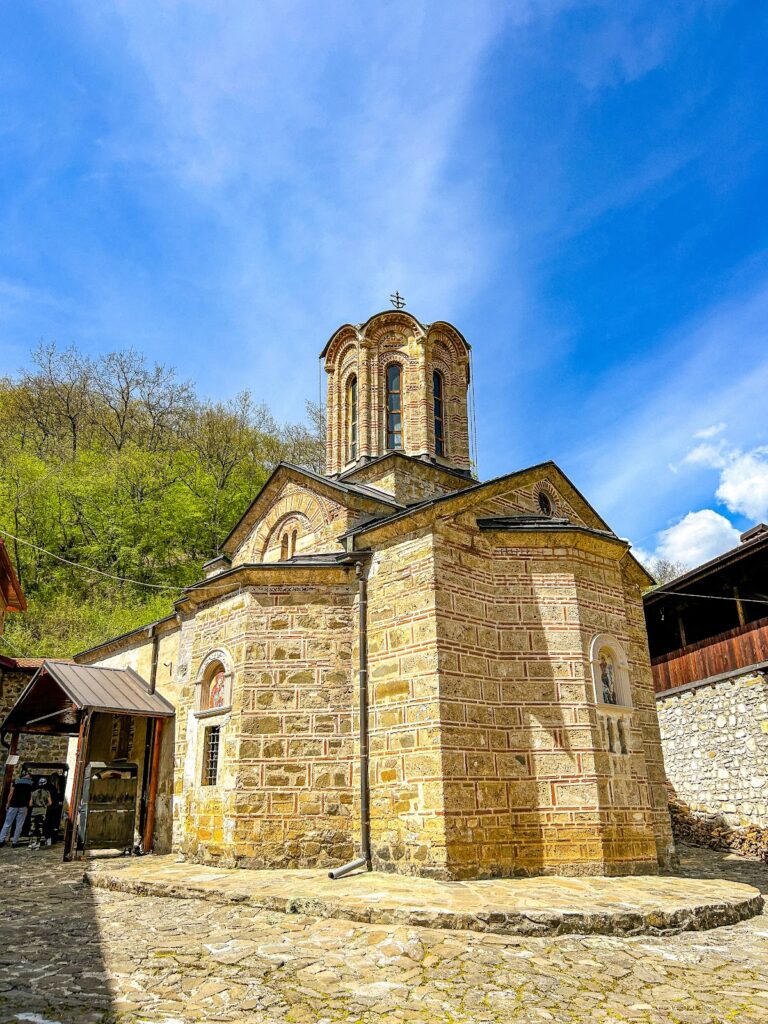
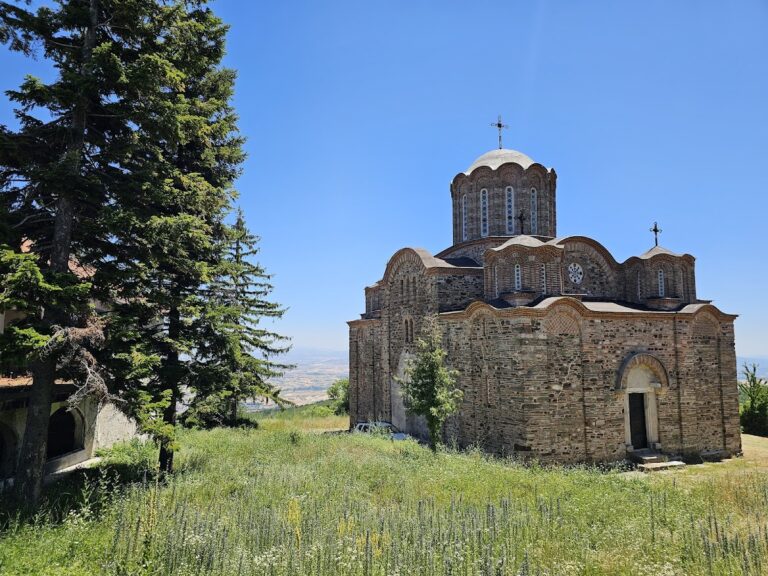
Pobožje Monastery is a medieval Orthodox monastery in North Macedonia, dedicated to the Nativity of the Most Holy Mother of God. It stands above the village of Pobožje near Skopje and is first mentioned in a charter issued by King Milutin in 1300. Stefan Uros II Milutin was the medieval Serbian king who ruled from 1282 to 1321.
The monastery’s construction is generally placed in the fourteenth or fifteenth century, although its precise building date and the date of its interior painting remain uncertain because written documents do not establish them. Its church combines an interior architectural character associated with the Ottoman period with religious paintings in the Byzantine tradition.
Religious and cultural continuity
During the Ottoman period, Pobožje Monastery served as one of the religious and cultural centers of the surrounding region. A monastic community has traditionally continued to maintain the monastery. Today, it belongs to the Skopje Diocese of the Macedonian Orthodox Church–Ohrid Archbishopric, an Eastern Orthodox ecclesiastical institution based in North Macedonia.
The monastery has been designated a cultural monument of Macedonia. Its historical value is closely connected with the continuity of Orthodox religious life in the region and with the survival of its medieval church and painted decoration.
Remains
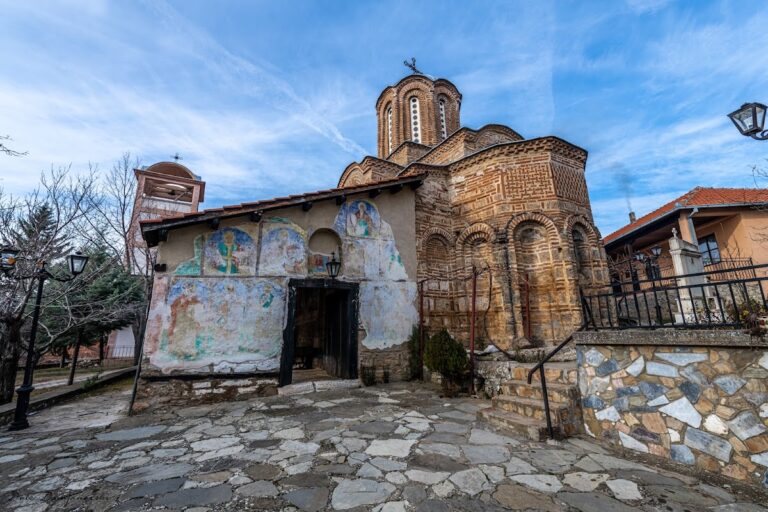
The monastery complex stands on the slopes of Skopska Crna Gora, a mountain range north of Skopje, above the Poboška River valley. It occupies an oak-wooded landscape and includes the church, older and newer residential buildings, a bell tower, and auxiliary economic structures.
Monastic buildings
Church of the Nativity of the Most Holy Mother of God
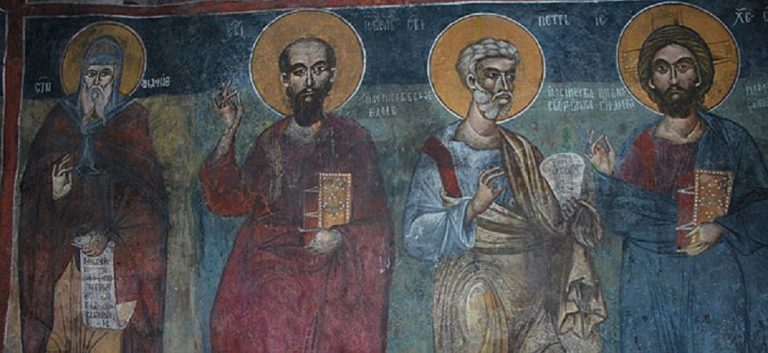
The monastery church preserves interior frescoes whose painting follows the Byzantine religious tradition, with conventional sacred compositions and devotional imagery. The surviving program includes Saints Cyril and Methodius, Christ Pantocrator, and female saints. Christ Pantocrator represents Christ as the all-powerful ruler and judge and commonly occupies a prominent position in Orthodox church decoration. The frescoes were produced by accomplished painters and are of considerable artistic value.
Residential and auxiliary buildings
The surviving complex also contains older and newer monastic residential buildings, a bell tower, and other economic buildings connected with monastic life. The residential structures are in good condition, forming part of the continuing architectural fabric of the monastery.