Ploutonion at Hierapolis: Ancient Sanctuary of Pluto
Site at a Glance
- Popularity
- Very High
- Country
- Turkey
- Primary era
- Classical
- Eras represented
- Classical, Medieval
- Civilizations
- Byzantine, Kingdom of Pergamon, Roman
- Site type
- Religious
- Remains
- Sanctuary
On this page10 sections
History
The Ploutonion at Hierapolis was a sanctuary dedicated to Pluto, the Roman name for Hades, the Greek god of the underworld, in ancient Hierapolis at Pamukkale, Türkiye. Its constituent phases date from the second century BCE to the second century CE, though its precise age is uncertain. Hierapolis was founded around 190 BCE by Eumenes II, king of Pergamon.
Foundation and ritual use
Animal sacrifice was central to the sanctuary’s activity. Priests lowered victims into the gas-filled cave and pulled them back out by ropes attached to their bodies. They also sold birds and other animals to visitors who wanted to test the gas’s lethal effects. Visitors could pay to consult Pluto’s oracle, which provided income for the sanctuary.
In the sanctuary’s early period, eunuch priests of Cybele, a major ancient Anatolian mother goddess, entered the cave. These priests, called Galli, reportedly crawled toward pockets of oxygen or held their breath before emerging. Onlookers interpreted their survival as proof of immunity, exceptional powers, and divine protection. Only priests could approach the cave mouth; visitors watched the ceremonies from a viewing area.
Ancient writers who referred to the sanctuary included Strabo, a Greek geographer, and the Roman authors Cassius Dio and Pliny the Elder, as well as Damascius, a late-antique philosopher.
Later use and closure
The Ploutonion remained fully operational until the fourth century CE. The Roman historian Ammianus Marcellinus indicated that the gas’s deadly effect had apparently weakened by then. People continued to visit intermittently for about two more centuries. Around 500 CE, Damascius recorded a visit by the physician Asclepiodotus, the latest known ancient reference to the sanctuary.
In the sixth century, the cave entrance was walled up, probably by Christians. Expansion of a nearby Nymphaeum, a monumental structure associated with water and nymphs, may also have deliberately concealed the entrance. Later earthquakes damaged or destroyed parts of the sanctuary.
Identification and interpretation
Italian archaeologists investigating the Apollo sanctuary in the 1960s identified a nearby place as the Ploutonion. Now called the Old Ploutonion, it was a separate sanctuary, not an earlier phase of the actual site. It was probably first associated with Cybele and later with Persephone, and may also have served as an oracle.
Studies in 1998 linked the Ploutonion and the nearby Apollo oracle to the surface trace of a seismic fault, a fracture in Earth’s crust where movement may occur. Both sanctuaries had been deliberately built above the fault, which was revered as a gateway to the underworld. The actual Ploutonion was located in 2012, about 200 metres southeast of the Apollo sanctuary, by following ancient hot-water flows. Italian archaeologists led by Francesco D’Andria explored it in 2013. Its remains belong to the Hierapolis-Pamukkale UNESCO World Heritage property, recognized for outstanding cultural or natural importance.
Remains
Sanctuary layout
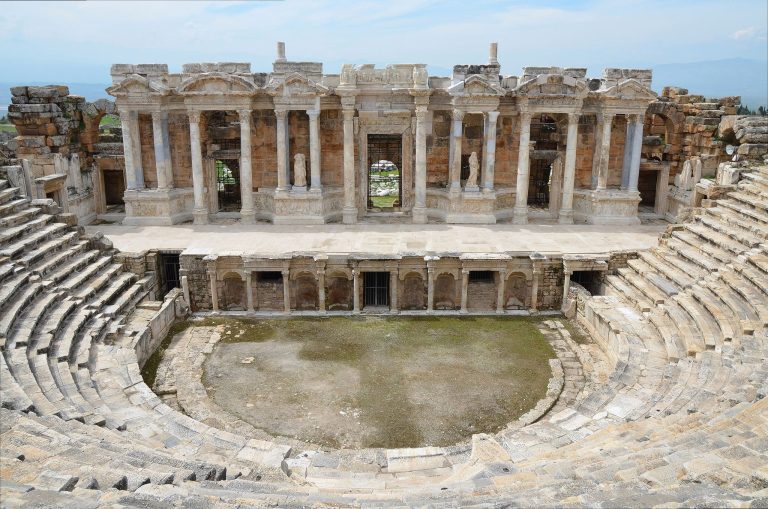
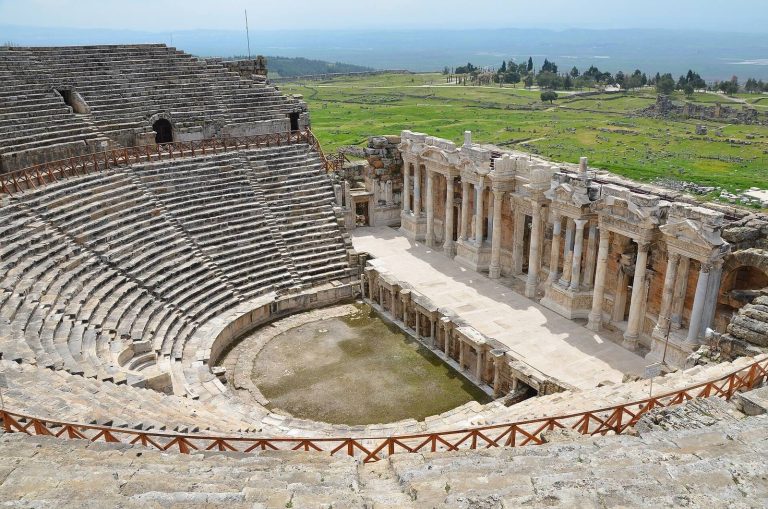
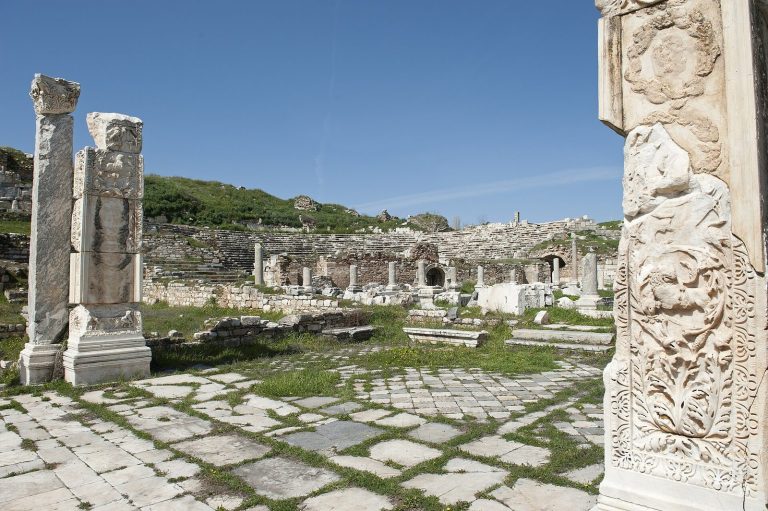
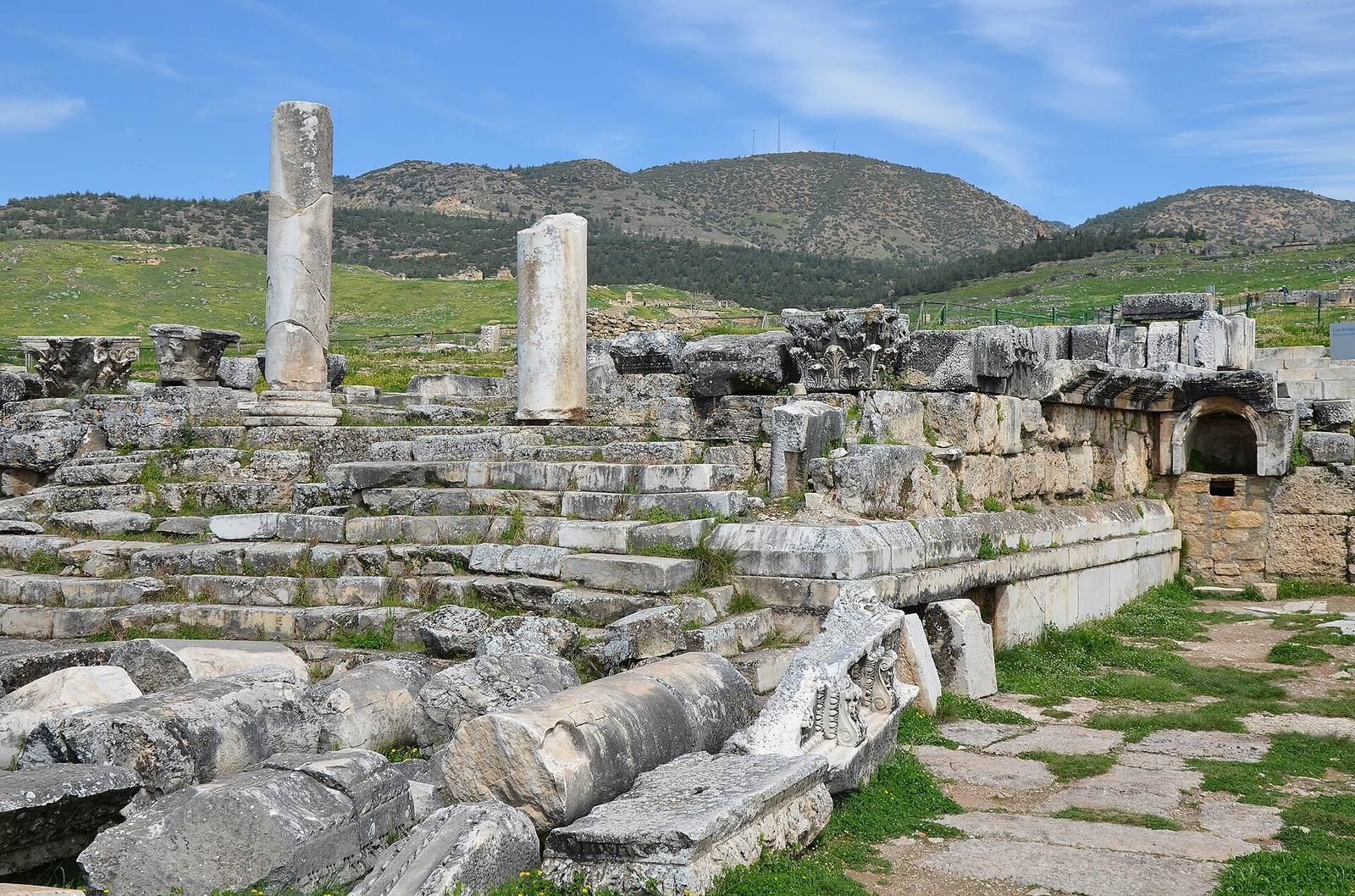
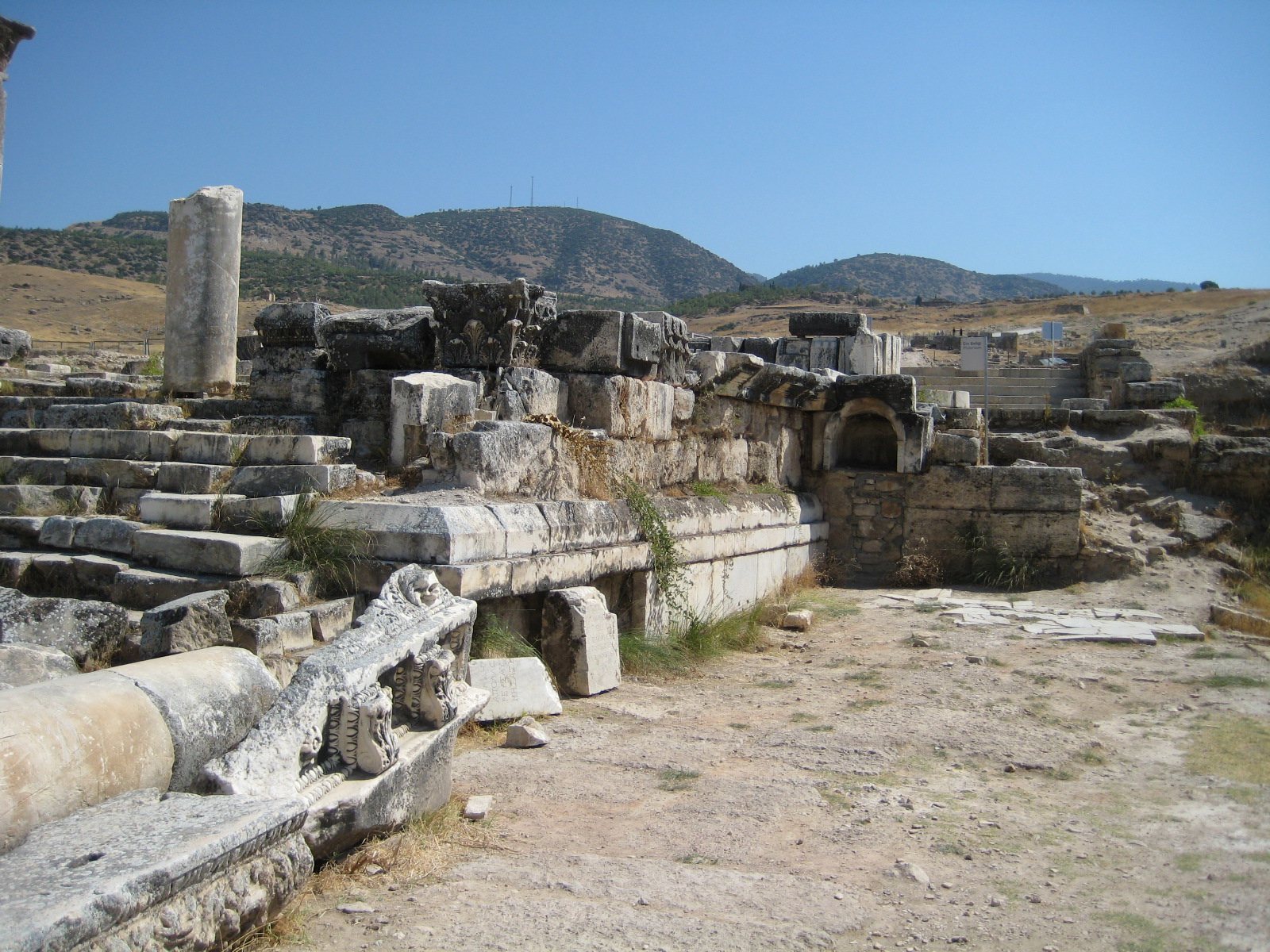
The stone-built remains lie southeast of the Apollo sanctuary and the Nymphaeum, and west of the theatre at Hierapolis. The actual Ploutonion centered on a cave mouth, with an enclosed space in front and a viewing structure on the slope above.
Forecourt and viewing area
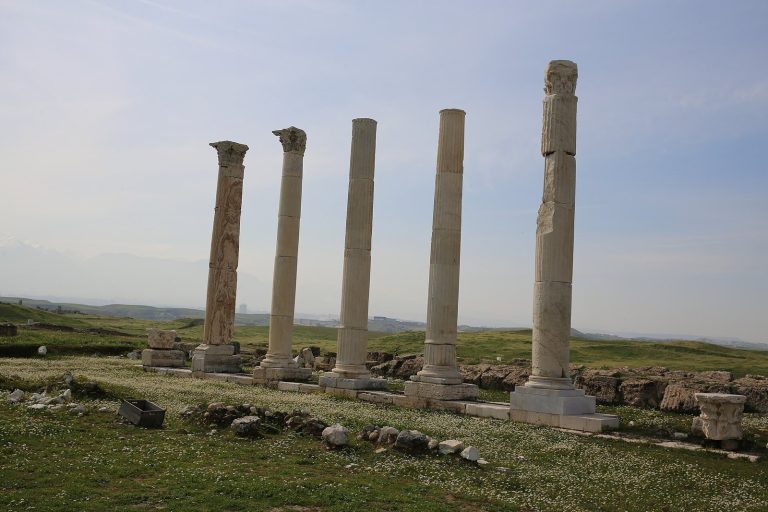
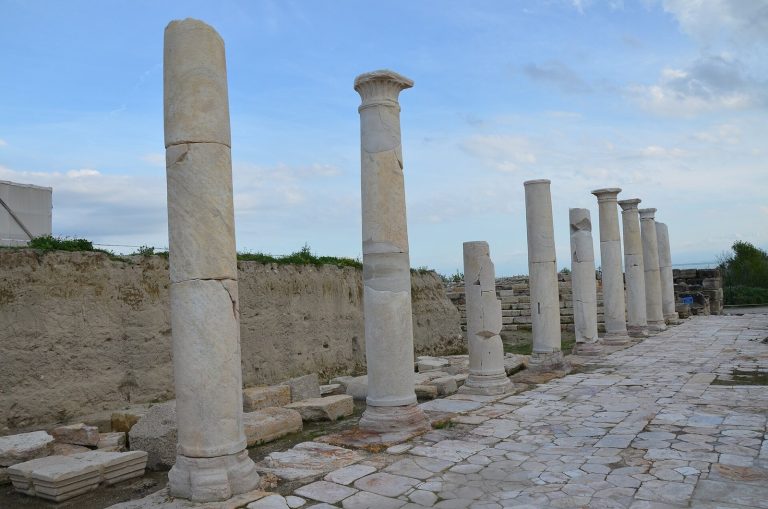
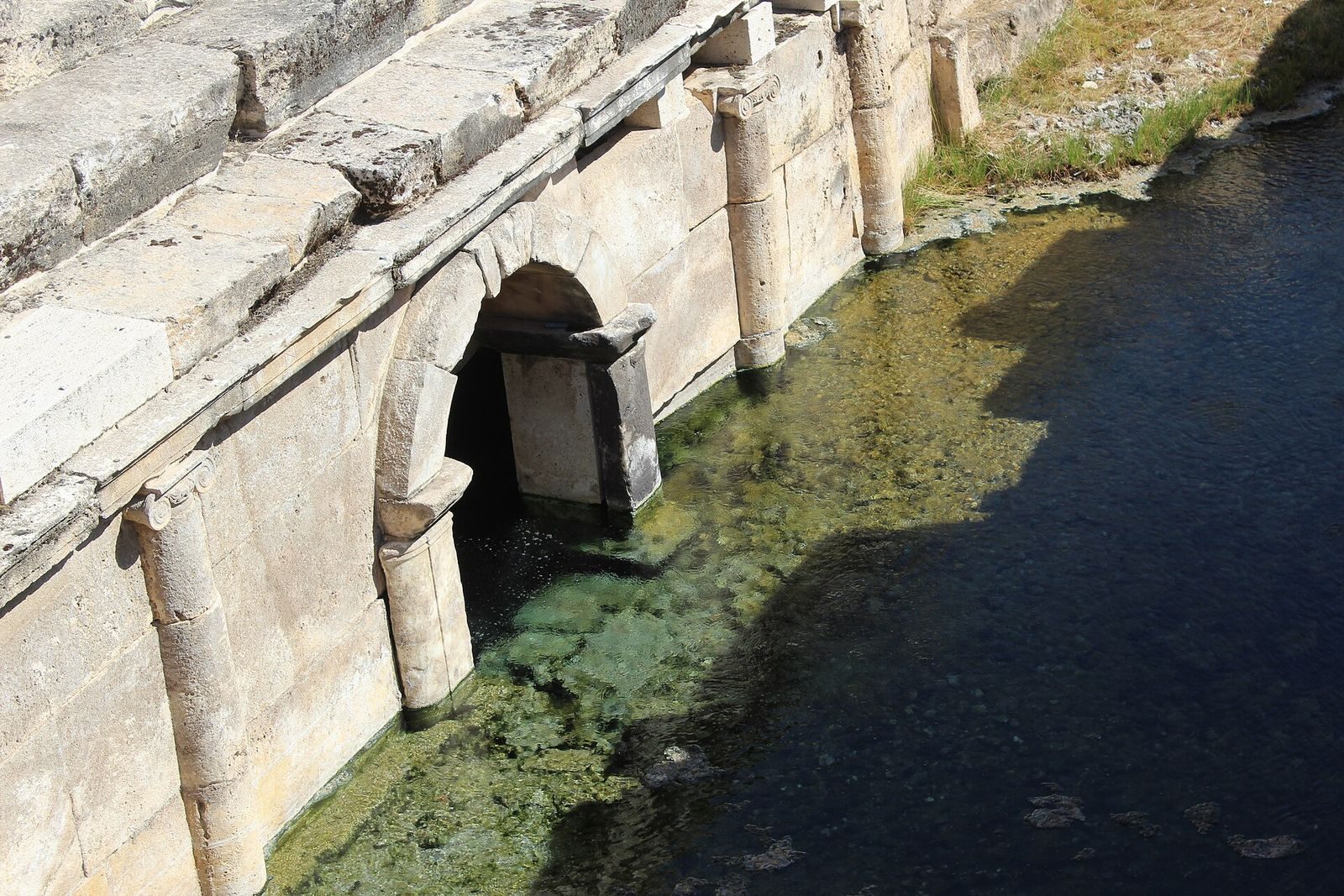
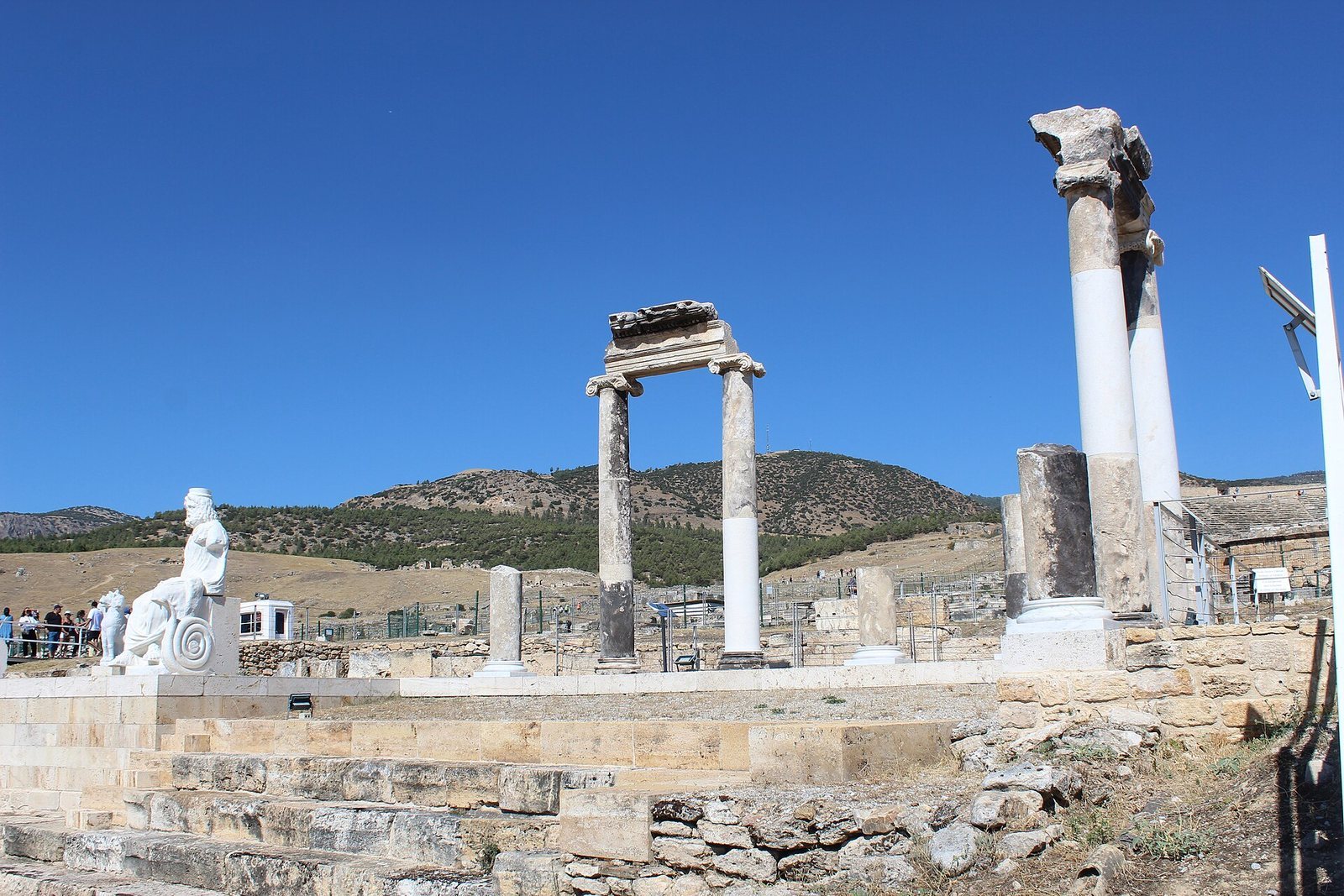
An enclosed area of about 2,000 square metres lay before the entrance. A large rectangular pool stood in front of the cave, while a round marble tholos, or circular building, stood nearby, flanked by two pools supplied with hot-spring water. A viewing structure on the slope overlooked ceremonies below. The sanctuary’s columns were in the Ionic style, whose capitals have scroll-like forms.
Cave entrance and fissure
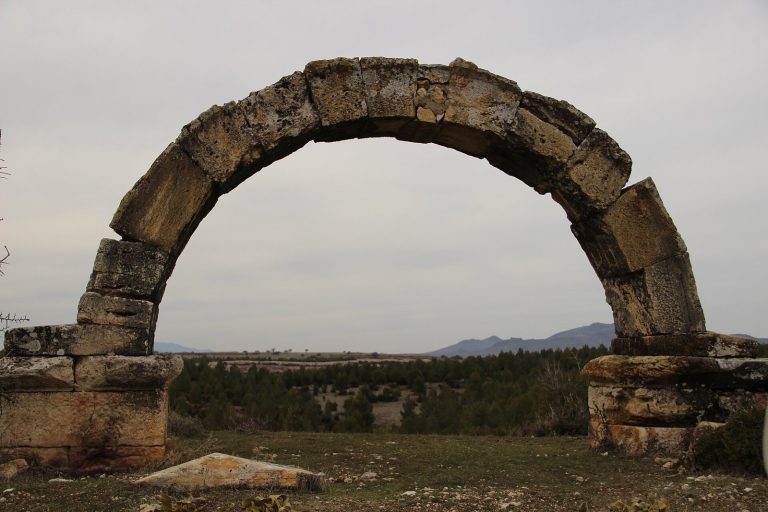
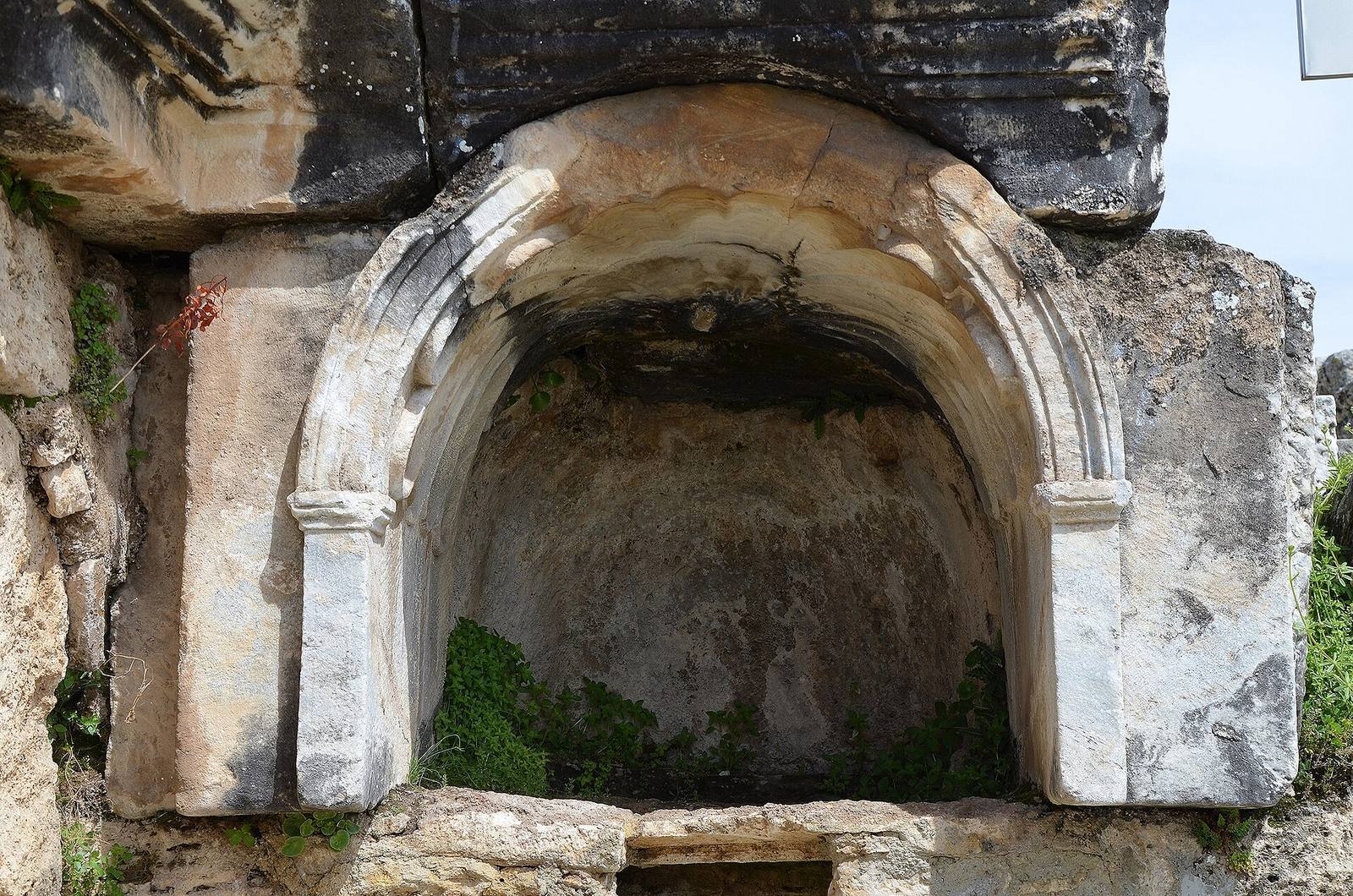
A fenced opening and steps led into the cave. An arch supported by half-columns framed the entrance, with a dedication naming Pluto and Kore, another name for Persephone that means “maiden.” The underground cave is dark and damp, with a carbon dioxide concentration of 91 percent. Behind a small roofed chamber, a deep cleft in the rock carried fast-flowing hot water and released pungent gas.
Sculptures and archaeological finds
A marble group showing Hades and Cerberus, along with two snake statues, stood directly above the cave entrance. The Hades figure was 3.5 metres high. Replicas occupy the sculptures’ original positions, while the originals are held in the Pamukkale Archaeological Museum. A restoration project returned the Hades-and-Cerberus replica to its place. Finds from the Ploutonion include many animal bones, especially those of birds. Birds were also observed approaching the cavern’s warm air and suffocating after inhaling its gas.
Old Ploutonion
The Old Ploutonion stood beside the southeast wall of Building A, conventionally identified as the Temple of Apollo. Its entrance opened into a roofed chamber, with a deep fissure at the back carrying hot, flowing water and pungent gas. A paved courtyard lay in front; gas seeped through cracks in its floor and was diverted away from the temple through gaps between stones in the side walls. The carbon dioxide concentration there was 65 percent. Numerous statues of female deities were found inside.