Tebtunis: An Ancient Settlement and Temple Center in Egypt
Site at a Glance
- Popularity
- Medium
- Country
- Egypt
- Primary era
- Classical
- Eras represented
- Bronze Age, Classical
- Civilizations
- Egyptian, Ptolemaic, Roman
- Site type
- City
On this page12 sections
History
Tebtunis was an ancient settlement at Tell Umm el-Baragat in the Faiyum region of Egypt, established around 1800 BCE under Amenemhat III, a pharaoh of the Twelfth Dynasty. It became a prosperous regional center during the Ptolemaic period, when a Hellenistic dynasty ruled Egypt after Alexander the Great’s conquest. Tebtunis remained inhabited until the thirteenth century CE and passed through Egyptian, Ptolemaic, Roman, and Byzantine rule. The Byzantine Empire was the eastern continuation of the Roman Empire.
Ptolemaic and Roman Tebtunis
The settlement belonged to the Arsinoite district, an ancient Egyptian administrative region. Its earlier name may have been Tynis, while its Coptic name was Touton. During the Ptolemaic and Roman periods, local worship centered on Sobek, an Egyptian deity represented as a crocodile or a human with a crocodile’s head. At Tebtunis he was venerated as Soknebtynis, a name identifying him as the lord of the town.
Local religious practice associated the Egyptian god Geb with the Greek god Cronus. Priests described themselves in Egyptian texts as servants of Soknebtynis-Geb and in Greek texts as priests of Soknebtynis-Cronus. Names derived from both gods were popular locally, especially Kronion. Religious imagery also blended their attributes, depicting Geb with those of Cronus or Cronus with those of Geb.
Papyri from Tebtunis preserve details of the temple priests’ dealings with Roman authorities. Between 24 and 22 BCE, they negotiated with P. Petronius, the prefect of Egypt, the province’s senior Roman governor, over the transfer of part of the temple’s land to state ownership. In return, the priests and their descendants received the right to lease a defined area of the former temple estate. A petition from 71/72 CE describes a later dispute with a local official over taxes on those plots, providing evidence about land reform under early Roman rule.
In the 120s CE, the priest who led the Soknebtynis temple’s rites also held an equivalent office at a Sobek sanctuary in Akoris, a town in Middle Egypt more than 100 kilometres away.
Later religious life
The Roman-era place name Tebynis may refer to the later town of Theodosiopolis, in the province of Arcadia north of Hermopolis Magna, but this identification is uncertain. If the connection is correct, Tebtunis was also associated with an early Christian bishopric in the church province of Oxyrhynchus.
By the ninth and tenth centuries CE, Touton had become a focus of Egyptian monastic life and Coptic manuscript copying. At least thirteen surviving manuscripts were copied there between 861 and 940 CE.
Excavations and papyrus research
Bernard P. Grenfell and Arthur S. Hunt carried out the first excavations at Tebtunis in 1899–1900, seeking papyri. French-Italian excavations followed, with their findings published from 2000 onward. Founded in 2000, the Center for the Tebtunis Papyri studies the town’s papyrus texts.
Remains
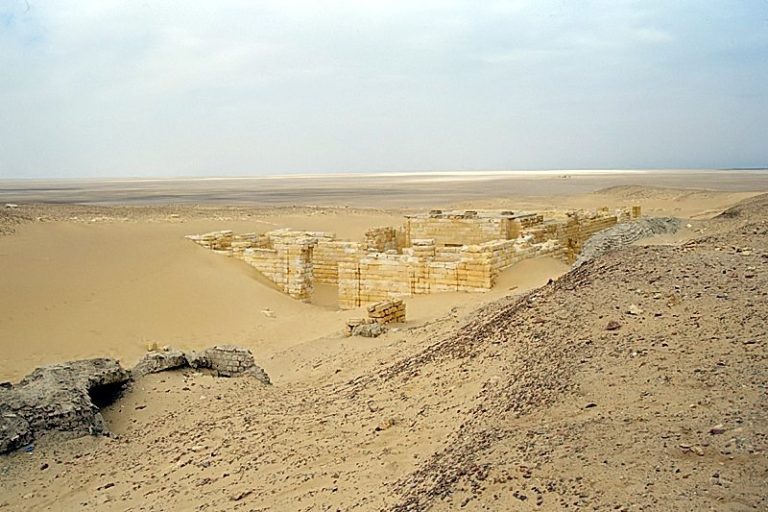
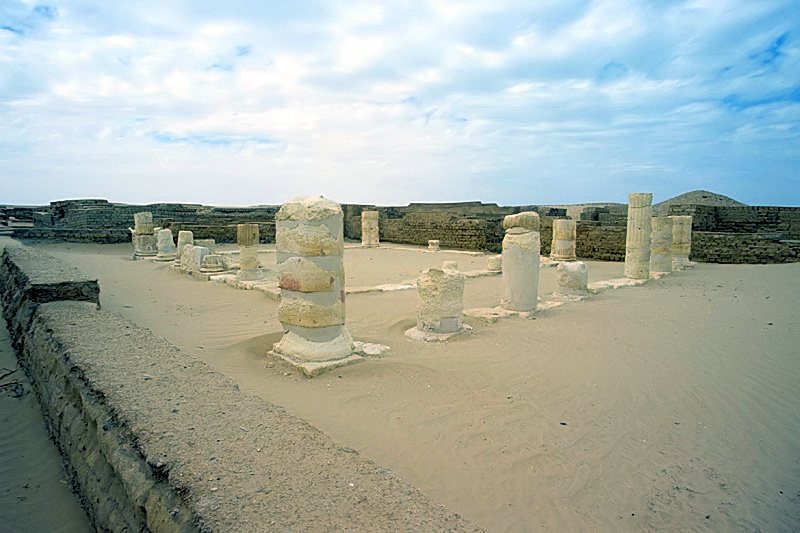
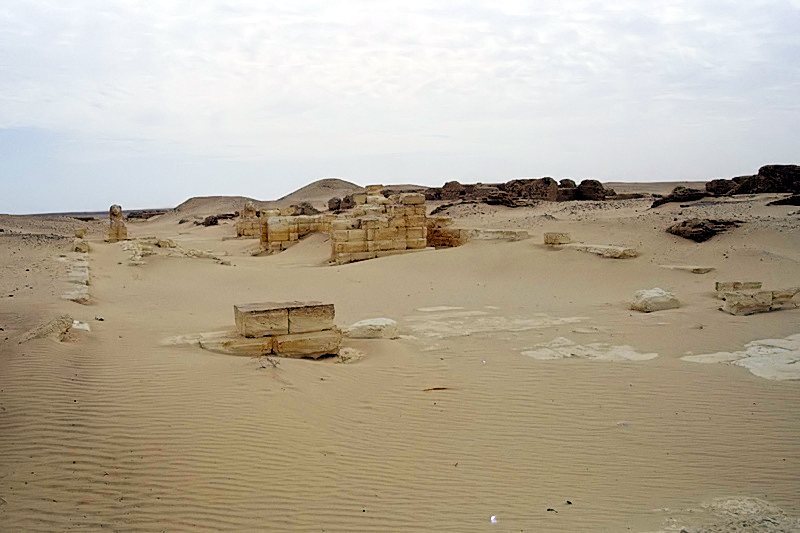
The archaeological area at Tell Umm el-Baragat covers about 950 by 600 metres, or roughly 57 hectares, several kilometres south of the present-day village of Touton. The settlement appears to have shifted northward over time, and the entire area may not have been occupied at once. The temple of Soknebtynis stood at the settlement’s southern edge and formed its central complex.
Temple complex
Approach and sanctuary
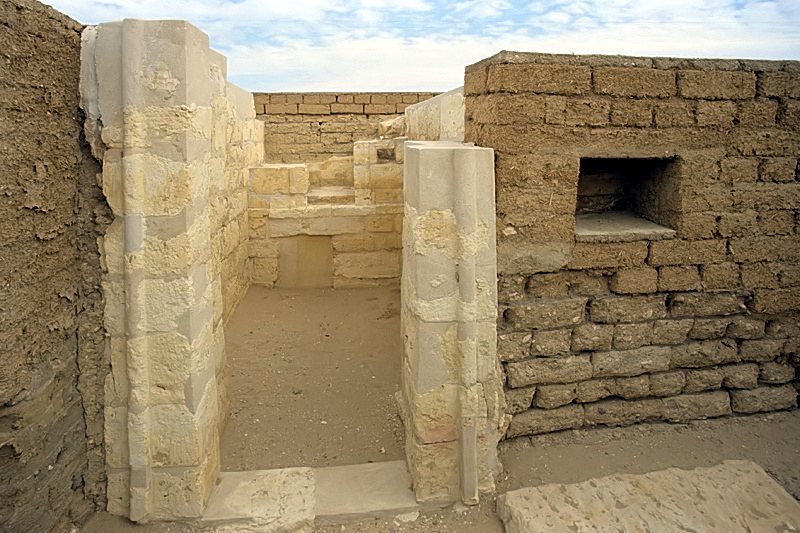
A bent processional approach led to a vestibule before the temple entrance, with two small pavilion-like kiosks along the way. A small court lay in front of the sanctuary.
Enclosure and associated buildings
An enclosing wall surrounded a small subsidiary temple and numerous cells used by priests. The settlement also contained many buildings from the Greek and Roman periods.
Burials and papyrus finds
Necropolis and mummy coverings
Excavations in the necropolis uncovered many crocodile burials and human graves. Greek papyri came from mummy wrappings, while several regulations for religious associations were probably placed with the burials. The inhabitants’ mummies had masks and coverings made from cartonnage, a layered material; papyri were later recovered from these coverings.
Papyrus collections
Most excavated Demotic papyri, written in a form of Egyptian script, went to Cairo. Greek papyri and texts still embedded in mummy coverings were first taken to Oxford for study, then transferred after Grenfell and Hunt’s deaths to the Bancroft Library at the University of California, Berkeley. Its Tebtunis holdings exceed 26,000 fragments, making it the largest collection of papyrus texts in the United States. Other material entered collections in the British Museum, the University of Michigan, and Copenhagen through local looting and the art trade. The British Museum holds about 50 Demotic documents, some fragmentary, concerning temple servants. Michigan has a substantial archive belonging to Kronion, son of Apion, who directed the town’s records office. Copenhagen’s Papyrus Carlsberg Collection consists chiefly of literary works from the temple library.
Texts from the temple and settlement
The papyri include minutes from a Ptolemaic-era meeting of priests, listing those present, the subject discussed, and the date. Other texts cover Egyptian astronomy and astrology. These include several copies of the Book of Nut, a work whose original title referred to principles governing the stars’ courses and which explains sunrise as a mythological rebirth. Copenhagen’s temple-library texts include works in Demotic and hieratic, another form of Egyptian writing.